Infected Tooth and Heart Disease: Real Risks, Treatment Costs in China
Infected Tooth Heart Disease Treatment Cost China: What the Evidence Actually Shows
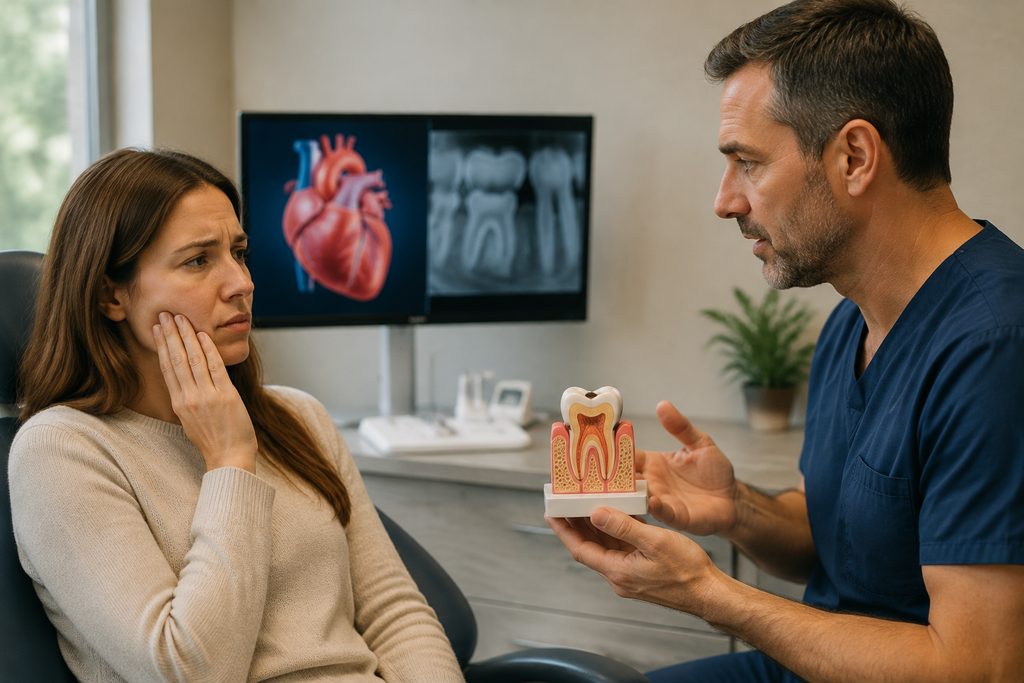
You’ve probably heard that a toothache is just a dental problem. Annoying, yes. Dangerous to your heart? Most people would laugh that off. But the evidence linking oral infections to cardiovascular events has been building for decades, and it’s stronger than most patients realize. A 2016 study in the Journal of Dental Research found that individuals with untreated dental infections had a 2.7 times higher risk of coronary artery disease compared to those without. If you’re searching for “infected tooth heart disease treatment cost China,” you’re likely past the question of whether there’s a connection and into the harder territory: what to do about it, where, and at what price.
Our team at China Medical Services works with international patients who face exactly this scenario. A dental abscess that spiraled into something systemic. A heart condition discovered during routine pre-dental clearance. The path forward is rarely obvious, and that’s what this article addresses.
The short answer to “can an infected tooth affect my heart?” is yes. The mechanism is not mystical. Bacteria from an oral abscess enter the bloodstream — a process called bacteremia — and can colonize damaged heart valves or arterial walls. The result can be infective endocarditis, a life-threatening infection of the heart’s inner lining. Or the chronic inflammation from periodontal disease can accelerate atherosclerosis, narrowing the arteries that feed the heart muscle itself. Neither outcome is rare. Infective endocarditis affects approximately 3 to 10 per 100,000 people annually, and dental procedures or untreated oral infections are a recognized trigger in a meaningful subset of those cases.
How This Actually Works, Step by Step
Let’s say you have a confirmed dental abscess and your cardiologist has flagged concerns about your heart. Or you have a known heart valve issue and your dentist just found an infected tooth. What does the process look like from where you are now to a resolved situation?
First, you need a clear clinical picture. That means blood tests — complete blood count, inflammatory markers like CRP and ESR, and blood cultures if endocarditis is suspected. You also need an echocardiogram, ideally a transesophageal echo, because it picks up valve vegetations that a standard transthoracic echo misses. And you need a dental evaluation, usually with a panoramic X-ray or cone-beam CT, to map the extent of the infection.
Second, the infection source must be controlled. This typically means either a root canal or extraction of the infected tooth, often preceded by a course of antibiotics. Timing matters. If you have a prosthetic heart valve or a history of endocarditis, your cardiologist may want the tooth addressed before any elective cardiac work. If the heart issue is acute, the order might reverse.
Third, the cardiac side gets addressed. That could mean a course of intravenous antibiotics for endocarditis — typically 4 to 6 weeks — or surgical valve repair or replacement if the infection has destroyed tissue. If the heart problem is coronary artery disease rather than endocarditis, the path might be a cardiac catheterization, stenting, or bypass surgery.
Fourth, you need coordinated follow-up. Dental clearance before cardiac surgery is standard. Cardiac clearance before dental surgery is also standard when the patient has significant heart disease. The two specialties have to talk to each other, and in many health systems, they don’t. That coordination gap is where complications breed.
Can an Infected Tooth Cause Heart Problems? The Biological Pathway
The question “can tooth infection cause heart problems” deserves a straight answer, because the mechanism matters for treatment decisions. Oral bacteria — particularly Streptococcus viridans group species — are among the most common culprits in infective endocarditis. When an abscess forms at the root of a tooth, the bacteria don’t stay put. They leak into surrounding tissue, then into the bloodstream.
Once circulating, these bacteria look for damaged tissue to latch onto. Heart valves with congenital defects, rheumatic damage, or prosthetic material are prime targets. The bacteria form vegetations — clumps of fibrin, platelets, and microbial colonies — on the valve surface. These vegetations can break off and travel to the brain, lungs, or kidneys, causing embolic strokes or organ abscesses. That’s not a rare complication. Stroke occurs in up to 30% of infective endocarditis cases.
But there’s a second pathway, and it’s more common. Chronic low-grade inflammation from periodontal disease or a long-standing dental abscess raises systemic inflammatory markers, including C-reactive protein and interleukin-6. These inflammatory molecules damage the endothelium — the inner lining of arteries — making it easier for atherosclerotic plaque to form and rupture. A 2019 meta-analysis in the European Journal of Preventive Cardiology found that periodontal disease was associated with a 20% higher risk of cardiovascular disease after adjusting for confounders. The connection is not as dramatic as endocarditis, but it affects far more people.
A Realistic Timeline
If you’re considering treatment in China for a dental infection with cardiac complications, here’s what a realistic timeline looks like. This assumes you’re starting from outside the country and need to coordinate both dental and cardiac care.
| Stage | What Happens | Typical Duration |
|---|---|---|
| Day 1–7 | Document collection: dental X-rays, echocardiogram reports, blood work, cardiologist’s notes. All translated into English or Chinese as needed. | 1 week |
| Week 1–3 | Remote review by a Chinese cardiac team and dental team. Written second opinion or video consultation. Decision on whether in-person treatment is warranted. | 1–2 weeks |
| Week 3–6 | S2 visa application with hospital invitation letter. Flight and accommodation planning. Pre-arrival antibiotic regimen if prescribed. | 2–3 weeks |
| Week 6–8 | Arrival in China. Initial in-person consultations: cardiologist, dentist, possibly an infectious disease specialist. New imaging and blood work ordered. | 3–5 days |
| Week 8–10 | Dental source control: extraction or root canal under antibiotic coverage. Hospital admission if intravenous antibiotics are needed for endocarditis. | 1–2 weeks |
| Month 3–4 | Cardiac intervention if required: valve surgery or coronary revascularization. Post-operative recovery in hospital, then at a nearby residence. | 4–6 weeks |
| Month 4–6 | Follow-up echocardiogram, blood cultures to confirm clearance, dental healing check. Discharge planning and return home. | 2–4 weeks |
The timeline stretches because of the things people forget: document translation takes days, not hours. Appointment lead times at top cardiac centers in China can run 1 to 2 weeks even with coordination. Visa processing varies by consulate but rarely takes less than 5 business days and often 2 to 3 weeks. And if you need both dental clearance before cardiac surgery and cardiac clearance before dental extraction, you’re looking at two separate evaluation loops.
What Can Go Wrong — and What Happens Then
The honest failure modes here are not pleasant to think about, but ignoring them doesn’t make them less real.
One: the infection is worse than imaging suggested. A tooth that looked manageable on X-ray turns out to have extensive bone loss or a spreading abscess into the floor of the mouth — Ludwig’s angina is a genuine emergency. The recourse is immediate surgical drainage and broad-spectrum intravenous antibiotics, which means hospital admission, not a quick outpatient fix.
Two: the heart involvement is more advanced than the initial echo showed. A small vegetation can grow rapidly, or a valve can perforate between the first echo and the second. That converts a medical treatment plan into a surgical one. The recourse is a frank conversation with the cardiac surgeon about valve repair versus replacement, and the risks of each.
Three: the coordination between dental and cardiac teams breaks down. The dentist extracts the tooth without adequate antibiotic prophylaxis, and the patient develops fever and positive blood cultures three days later. Or the cardiologist clears the patient for surgery without confirming the dental infection is fully controlled, and the patient develops prosthetic valve endocarditis six months after valve replacement. The recourse is prevention — a case manager who ensures both teams review the same records and sign off in the right sequence.
Four: the patient’s home country follow-up is inadequate. They return home after valve surgery, stop the prescribed anticoagulation, and develop a valve thrombosis. The recourse is a clear written discharge plan that the patient’s home cardiologist can follow, plus a scheduled video follow-up with the Chinese team at 1 month and 3 months post-discharge.
Dental Infection Heart Surgery Price Shanghai: What the Numbers Mean
If you’re searching for “dental infection heart surgery price Shanghai,” you’re likely weighing whether China makes financial sense for a complex, two-specialty problem. The answer depends on what exactly you need.
A straightforward dental extraction with antibiotic coverage at a top Shanghai dental hospital runs $100 to $500, depending on the tooth and complexity. A root canal by an endodontist runs $300 to $800. These are cash prices at public hospital international departments or private dental clinics.
Cardiac care is where the numbers diverge sharply from Western prices. An echocardiogram at a top Shanghai cardiac center costs $100 to $300 out of pocket. A transesophageal echo runs $300 to $600. A cardiac CT angiography runs $400 to $800. These are diagnostic costs that in the United States would run 5 to 10 times higher.
If the cardiac intervention is valve surgery — which becomes necessary in roughly 25% to 50% of infective endocarditis cases depending on the series — the price at a top Chinese public hospital international department typically ranges from $25,000 to $45,000 for a single valve replacement, including hospital stay and surgeon fees. The same procedure in the United States averages $150,000 to $250,000. At Fuwai Hospital in Beijing, which performs over 14,000 cardiac surgeries annually — the highest volume in the world — the international department pricing reflects that scale advantage.
For coronary artery bypass grafting, the range in China is $20,000 to $35,000 at top centers, versus $120,000+ in the US. The gap is not because Chinese surgeons are less skilled. Fuwai’s surgical outcomes are published in peer-reviewed journals and are comparable to major Western centers. The gap is structural: lower labor costs, lower facility fees, and a hospital system that doesn’t layer on administrative overhead the way American hospitals do.
But price is not the only variable. The question of how does an infected tooth affect your heart is answered differently depending on whether you’re dealing with endocarditis, coronary disease, or both. And the answer determines which specialist you need to see first.
Practical Considerations: Records, Visa, Payment, and Follow-Up
For international patients dealing with a dental infection and suspected heart involvement, the practical details are where plans fall apart. Here’s what actually matters.
Records. You need everything, not just the recent stuff. Prior echocardiograms matter because they show whether a valve abnormality is new or old. Dental X-rays from six months ago matter because they show how fast the infection progressed. Blood culture results matter because they identify the organism and its antibiotic sensitivities. Bring digital copies of everything, and have them translated into English if they’re in another language. Chinese specialists generally work in English at international departments, but your records need to be legible to them.
Visa. Medical treatment in China falls under the S2 visa category, which covers short-term private affairs including medical treatment. The hospital’s international department provides an invitation letter that you submit with your application. Processing times vary by consulate, but plan for 2 to 3 weeks. Family members accompanying you also apply for S2 visas. The S1 visa is for stays exceeding 180 days, which is rarely necessary for the scenarios described here. The M visa is for commercial and trade activities — it is not the correct category for medical treatment, and using it for that purpose can create problems at the border.
Payment. Public hospitals in China, including their international departments, generally require prepayment. You deposit funds at admission, and the hospital draws down against that deposit as services are provided. Private international hospitals like United Family or Jiahui may bill insurance directly, but public hospital international departments typically require you to pay and then seek reimbursement from your insurer. Check with your insurance company before committing to a treatment plan.
Language. Top public hospitals in China are enormous. A single-day outpatient volume of 10,000 patients is not unusual at major centers. Signage is increasingly bilingual, but the actual flow — registration, payment, lab draws, imaging, pharmacy pickup — still runs primarily in Chinese. Without a bilingual companion who knows the system, you’ll lose hours to confusion. That’s not a criticism of Chinese hospitals; it’s the reality of a system optimized for domestic patients at scale.
Follow-up at home. After you return, your home cardiologist and dentist need a clear summary of what was done, what medications you’re on, and what monitoring is required. Chinese hospitals provide discharge summaries in English at international departments, but the quality varies. Ask for a detailed written summary before you leave, and schedule a video follow-up with the Chinese team if your case is complex.
How Does an Infected Tooth Affect Your Heart: Decision Criteria for Treatment Abroad
Not every dental infection with cardiac implications requires international travel. Here’s how to think about whether going to China makes sense for your specific situation.
If your case is straightforward — a single abscessed tooth, normal echocardiogram, no fever, no cardiac symptoms — then local treatment is almost certainly the right call. Fly to China for a dental extraction and you’re paying for airfare and coordination that adds no clinical value.
If your case is complex — confirmed endocarditis, valve destruction, need for both dental source control and cardiac surgery — then the calculus shifts. The question is whether you can get both specialties coordinated in one place, at a price you can afford, with a timeline you can tolerate. China’s top cardiac centers do this routinely. Fuwai Hospital in Beijing, Zhongshan Hospital in Shanghai, and West China Hospital in Chengdu all have cardiac surgery volumes that rank among the highest globally. Their infectious disease teams work alongside cardiac surgeons on endocarditis cases daily.
For patients specifically searching for “best cardiology hospital China for dental abscess complications,” the answer starts with the Fudan ranking system. The Fudan University hospital rankings are the most authoritative in China, and the cardiac surgery specialty list places Fuwai Hospital and Zhongshan Hospital among the top-ranked programs. These are not vague reputations — they’re based on peer assessment, clinical volume, and research output. You can browse our specialty-specific hospital rankings to see which centers rank among China’s top 10 for cardiac surgery and infectious disease.
One more consideration: timing. If your endocarditis is acute and your valve is failing, you don’t have months to deliberate. The question becomes whether you can get to China fast enough, and whether your condition is stable enough for the flight. That’s a conversation to have with your current cardiologist before you book anything.
Book Heart Check Up After Tooth Infection China: What to Expect
For patients who’ve had a tooth infection and want a cardiac evaluation before making any treatment decisions, the process of booking a heart check-up in China is more straightforward than most people expect. If you’re searching for “book heart check up after tooth infection China,” here’s what the pathway looks like.
You start with a remote consultation. Send your dental records, any recent blood work, and your medical history. A Chinese cardiologist reviews them and tells you what tests you actually need — not a generic package, but a targeted workup. That might be an echocardiogram and blood cultures if endocarditis is suspected. It might be a coronary CT angiogram if your concern is arterial disease. The written second opinion costs $300 to $500, and a video consultation runs $100 to $300 depending on the hospital tier.
If the remote review suggests you need in-person evaluation, we coordinate the appointment. You arrive in Shanghai or Beijing, get your tests done over 2 to 3 days, and leave with a clear report and treatment plan. The coordination fee starts at $300, and if the appointment can’t be secured as promised, that fee is refunded in full. Any consultation fees you paid are credited toward on-the-ground coordination if you proceed with treatment within 90 days.
What you shouldn’t expect is to walk into Fuwai Hospital without an appointment and be seen the same day. Public hospitals in China don’t work that way for domestic patients, and they don’t work that way for international patients either. The international department pathway exists precisely because it provides a structured, English-speaking route through a system that would otherwise be impenetrable.
Frequently Asked Questions
Can a tooth infection really reach my heart?
Yes. Bacteria from an infected tooth can enter the bloodstream and attach to heart valves, causing infective endocarditis. Chronic dental infections also
For more medical information and treatment options in China, visit chinamedservices.com (China Medical Services).
