Healthcare in Chengdu for Foreigners: Costs, Top Hospitals & How to Start
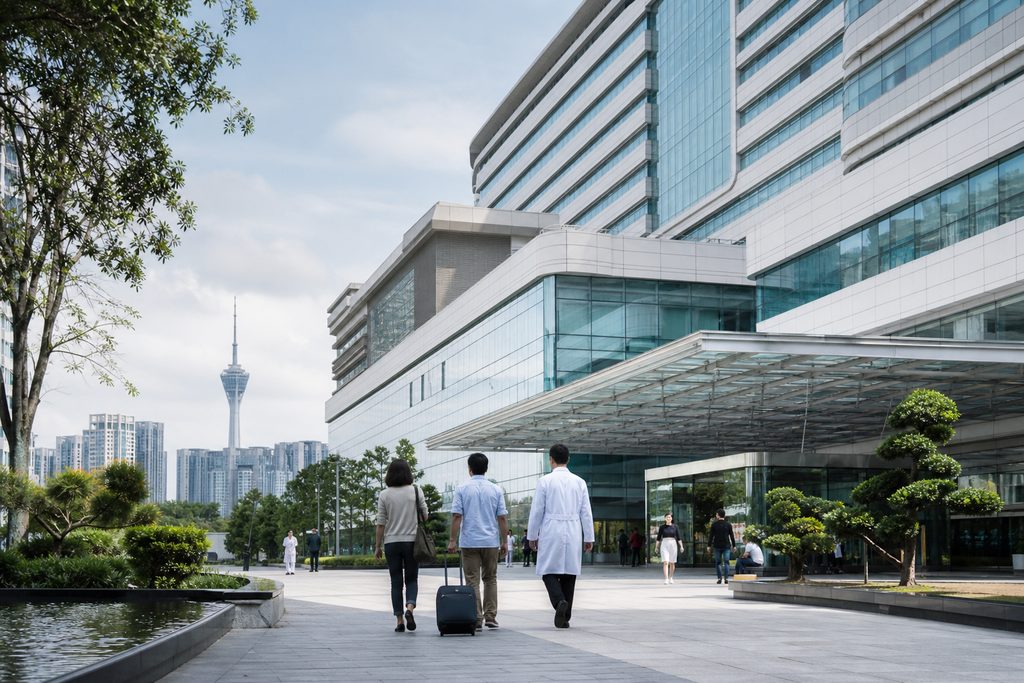
When 42-year-old Michael relocated from Portland to Chengdu for a two-year engineering contract, a routine physical flagged something on his ECG. His first instinct was to fly home. His second was to open a map and realize he had no idea which hospital to walk into, how to pay, or whether anyone would speak English. That moment of paralysis is common. Chengdu is a city of 21 million people with a genuinely strong medical system, but almost none of it is designed for a foreigner who shows up cold at the front desk.
Here is the short answer. Chengdu has two parallel tracks for foreign patients: private international hospitals with English-speaking staff and direct insurance billing, and large public tertiary hospitals where the specialists are world-class but the process is almost entirely in Chinese. International hospitals in Chengdu China are easy to navigate and cost more. Public hospitals are cheaper and harder. Most foreigners end up using both.
Healthcare in Chengdu: The Short Answer
Chengdu is one of China’s stronger medical cities. West China Hospital, affiliated with Sichuan University, is consistently ranked among the top-tier comprehensive hospitals in the country by the Fudan Hospital Ranking, and it is one of the largest single-site hospitals anywhere in the world. For complex surgery, oncology, and cardiac care, the clinical capability here is real.
The friction is not quality. It is access. Walk-in registration at a major public hospital means joining a queue that can start before dawn. Appointments for ordinary outpatient clinics generally cannot be reserved from overseas in advance. And outside the international departments, signage, forms, and most physicians operate in Mandarin.
That gap is exactly what a coordination service exists to close, and it is also why so many expats default to the private track for anything routine.
Who This Is Right For — and Who It Isn’t
Chengdu works well for a specific set of people. It works poorly for others, and being honest about that saves everyone time.
Typically a good fit:
- Expats and long-stay residents who need a reliable primary-care relationship plus access to specialists
- Patients seeking a second opinion or a specific procedure at a fraction of US or European pricing
- Medical travelers whose condition allows a planned, scheduled visit rather than an emergency
- Anyone wanting Traditional Chinese Medicine for chronic pain, rehabilitation, or stress-related conditions
Probably not the right choice:
- Anyone with an acute emergency. Call 120 or go to the nearest emergency department immediately — do not wait for coordination.
- Patients whose condition makes long-haul travel itself risky without a physician’s clearance
- People expecting a Western-style “concierge” experience at public-hospital prices. Those two things do not coexist.
- Travelers on a short tourist visa hoping to squeeze in a complex surgery. The timeline rarely cooperates.
The Options, Compared
Chengdu’s foreigner-facing care splits into three tiers. The table below reflects typical patterns, not fixed prices — actual figures vary by hospital and case complexity.
| Factor | Public Tertiary Hospital (Standard) | Public Hospital International / VIP Department | Private International Hospital |
|---|---|---|---|
| English support | Limited; varies by doctor | Yes, dedicated staff | Yes, standard |
| Advance booking from abroad | Generally not for ordinary clinics | Often possible | Yes |
| Typical consultation cost | Low (tens of USD) | Roughly 1.5–2x standard | Highest |
| Payment model | Prepay, reimburse later | Prepay, reimburse later | Direct insurance billing common |
| Wait times | Long queues | Shorter | Shortest |
| Best for | Cost-sensitive, non-urgent | Complex cases needing senior specialists | Routine care, expat families |
Which column suits you depends on one question: how much is your time worth, and how complex is the problem? A sprained ankle and a suspected tumor should not follow the same path.
Chengdu Hospital English Speaking Doctors: Where to Actually Find Them
This is the part most guides gloss over. “English-speaking” in Chengdu is not a binary. It ranges from a physician who trained abroad and speaks fluent English, to a resident who can read English literature but hesitates to converse, to a registration clerk who knows three phrases.
The reliable pockets are the international departments of the major public hospitals and the private international hospitals. Names like United Family and other JCI-accredited facilities are built around foreign patients, with English-language intake, translated consent forms, and staff accustomed to international insurance.
At West China Hospital and similar public giants, English capability concentrates in the international or VIP wing. That is also where you can sometimes secure a specialist appointment in advance — the ordinary clinic generally will not allow it. Knowing which door to knock on matters more than knowing the hospital’s name.
If your case involves a specific specialty, it helps to check which hospitals rank highest for that department before choosing a city or a facility. Our department-by-department rankings list the top hospitals for 45 specialties, from oncology to cardiac surgery.
Chengdu Medical Costs for Foreigners
Cost is where China’s system becomes genuinely compelling. The same procedure that runs six figures in the United States often lands in the low five figures here. The table below gives broad ranges; treat them as orientation, not quotes.
| Service | Typical Range in Chengdu (USD) | US Comparison |
|---|---|---|
| Specialist consultation (public, standard) | $15–$50 | $200–$500 |
| Specialist consultation (international dept.) | $80–$200 | $300–$600 |
| Comprehensive health checkup | $150–$600 | $1,000–$3,000 |
| MRI scan | $100–$350 | $1,000–$3,000 |
| Coronary bypass surgery | $12,000–$20,000 | $120,000+ |
| Private international hospital overnight | $500–$1,500 | Comparable to US |
Two caveats. First, public hospitals require prepayment, and insurance reimbursement happens afterward — bring documentation and expect paperwork. Second, private international hospitals often bill your insurer directly, which is convenient but erases most of the cost advantage. You are paying for the experience, not the discount.
How to See a Doctor in Chengdu as a Foreigner
The mechanics trip up almost everyone, so here is the sequence that actually works.
Step one: decide your track. Routine issue, English comfort, insurance that bills directly — go private. Complex diagnosis, need a senior specialist, cost matters — go public international department.
Step two: gather records. Bring prior imaging, lab results, and a medication list. Chinese specialists move fast and expect data. Without records, you will repeat tests you already paid for at home.
Step three: understand the registration rule. For ordinary public clinics, you generally register on the day, in person. For surgery or inpatient admission, an in-person consultation must come first — no hospital schedules an operation off an email. If you need to lock in a specialist visit before you fly, that is the international department’s role.
Step four: handle payment and language. This is where a bilingual companion earns their keep — queuing, registering, paying, translating the doctor’s instructions, and making sure you understood the follow-up plan.
If you want a specialist’s input before committing to travel, a written second opinion or video consultation can clarify whether Chengdu is even the right destination for your case. Our consultation service starts there.
Practical Considerations: Visas, Payment, and Follow-Up
Visa. For medical treatment, the applicable short-stay category is the S2 visa, with accompanying family members applying under the same category. Longer stays fall under S1. Requirements shift, so confirm current rules with the nearest Chinese embassy or consulate and bring supporting hospital documents. Note that the M visa is for commercial and trade activity — it is not a medical visa.
Payment. Public hospitals: prepay, then claim. Private: often direct billing. International credit cards work at private facilities; public hospitals may prefer local payment methods, so plan accordingly.
Insurance. Confirm whether your policy covers treatment in China and whether it reimburses or pays directly. Many Western policies reimburse only, which means you front the cost.
Language. Assume you need help unless you are in a private international facility. This is not a reason to avoid Chengdu — it is a reason to plan.
Follow-up. Before you leave, get your discharge summary, imaging, and pathology in a form your home physician can read. Ask for English copies at the international department.
For a broader view of how Chinese hospitals are organized and ranked, our main hospital database groups facilities by city and tier.
Is Healthcare in Chengdu Good for Expats?
Yes, with conditions. The clinical depth is genuine — West China Hospital handles volumes and complexity that few Western hospitals match, and the cost structure is dramatically lower. For expats with a chronic condition, a planned procedure, or a need for specialist care, Chengdu delivers real value.
The condition is that you cannot treat it like a Western walk-in system. You need to know which door to use, bring your records, and solve the language problem in advance. Expats who figure that out tend to be very satisfied. Those who don’t often fly home frustrated.
Frequently Asked Questions
At private international hospitals, generally yes. At public hospitals, ordinary outpatient clinics usually cannot be reserved from overseas — you register on the day. However, international or VIP departments often can arrange advance appointments. If you need a confirmed specialist visit before flying, that is the route to pursue.
For short medical visits, the S2 visa is the applicable category, with family members applying under the same classification. Confirm current requirements with your nearest Chinese embassy or consulate, and prepare hospital supporting documents. The M visa is for business and trade, not medical treatment.
It depends entirely on the procedure and the track you choose. A specialist consultation might run $15–$50 in a public standard clinic or $80–$200 in an international department. Major surgery often costs one-fifth to one-tenth of US pricing. Always request an itemized estimate, and expect final figures to vary by hospital and case complexity.
Complications are possible anywhere, and China is no exception. Public hospitals have full emergency and intensive-care capability, and top-tier facilities handle high-acuity cases routinely. The realistic safeguard is preparation: clear records, an informed consent process you actually understand, and a bilingual companion who can flag concerns in real time. No service can guarantee an outcome, and anyone who promises one should be treated with suspicion.
It depends on your Chinese fluency and tolerance for logistics. If you speak Mandarin and have time, you can navigate much of this yourself. If you don’t, a bilingual companion handles registration, queuing, payment, and translation — typically from $300 per day. Whether that is worth it is your call, not ours.
Your Next Step
Chengdu can serve foreign patients well, but only if you match the right hospital tier to your actual problem and prepare the paperwork before you travel. The city rewards planning and punishes improvisation.
We are China Medical Services — a coordination team, not a hospital. We do not diagnose or treat. What we do is help you understand your options, connect you with the appropriate department, and handle the logistics that make a foreign hospital visit manageable. If you would like a clearer picture of what your case would involve in Chengdu, start with a free consultation. No pressure, no obligation — just a conversation about whether this path makes sense for you.
For more medical information and treatment options in China, visit chinamedservices.com (China Medical Services).
