Healthcare in Sanya for Foreigners: What to Expect from a Top Chinese Hospital
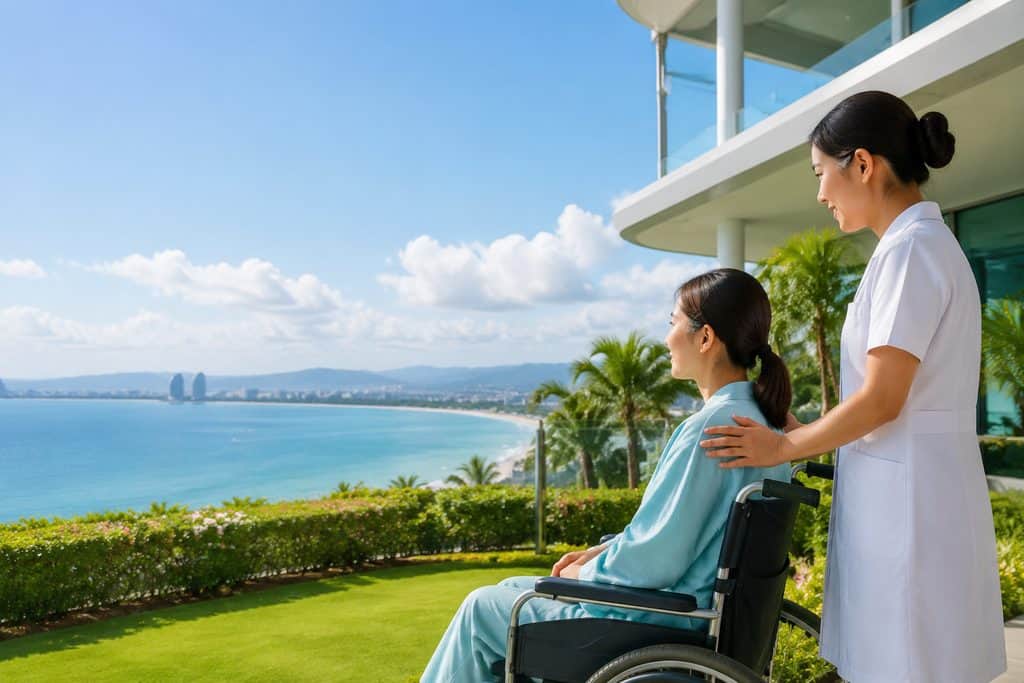
Healthcare in Sanya for Foreigners: What to Expect
While a patient in the UK waits a median 18 weeks just to start routine treatment, a single top-tier Chinese hospital can process more than 10,000 outpatient visits in one day. Those two numbers rarely appear in the same sentence. For anyone weighing medical tourism Sanya, they are the whole story: a tropical city of roughly one million residents, backed by the clinical depth of the world’s second-largest healthcare system.
So what does healthcare in Sanya actually look like for a foreigner? Short answer: good for routine and urgent care, workable for specialist treatment, and genuinely excellent if you know which door to walk through. The long answer involves a few rules nobody explains at the airport.
How This Actually Works, Step by Step
Here is the real sequence, from a hotel room in Dadonghai to a specialist’s office.
Step one: decide what kind of care you need. A fever, a sprained ankle, a skin rash — that is a walk-in problem. A cardiac workup, an orthopedic opinion, a full-body health screening — that is a scheduling problem, and the two paths look nothing alike.
Step two: gather your documents. Passport, visa or entry stamp, and any prior medical records with English translations. Chinese hospitals cannot bill foreign insurers directly in most public settings, so bring a payment card that works internationally.
Step three: choose the right facility. Sanya has public tertiary hospitals, a growing number of international-standard clinics, and TCM centers. Each serves a different purpose. Our directory of top-ranked Chinese hospitals groups facilities by city and specialty so you can compare before you commit.
Step four: register and pay. At a public hospital you create a medical card on arrival, pay a registration fee, then queue for your department. At an international clinic, staff handle registration for you and often speak English.
Step five: see the doctor, then decide. If surgery or a longer treatment plan is on the table, most public hospitals require an in-person consultation first. You cannot lock in an operating room from overseas without it.
Is Healthcare in Sanya Good for Tourists?
For everyday problems, yes — and better than most visitors expect. Sanya’s public hospitals handle high volumes of seasonal residents and domestic tourists, so minor injuries, gastrointestinal issues, and respiratory infections are routine business. Pharmacies are everywhere, and many are open late.
Where it gets complicated is anything requiring a specialist opinion. Sanya is not Beijing or Shanghai. The deepest clinical benches sit in those two cities, plus Guangzhou. If your situation needs a nationally ranked oncologist or a high-volume cardiac surgeon, you may be looking at a domestic flight rather than a taxi ride.
That said, Hainan’s status as a free trade port has pulled in private investment. International clinics and premium wards have expanded, and English-language service is far more available than it was a decade ago. For a tourist with a broken wrist or a stubborn infection, Sanya is entirely adequate. For a complex diagnosis, treat it as a gateway, not the destination.
A Realistic Timeline
Timelines depend on whether you are already in China or planning from abroad. Here is what we typically see.
| Stage | What Happens | Typical Duration |
|---|---|---|
| Records collection | Gather reports, imaging, lab results; arrange certified English translation | 3–10 days |
| Remote review | Specialist reviews your file; written second opinion or video consultation | 2–7 days |
| Appointment coordination | Registration, medical card creation, department scheduling | 3–14 days |
| Visa processing | S2 short-stay visa for medical treatment, subject to consulate requirements | 1–3 weeks |
| Travel and arrival | Flights, accommodation, airport transfer, first in-person visit | 2–5 days |
| Consultation to treatment | In-person exam, tests, treatment plan confirmation | 1–7 days |
| Recovery and follow-up | Post-treatment checks, records handover for your doctor at home | Varies by procedure |
The step people forget is translation. A radiology report in German or Arabic needs a certified English version before a Chinese specialist will rely on it. That alone can add a week.
What Can Go Wrong — and What Happens Then
Honest failure modes, and the actual recourse for each.
You arrive without an appointment. At a public hospital, you join the same queue as everyone else. On a bad day that means hours. Recourse: go early, or pay for the international department where scheduling is managed.
The specialist you wanted has no openings. This happens. Senior physicians at top hospitals are booked weeks out. Recourse: a written second opinion or video consultation can get you expert input without the travel, and any coordination fee is typically refunded if the appointment cannot be secured.
Your insurance will not pay upfront. Most public Chinese hospitals require prepayment; you file for reimbursement afterward. Recourse: private international hospitals often bill insurers directly, so check network status before choosing.
Language breaks down at the worst moment. Consent forms, dosage instructions, discharge summaries — these are not places for guesswork. Recourse: a bilingual medical companion who sits through the entire visit with you.
What an International Clinic in Sanya Actually Costs
Pricing is the question every reader asks, and the honest answer is that it varies by hospital and case complexity. Still, useful ranges exist.
A standard outpatient consultation at a public hospital runs low — often under $15 equivalent for registration and a basic visit. An international clinic consultation typically lands between $50 and $150. Specialist consultations at premium facilities run higher.
Diagnostic imaging is where the gap between China and the West becomes dramatic. An MRI that costs $1,500 to $3,000 in the United States often runs $150 to $400 in a Chinese tertiary hospital. Blood panels, ECGs, and ultrasound follow similar patterns.
For surgical procedures, the comparison is starker. A cardiac bypass at a top Chinese public hospital typically falls in the $12,000 to $20,000 range. The same operation in the United States frequently exceeds $120,000. That is not a discount gimmick — it reflects drug pricing, hospital fee structures, and volume.
Health screening packages, popular with visitors who want a full checkup during a longer stay, generally range from $200 to $800 depending on how many systems are covered.
Practical Considerations: Visas, Records, and Language
Visa category matters. Foreigners coming to China for medical treatment use the S2 visa, which covers short stays for medical treatment and private affairs. Stays beyond 180 days fall under S1. Accompanying family members apply for S2 as well. The M visa is for commercial and trade activity — it has nothing to do with medical care, and using it for treatment creates problems at the border. Requirements shift, so confirm current rules with the nearest Chinese embassy or consulate.
Bring records, not summaries. Original imaging files, pathology slides where relevant, and full lab reports. A one-paragraph note from your doctor at home is not enough for a Chinese specialist to form an opinion.
Payment comes first. Public hospitals collect before service. Private international hospitals may bill your insurer directly if they are in-network.
Plan the follow-up before you leave. Ask for discharge summaries, imaging on disc, and medication names in generic form. Your physician at home will need all of it.
Frequently Asked Questions
Yes, for urgent and routine care. Bring your passport, expect to register on site, and be ready to pay upfront. For anything involving a specialist or a procedure, call ahead or go through an international department.
Public hospital outpatient slots generally cannot be reserved from overseas — you register in person on the day. To secure a specific specialist or a procedure date in advance, you need the hospital’s international or VIP channel. Coordination services can handle registration and scheduling on your behalf, with a refund if the appointment cannot be arranged.
For minor issues, yes — many clinics have some English-capable staff. For anything more involved, assume you will need interpretation. Consent forms and treatment instructions carry real risk if misunderstood.
Sometimes, depending on your policy and whether the facility is in-network. Public hospitals typically require you to pay first and claim reimbursement later. Confirm coverage details with your insurer before you travel.
Your Next Step
Sanya works well for routine and urgent care, and it can serve as a starting point for serious treatment — but the quality of your experience depends almost entirely on choosing the right facility and preparing your records properly. China Medical Services connects international patients with more than 340 top-ranked hospitals across 37 cities, and we handle the parts that trip people up: record translation, appointment coordination through official international departments, and bilingual accompaniment. We are not a hospital and we do not provide medical advice or promise clinical outcomes. If you want to understand your options before booking anything, start with a free consultation at our patient services page — no pressure, just a clear picture of what is possible.
For more medical information and treatment options in China, visit chinamedservices.com (China Medical Services).
