Medical Tourism in China for Mongolian Patients: Costs, Top Hospitals, and How to Start
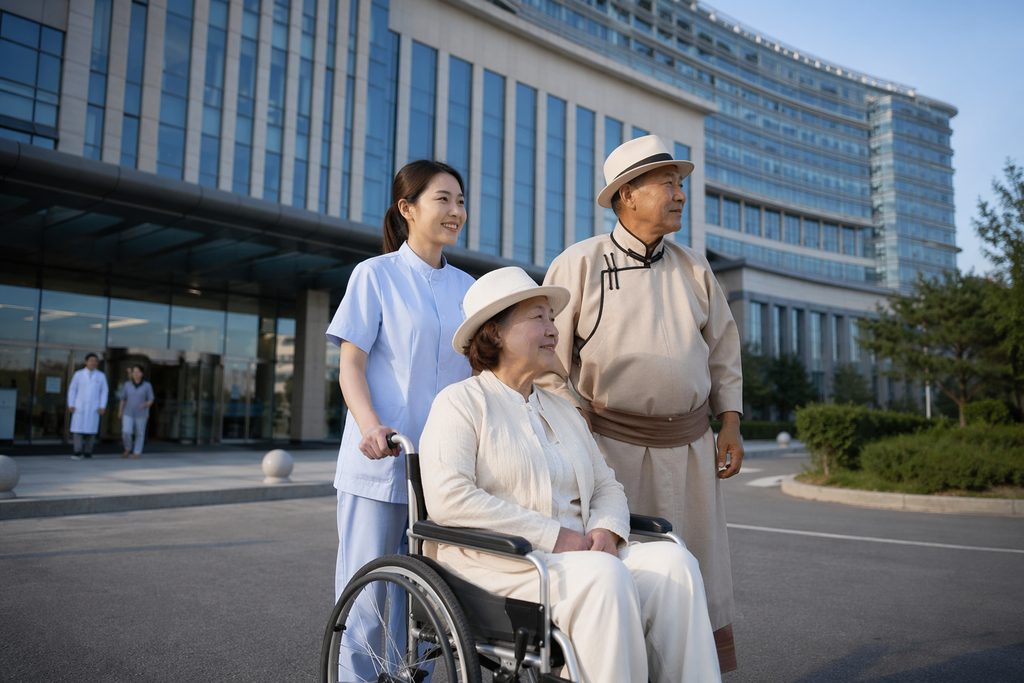
Key Takeaways
- Complex surgery in China often costs one-fifth to one-tenth of U.S. prices — a heart bypass runs roughly $12,000–20,000 at a top public hospital versus $120,000+ in America.
- China’s 340+ top-ranked hospitals sit in the top 5% of more than 35,000 nationwide, and 23 cities host the Fudan Top 100.
- Public hospital outpatient slots usually cannot be reserved from abroad in advance — surgery follows an in-person consultation, which is the single biggest planning hurdle.
- Mongolian citizens traveling for care generally use the S2 visa (private affairs/medical treatment), not the M visa, and approval always depends on current embassy rules.
When 47-year-old Batbayar from Ulaanbaatar learned he needed spinal surgery, one question dominated every family conversation: where could he get it done well, and at what price? His cousin had already traveled to Beijing for gallbladder surgery and returned with a bill that was a fraction of what clinics in Seoul had quoted. That experience is not unusual. For Mongolian patients, China is close, comparatively affordable, and home to some of the highest-volume hospitals on earth.
This guide walks through what medical tourism in China cost actually looks like, which hospitals Mongolian patients most often consider, and the practical steps — visa, records, consultation, payment — that turn a vague plan into a real trip.
The Problem: Distance, Cost, and a System That Isn’t Built for Foreigners
Mongolia has roughly 3.4 million people and a limited number of tertiary-care centers. For advanced cardiac surgery, complex oncology, or certain orthopedic procedures, patients are frequently referred abroad. The two default destinations have long been South Korea and, for those who can afford it, Japan or Germany.
Cost is the wall. A cardiac bypass in the United States easily exceeds $120,000. Even in South Korea, which is relatively affordable by developed-country standards, major surgery plus travel and lodging can run $30,000–60,000 or more depending on the case. For a family earning an average Mongolian salary, that number is simply out of reach.
Then there’s the language problem. China’s flagship hospitals handle enormous daily patient volumes — some see more than 10,000 outpatient visits a day. Signage, forms, and most staff operate in Chinese. A Mongolian patient who speaks neither Chinese nor English fluently faces a system that moves fast and explains little. That gap, more than anything, is what stops people from even trying.
Why China Delivers Results for Mongolian Patients
The case rests on three structural facts, not marketing.
Clinical volume that most countries cannot match
Fuwai Hospital in Beijing performs more than 14,000 cardiac surgeries a year — the highest volume of any heart center globally. High volume matters because surgical teams that operate constantly tend to refine technique and manage complications faster. China’s national hospital count exceeds 35,000, and the Fudan rankings place only the top tier into the A++++ to A bands. That concentration means the best institutions are genuinely elite, even if the average hospital is not.
Technology and efficiency at scale
Top Chinese hospitals run modern imaging suites, robotic surgery platforms, and dedicated international departments. The difference from Western systems is operational: because patient throughput is so high, scheduling can move quickly once you are inside the system. The catch is getting inside it — which is exactly where advance coordination matters.
Cost advantage without a quality trade-off
Lower prices come from labor economics, hospital efficiency, and sheer case volume — not from cutting corners on implants or technique. The same titanium hardware, the same imaging, the same anesthesia standards. A private international hospital in Shanghai charges more than a public tertiary hospital, but both remain well below Western rates.
| Procedure | Typical China range (USD) | U.S. benchmark |
|---|---|---|
| Coronary artery bypass | $12,000–20,000 | $120,000+ |
| Spinal fusion | $10,000–18,000 | $80,000–150,000 |
| Knee replacement (single) | $8,000–15,000 | $35,000–70,000 |
| Comprehensive health screening | $500–2,500 | $2,000–8,000 |
Figures vary by hospital and case complexity. Private international hospitals typically cost more than public tertiary hospitals.
Which Hospitals Mongolian Patients Actually Consider
Geography matters. Beijing is the closest major medical hub to Ulaanbaatar — a short flight — and it holds 21 of the Fudan Top 100 hospitals, more than any other city. Shanghai follows with 18, and Guangzhou with 10.
For cardiac cases, Fuwai Hospital is the reference point. For complex internal medicine and rare disease, Peking Union Medical College Hospital carries the strongest reputation. West China Hospital in Chengdu and Ruijin Hospital in Shanghai appear repeatedly across specialty rankings. Oncology patients often look at the Fudan specialty reputation list, where individual departments are ranked among China’s top 10 — a more useful signal than any overall “number one” claim, since China’s comprehensive ranking uses tiers rather than numbered positions.
You can browse the full city-by-city breakdown on our Fudan Top 100 hospital directory, or filter by condition through the 45 specialty rankings. For patients who prefer English-speaking staff, JCI accreditation, and direct insurance billing, the private international hospital list is the better starting point.
Is Treatment in China Safe for Foreigners? What the Evidence Shows
This is the question families ask most, and it deserves a direct answer. China’s leading hospitals meet international standards for sterilization, blood management, and post-operative care. Many hold JCI accreditation, the same certification used by hospitals in the U.S. and Europe.
Safety, though, is not only about the operating room. It’s about communication. If a patient cannot describe a symptom or understand a discharge instruction, risk rises regardless of surgical skill. That’s why bilingual support is not a luxury in this context — it’s a safety measure.
Two honest caveats. First, public hospitals require prepayment, with insurance reimbursement handled afterward; private international hospitals often bill insurers directly. Second, not every hospital is equal. A provincial facility and a Fudan A++++ center operate at very different levels. Choosing well is the single most important safety decision a patient makes.
How to Book Medical Treatment in China: A Step-by-Step Timeline
Here is how the process actually unfolds, with realistic time markers.
- Days 1–7: Gather existing records — imaging discs, pathology reports, lab results, medication lists. Send them for a written second opinion or video consultation with the relevant Chinese specialty.
- Days 7–21: The specialty reviews the file and returns analysis plus treatment direction. This is where a plan becomes concrete: is surgery appropriate, and at which type of hospital?
- Days 21–35: Apply for the S2 visa with supporting hospital documents. Processing time varies by consulate, so confirm current requirements directly.
- Arrival week: In-person consultation at the hospital. For public hospitals, this step is mandatory before surgery can be scheduled.
- Post-consultation: Admission, pre-operative testing, and surgery. International departments can often compress this timeline; standard channels move at the hospital’s pace.
One rule trips up almost everyone: ordinary public hospital outpatient appointments generally cannot be locked in from overseas. You register on the day. If you need a confirmed surgical date in advance, the international or VIP channel is the realistic route — it costs roughly 1.5 to 2 times the standard fee but provides senior specialists and English-language service.
The Visa Question: China Medical Visa for Mongolians
Mongolian citizens traveling for medical treatment typically apply for the S2 visa, which covers short-stay private affairs including medical care. Stays beyond 180 days fall under S1. Accompanying family members apply for S2 as well.
Be careful here: the M visa is strictly for commercial and trade activity. It has nothing to do with medical treatment, and using it for that purpose creates problems at the border.
Requirements shift, so verify with the Chinese embassy or consulate in Ulaanbaatar before submitting. Expect to provide a hospital invitation or appointment confirmation, proof of funds, and travel documents. No service can guarantee approval — the decision rests entirely with the consulate.
Practical Considerations for Mongolian Patients
Language. Mongolian and Chinese share no mutual intelligibility, and English proficiency among hospital staff varies. Plan for interpretation from day one.
Payment. Public hospitals require upfront payment; international cards work at major institutions, but confirm limits with your bank before traveling. Private hospitals frequently settle directly with international insurers.
Records. Bring physical copies and digital files. Chinese specialists want original imaging, not summaries.
Follow-up. Arrange a written post-operative plan in a language you read before discharge. Remote follow-up consultations are increasingly available.
Accommodation. Beijing’s hospital districts have affordable lodging near major centers; booking near the hospital reduces daily travel burden significantly.
Frequently Asked Questions
For major procedures, Beijing’s top public hospitals typically land 60–80% below South Korean private rates and 80–90% below U.S. rates. A coronary bypass, for example, runs roughly $12,000–20,000. Final pricing depends on hospital tier, implant choice, and case complexity.
Generally no, through standard public channels. Surgery follows an in-person consultation. International departments can sometimes arrange faster scheduling, but no one can guarantee a named surgeon or fixed date. Be skeptical of any service that promises otherwise.
Request a complete written discharge summary and imaging before leaving China, and ask whether remote follow-up is available. Many top hospitals now offer video follow-up. For emergencies, local Mongolian providers can act on the Chinese records, though coordination is easier if the documents are translated.
Mongolian patients typically use the S2 visa with hospital supporting documents. Processing times vary by consulate — check current requirements in Ulaanbaatar. The M visa is not applicable to medical travel.
Your Next Step
The core message is simple: China offers world-class surgical capacity at a fraction of Western cost, but the system rewards preparation. Mongolian patients who gather records early, clarify the visa category, and understand the consultation-first rule navigate it far more smoothly than those who arrive hoping to sort things out on the ground.
Our team at China Medical Services helps international patients match with appropriate hospitals, coordinate appointments, and arrange bilingual medical companions. We are not a hospital and we do not provide diagnoses or treatment — we handle the logistics so you can focus on recovery. If you’d like an honest assessment of your options, start with a free consultation through our patient support page.
This article is for general information only and does not constitute medical advice. Treatment decisions should always be made with a qualified physician who has reviewed your individual case.
For more medical information and treatment options in China, visit chinamedservices.com (China Medical Services).
