Getting Around China: A Practical Guide for Medical Travelers
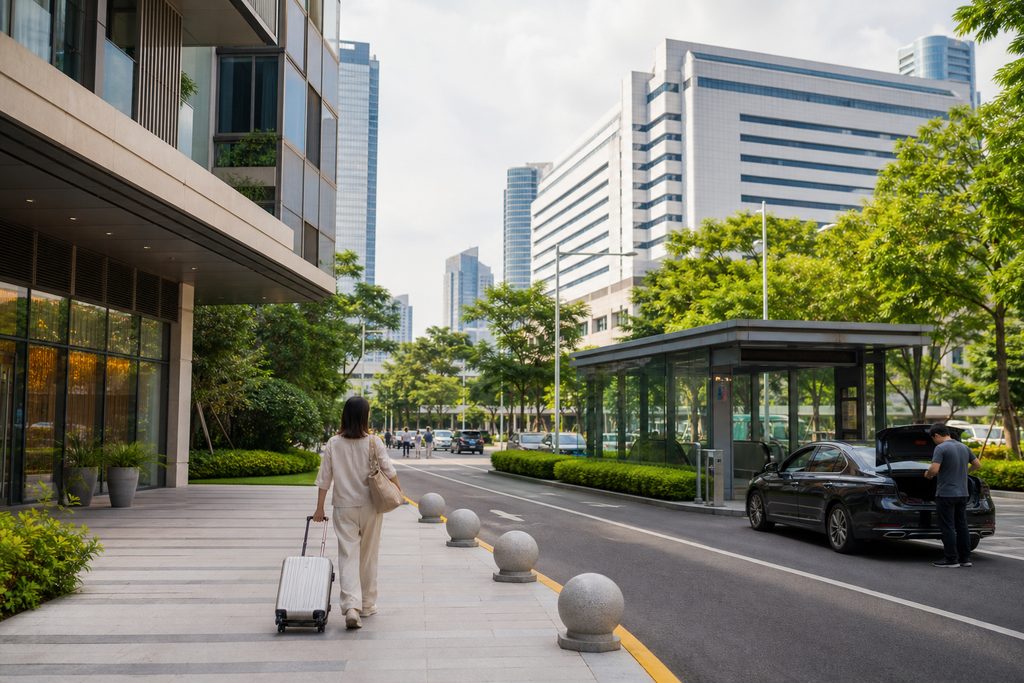
Getting Around China: A Practical Guide for Medical Travelers
You’ve probably heard that medical tourism in China cost savings come with a catch — that you’ll be lost in a system designed for locals, unable to communicate, unable to navigate, and unable to get where you need to go. The reality is more nuanced than that. China’s top hospitals are genuinely world-class, and the savings are real. But nobody hands you a roadmap when you land. This guide is that roadmap.
We’re China Medical Services, and our team has spent years helping international patients move through Chinese hospitals, cities, and bureaucracies. What follows is what we’ve learned about getting around — not just physically, but logistically, linguistically, and medically.
How This Actually Works, Step by Step
Here’s the real sequence, stripped of marketing gloss.
Step one: You gather your existing medical records — imaging, lab results, pathology reports, discharge summaries — and send them to a coordinating service or directly to a hospital’s international department. Everything needs translation into Chinese, and that takes time.
Step two: A Chinese specialist reviews your file. This is a written second opinion, typically returned within three to seven business days. You’ll get an assessment, treatment suggestions, and a sense of whether traveling to China makes medical sense for your case.
Step three: If the answer is yes, you move to a video consultation. You speak directly with the specialty team, ask questions, and hear their recommendations. This is where you decide whether to proceed.
Step four: Visa and logistics. You’ll need an S2 visa for short-term medical treatment, or an S1 if your stay exceeds 180 days. Family members accompanying you apply for S2 as well. Processing typically runs four to ten business days at most Chinese consulates, though this varies by country.
Step five: Arrival and the hospital visit itself. At most public hospitals, you cannot book an ordinary outpatient slot from overseas in advance. You register on the day, queue, and see the doctor. Surgery can only be scheduled after an in-person consultation. The exception is the international or VIP department, where advance scheduling is possible — at roughly 1.5 to 2 times the standard fee.
Step six: Treatment, recovery, and follow-up. This is where a bilingual companion becomes genuinely useful, because a hospital that sees 10,000 outpatients a day does not slow down for someone who doesn’t speak Mandarin.
Navigating Cities and Hospitals Once You Arrive
Foreign patients traveling to China for treatment typically use the S2 visa, which covers short-term medical treatment and private affairs. Stays exceeding 180 days require an S1. Accompanying family members also apply for S2. Applications are submitted at a Chinese embassy or consulate with supporting documents, including an invitation or documentation from the treating hospital. Requirements vary by country and can change — always confirm with the consulate handling your application. The M visa is for commercial and trade activities and is not the appropriate category for medical treatment.
Not at most public hospitals. The standard rule is that surgery is scheduled only after an in-person consultation. International or VIP departments may allow earlier coordination, but even then, the final decision follows the examination. This is why we encourage patients to start with a remote evaluation — it clarifies whether traveling is worthwhile before you book flights.
Plan for flights, hotel, meals, local transport, translation, and companion services. Bilingual medical companion support starts from $300 per day. Airport transfers run about $200 round-trip. Add a contingency buffer of 20 to 30 percent for extended stays or additional testing. Final costs always vary by hospital and case complexity.
You’ll manage at international departments and private hospitals, where English-speaking staff are common. Elsewhere, you’ll struggle. Registration, payment, pharmacy pickup, and ward communication all happen in Chinese. This isn’t a reason to avoid China — it’s a reason to arrange language support in advance.
Your Next Step
Getting around China for medical treatment is manageable, but it isn’t self-service. The system rewards preparation and punishes improvisation. Start with your records, get a real medical opinion before you book anything, and be honest with yourself about how much logistical support you’ll need.
Our team at China Medical Services connects international patients with 340+ top-ranked hospitals across 37 cities. We coordinate written second opinions, video consultations, appointment scheduling through official hospital channels, and bilingual accompaniment. We don’t provide medical care, we don’t promise outcomes, and we don’t sell shortcuts. If you’d like to talk through your situation, a free consultation is the place to start — no pressure, no obligation.
Frequently Asked Questions
Yes. The hospitals used for international patients are JCI-accredited and follow the same international safety standards as top hospitals in the US and Europe. Surgical teams perform high volumes of procedures — often more than their Western counterparts — which studies show leads to better outcomes.
Costs vary by procedure and hospital, but international patients typically save 40-80% compared to US prices — even when factoring in travel and accommodation. A consultation with our team will give you an exact, all-inclusive quote with no hidden fees.
Send us your existing medical reports to get started. We handle everything from hospital selection and appointment scheduling to visa assistance and post-operative recovery planning. Your medical records are reviewed by the specialist before you even book a flight.
For more medical information and treatment options in China, visit chinamedservices.com (China Medical Services).
