Cochlear Implant Surgery in China: How to Arrange It Step by Step
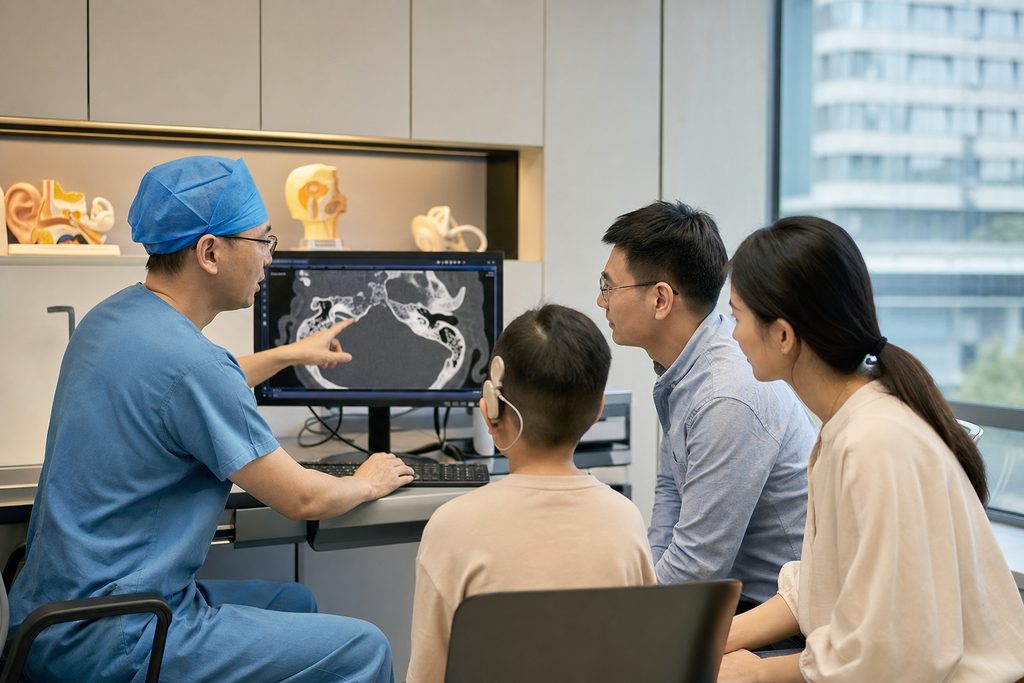
You have probably heard that arranging surgery in China means gambling on quality, navigating a system that was never built for foreigners, and hoping the language barrier does not swallow you whole. For cochlear implant surgery, that fear gets sharper. This is not a knee operation you can postpone. A child with profound hearing loss has a developmental window, and adults who lose hearing suddenly face isolation that compounds by the month. So the real question is not whether China can do the procedure. It is whether you can get to the right operating room without wasting a year.
Here is the honest answer up front: China’s top-tier hospitals perform cochlear implantation at high volume, with outcomes that track international benchmarks, and the cochlear implant surgery cost China patients pay is often one-third to one-half of what the same device and procedure runs in the United States. The hard part is not the surgery. It is the logistics — appointment rules, visa category, device selection, and post-activation rehabilitation. This guide walks through all of it.
How This Actually Works, Step by Step
Start with what you have in hand. You need recent audiometry, ABR results if the patient is a child, CT or MRI of the temporal bone, and any speech-language evaluation reports. If those exist in English, the first task is certified translation into Chinese. Hospitals will not schedule a surgical evaluation without readable imaging and audiology data.
Then the sequence runs like this:
- Send records for review. A written second opinion from a Chinese otolaryngology department takes roughly 5 to 10 business days once translated files arrive. You get back an assessment of candidacy, device options, and whether the case is straightforward or complex.
- Video consultation. The surgical team explains what they see, answers your questions about unilateral versus bilateral implantation, and tells you what additional testing is needed on arrival.
- Appointment coordination. This is where most foreign patients get stuck. Public hospital general clinics in China do not accept advance overseas bookings. You queue on the day. Surgical scheduling only follows an in-person consultation. To lock a date before you fly, you go through the hospital’s international or VIP channel.
- Arrival and in-person evaluation. Expect repeat audiometry, imaging if yours is outdated, and a pre-anesthetic workup. Two to four days, typically.
- Surgery and activation. The implant goes in, then a healing period, then the external processor is fitted and switched on. Activation is not the finish line — it is the starting gun for rehabilitation.
Notice what is missing from that list: a single phone call that solves everything. Coordination is the actual work.
What Cochlear Implant Surgery Cost in China Really Looks Like
Not through standard public hospital channels. General outpatient registration in China happens on the day, and surgery is scheduled only after an in-person consultation. Pre-arrival scheduling is possible through a hospital’s international or VIP department, which is why coordination matters. A written second opinion and video consultation first lets you confirm candidacy and a feasible plan before committing to travel — our consultation service starts there.
Depends entirely on what is inside the package. A legitimate arrangement covers records translation, hospital coordination through official international channels, interpretation during appointments, and honest disclosure of what cannot be guaranteed. Be skeptical of anything promising a specific surgeon on a specific date, guaranteed admission, or a fixed all-in price before your records have been reviewed.
It happens, and it is better to learn it remotely than after a 14-hour flight. Non-candidacy usually reflects cochlear anatomy, nerve status, or expected benefit being too low relative to risk. In those cases the team will discuss alternatives — different device configurations, hearing aids, or auditory brainstem approaches where appropriate. Get that conversation on record before making travel decisions.
Your Next Step
The gap between “China does this well” and “I have a surgery date” is closed by records, translation, an honest remote evaluation, and coordination through official hospital channels. Nothing about that is mysterious once it is laid out — it is simply work that is hard to do from another continent.
We are China Medical Services. Our team connects international patients with 340+ top-ranked hospitals across 37 cities, handles records translation and appointment coordination through hospital international departments, and provides bilingual medical companions on the ground. We are not doctors, and we do not promise admission, specific surgeons, or clinical outcomes. We handle the logistics so your energy goes toward recovery.
If you are weighing cochlear implantation in China, start with a written second opinion. It costs far less than a flight, and it tells you whether the trip is worth making.
Frequently Asked Questions
Yes. The hospitals used for international patients are JCI-accredited and follow the same international safety standards as top hospitals in the US and Europe. Surgical teams perform high volumes of procedures — often more than their Western counterparts — which studies show leads to better outcomes.
Costs vary by procedure and hospital, but international patients typically save 40-80% compared to US prices — even when factoring in travel and accommodation. A consultation with our team will give you an exact, all-inclusive quote with no hidden fees.
Send us your existing medical reports to get started. We handle everything from hospital selection and appointment scheduling to visa assistance and post-operative recovery planning. Your medical records are reviewed by the specialist before you even book a flight.
For more medical information and treatment options in China, visit chinamedservices.com (China Medical Services).
