Fertility Surgery in China: What to Expect, Start to Finish
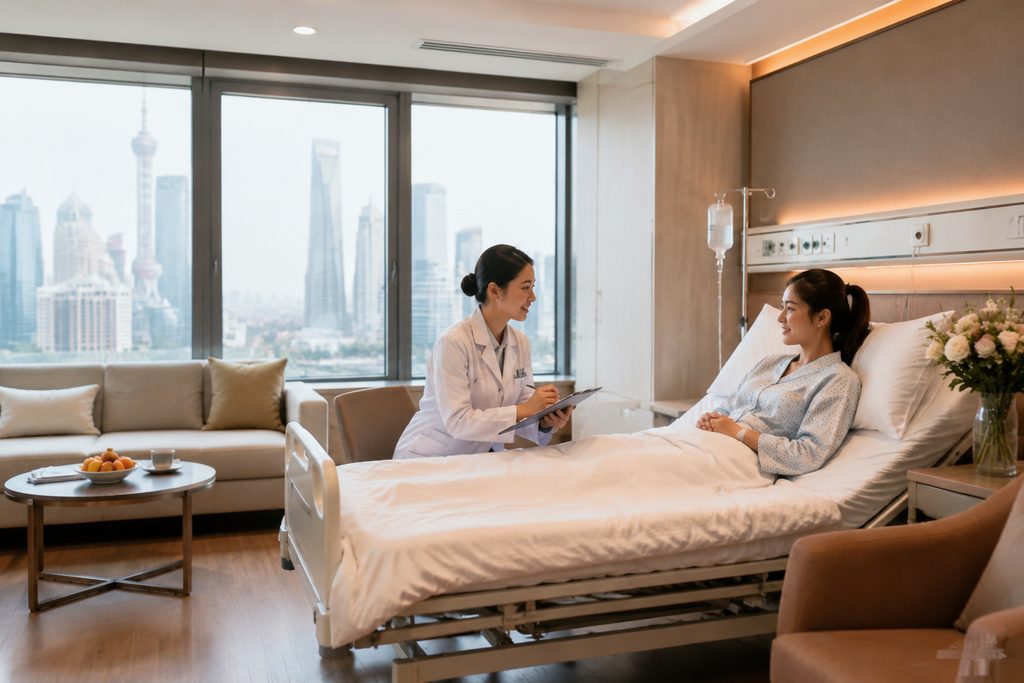
Fertility Surgery in China: What to Expect
When 38-year-old Sarah from Melbourne started looking into fertility surgery in China, she had three tabs open and no clear plan. One page quoted a price with no hospital name. Another described a “guaranteed” IVF package that sounded nothing like the clinics she knew at home. She closed her laptop and did nothing for four months. That delay is the most common outcome we see — not a bad decision, just no decision, because the information online is either vague or too good to be true. This guide is the version we wish she had found first: what actually happens, in what order, at what cost, and where the real risks sit.
How This Actually Works, Step by Step
Fertility care in China runs on a different rhythm than in the US, UK, or Australia. Understanding the sequence matters more than comparing brochures.
Start with your existing records. Whoever you work with will need your AMH, FSH, estradiol, ultrasound findings, semen analysis if applicable, prior cycle history, and any HSG or hysteroscopy reports. Send them as PDFs. If they are in English, a Chinese specialty team can usually work from them directly; if translation is needed, that is handled before review, not after.
A Chinese reproductive medicine specialist then reviews the file and returns a written opinion. This is not a sales document. It should say whether your case is a candidate for surgery, medication, IVF, or none of the above — and why. For many patients, the honest answer is that surgery is not the right first move. That answer is worth paying for.
If surgery is on the table, the next step is a video consultation. You speak with the team, ask your questions, and hear their reasoning. Only after that does anyone talk about dates.
Here is the part that surprises Western patients most: public hospitals in China do not let you book a specialist outpatient appointment from overseas in advance. You register on the day, in person, and surgery can only be scheduled after that face-to-face consultation. The way around this for international patients is the hospital’s international or VIP department, which offers English-speaking staff and a reserved channel — typically at 1.5 to 2 times the standard fee. Private international hospitals work differently and can often be booked ahead.
What Fertility Surgery in China Usually Involves
Hysteroscopy usually means one to three days in hospital and a week of light activity. Laparoscopy typically needs three to seven days inpatient and two to three weeks before most surgeons clear you for a long-haul flight. Your surgeon’s clearance, not your calendar, decides.
Realistically, in stages. Send records, get a written opinion, hold a video consultation, then travel for the in-person appointment that precedes any surgical booking. Public hospitals will not schedule surgery before that face-to-face step. Private international hospitals are more flexible.
At high-volume public hospitals and JCI-accredited private hospitals, outcomes for routine fertility surgery are broadly in line with Western standards. The bigger risks for international patients are communication, continuity of follow-up, and choosing a hospital that rarely performs your specific procedure.
There is no single answer. Reproductive medicine rankings, procedure volume, and whether the hospital has an international department all matter, and the right fit depends on your diagnosis. A written second opinion is the fastest way to narrow the list before you commit to travel.
Your Next Step
The core message is simple: fertility surgery in China can be excellent value and clinically sound, but only when the sequence is respected — records first, opinion second, travel last. As China Medical Services, we maintain a database of 340+ top-ranked hospitals across 37 cities, and we coordinate written second opinions, video consultations, hospital appointments, and bilingual accompaniment. We are not doctors, and we do not promise admission, a specific surgeon, or any clinical outcome. If you would like an honest read on whether your case is a fit, start with a free consultation — no pressure, and no obligation to travel.
Frequently Asked Questions
Yes. The hospitals used for international patients are JCI-accredited and follow the same international safety standards as top hospitals in the US and Europe. Surgical teams perform high volumes of procedures — often more than their Western counterparts — which studies show leads to better outcomes.
Costs vary by procedure and hospital, but international patients typically save 40-80% compared to US prices — even when factoring in travel and accommodation. A consultation with our team will give you an exact, all-inclusive quote with no hidden fees.
Send us your existing medical reports to get started. We handle everything from hospital selection and appointment scheduling to visa assistance and post-operative recovery planning. Your medical records are reviewed by the specialist before you even book a flight.
For more medical information and treatment options in China, visit chinamedservices.com (China Medical Services).
