Medical Tourism in China: What to Pack for a Smooth Trip
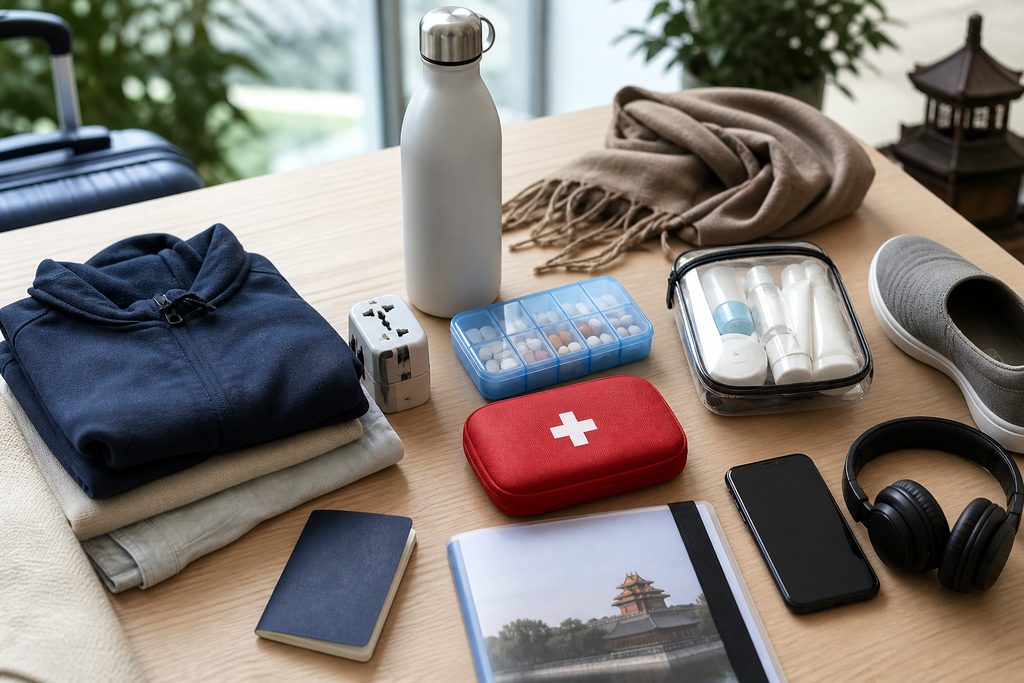
What if the hardest part of your medical journey to China wasn’t the surgery — but the moment you realize you forgot something critical at home? Every week, our team watches international patients arrive in Beijing or Shanghai with a suitcase full of clothes and a folder missing the one document that could delay their entire treatment plan. Packing for medical travel isn’t like packing for a holiday. It’s closer to preparing for a move: you need paperwork, medication, comfort items, and a plan for the weeks after treatment, all compressed into two bags.
This guide covers exactly what to bring for treatment in China, based on the real patterns we see across the 340+ top-ranked hospitals in our network, spanning 37 cities. Nothing here is theoretical. It’s the checklist our coordinators walk through with patients before every trip.
How This Actually Works, Step by Step
Before you pack anything, understand the sequence. Most patients get this backwards and book flights before they have a confirmed appointment — which creates problems later.
Step one: you send your existing examination reports, imaging files, and lab results to a hospital’s international department for review. Step two: the relevant Chinese specialty reviews those records and returns a written second opinion with treatment suggestions. Step three: if a plan looks feasible, you move to a video consultation, where you speak directly with the medical team about symptoms, goals, and realistic expectations. Step four: only after that do you confirm travel dates, apply for your visa, and start packing.
That order matters. Packing is the last step, not the first. The documents you carry are the same ones you already sent digitally — but hospitals in China will ask for physical or certified copies at admission, and that’s where people get caught out.
Documents and Paperwork: The Non-Negotiables
This is the section people underestimate. A china hospital admission packing list starts with paper, not clothes.
Bring your passport with at least six months of validity, plus two photocopies. Bring your visa — for medical treatment, that’s the S2 category, which covers short-stay visits for medical treatment and private affairs, subject to the latest embassy or consulate requirements and supporting hospital documents. If your stay exceeds 180 days, the S1 applies. Accompanying family members typically apply under the same S2 category. Note that the M visa is for commercial and trade activities only — it has nothing to do with medical treatment, and using it for that purpose creates real problems at entry.
Your document folder should also contain:
- Printed copies of all medical records, translated into English or Chinese where possible
- Recent imaging on CD or USB, plus the written radiology reports
- A medication list with generic drug names, dosages, and your prescribing doctor’s contact
- Insurance policy documents, including the emergency assistance hotline
- Hospital appointment confirmation or invitation letter from the international department
- Payment method — a card that works internationally, plus some cash in RMB
One more thing. If you’re traveling with a companion, give them a copy of everything. If you’re sedated or recovering, they become your memory.
A Realistic Timeline
Here’s how the process typically unfolds. Timelines vary by hospital, specialty, and how quickly your records are translated.
| Stage | Typical Duration | What Happens |
|---|---|---|
| Record submission and review | 3–10 days | You send reports; the specialty team reviews and responds |
| Written second opinion | 5–14 days | Formal written analysis and treatment direction returned |
| Video consultation | Scheduled within 1–2 weeks | Direct discussion with the medical team |
| Appointment coordination | 1–3 weeks | Registration, medical card creation, scheduling |
| Visa application (S2) | 4–10 business days | Depends on consulate and document completeness |
| Travel and arrival | 1–2 days | Flights, airport transfer, hotel check-in |
| In-person consultation | Day 1–3 after arrival | Face-to-face exam; surgery scheduled only after this |
| Treatment and recovery | Varies widely | Depends entirely on procedure and individual healing |
Notice the waiting steps people forget: document translation, appointment lead time, and visa processing. Each adds days. Build in buffer.
What Can Go Wrong — and What Happens Then
Honesty matters more than reassurance here.
The most common failure: arriving without translated records. Chinese hospitals work in Chinese, and while international departments have English-speaking staff, your clinical documents need to be readable by the treating team. Without translation, you may face delays of several days while someone does it locally — at your cost.
Second: medication problems. If you take controlled substances, check China’s import rules before you fly. Some common Western medications are restricted. Bring only what you need for the trip, in original packaging, with the prescription. Do not pack medication in checked luggage.
Third: assuming you can book surgery remotely. You can’t. Public hospitals in China require an in-person consultation before scheduling a procedure — this is standard policy, not a bureaucratic quirk. If you need to lock in a specialist and a date in advance, that’s what hospital international or VIP channels are for, and they typically cost 1.5 to 2 times the standard rate.
If something goes wrong — a missing document, a delayed appointment — the recourse is usually straightforward: your hospital’s international department or your coordination service can help resolve it. That’s a big part of why patients use a bilingual companion in the first place.
Clothing, Comfort, and Recovery Items
Now the practical packing. What you wear and carry matters more than you’d think.
Pack loose, front-opening clothing. After many procedures, pulling a shirt over your head is painful or impossible. Button-down shirts, zip-front jackets, and elastic-waist pants are your friends. Bring slip-on shoes — you’ll be walking hospital corridors, and bending to tie laces isn’t fun post-surgery.
For a longer stay, consider:
- Two to three changes of comfortable daywear
- Warm layers — hospital air conditioning can be aggressive, and Chinese winters bite
- A light blanket or shawl for waiting rooms
- Entertainment: books, a tablet, headphones, a long charging cable
- Toiletries you trust — familiar brands reduce stress
- A small notebook for questions and doctor’s instructions
Don’t overpack. You can buy almost anything in China’s major cities, often cheaper than at home. What you can’t easily replace is your specific medication, your documents, and your comfort items.
Practical Considerations: Money, Language, and Payment
Usually yes, in original packaging with your prescription, for personal use during the trip. But some controlled substances are restricted in China. Check the current rules with the Chinese embassy or consulate before you fly, and never pack medication in checked baggage.
It happens. Surgeons sometimes need additional tests or find something unexpected during the in-person exam. The hospital will explain the reason and reschedule. This is one reason we recommend flexible return flights.
Enough for small daily expenses — meals, transport, incidentals. Major hospital payments are usually handled by card or bank transfer. Carry a modest amount in RMB and rely on cards for the rest.
For most international patients, yes. The language and logistics barrier in large Chinese hospitals is real. A companion handles the friction — registration, queues, payment, translation — so you and your family can focus on treatment and recovery.
Your Next Step
Packing for medical travel to China comes down to three things: documents, medication, and comfort. Get those right, and everything else is manageable.
Our team at China Medical Services connects international patients with top-ranked Chinese hospitals, coordinates appointments, and provides bilingual support from first inquiry to recovery. We don’t promise specific outcomes or guaranteed admission — hospitals make those decisions. What we do is remove the logistical friction so you can make informed choices.
When you’re ready, start with a free consultation. No pressure, no obligation — just a conversation about your situation and whether China is the right fit.
Frequently Asked Questions
Yes. The hospitals used for international patients are JCI-accredited and follow the same international safety standards as top hospitals in the US and Europe. Surgical teams perform high volumes of procedures — often more than their Western counterparts — which studies show leads to better outcomes.
Costs vary by procedure and hospital, but international patients typically save 40-80% compared to US prices — even when factoring in travel and accommodation. A consultation with our team will give you an exact, all-inclusive quote with no hidden fees.
Send us your existing medical reports to get started. We handle everything from hospital selection and appointment scheduling to visa assistance and post-operative recovery planning. Your medical records are reviewed by the specialist before you even book a flight.
For more medical information and treatment options in China, visit chinamedservices.com (China Medical Services).
