China Prescription and Medication Rules: What Foreigners Must Know Before Traveling
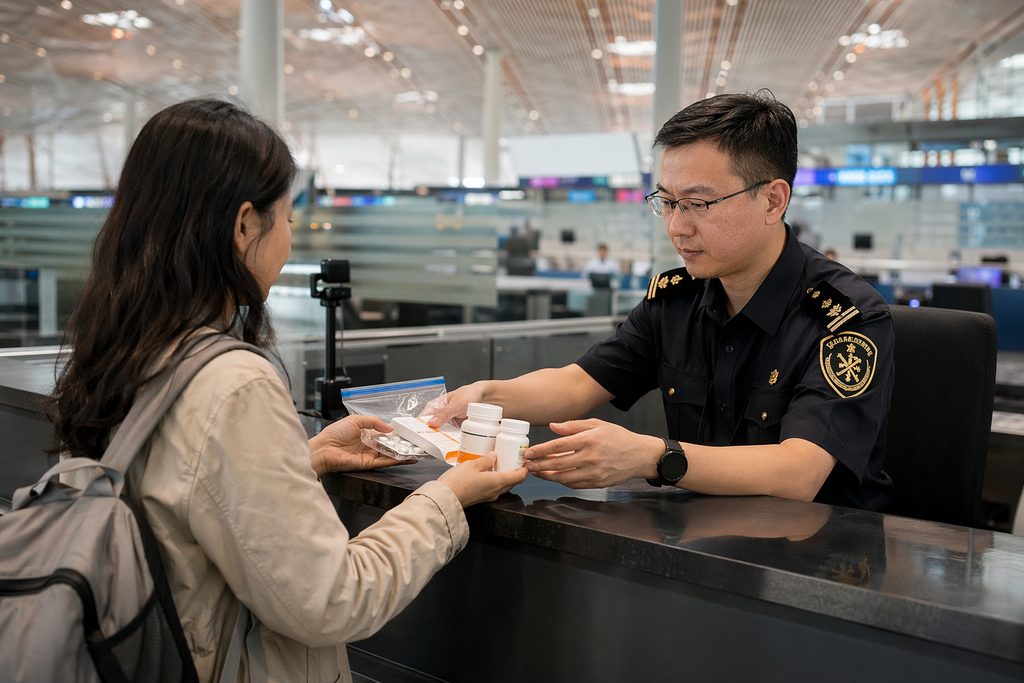
China Prescription and Medication Rules: A Practical Guide for Foreign Patients and Travelers
Key Takeaways
- China’s State Council regulations cap personal medication imports at a 3-month supply for most prescription drugs, with stricter limits on controlled substances.
- Hospital pharmacies in China’s 340+ top-ranked hospitals operate differently from Western retail pharmacies—many medications require an in-person consultation before dispensing.
- Prescription drug costs in China run 40-70% below US prices for common medications, but insurance reimbursement for foreigners is rare without a local policy.
- Bringing medication into China requires original prescriptions, a doctor’s letter in English, and—for psychotropics or narcotics—pre-approval from Chinese customs.
- Understanding prescription medication rules for foreigners in China before you pack can prevent confiscation, fines, or treatment interruptions.
The Problem: Medication Mismanagement Can Derail a Medical Trip
According to China’s National Immigration Administration, over 97 million foreigners entered China in 2024 for business, tourism, and medical purposes. A significant portion carried personal medications. Yet customs data from Beijing Capital International Airport shows that medication-related seizures rank among the top five reasons for secondary inspection of foreign travelers. The stakes are high. A traveler with diabetes who loses insulin access, or a cardiac patient whose beta-blockers are confiscated, faces a genuine medical emergency—not just an inconvenience.
The confusion starts before departure. Different countries have different rules about what counts as a controlled substance. Codeine, common in European and Middle Eastern cough syrups, is strictly regulated in China. Pseudoephedrine, found in many over-the-counter decongestants in the US and UK, sits on China’s precursor chemical watchlist. What is routine at home can be a customs violation in Beijing or Shanghai. And once you are inside China, the pharmacy system operates on a logic that surprises most Western visitors.
So what actually happens when a foreigner tries to fill a prescription in China? Can you bring your medication to China at all? Where can you buy medicine in Shanghai if you run out? These are the questions this guide answers—with specifics, not generalities.
Prescription Medication Rules for Foreigners in China: The Framework
The standard allowance for personal medication is a supply sufficient for the duration of your stay, capped at a 3-month supply for most prescription drugs. This comes from the General Administration of Customs’ Announcement No. 43 of 2016, which governs personal articles entering China. For antibiotics, antihypertensives, insulin, and most chronic disease medications, a 90-day supply is the practical ceiling.
But the rules tighten sharply for controlled substances. Narcotics and psychotropics—including codeine-containing products, benzodiazepines, amphetamines, and certain sleep aids—require a special permit issued by the National Medical Products Administration (NMPA) before you travel. The application process takes 2-4 weeks and requires your home country’s prescribing physician to submit documentation. Without this permit, even a 2-week supply of a controlled medication can be confiscated at the border.
Critical: Tramadol, a common painkiller in Europe and the Middle East, is classified as a psychotropic substance in China. Carrying it without an NMPA permit is a criminal offense, not a customs infraction. Check your medication’s active ingredient against China’s controlled substance list before booking a flight.
Documentation That Actually Works
Chinese customs officers look for three things when you declare medication: an original prescription from your home doctor, a letter explaining your diagnosis and treatment plan (in English or Chinese), and the medication in its original packaging with pharmacy labels intact. Photocopies are not accepted. The doctor’s letter should state your name, the medication name, dosage, frequency, and the total quantity you are carrying. Having this documentation in both English and Chinese speeds the process considerably.
How to Fill a Prescription in China as a Tourist
Here is the reality that surprises most visitors: China does not have a retail pharmacy system like CVS or Boots for prescription medications. Prescription drugs are dispensed almost exclusively through hospital pharmacies. You cannot walk into a neighborhood drugstore with a foreign prescription and walk out with the medication. The system is hospital-centric by design.
So how to fill a prescription in China as a tourist? The process works like this: you register at a hospital, see a doctor, receive a Chinese prescription, and fill it at that hospital’s pharmacy—all in the same visit. For foreigners, this means navigating registration desks, often without English support, and waiting in the same queues as local patients. A typical visit to a top-tier public hospital in Beijing or Shanghai takes 3-5 hours from registration to pharmacy pickup.
There is an alternative. Private international hospitals such as United Family, Jiahui, and Parkway operate in-house pharmacies that stock both imported and domestic medications. Their physicians are accustomed to seeing foreign patients and can prescribe based on your existing medication history. The trade-off is cost: consultation fees at these hospitals run $100-300, compared to $15-50 at a public hospital’s international department.
China Hospital Pharmacy Rules for International Patients
Hospital pharmacies in China operate under strict dispensing protocols that differ from Western practice in three key ways. First, prescriptions are valid only at the issuing hospital’s pharmacy. You cannot take a prescription from Ruijin Hospital in Shanghai and fill it at a pharmacy across town. Second, many hospitals require you to pay for the medication before the pharmacy dispenses it—there is no separate billing step at the counter. Third, hospital pharmacies typically dispense in standardized package sizes, not custom quantities. If the standard box contains 14 tablets and your doctor prescribed 10, you will likely receive the full box.
For international patients, the practical implication is that refills require a return visit to the prescribing hospital. Some hospitals now offer online follow-up consultations for existing patients, which can generate electronic prescriptions, but this service is generally unavailable to foreigners without a Chinese ID number and local payment platform.
Where Can You Buy Medicine in Shanghai
Shanghai, as China’s most international city, offers the broadest range of options for foreigners needing medication. The city has three tiers of access. Tier one is hospital pharmacies—the only legal source for prescription medications. Shanghai’s top hospitals, including Zhongshan Hospital and Huashan Hospital, have international departments with English-speaking staff who can guide you through the process.
Tier two is licensed retail pharmacies, called yaofang, which sell over-the-counter medications, traditional Chinese medicine products, and basic health supplies. Chains like Guoda and Huaxing are ubiquitous. These pharmacies cannot dispense prescription drugs, but they stock common OTC items—ibuprofen, antihistamines, bandages, cold remedies—and many have a licensed pharmacist on duty who can advise on minor ailments. English proficiency varies widely.
Tier three is the international hospital pharmacy. United Family’s Shanghai locations, Jiahui International Hospital, and ParkwayHealth all maintain pharmacies stocked with imported medications familiar to Western patients. If you need a specific brand of medication that is not available in China’s domestic supply chain, these are your best bet. Expect to pay a premium—imported medications here cost 2-3 times their home-country price.
Cost of Prescription Drugs in China for Foreigners
The cost of prescription drugs in China for foreigners is shaped by one central fact: China’s National Healthcare Security Administration negotiates drug prices centrally, and those negotiated prices apply to everyone—including foreigners paying out of pocket at public hospitals. This is why China’s medication costs are dramatically lower than US prices for many common drugs.
| Medication | China Public Hospital Price (USD) | US Average Price (USD) | Savings |
|---|---|---|---|
| Metformin 500mg, 30 tablets | $2-4 | $15-25 | 80-85% |
| Amlodipine 5mg, 30 tablets | $3-6 | $20-40 | 75-85% |
| Atorvastatin 20mg, 30 tablets | $8-15 | $40-80 | 70-80% |
| Insulin glargine (Lantus), 5 pens | $45-70 | $350-450 | 80-85% |
| Amoxicillin 500mg, 20 capsules | $4-8 | $15-30 | 65-75% |
These prices reflect public hospital pharmacy rates. Private international hospitals charge more—typically 30-50% above public hospital prices for the same domestic medications, and significantly more for imported brands. But even at private hospital pharmacies, most medications cost less than US retail prices.
One caveat: some newer specialty medications, particularly oncology drugs and biologics approved in the US or Europe within the last 2-3 years, may not yet be available in China. China’s drug approval process, while accelerating, still lags behind the FDA and EMA for certain therapies. Before planning a trip that depends on a specific medication, verify its availability in China through the NMPA’s drug database or by contacting a hospital pharmacy directly.
Can I Bring My Medication to China? A Pre-Travel Checklist
Yes, you can bring your medication to China—if you prepare correctly. The question is not whether it is allowed, but whether your specific medication and quantity will pass inspection. Here is the checklist that determines the outcome.
First, identify your medication’s classification in China. The NMPA maintains a public database of controlled substances. Common medications that trigger additional scrutiny include: codeine-containing cough syrups, tramadol, benzodiazepines (Xanax, Valium, Ativan), zolpidem (Ambien), and any amphetamine-based ADHD medication. If your medication falls into these categories, start the NMPA permit application at least one month before travel.
Second, prepare your documentation. The original prescription must show your name, the medication name, dosage, and quantity. A doctor’s letter should explain your diagnosis and why you need the medication. Translate both into Chinese—a certified translation is not required, but a professional translation helps. Keep everything in your carry-on luggage, not checked baggage.
Third, declare honestly. China’s customs declaration form asks about medications. If you are carrying a controlled substance, declaring it is mandatory. Failure to declare a controlled substance, even unintentionally, can result in confiscation, fines, or detention. The risk is not worth the gamble.
Practical tip: Take photos of all prescriptions and your doctor’s letter before departure. Store them in cloud storage accessible from China. If your physical documents are lost or confiscated, digital copies can help resolve the situation at a hospital or pharmacy.
Practical Considerations: Documentation, Payment, and Follow-Up
Beyond the medication itself, several practical factors shape the experience of managing prescriptions in China. Payment is the first hurdle. Public hospitals require prepayment—you load money onto a hospital card, and each service deducts from the balance. International credit cards are not accepted at most public hospital cashiers. You will need cash (Chinese yuan) or a Chinese payment platform like WeChat Pay or Alipay, which require a Chinese bank account or a foreign card linked through specific verification processes. Private international hospitals accept international credit cards directly.
Insurance is the second factor. Foreign health insurance rarely covers prescription medications purchased in China, because Chinese pharmacies do not operate within Western insurance networks. Some international insurance plans offer reimbursement for out-of-pocket medication costs, but you will need to pay upfront and submit claims yourself. Keep every receipt—hospital pharmacies provide itemized receipts that insurance companies generally accept.
Language is the third barrier. Public hospital pharmacies operate entirely in Chinese. The pharmacist will call your name in Chinese, the medication labels are in Chinese, and the dosage instructions are in Chinese. A bilingual medical companion—the kind of support offered by China Medical Services—handles these interactions, ensuring you receive the correct medication and understand the dosage. Without this support, miscommunication is common, and medication errors are a real risk.
Follow-up after returning home is the final consideration. If you start a new medication in China, bring the Chinese prescription and a translated summary back to your home doctor. Some Chinese medications are not available in Western countries, and your doctor needs to know what you have been taking. Conversely, if you need a refill of a medication you started at home, plan your supply carefully—China’s 3-month import limit means you cannot bring an indefinite supply, and refilling a foreign prescription in China requires a new Chinese prescription.
Frequently Asked Questions
Can I bring my medication to China if it is not available there?
Yes, for most medications. The 3-month personal use allowance covers drugs that are not marketed in China, as long as they are not controlled substances. You must carry the original prescription and a doctor’s letter. For controlled substances, the NMPA permit is required regardless of whether the drug is available in China.
What happens if my medication is confiscated at Chinese customs?
If you declared the medication and it is a controlled substance without the required permit, customs will confiscate it and you may face a fine. You will not be detained for a first offense involving small quantities intended for personal use, but the medication will not be returned. If you did not declare a controlled substance, the consequences are more serious—detention and potential criminal charges are possible. Always declare.
Can I get a prescription refilled at a Chinese hospital without seeing a doctor again?
No. Chinese regulations require a physician consultation for every prescription. Some hospitals allow existing patients to schedule online follow-up consultations that generate electronic prescriptions, but this service requires a Chinese ID number and local payment platform. Foreigners generally need an in-person visit for each refill.
Are Chinese pharmacies allowed to dispense antibiotics without a prescription?
Legally, no. China has tightened antibiotic dispensing rules in recent years, and antibiotics now require a prescription. In practice, enforcement varies, and some retail pharmacies may dispense antibiotics informally. We strongly advise against obtaining antibiotics without a proper medical consultation—incorrect antibiotic use is a global health risk and can complicate your treatment.
What should I do if I run out of medication in a city without an international hospital?
Go to the nearest public hospital’s international department or VIP clinic. Most top-ranked hospitals in China’s 37 major cities have some English-speaking staff. Bring your original prescription and a translated medication list. The hospital will register you, arrange a consultation, and dispense a local equivalent if your specific medication is unavailable. This process takes several hours, so plan ahead and do not wait until your last dose.
Your Next Step
Understanding prescription medication rules for foreigners in China is the difference between a smooth medical journey and a stressful one. The rules are navigable, but they require preparation—proper documentation, knowledge of controlled substance classifications, and a realistic plan for refills. Our team at China Medical Services helps international patients prepare for medical travel to China, from medication documentation review to hospital coordination. We are not a hospital and do not provide medical advice, but we can connect you with the right resources and support. If you are planning a medical trip to China and have questions about your medications, start with a free consultation.
Prepare your documents. Know your medication’s classification. Plan your refills. The rest follows.
For more medical information and treatment options in China, visit chinamedservices.com (China Medical Services).
