Rare Sarcoma in Shanghai: Who to See and How to Start
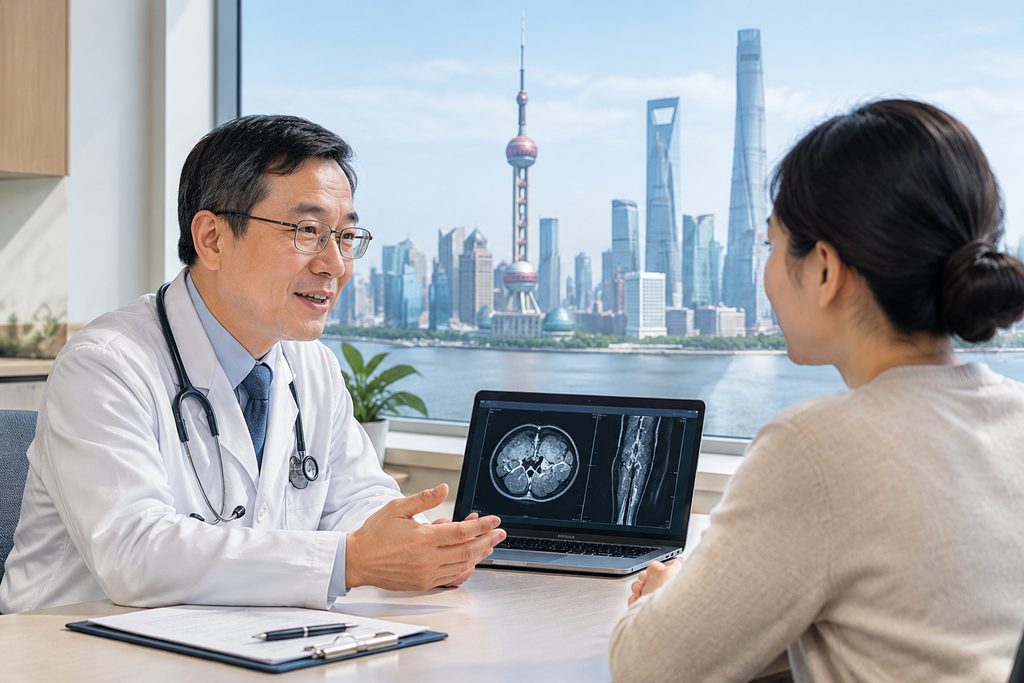
Rare Sarcoma in Shanghai: Who to See and How to Start
So you have a pathology report that says something like “undifferentiated pleomorphic sarcoma” or “epithelioid hemangioendothelioma,” and your oncologist at home has seen two cases in fifteen years. Where do you go next? For a growing number of international patients, the answer involves a rare sarcoma in Shanghai — specifically the sarcoma and soft-tissue tumor teams at a handful of high-volume academic hospitals that see these diagnoses weekly rather than yearly. The short answer is that Shanghai has genuine depth here, but the path in is not a simple online booking. It runs through a referral process that most foreign patients cannot navigate alone.
Here is the part that surprises people. You cannot email a Shanghai public hospital’s general outpatient department and reserve a sarcoma specialist appointment for next month. That is not how the system works. Understanding the real route saves weeks of frustration.
Rare Sarcoma in Shanghai: The Short Answer
The hospitals worth considering are concentrated in a small group of tertiary (Grade 3A) academic centers, several of which appear in the Fudan University Hospital Rankings — a national ranking system that places only the top 100 hospitals into tiers from A++++ down to A. Shanghai holds 18 of those top-100 hospitals, second only to Beijing. For sarcoma specifically, you want a hospital with a dedicated bone and soft-tissue tumor department, an orthopedic oncology or general surgery sarcoma unit, and an in-house multidisciplinary team that meets regularly.
The catch: sarcoma is rare by definition, and even large hospitals vary in how much of it they actually treat. Volume matters. A center that resects 200 soft-tissue sarcomas a year makes different decisions than one that sees 15. So the first real task is not picking a city — it is identifying which Shanghai departments genuinely carry sarcoma case volume, and confirming that through the hospital’s international office rather than a search result.
Who This Is Right For — and Who It Isn’t
Shanghai is not automatically the right move for every sarcoma patient. Be honest with yourself about which group you fall into.
Typically a reasonable fit:
- You have a confirmed or strongly suspected sarcoma diagnosis with imaging and a pathology report already in hand
- Surgery is on the table, and the tumor is in a location where margin control is technically demanding — retroperitoneal, pelvic, limb-salvage cases
- Your home team has offered amputation or a major functional sacrifice and you want a second surgical opinion before accepting it
- You are facing a rare subtype (chondrosarcoma, Ewing sarcoma, desmoid, angiosarcoma) where guideline-level evidence is thin
- Cost is a genuine constraint — sarcoma surgery in the U.S. can exceed $80,000 before reconstruction, and self-pay patients feel that immediately
Probably not the right move:
- You are undiagnosed and hoping a trip will produce a diagnosis. Get the biopsy and pathology done first, at home.
- You are in an acute crisis — uncontrolled bleeding, spinal cord compression, rapid deterioration. Go to the nearest emergency department. Do not book a flight.
- Your tumor is already resected with clear margins and your home team is following a standard surveillance protocol. There is little Shanghai adds at that stage.
- You cannot travel for medical reasons, or you have no one who can accompany you. Sarcoma treatment is a months-long commitment, not a single trip.
The Options, Compared
Most patients are choosing between staying home, going to another Western center, or coming to Shanghai. The comparison below reflects general patterns, not quotes for your case. Every figure varies by hospital and case complexity.
| Path | Typical access time | Indicative surgical cost (self-pay) | Language support | Best suited to |
|---|---|---|---|---|
| Home country public system | 3–12 weeks to see a sarcoma specialist | Covered, or long waitlist | Native | Patients with good insurance and tolerable timelines |
| U.S. / Western private sarcoma center | 1–3 weeks | $60,000–$150,000+ | Native | Those with comprehensive insurance or high budget |
| Shanghai public Grade 3A — standard channel | Requires in-person registration; surgery only after face-to-face consult | Roughly one-fifth to one-tenth of U.S. pricing for comparable procedures | Limited; bilingual help usually needed | Cost-sensitive patients willing to accept a queue-based system |
| Shanghai public Grade 3A — international / VIP channel | Coordinated in advance through the international department | Approximately 1.5–2× the standard channel | English-speaking staff | Patients who need scheduling certainty and language support |
| Shanghai private international hospital | Days to 2 weeks | Higher than public VIP; direct insurance billing common | Full English service | Those prioritizing comfort and insurer direct-billing |
Which column fits you depends on three variables: how fast the tumor needs to come out, how much you can pay out of pocket, and how much uncertainty you can tolerate. A patient with a slow-growing low-grade tumor and a modest budget can reasonably take the standard public route. Someone with a high-grade tumor and a two-week window should be looking at the VIP or private channel, or reconsidering whether Shanghai is the right destination at all.
How Sarcoma Referral Actually Works in Shanghai
This is the section most guides skip, and it is the one that determines whether your trip is productive.
Chinese public hospitals run on a registration system. For a standard outpatient visit, you take a number and wait — same day, no advance booking from overseas. That means a foreign patient who simply flies to Shanghai and walks into a hospital may spend days just getting a registration slot, then more days waiting for imaging, then more waiting for a pathology review. For a sarcoma workup, which needs MRI, possibly PET-CT, and often a re-read of outside slides, that adds up fast.
The workaround is the hospital’s international department, sometimes called the VIP or special-needs clinic. These units exist precisely for patients like you. They coordinate appointments in advance, assign senior specialists, provide English-speaking staff, and can compress a workup that would otherwise sprawl across two weeks. The trade-off is price — roughly 1.5 to 2 times the standard channel. For a complex sarcoma case, that premium often buys back more in time than it costs in money.
What you should not expect, from anyone, is a promise. No hospital will confirm a surgery date before a face-to-face consultation. No coordinator can guarantee you will see a specific named professor. Anyone who tells you otherwise is selling something. What a good coordinator does is get your materials in front of the right department, arrange the consult, and make sure the surgeon has your full file before you sit down.
What It Costs and How Long It Takes
Sarcoma surgery pricing in Shanghai depends on the site, the reconstruction required, and whether you are in the standard or international channel. Broadly, complex soft-tissue resection with limb salvage at a top public hospital runs in the range of $15,000 to $40,000 for the surgical episode, with wide variation. A U.S. center performing the same operation might bill $80,000 to $150,000. That gap is real, and it is the main reason patients make this trip.
What drives the variance:
- Anatomical site — a superficial forearm tumor is a different operation from a retroperitoneal mass
- Reconstruction — free flaps, vascular grafts, and prosthetics add substantially
- Adjuvant therapy — radiation or chemotherapy extends the timeline and the bill
- Channel — international department pricing sits above standard
- Length of stay — sarcoma patients often need 7 to 14 days inpatient
Timeline, assuming your records are ready before you fly: written second opinion, 3 to 7 days. Video consultation with the surgical team, within about a week of that. Travel and face-to-face consult, 1 to 2 weeks out. Surgery, typically within days to two weeks after the consult is approved. Total, from first contact to operating room, is commonly four to eight weeks. That is not fast by private Western standards, but it is competitive with many public systems.
Practical Considerations: Records, Visa, Payment, Follow-Up
Records. Bring everything in a form the Chinese team can read: pathology slides or a block if possible, DICOM files of all imaging on a USB drive, and translated reports. Missing slides is the single most common cause of delay. If your home lab will release the block, get it.
Visa. Medical travel to China uses the S2 visa, which covers short-stay private affairs including medical treatment, with the purpose noted. Stays beyond 180 days fall under S1. Accompanying family members apply for S2 as well. Note carefully: the M visa is for commercial and trade activity and has nothing to do with medical treatment. Requirements shift, so confirm current rules with the nearest Chinese embassy or consulate and make sure your hospital invitation letter is in order before applying. Approval is never guaranteed.
Payment. Public hospitals generally require prepayment, with insurance reimbursed afterward. Private international hospitals often bill insurers directly. Check your policy’s overseas coverage before you commit — many Western plans exclude elective treatment abroad entirely.
Language. Top Chinese hospitals can see 10,000 or more outpatients a day. Signage, forms, and queue systems are in Chinese. Even a fluent English speaker will struggle with registration, payment windows, and imaging pickup. A bilingual medical companion handles exactly this: queuing, registration, payment, wayfinding, and interpretation during consults.
Follow-up. Plan the return before you leave. Ask for your operative notes, pathology, and imaging in English, and confirm who at home will manage surveillance. Sarcoma follow-up is years long, and continuity matters more than any single operation.
Frequently Asked Questions
No. Public hospital outpatient registration is generally same-day and in person, and surgery is only scheduled after a face-to-face consultation. The realistic route is through the hospital’s international department, which can coordinate appointments in advance for a higher fee.
Often not, and you should assume self-pay until your insurer confirms otherwise in writing. Many Western policies exclude planned treatment abroad. Private international hospitals are more likely to bill insurers directly, but coverage still depends on your specific plan.
Complications happen in sarcoma surgery anywhere, and a longer stay means more cost. Budget a contingency of at least 20 to 30 percent above the quoted surgical estimate, and confirm before admission how the hospital handles extended stays and revision procedures. Ask directly. A team that answers clearly is a team worth trusting.
Your Next Step
Rare sarcoma in Shanghai is a real option, but it rewards preparation over impulse. Get your pathology and imaging organized, decide honestly whether your case fits the profile above, and start with a written second opinion rather than a plane ticket.
We are China Medical Services — a coordination team, not a hospital and not a source of medical advice. We help international patients reach the right departments across 340+ top-ranked hospitals in 37 cities, arrange written and video consultations, and provide bilingual support on the ground. If you want to know whether a Shanghai sarcoma team would take your case, start with a free consultation and we will tell you what is realistic.
For more medical information and treatment options in China, visit chinamedservices.com (China Medical Services).
