Low-Grade Glioma Care in China: Options, Costs, and Top Hospitals
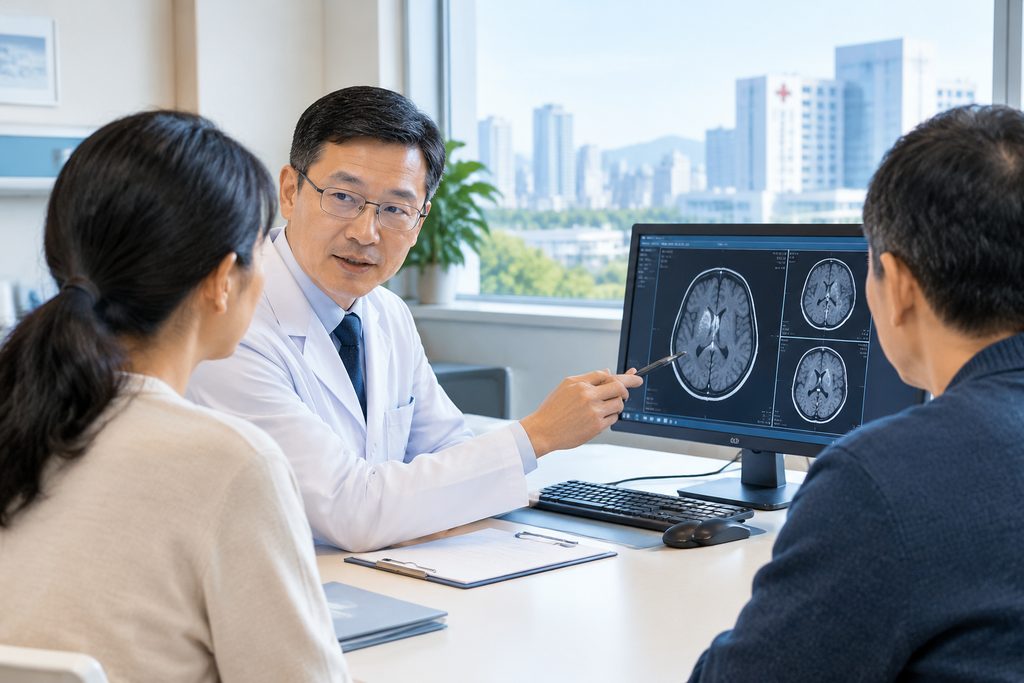
When 38-year-old Daniel, a software architect from Portland, received his MRI report in March, the words “suspected low-grade glioma” sent him into a research spiral that lasted three weeks. He wasn’t alone. Every year, roughly 1,000 to 1,500 adults in the United States receive a grade II glioma diagnosis, and the first question almost every one of them asks is the same: where do I go, and how much will this cost?
For a growing number of international patients, the answer involves low-grade glioma care in China — a country that performs more neurosurgical procedures annually than any other nation, at a fraction of Western costs. This guide walks through what’s available, what it costs, and how the process actually works for someone sitting at a kitchen table in another country with a folder full of scans.
How This Actually Works, Step by Step
Here’s the real sequence. No marketing gloss.
Step one: You gather your existing records — MRI and CT imaging (DICOM files on disc or USB), pathology reports if a biopsy has already been done, EEG results, and any genetic/molecular testing such as IDH mutation status or 1p/19q codeletion. These molecular markers matter enormously in glioma care, and Chinese neuro-oncology teams will want them.
Step two: You send those records to a coordination service or directly to a hospital’s international department. A written second opinion from a top-tier Chinese neurosurgery team typically takes 3–7 business days and costs $300–500. That written analysis covers imaging interpretation, whether surgery or watchful waiting is appropriate, and what the treatment direction would look like.
Step three: If surgery looks feasible, the next move is a video consultation with the neurosurgery team — usually $500–800 for a top specialist, or $1,500–2,000 if a multidisciplinary team (neurosurgeon, neuro-oncologist, radiation oncologist) reviews your case together. This is where you hear recommendations directly and can ask questions.
Step four: Assuming you decide to proceed, the hospital arranges an in-person consultation. Here’s the part most foreign patients don’t know: in Chinese public hospitals, surgery cannot be scheduled without an in-person examination first. You fly to China, attend the appointment, and the surgical date gets set after that face-to-face meeting.
Step five: Pre-operative workup, surgery, hospitalization, and discharge. For low-grade gliomas, most craniotomies involve 5–10 days in hospital, sometimes with awake mapping if the tumor sits near speech or motor cortex.
Low-Grade Glioma Care in China: What Treatment Looks Like
A craniotomy and hospitalization typically runs $15,000–30,000 at a top Chinese public hospital, versus $80,000–150,000 or more in the United States. Final costs depend on hospital tier, case complexity, and whether you use the international/VIP channel. Get a written estimate before committing.
Complications happen in any country. Chinese surgical teams provide English discharge summaries for your home doctors, and follow-up imaging can be reviewed remotely. But emergency care after you return home happens locally — which is why you need a neurologist at home who knows your case before you leave.
Your Next Step
Low-grade glioma care in China offers genuine advantages: high surgical volume, experienced neuro-oncology teams, and costs that make treatment accessible without compromising quality. It also requires planning — visa timelines, records translation, and realistic expectations about how Chinese hospitals schedule surgery.
We are China Medical Services, a coordination team that connects international patients with 340+ top-ranked hospitals across 37 Chinese cities. We do not provide medical advice or guarantee outcomes. What we do is handle the logistics: hospital matching, appointment coordination, bilingual medical companions, and visa guidance so you can focus on the decision that matters. When you’re ready, start with a free consultation — no pressure, no obligation, just a conversation about whether China makes sense for your situation.
This article is for informational purposes only and does not constitute medical advice. Treatment decisions should always be made in consultation with qualified physicians who have reviewed your individual case.
Frequently Asked Questions
Yes. The hospitals used for international patients are JCI-accredited and follow the same international safety standards as top hospitals in the US and Europe. Surgical teams perform high volumes of procedures — often more than their Western counterparts — which studies show leads to better outcomes.
Costs vary by procedure and hospital, but international patients typically save 40-80% compared to US prices — even when factoring in travel and accommodation. A consultation with our team will give you an exact, all-inclusive quote with no hidden fees.
Send us your existing medical reports to get started. We handle everything from hospital selection and appointment scheduling to visa assistance and post-operative recovery planning. Your medical records are reviewed by the specialist before you even book a flight.
For more medical information and treatment options in China, visit chinamedservices.com (China Medical Services).
