Eyelid Tumor Surgery in Shanghai: A Guide for International Patients
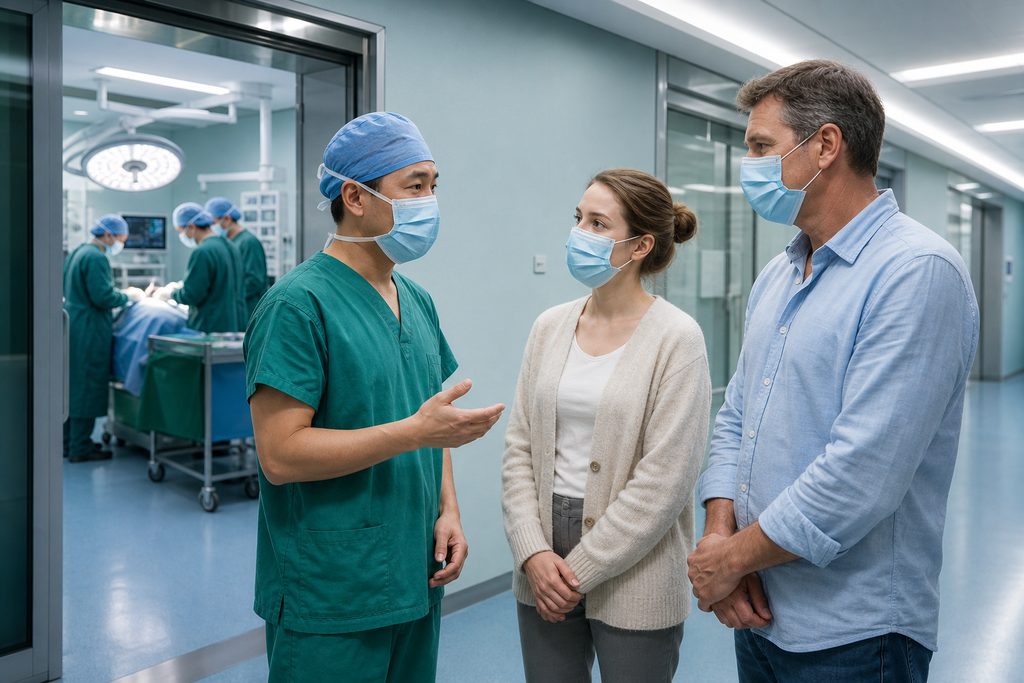
Eyelid Tumor Surgery in Shanghai: A Guide for International Patients
In the United States, a patient waiting for Mohs micrographic surgery on a suspicious eyelid lesion may face a scheduling backlog of six to twelve weeks at an academic center. In Shanghai, a city whose public hospital system handles more than 100 million outpatient visits annually, oculoplastic surgeons at top-ranked facilities operate on hundreds of periorbital cases each year — and international patients can reach them through a structured pathway. Eyelid tumor surgery in Shanghai is not a shortcut around quality. It is a different system, with different rules, and this guide explains exactly how those rules work.
What follows is not a sales pitch. It is the operational reality of getting evaluated, scheduled, and treated in one of China’s most capable medical cities — including the parts that are inconvenient.
How This Actually Works, Step by Step
Start where you are, not where you wish you were. The sequence below is the one that works for most international patients, and it exists because Chinese public hospitals do not allow overseas patients to book surgery directly from abroad.
Step one: gather your records. You will need your biopsy report if one exists, recent imaging (MRI or CT of the orbit, if performed), clinical photographs of the lesion, and a short medical history. If you have not had a biopsy, say so clearly — many eyelid lesions are evaluated clinically first.
Step two: get a written second opinion. Send those records to a Chinese specialty team through a coordination service. An oculoplastic or ophthalmology department reviews the material and returns written analysis, treatment direction, and — critically — whether the case is suitable for travel at all. This costs far less than a flight and answers the question that matters most.
Step three: video consultation. If the written opinion suggests a surgical plan, a video call with the specialty team lets you explain symptoms and goals directly and hear their recommendations. This is where you learn whether reconstruction will be simple excision or something more complex involving the lacrimal system or eyelid margin.
Step four: appointment coordination and visa. Once a plan is feasible, the hospital’s international department or VIP channel is engaged for scheduling. In parallel, you apply for the S2 visa with supporting hospital documents. More on that below.
Step five: arrive, attend in-person consultation, then surgery. In Chinese public hospitals, surgery follows an in-person examination. There is no way around this. The in-person visit confirms the plan and sets the operative date.
Which Shanghai Hospitals Handle Complex Eyelid Reconstruction
Shanghai hosts 18 hospitals in the Fudan University Hospital Rankings Top 100 — the second-highest concentration in China after Beijing. For periorbital and ocular oncology work, the relevant departments are ophthalmology, oculoplastic surgery, and in some cases dermatology or head-and-neck surgery.
Shanghai Ninth People’s Hospital, affiliated with Shanghai Jiao Tong University School of Medicine, is widely recognized for oral and maxillofacial surgery and has a substantial oculoplastic practice. Eye and ENT Hospital of Fudan University is a national reference center for ophthalmology. Fudan University Shanghai Cancer Center handles oncologic cases where the lesion is malignant and requires coordinated oncology input.
Not every eyelid tumor needs a top-tier academic center. A benign papilloma or a small basal cell carcinoma can often be managed at a strong tertiary hospital with an experienced oculoplastic surgeon. Malignant melanoma of the eyelid, sebaceous carcinoma, or lesions involving the eyelid margin and canaliculus warrant the subspecialty depth found at the institutions above.
You can browse specialty rankings by department at our department directory, which lists the top-ranked Chinese hospitals for ophthalmology, oncology, and related fields.
A Realistic Timeline
Optimism is easy to sell. Accuracy is more useful. The table below reflects typical ranges for an international patient with a confirmed or suspected eyelid tumor, assuming no complications.
| Stage | Typical Duration | Notes |
|---|---|---|
| Records gathering and translation | 3–10 days | Longer if pathology slides need re-review |
| Written second opinion | 5–10 business days | Depends on completeness of submitted records |
| Video consultation scheduling | 1–2 weeks | Top specialists book out further |
| S2 visa application | 4–10 business days | Varies by consulate and season; hospital invitation documents required |
| Hospital appointment coordination | 1–3 weeks | International/VIP channel is faster than standard registration |
| Travel and arrival | 1–2 days | Allow buffer for jet lag before examination |
| In-person consultation to surgery date | 3 days – 3 weeks | Depends on surgeon schedule and pre-op clearance |
| Post-operative review before flying home | 7–14 days | Suture removal and wound check |
Total elapsed time from first contact to surgery typically runs four to eight weeks. Patients who already hold a valid visa and complete records can compress this. Patients needing pathology re-review or additional imaging should plan for the longer end.
What Can Go Wrong — and What Happens Then
Honest failure modes, and the actual recourse for each.
The case is not operable in China, or not operable at all. Some lesions require systemic oncology workup before any excision. Occasionally the second opinion comes back recommending treatment closer to home. That is a real outcome, and it is better learned for a few hundred dollars than after a transpacific flight.
The appointment cannot be secured. Top specialists have limited slots. A coordination service that cannot obtain the requested appointment should refund the coordination fee — that is the standard we hold ourselves to, and you should ask any provider whether they offer the same.
The visa is delayed or refused. Consular decisions are outside anyone’s control. Apply early, submit complete hospital documentation, and do not book non-refundable flights before the visa is in hand.
Surgical findings differ from imaging. A lesion that looked shallow on MRI may require wider excision and more complex reconstruction, extending hospital stay and cost. Build financial buffer into your plan.
Language breakdown at the hospital. Chinese tertiary hospitals are enormous, with daily outpatient volumes in the thousands. Signage, registration systems, and most staff operate in Chinese. Without a bilingual companion, simple tasks — paying a fee, finding the correct imaging room — become genuine obstacles. This is not a sales tactic; it is the most common complaint we hear from patients who tried to manage alone.
Costs, and How They Compare
Cost is usually the second question after “can you help me.” For eyelid tumor excision with reconstruction, published price lists do not exist because fees depend on lesion size, reconstruction complexity, whether frozen-section pathology is used, and whether the case is managed through a standard or international/VIP channel.
As a general frame: major surgical procedures in China’s top public hospitals commonly cost one-fifth to one-tenth of comparable US charges. Eyelid tumor surgery with reconstruction at a Shanghai tertiary hospital typically falls in the range of $3,000 to $9,000 all-in for international patients, including hospital fees, surgeon fees, anesthesia, and short inpatient stay. Complex reconstruction or oncologic coordination pushes toward the upper end. These figures vary by hospital and case complexity and are not quotes.
Private international hospitals in Shanghai — Jiahui, United Family, Parkway — offer English-speaking staff, JCI accreditation, and direct insurance billing, at roughly 1.5 to 2 times the cost of the public international channel. For straightforward excisions, that premium buys convenience. For rare tumors, the public academic centers hold the subspecialty depth.
Practical Considerations: Visa, Payment, and Follow-Up
Visa category. Medical travel to China uses the S2 visa, annotated for medical treatment purposes. Stays exceeding 180 days require the S1. Accompanying family members apply for S2 as well. The M visa is for commercial and trade activity and has nothing to do with medical treatment — if a service tells you otherwise, treat that as a warning sign. Requirements shift, so confirm current documentation with the relevant Chinese embassy or consulate before applying.
Payment. Chinese public hospitals require prepayment. International insurance is typically reimbursed after the fact rather than billed directly, though some private hospitals offer direct billing arrangements. Bring a payment method that works internationally and confirm accepted cards with your coordinator in advance.
Records to carry. Bring printed copies of everything — pathology report, imaging discs, medication list — plus digital backups. Hospital systems in China may not access foreign electronic records.
Follow-up at home. Arrange a local ophthalmologist or dermatologist for suture removal and wound surveillance before you travel. Ask the Shanghai team for a written operative note and pathology report in English; you will need both.
Language support. A bilingual medical companion handles registration, queueing, payment, wayfinding, and interpretation during consultations. Rates start from $300 per day for a half or full day. You can review the full service structure at our patient consultation page.
Frequently Asked Questions
No. Public hospitals in China require an in-person examination before scheduling surgery. What you can do remotely is obtain a written second opinion and a video consultation, which establish whether a surgical plan is feasible and give you a realistic basis for deciding whether to travel.
Realistically, yes — or you need someone with you who does. Shanghai’s top hospitals handle enormous patient volumes, and registration, payment, and imaging departments operate in Chinese. A bilingual medical companion exists precisely for this gap, and it is the service most international patients end up needing regardless of how independent they are at home.
Malignant eyelid lesions — basal cell carcinoma, squamous cell carcinoma, sebaceous carcinoma, melanoma — require oncologically appropriate margins and, in some cases, coordination with oncology and pathology for frozen-section or Mohs-type techniques. Shanghai’s academic centers have this capability. What no one can promise is a specific outcome; surgical oncology depends on tumor biology, margins achieved, and timing. Discuss prognosis with the treating surgeon, not with a coordination service.
Your Next Step
The pathway is real, the hospitals are capable, and the cost difference is genuine — but the process rewards preparation and punishes improvisation. Start with records, get a written opinion, and let that opinion tell you whether travel makes sense. China Medical Services connects international patients with more than 340 top-ranked hospitals across 37 cities, and we do not practice medicine, promise outcomes, or guarantee appointments. What we do is translate records, coordinate with hospital international departments, and stand beside you in the queue. If you want to know whether your case is a fit, start with a free consultation — no obligation, no pressure.
This article is for informational purposes only and does not constitute medical advice. Treatment decisions should be made in consultation with qualified physicians who have examined you directly.
For more medical information and treatment options in China, visit chinamedservices.com (China Medical Services).
