Biologic Therapy Planning in Shanghai: How to Book Treatment
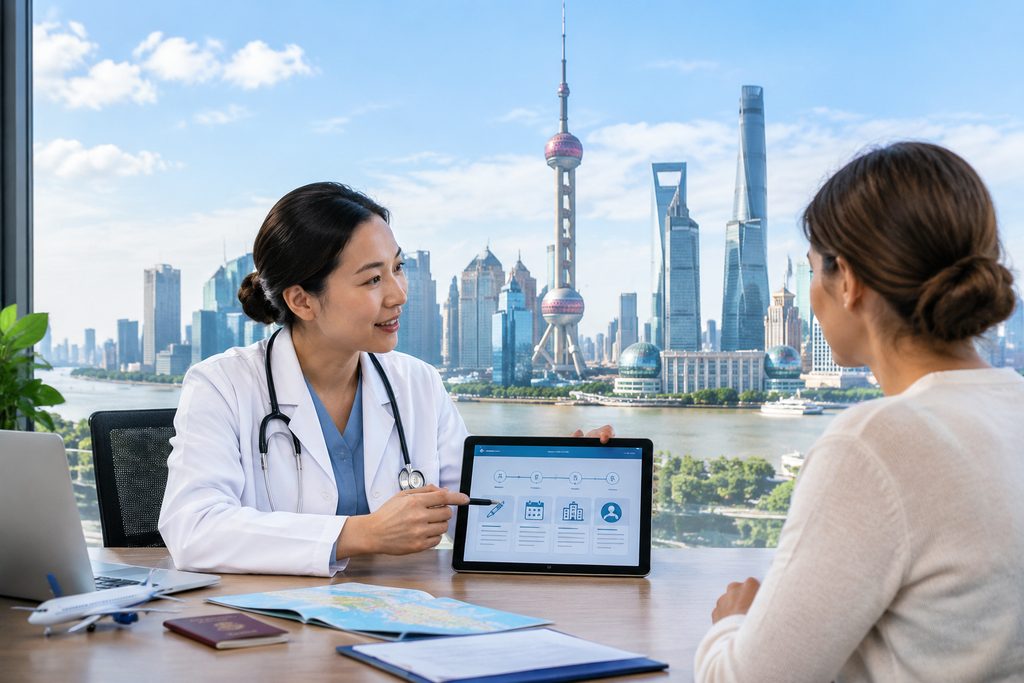
While patients in the United Kingdom wait a median of 18 weeks for specialist consultations, Shanghai’s top-tier hospitals process over 10,000 outpatient visits daily across their international departments. Biologic therapy planning in Shanghai has become a realistic option for patients with autoimmune conditions, inflammatory diseases, and certain cancers who face long waits or high costs at home. The city hosts 18 of China’s Fudan-ranked Top 100 hospitals — more than any city except Beijing.
Key Takeaways
- Shanghai is home to 18 Fudan Top 100 hospitals, giving international patients access to deep specialist expertise in rheumatology, gastroenterology, dermatology, and oncology.
- Biologic therapy cost in Shanghai typically runs 40–70% below US list prices for the same or equivalent agents, though final pricing depends on the specific drug, hospital tier, and treatment duration.
- Public hospital outpatient departments cannot be pre-booked from overseas — international departments or VIP channels are the standard route for foreign patients seeking scheduled appointments.
- Foreigners can receive biologic therapy in Shanghai, but the process requires careful planning around visa category, hospital selection, and documentation.
The Problem: Long Waits and High Costs Block Access to Biologics
In the United States, a year of biologic therapy for rheumatoid arthritis can exceed $30,000 before insurance adjustments. In Canada and the UK, the same treatment may be fully covered — but the wait to see a rheumatologist and then start therapy can stretch past six months. For patients with moderate-to-severe Crohn’s disease, psoriasis, or ankylosing spondylitis, that delay means irreversible joint damage, uncontrolled flare-ups, and lost work time.
The math is brutal. A 2022 study in Arthritis & Rheumatology found that every three-month delay in starting biologic therapy for rheumatoid arthritis reduced the likelihood of achieving low disease activity by roughly 12%. Patients know this. They feel the clock ticking. Yet the systems they rely on move slowly.
China offers a different pathway — not because the medicine is different, but because the access model is.
Why Shanghai Delivers Results for Biologic Therapy
Shanghai’s medical infrastructure is not a compromise. It is a genuinely strong option for patients who need timely, expert-directed biologic treatment.
Clinical Volume and Specialized Expertise
Renji Hospital, affiliated with Shanghai Jiao Tong University School of Medicine, operates one of China’s largest gastroenterology departments. Its rheumatology and dermatology departments at hospitals like Ruijin Hospital and Huashan Hospital see thousands of autoimmune patients annually. That volume translates into deep familiarity with biologic agents — dosing, switching between drugs, managing side effects, and monitoring response.
China’s Fudan University Hospital Rankings place several Shanghai hospitals among the top 10 nationally in their specialties. Ruijin Hospital ranks among China’s top 10 for endocrinology and rheumatology. Huashan Hospital is consistently ranked among the top for dermatology. For patients researching the best hospital for biologic therapy in Shanghai, these rankings matter — they reflect peer-reviewed clinical reputation, not marketing.
Cost Structure Without Quality Compromise
Biologic therapy cost in Shanghai reflects China’s broader healthcare economics: lower labor costs, high-volume purchasing power, and a domestic biosimilar market that has matured significantly since 2019. China’s National Healthcare Security Administration has negotiated steep price reductions on several biologic agents, and that pricing pressure extends into the private and international department market.
Here is a rough comparison for common biologic therapies. These figures are illustrative ranges and vary by hospital, drug brand, and patient weight.
| Biologic Agent (Class) | Typical US Annual Cost | Shanghai Range (Annual) | Notes |
|---|---|---|---|
| Adalimumab (TNF inhibitor) | $25,000–$40,000 | $8,000–$15,000 | Biosimilars widely available |
| Infliximab (TNF inhibitor) | $30,000–$45,000 | $10,000–$18,000 | Infusion costs included |
| Secukinumab (IL-17 inhibitor) | $35,000–$50,000 | $12,000–$22,000 | Psoriasis/PsA indication |
| Rituximab (anti-CD20) | $40,000–$60,000 | $15,000–$25,000 | Lymphoma/RA indications |
| Tocilizumab (IL-6 inhibitor) | $20,000–$35,000 | $7,000–$14,000 | RA and cytokine release syndrome |
These numbers are not guarantees. They are directional. A patient with severe Crohn’s disease requiring higher doses will pay more than a psoriasis patient on maintenance dosing. Hospital tier matters too: a VIP international department at a top-tier public hospital may charge 1.5–2x the standard rate for the same drug.
Speed of Access
Once a patient is evaluated and a prescription is written, biologic therapy can often begin within days — not months. That speed is the single biggest differentiator for patients facing progressive disease.
How to Book Biologic Therapy in Shanghai: A Step-by-Step Process
Booking biologic therapy in Shanghai is not like booking a hotel. The process is medical, sequential, and requires documentation. Here is how it actually works.
Step 1: Assemble your medical records. You will need recent blood work, imaging, biopsy results (if applicable), and a summary of prior treatments — including any biologics you have already tried and why you stopped. English records are accepted at international departments, but a certified Chinese translation speeds things up.
Step 2: Choose your hospital and department. For rheumatology, Ruijin Hospital and Renji Hospital are strong starting points. For gastroenterology, Renji Hospital’s IBD center is well-regarded. For dermatology, Huashan Hospital is a national leader. The Fudan-ranked top hospitals directory lets you filter by city and specialty.
Step 3: Request a written second opinion or video consultation. This is where the process gets practical. Most top-tier Shanghai hospitals will not schedule a biologic infusion for a patient they have never evaluated. A remote consultation — sending your records for specialist review — is the standard first step. This can be done before you buy a plane ticket.
Step 4: Schedule the in-person evaluation. Once the remote review confirms that biologic therapy is appropriate, you will need an in-person visit. This is where the hospital’s international department or VIP channel becomes essential. Standard outpatient registration at a public hospital is a same-day queue system — not something you can book from abroad.
Step 5: Begin treatment. After the in-person evaluation, the specialist writes the prescription. For infusion-based biologics (infliximab, rituximab), the first infusion is often scheduled within the same week. For self-injectable agents (adalimumab, secukinumab), you may receive a prescription to fill at the hospital pharmacy or a designated pharmacy.
Is Biologic Therapy Safe in China? What Foreigners Need to Know
This is the question every patient asks — and it deserves a direct answer.
China’s top-tier hospitals follow international treatment protocols for biologic therapy. The drugs themselves are either imported originator products (Humira, Remicade, Cosentyx) or domestically manufactured biosimilars approved by the National Medical Products Administration (NMPA). The NMPA has approved over 20 biosimilars since 2019, and several have received WHO prequalification.
But safety is not just about the drug. It is about monitoring. Biologic therapy requires regular blood tests — liver function, infection screening (especially tuberculosis and hepatitis B), and complete blood counts. Shanghai’s top hospitals have the laboratory infrastructure to run these tests reliably and quickly. A patient starting infliximab at Renji Hospital will typically have baseline TB screening, hepatitis panel, and CBC done before the first infusion — the same standard used at the Mayo Clinic or Charité.
The real safety question is continuity. If you start biologic therapy in Shanghai and return home after three months, will your local physician have the records they need to continue treatment? The answer depends on how well you prepare. Request copies of all lab results, imaging, and treatment notes before you leave. Ask for them in English.
Can Foreigners Get Biologic Therapy in Shanghai? Eligibility and Practical Realities
Yes — but with conditions.
Foreigners can receive biologic therapy in Shanghai. The pathway is through a hospital’s international department or VIP clinic. These departments are designed for patients who do not speak Chinese, do not have a Chinese national ID, and need English-language support. They charge more than the standard outpatient rate, but they provide the infrastructure that makes treatment feasible.
What about insurance? Most international departments at Shanghai’s top hospitals do not bill US or European insurance directly. Patients typically pay out of pocket and seek reimbursement later. Some private international hospitals — like United Family Healthcare and Jiahui Health — do offer direct billing with certain international insurers. It is worth checking with your insurer before you travel.
What about visa? For medical treatment in China, the applicable short-stay category is the S2 visa, which covers medical treatment and private affairs. The M visa is for commercial and trade activities — it is not a medical visa. A supporting letter from the treating hospital is typically required as part of the S2 application. Accompanying family members also apply for S2. For stays exceeding 180 days, S1 applies. Visa rules change, so confirm current requirements with your nearest Chinese embassy or consulate.
Frequently Asked Questions
For most common biologic agents, annual costs in Shanghai run 40–70% below US list prices. A TNF inhibitor like adalimumab that costs $25,000–$40,000 per year in the US may cost $8,000–$15,000 in Shanghai. These figures vary by hospital, drug brand (originator vs. biosimilar), and patient weight. They are not fixed prices.
No. You cannot start biologic therapy remotely. The standard process is a written second opinion or video consultation first, followed by an in-person evaluation at the hospital. Only after that evaluation can a physician write a prescription and schedule treatment. This is a safety requirement, not a bureaucratic hurdle.
Top-tier Shanghai hospitals have emergency departments and infusion centers equipped to manage infusion reactions. Before starting treatment, your physician will review your history and may pre-medicate to reduce risk. If you experience a reaction, the hospital’s clinical team handles it on-site. This is one reason why choosing a hospital with a strong international department — rather than a smaller clinic — matters.
That depends on your home physician and the quality of the records. Shanghai’s top hospitals provide discharge summaries and treatment notes in English upon request. Bring those records to your local doctor. In most cases, they will be sufficient to continue monitoring. If your doctor needs additional documentation, the hospital’s international department can usually provide it.
Your Next Step
Biologic therapy planning in Shanghai is a viable path for patients facing long waits or prohibitive costs at home. The city’s top hospitals offer deep specialist expertise, transparent pricing, and a clear — if structured — process for international patients. The key is to start with a remote consultation, not a plane ticket.
We are China Medical Services, a patient coordination service that connects international patients with top-tier Chinese hospitals. We are not a hospital and we do not provide medical diagnoses. What we do is help you navigate the system: matching you with the right department, coordinating appointments, arranging bilingual medical companions, and guiding you through the visa and logistics process. If you are considering biologic therapy in Shanghai, start with a free consultation — no pressure, just information.
This article is for informational purposes only and does not constitute medical advice. Treatment decisions should always be made in consultation with a qualified physician who has reviewed your complete medical history.
For more medical information and treatment options in China, visit chinamedservices.com (China Medical Services).
