Repeat Scans in China: When You Need Them and What They Cost
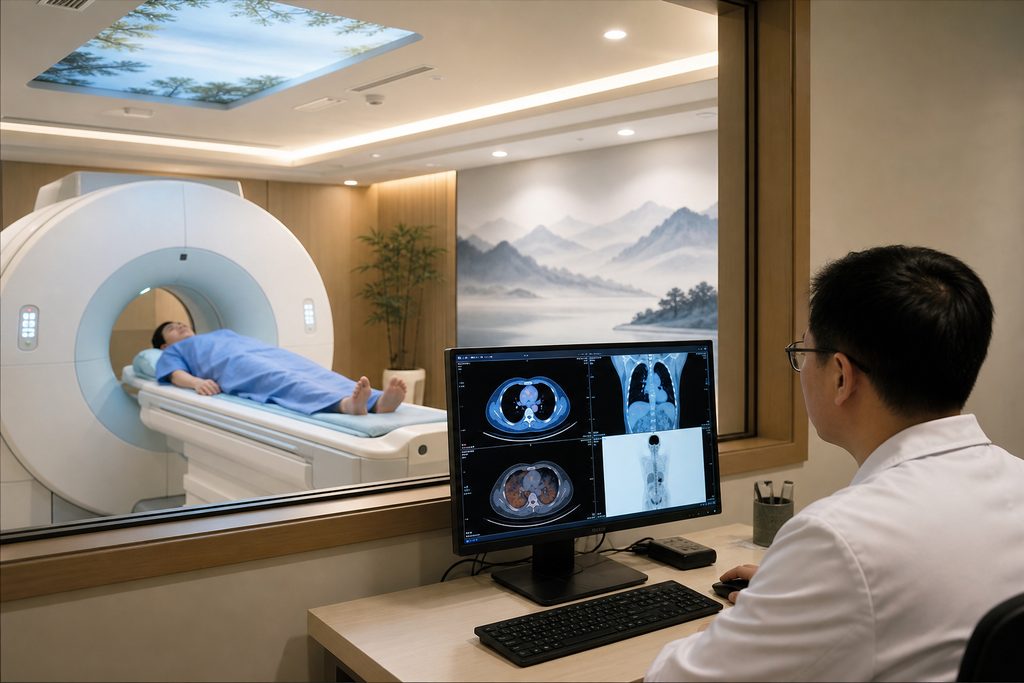
Repeat Scans in China: When You Need Them and What They Cost
Roughly one in ten international patients who arrive in China with a folder of imaging from home is asked to repeat at least one study before treatment begins. That figure comes from internal case reviews our team conducts across partner hospitals, and it surprises almost everyone. The question that follows is always the same: why? Understanding the repeat CT scan cost China hospitals charge — and more importantly, why the scan is being requested at all — is the difference between a smooth treatment path and an expensive detour.
This guide walks through the real reasons Chinese specialists re-image patients, what the studies cost, how long the whole process takes, and where things commonly go sideways.
How This Actually Works, Step by Step
Here is the sequence, from the moment you decide to pursue care in China to the moment a repeat scan is either ordered or ruled out.
Step one: you send your existing records. You email or upload your imaging files — DICOM discs, PDF reports, pathology slides if relevant — along with a short summary of your symptoms and treatment history. Our team arranges professional translation into Chinese, which typically takes two to four business days for a standard oncology or cardiac file.
Step two: a specialty team reviews the file remotely. This happens through a written second opinion (from $300) or a video consultation (from $100–300 with a standard international department, $500–800 with a top specialist). The reviewing physician looks at image quality, scan dates, and whether the study answers the clinical question being asked right now.
Step three: you get a written assessment. It states one of three things. Your existing imaging is sufficient. Your imaging is too old and needs refreshing. Or your imaging is technically inadequate — wrong slice thickness, missing contrast phase, incomplete coverage — and must be redone.
Step four: if a repeat is needed, it gets scheduled. For patients already in China, this is usually same-week at a public hospital and within 48 hours at a private international facility. For patients still abroad, the scan is booked into the arrival window so it coincides with your in-person consultation.
Step five: results come back. Standard turnaround is 24 to 72 hours for a CT or MRI report. Complex cases go to a multidisciplinary review, which adds two to five days.
Why Chinese Specialists Ask for New Imaging
Three legitimate reasons drive almost every repeat request. Knowing which one applies to you changes how you should respond.
Image quality and protocol mismatch. This is the most common cause. A CT done at a small clinic with 5mm slices cannot be used to plan a precise surgical margin. A PET scan without a diagnostic CT component may not localize a lesion accurately enough. Chinese tertiary hospitals — the 340+ top-ranked facilities across 37 cities in our database — work to specific protocols, and if your study does not match, the surgeon is operating half-blind.
Disease progression. If your last scan was four months ago and you have had two cycles of chemotherapy since, that scan describes a body that no longer exists. Oncologists need a current baseline. A 2023 review in a major oncology journal noted that treatment decisions based on imaging older than 12 weeks carried meaningfully higher rates of protocol adjustment mid-treatment.
Staging completeness. Sometimes a single scan simply does not cover what needs covering. A chest CT does not tell you about the liver. A brain MRI does not rule out spinal involvement. When a Chinese team is planning a major intervention, they want the full picture before anyone commits to a date.
A Realistic Timeline
The table below reflects typical ranges for an international patient starting from abroad. Individual cases vary substantially.
| Stage | What Happens | Typical Duration |
|---|---|---|
| Records sent | You upload imaging and reports | Day 0 |
| Translation | Medical translation into Chinese | 2–4 business days |
| Remote review | Written opinion or video consult | 3–7 days after translation |
| Decision on repeat imaging | Specialist states whether new scans are needed | Same report |
| Appointment booking | Scan slot reserved at chosen hospital | 3–10 days lead time |
| Visa (S2, medical purpose) | Application with hospital invitation documents | 1–3 weeks |
| Travel and scan | Arrival, scan performed | 1–2 days in-country |
| Report issued | Radiology report available | 24–72 hours |
| MDT review if needed | Multi-specialty discussion | 2–5 additional days |
Total elapsed time from first contact to scan results: roughly four to eight weeks for most patients. The waiting steps people forget are translation and visa processing. Neither can be rushed much, and both sit on the critical path.
What It Costs
Imaging in China is inexpensive by Western standards, but prices vary by hospital tier, contrast use, and whether you go through a standard or international department.
| Study | Public Tertiary Hospital | Private International Hospital |
|---|---|---|
| CT, single region, no contrast | $80–150 | $300–600 |
| CT with contrast | $150–300 | $500–900 |
| MRI, single region | $150–350 | $600–1,200 |
| PET-CT | $700–1,200 | $1,500–2,500 |
| Ultrasound | $40–100 | $150–350 |
For comparison, a PET-CT in the United States commonly runs $3,000–6,000. A contrast CT in a US hospital system often bills $1,200–3,000. That gap is real, and it is one reason patients accept a repeat study without much argument.
Some hospitals offer bundled imaging packages. A medical imaging repeat scan package China price typically ranges from $400 to $1,800 depending on how many modalities are included. Ask specifically what the bundle covers — a “full body scan” that turns out to be a low-dose screening CT is not the same as a diagnostic staging study.
What Can Go Wrong — and What Happens Then
The honest failure modes, and the actual recourse for each.
Your home imaging turns out to be unusable. This is common with scans done at standalone imaging centers rather than hospitals. The fix is a repeat scan, which adds cost and days. There is no workaround. Request DICOM files early and have them checked before you book flights.
The scan is done but the report is ambiguous. Radiology reports in China are written for Chinese clinicians. Even translated, they can read as terse. The recourse is a follow-up consultation with the treating physician, who interprets the images alongside the report. Budget for this. It is not included in the scan price.
You are asked to repeat a scan you had two weeks ago. This happens when the new hospital does not trust outside imaging. It is frustrating and occasionally unnecessary. Push back politely and ask the reviewing physician to justify the request in writing. Sometimes they concede. Sometimes they do not, and you have to decide whether the second opinion is worth the extra study.
Insurance will not reimburse the repeat. Most international insurers cover medically necessary imaging, but “medically necessary” is their call, not yours. Get pre-authorization in writing before the scan if you plan to claim. Public hospitals in China require prepayment and reimburse after the fact; private international hospitals frequently bill insurers directly.
Safety and Radiation: Is It Safe to Get Another CT Scan in Beijing?
This is the question patients ask most often, and it deserves a straight answer.
A single diagnostic CT delivers roughly 2 to 10 millisieverts of radiation, depending on the region and protocol. A chest X-ray is about 0.1 mSv. Natural background radiation is about 3 mSv per year. So one additional CT is a meaningful but not catastrophic dose — comparable to a couple of years of background exposure.
The risk calculus changes with cumulative exposure. If you have had six CTs in eighteen months, a seventh is worth questioning. If you have had one, it is not. Chinese tertiary hospitals use modern low-dose protocols, and radiologists are generally willing to discuss dose when asked. Ask.
MRI and ultrasound involve no ionizing radiation at all. If your clinical question can be answered with MRI, that is often the better path. PET-CT involves a radiotracer and a CT component, so it carries both radiation and cost considerations.
How Often Are Repeat Scans Needed After Surgery?
Post-operative surveillance follows established schedules that vary by condition. For many solid tumors, the pattern is imaging every three to six months for the first two years, then every six to twelve months through year five, then annually. Cardiac surgery follow-up is typically lighter — an echocardiogram at intervals rather than routine CT.
Two practical points matter for international patients. First, surveillance schedules are set by the treating team and should be documented in writing before you leave China, so your home physician can continue them. Second, if you plan to return to China for follow-up imaging, book the appointment before you depart. Repeat scans in China are inexpensive, but the scheduling lead time is not short.
Patients who want to compare hospital options for follow-up care can browse the specialty rankings by department to see which facilities lead in their condition area.
Practical Considerations: Records, Visa, Payment, Language
Records. Bring DICOM files on a USB drive and in cloud storage. Bring printed reports. Bring pathology slides if you have them — some hospitals will re-read them, and re-reading is cheaper than repeating a biopsy.
Visa. Medical travel to China uses the S2 visa with a notation for medical treatment. Stays beyond 180 days use S1. Accompanying family members also apply under S2. Requirements change, so confirm current rules with the nearest Chinese embassy or consulate. Note that the M visa is for commercial and trade activity and is not the correct category for medical treatment.
Payment. Public hospitals require prepayment. Private international hospitals often accept direct insurance billing. Bring a card that works internationally and confirm accepted payment methods in advance.
Language. This is the practical bottleneck. A large tertiary hospital may see ten thousand outpatients in a day. Registration, payment, and imaging departments are separate buildings with separate queues. Without Chinese, navigating a repeat scan appointment is genuinely difficult. Bilingual medical companion services exist for this reason, and they handle registration, queuing, payment, wayfinding, and translation.
Follow-up at home. Before you leave China, request your imaging on disc and a translated report. Your home physician will need both. Hospitals can usually provide these within a few days of request.
Frequently Asked Questions
Generally, no — not through standard channels. Public hospital outpatient imaging cannot be reserved from overseas in advance. What you can do is complete a remote review first, then have our team coordinate the appointment through the hospital’s international department so a slot is held for your arrival window. Private international hospitals in Shanghai are more flexible with advance booking.
Usually because the treatment changed something. A scan taken before chemotherapy describes a different clinical situation than one taken after. Chinese oncologists also work to specific imaging protocols, and a study done elsewhere may not match the slice thickness or contrast timing the surgical team needs. If the reason is unclear, ask the reviewing physician to explain it.
One additional diagnostic CT is generally considered low risk, delivering roughly 2–10 mSv compared with about 3 mSv of annual background radiation. The concern is cumulative exposure over time, not any single study. If you have had many recent scans, raise it with the radiologist — low-dose protocols and alternative modalities like MRI are often available.
Sometimes. Coverage depends on your policy and whether the insurer deems the study medically necessary. Public hospitals require you to pay upfront and claim reimbursement afterward. Many private international hospitals bill insurers directly. Get pre-authorization in writing before the scan if you intend to claim.
A single-region CT without contrast typically runs $80–150 at a public tertiary hospital and $300–600 at a private international facility. Contrast adds to both figures. Prices vary by hospital and case complexity, so treat these as ranges rather than quotes.
Your Next Step
Repeat imaging is not a scam and not a formality. It is a clinical decision that should have a stated reason, a defined cost, and a clear role in your treatment plan. When those three things are present, the scan is worth doing. When they are not, ask why.
Our team at China Medical Services coordinates remote reviews, hospital appointments, and bilingual accompaniment for international patients. We are not physicians and we do not provide medical advice or treatment. What we do is translate records, navigate hospital systems, and make sure you understand what is being asked of you before you commit to anything.
If you are weighing whether a repeat scan is necessary, start with a written second opinion. It is the cheapest way to find out — and if you travel to China within 90 days, the consultation fee is credited in full toward your on-the-ground coordination. You can request a free consultation to talk through your situation with no obligation.
This article is for general information only and does not constitute medical advice. Imaging decisions should be made with a qualified physician who has reviewed your individual case.
For more medical information and treatment options in China, visit chinamedservices.com (China Medical Services).
