MRI in China: Getting a Second Read That Changes Decisions
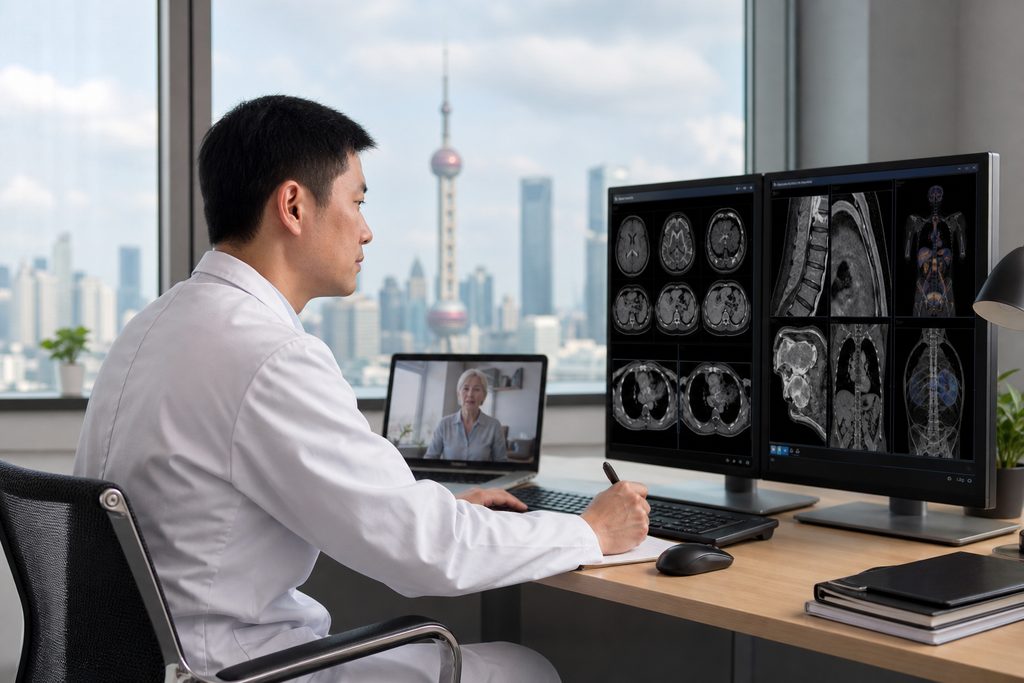
MRI in China: Getting a Second Read
You’ve probably heard that a diagnosis from a Western hospital is final — that once a radiologist signs off on your MRI, there’s nothing left to question. That belief costs people unnecessary surgeries every year. An MRI scan cost China hospitals charge is often one-tenth of what you paid at home, and the read that comes with it can be just as rigorous. Sometimes more so.
Second reads are not a workaround for doubt. They are standard practice in oncology, orthopedics and neurology. The question is where to get one that carries weight, and how to move the images across borders without losing quality.
How This Actually Works, Step by Step
Here is the real sequence. No abstractions.
Step one: you gather your existing imaging — the DICOM files on disc or a cloud link, plus the written radiology report, pathology if there is one, and any operative notes. DICOM matters. A PDF screenshot of your scan is nearly useless to a radiologist.
Step two: you send those files to us. Our team arranges certified medical translation of the reports into Chinese, because the specialist reading your case works in Chinese, not English.
Step three: we route the package to a hospital department that matches your specific question. A pituitary adenoma goes to neurosurgery and endocrinology. A suspected meniscal tear goes to orthopedics. A lung nodule goes to thoracic surgery or oncology. The department, not a generalist, reviews the images.
Step four: a written second opinion comes back — typically within 5 to 10 business days — with the radiologist’s re-reading of the images, an assessment of the original interpretation, and treatment direction. This is a written document for reference, not a prescription.
Step five: if surgery or further imaging looks necessary, we discuss whether traveling to China makes sense. If it does, we coordinate a video consultation or an in-person visit through the hospital’s international department.
Is MRI in China Reliable for Diagnosis?
This is the question that stops most people. The honest answer: it depends entirely on which hospital and which radiologist, and the gap between the top tier and the average is wider in China than in most Western countries.
China has roughly 35,000 hospitals. The top 5% — the ones ranked by Fudan University’s hospital index and accredited by JCI — operate imaging departments that rival anything in Boston or Heidelberg. Fuwai Hospital in Beijing performs more than 14,000 cardiac surgeries a year, and its imaging volume follows that scale. Shanghai’s Zhongshan Hospital and Ruijin Hospital handle oncology and hepatology case loads that most European centers never approach. Volume builds pattern recognition, and pattern recognition is what a radiologist sells.
But the same system also contains thousands of hospitals where equipment is older and subspecialty reading is thin. The word “China” tells you nothing useful. The hospital name does.
So when patients ask whether an MRI read in China is reliable, the correct response is another question: reliable compared to what, and read by whom? A second read from a Fudan top-100 radiology department is a different product from a walk-in scan at a provincial facility. Our hospital database exists precisely to make that distinction visible before you commit.
A Realistic Timeline
These are ranges, not promises. Hospital schedules move, and holiday periods in China — especially the Lunar New Year window — slow everything down.
| Stage | What Happens | Realistic Duration |
|---|---|---|
| Day 1–3 | You collect DICOM files and reports; we confirm which department fits your case | 2–4 days |
| Day 4–7 | Certified medical translation of reports into Chinese | 3–5 business days |
| Week 2 | Hospital international office receives the package; specialist assigned | 3–7 business days |
| Week 2–3 | Written second opinion drafted and returned | 5–10 business days |
| Week 3–4 | Optional video consultation with the specialty team | Scheduled 1–2 weeks out |
| Week 4–8 | If traveling: S2 visa application, appointment coordination, travel planning | 2–4 weeks |
| On arrival | In-person consultation; further imaging or admission if indicated | 1–3 days |
The step people forget is translation. It is not optional and it is not instant. A 40-page oncology file with prior imaging reports takes real time to render accurately, and rushing it produces errors that undermine the whole read.
What Can Go Wrong — and What Happens Then
Let’s be direct about failure modes, because you deserve to know them before you spend money.
The images arrive in unusable format. This happens more than anyone admits. Someone exports a JPEG of a single slice, or the disc is corrupted. Recourse: we go back to your original imaging center and request a proper DICOM export. If they cannot provide it, the second read cannot proceed and you should not be charged for it.
The second read agrees with the first. This is a real outcome, and it is not a failure. Confirmation has value — it means you can proceed with your original plan with more confidence. But if you were hoping for a different answer, this will disappoint you, and no service can prevent that.
The two reads conflict. Now you have a genuine clinical question. The right move is a video consultation or MDT where both interpretations can be discussed, not a coin flip. We can arrange that, but we cannot tell you which radiologist is correct. That is a medical judgment, and it belongs to the specialists.
The hospital declines the case. Some cases fall outside a department’s scope, or the specialist concludes more imaging is needed first. You get that answer in writing, which is still useful information.
You decide to travel and the timeline slips. Public hospital outpatient registration in China generally cannot be pre-booked from abroad the way it can in the US. Surgery requires an in-person consultation first. The way to lock in a specialist in advance is through the hospital’s international or VIP channel, which typically costs 1.5 to 2 times the standard fee. Anyone promising you a guaranteed surgical date without that step is not being straight with you.
How Much Does an MRI Cost in Beijing — and What a Second Read Adds
Let’s put numbers on the table, because cost is usually the second question after “is it any good.”
| Service | Typical Cost in China (USD) | Comparison |
|---|---|---|
| MRI scan, single body region, top public hospital | $200–$500 | $1,000–$3,000 in the US |
| MRI scan, private international hospital | $500–$900 | English service, direct insurance billing |
| Written second opinion, top-tier specialist | $300–$500 | Rarely available under $1,500 in the US |
| Video consultation, standard international dept. | $100–$300 | — |
| Top-specialist video consultation | $500–$800 | — |
| Multidisciplinary team (MDT) review | $1,500–$2,000 | — |
Prices vary by hospital and case complexity, and the figures above are ranges, not quotes. What surprises most patients is the ratio. A full second read plus a specialist video call in China often costs less than a single follow-up MRI copay in the United States.
One mechanism worth knowing: any consultation fee you pay is credited in full toward on-the-ground coordination if you decide to travel within 90 days. It is a one-time credit applied to the coordination fee only, never to hospital treatment charges.
If you want to see which hospitals in a given city handle your condition, the Fudan-ranked hospital directory by city is the fastest starting point. For subspecialty depth, the top 10 hospitals by specialty narrows it further.
Best Hospital in Shanghai for MRI Second Opinion: How to Choose
Patients search for a single name. That instinct is understandable and slightly wrong. The better question is which department, because a hospital can be world-class in hepatology and ordinary in musculoskeletal imaging.
Three criteria actually matter:
- Subspecialty match. You want a radiologist or clinician who reads your anatomy daily. Zhongshan Hospital’s imaging strength in abdominal and liver disease is not the same as its neuroimaging depth. Ask which it is.
- Volume in your specific condition. A center that sees 300 cases a year of your diagnosis will read your scan differently than one that sees 12. Ask for the case volume, or ask us to find it.
- Whether the read comes with a treatment opinion. A pure radiology re-read tells you what the images show. A departmental second opinion tells you what to do about it. For most patients, the second is what they actually need.
Shanghai concentrates 18 Fudan top-100 hospitals, second only to Beijing’s 21. That density is an advantage — it means a genuine subspecialty match exists for almost any condition. The Shanghai hospital guide breaks them down by specialty and tier.
Practical Considerations: Records, Visa, Payment, Follow-Up
Records. DICOM files, the original written report, pathology slides if relevant, and a short summary of your symptoms and timeline. Send the summary in plain language. It helps the translator and the specialist alike.
Visa. For medical travel to China, the applicable short-stay category is the S2 visa, annotated for medical treatment purposes, subject to the latest embassy or consulate requirements and supporting hospital documents. Family members accompanying you apply under the same category. Stays beyond 180 days fall under S1. The M visa is for commercial and trade activity and has nothing to do with medical treatment — if anyone tells you otherwise, they are wrong. Approval is never guaranteed, and requirements change, so verify with your nearest Chinese embassy before booking flights.
Payment. Public hospitals require prepayment, and you file with your insurer afterward. Private international hospitals often bill your insurance directly. Bring a card that works internationally, and expect to pay before service, not after.
Language. A top Chinese public hospital can see 10,000 or more outpatient visits in a day. Signage, registration systems and staff are overwhelmingly in Chinese. Without a bilingual companion, the logistics alone can consume your entire visit. This is not a sales point — it is simply what the environment is like.
Follow-up at home. Ask the Chinese team to produce a written English summary you can hand to your doctor at home. Most international departments will do this. Get it before you leave the country, not after.
Frequently Asked Questions
Yes. The written second opinion is designed exactly for that. You send existing reports and images, the relevant department reviews them, and you receive written analysis and treatment direction. No visa, no flight. Many patients stop there, and that is a perfectly good outcome.
There is no single package price, and you should be wary of anyone quoting one before seeing your case. A scan alone runs $200–$900 depending on hospital tier. Add a written second opinion ($300–$500) and a video consultation ($100–$800) and you have a realistic range. Final pricing depends on the hospital, the body region, and whether contrast is needed.
Some private international hospitals bill insurance directly. Most public hospitals do not — you pay upfront and seek reimbursement from your insurer afterward. Check your policy’s coverage for treatment abroad before you commit to anything.
Then you have two documented interpretations and a real decision to make. The responsible next step is a conversation — ideally a video consultation or MDT where the discrepancy can be examined directly. We can arrange that discussion. We cannot tell you which specialist is right, and we will not pretend to.
Sometimes yes, sometimes no. Second reads change management most often in borderline oncology cases, ambiguous spinal imaging, and situations where surgery is on the table. If your diagnosis is unambiguous and your treatment plan is working, a second read adds little. Be honest with yourself about which situation you are in.
Your Next Step
The takeaway is simple: an MRI read is an interpretation, not a verdict, and a second interpretation from a high-volume Chinese department costs a fraction of what you would pay at home. China Medical Services is a coordination service — we translate records, connect you with the right hospital department, arrange written second opinions and video consultations, and provide bilingual support on the ground. We are not doctors, and we do not diagnose or promise outcomes.
If you have images and a question, the lowest-pressure move is a free consultation. Send us what you have. We will tell you honestly whether a second read is worth your money — and if it isn’t, we will say so.
This article is for general information only and does not constitute medical advice. Always consult a qualified physician about your individual condition before making treatment decisions.
For more medical information and treatment options in China, visit chinamedservices.com (China Medical Services).
