Ankle MRI in China: Booking Made Easy for International Patients
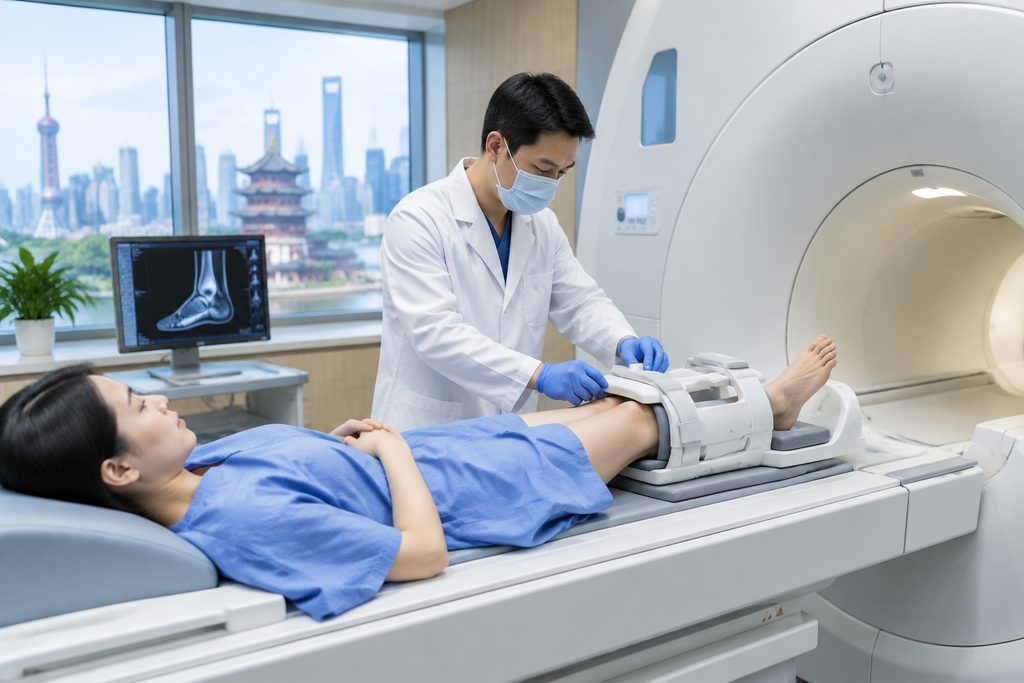
Ankle MRI in China: Booking Made Easy
You have probably been told that arranging an ankle MRI in China as a foreigner means weeks of phone calls, a Mandarin-only hospital portal, and a flight you might not even need. That story is outdated. The ankle MRI cost China hospitals charge often lands between $150 and $600 depending on the city and the machine, and the booking itself can now be handled remotely, in English, before you ever board a plane. What actually trips people up is not the scanner. It is the sequence: who orders the scan, which hospital accepts a foreign order, and how the images reach your orthopedic surgeon back home.
We work inside this system every week. Here is how it really runs.
How This Actually Works, Step by Step
Start with what you already have, not with a hospital name.
- Send your existing records. Old X-rays, a prior MRI on disc, the referral note from your doctor, and a short description of the injury. Ankle pain has a dozen causes — ligament tears, osteochondral lesions, peroneal tendon issues, stress fractures — and the scan protocol changes depending on what the radiologist is looking for.
- A Chinese musculoskeletal radiologist or orthopedic specialist reviews the file. This is a written second opinion, typically $300–500. You get back a plain-language analysis, whether an MRI is even the right next test, and which sequences matter.
- You choose the hospital and the format. Some patients want a video consultation first (usually $100–300 with a standard international department, $500–800 with a named senior specialist) so they can ask questions directly.
- We coordinate the appointment. Registration, hospital medical card creation, and the imaging slot. Appointment coordination starts from $300, and if we cannot secure the booking you were quoted, that fee is refunded in full.
- You arrive, scan, and leave with images and a report. DICOM files on a USB drive, plus a translated written report, usually within 24–48 hours of the scan.
Notice what is missing: no cold walk-in to a public hospital queue, no guessing which department handles foreign patients.
What an Ankle MRI Actually Costs in China — and Why
Often yes. You can send existing records for review, have the protocol confirmed remotely, and coordinate an appointment before booking flights. What cannot be done remotely is the scan itself, and any treatment decision still requires an in-person evaluation under hospital rules.
It depends entirely on your policy. Many international plans reimburse overseas diagnostics after the fact; some exclude it. Public hospitals typically require you to pay upfront and claim later. Private international hospitals frequently bill insurers directly. Call your insurer before you book, not after.
If you are traveling to China specifically for medical treatment, the S2 short-stay visa is the applicable category, and accompanying family members apply under the same category. Requirements and processing times depend on the latest rules from the relevant Chinese embassy or consulate and on supporting hospital documents. Approval is never guaranteed, so plan a buffer.
Then you have a diagnosis and a decision to make, not an emergency. A finding like a ligament tear or cartilage defect usually leads to a consultation with an orthopedic specialist, either in China or at home, to discuss conservative versus surgical options. Take the images and report to a qualified physician and let them guide the next step.
Your Next Step
An ankle MRI in China is a logistics problem, not a medical mystery. Get the protocol right, pick the right channel, build in buffer time for translation and visas, and the whole thing becomes a two-day trip instead of a two-month ordeal.
We are China Medical Services. We are not doctors and we do not practice medicine. We translate records, coordinate appointments through official hospital international departments, arrange bilingual accompaniment, and advise on visa and travel logistics. Our full service overview lives at our patient consultation page, where you can describe your situation and get a straight answer about whether traveling to China for imaging makes sense for you. No pressure either way — sometimes the honest answer is that you should scan closer to home.
This article is for general information only and is not medical advice. Imaging decisions, diagnoses, and treatment plans should always be made with a qualified physician who has reviewed your individual case.
Frequently Asked Questions
Yes. The hospitals used for international patients are JCI-accredited and follow the same international safety standards as top hospitals in the US and Europe. Surgical teams perform high volumes of procedures — often more than their Western counterparts — which studies show leads to better outcomes.
Costs vary by procedure and hospital, but international patients typically save 40-80% compared to US prices — even when factoring in travel and accommodation. A consultation with our team will give you an exact, all-inclusive quote with no hidden fees.
Send us your existing medical reports to get started. We handle everything from hospital selection and appointment scheduling to visa assistance and post-operative recovery planning. Your medical records are reviewed by the specialist before you even book a flight.
For more medical information and treatment options in China, visit chinamedservices.com (China Medical Services).
