Medical Treatment in Shijiazhuang China: Hebei’s Affordable Hub Near Beijing
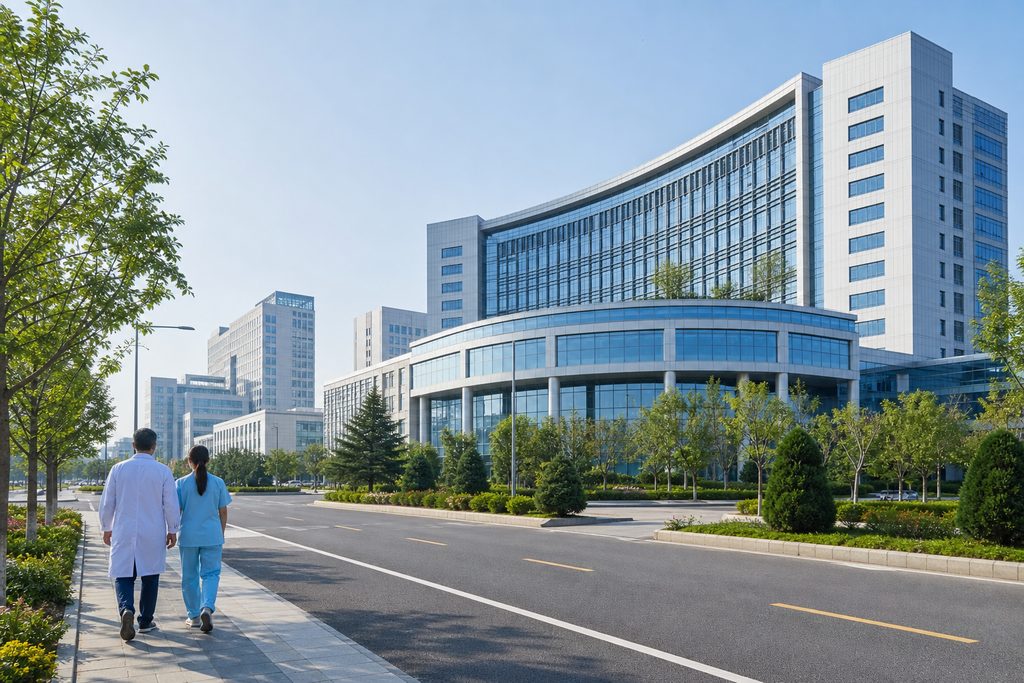
A hip replacement in the United States costs roughly $40,000. The same procedure, using the same generation of prosthetics, runs between $8,000 and $12,000 in Shijiazhuang. That gap isn’t a fluke of one procedure. It holds across cardiac interventions, spinal surgeries, and oncology treatments. The question that follows is obvious: does lower cost mean lower quality? The data says no. Hebei Province’s clinical hub has been quietly scaling its capabilities for two decades, and the volume its surgeons accumulate tells a story that most Western patients never hear.
We have spent years connecting international patients with China’s top-tier medical infrastructure. Shijiazhuang occupies a strange blind spot in the global medical travel conversation. Everyone knows Beijing. Almost nobody looks 280 kilometers southwest. That oversight is costing patients real money and real time. This article unpacks what Shijiazhuang actually offers, how the numbers stack up, and what you need to know before booking a flight.
Key Takeaways
- Shijiazhuang delivers surgical costs 60-80% below US benchmarks, with outcomes at major Hebei teaching hospitals tracking international standards for common procedures.
- The city functions as a genuine alternative to Beijing for surgery—shorter queues, lower hospital fees, and the same pool of rotating senior specialists from top-tier institutions.
- Public hospitals in Shijiazhuang do not accept international walk-ins. You cannot book a surgery slot from abroad without a local facilitator or the hospital’s international department.
- Language, payment, and visa logistics remain significant barriers. Anyone considering this route should understand the full operational picture before making decisions.
The Problem: Beijing’s Success Creates Its Own Bottleneck
Beijing’s top hospitals are victims of their own reputation. Peking Union Medical College Hospital and Fuwai Hospital draw patients from every province. That demand translates into wait times that surprise foreign patients. A cardiac consultation that might take two weeks to schedule in London or Toronto can stretch to six or eight weeks in Beijing’s public queue. And that is just for the initial outpatient visit. Surgery scheduling adds another layer of uncertainty.
Cost compounds the problem. Beijing’s international departments charge premium rates. A coronary artery bypass graft at a top Beijing center runs $20,000 to $30,000 through the international wing. That is still a fraction of the $120,000-plus price tag in the United States. But it is roughly double what the same procedure costs in Shijiazhuang. The clinical protocols are nearly identical. The implant devices come from the same manufacturers. The difference is real estate, administrative overhead, and the brand premium that Beijing institutions command.
Then there is the sheer logistical friction. Navigating a Beijing public hospital without Mandarin fluency is exhausting. The registration hall at a major teaching hospital can process 15,000 patients in a single day. Finding the right window, the right queue, the right department—this is not a language barrier you overcome with a phrasebook. It is a system designed for domestic throughput, not international hospitality. Shijiazhuang’s hospitals face the same fundamental structure. But the scale is smaller. The crowds are thinner. The staff, in our experience, have more bandwidth to accommodate foreign patients when proper arrangements are made in advance.
Who We Are
We are not a hospital. We do not provide medical treatment or clinical diagnoses. Our team functions as your logistical architects—we bridge the gap between you and China’s top-tier medical expertise. We maintain a database of 340+ top-ranked hospitals across 37 Chinese cities, including the major institutions in Shijiazhuang and across Hebei Province. We handle hospital matching, appointment coordination, bilingual medical companionship, and visa guidance. We do not promise miracles. We do promise that if a treatment pathway exists in China’s public hospital system, we can map it for you clearly and honestly.
Why Shijiazhuang Works as a Medical Treatment in Shijiazhuang China: Hebei Province Medical Hub Near Beijing Alternative Access Point
Clinical Volume That Rivals Any Western Center
The Second Hospital of Hebei Medical University handles over 3.2 million outpatient visits annually. Its orthopedic department alone performs more than 8,000 joint replacements each year. Compare that to a busy US academic center, where 500 to 800 annual joint replacements would be considered a high-volume program. Volume matters in surgery. Study after study in the Lancet and JAMA has demonstrated a clear inverse relationship between surgical volume and complication rates. A surgeon who replaces 300 hips a year simply encounters—and learns to manage—complications that a lower-volume colleague might see once in a career.
Hebei General Hospital runs a cardiology department that performs over 4,000 interventional procedures annually. The cardiac surgery team completes more than 1,200 open-heart cases. These are not small numbers. They reflect a provincial population of 75 million people funneling complex cases into a concentrated network of tertiary hospitals. When an international patient asks us whether the clinical experience in Shijiazhuang is sufficient, the volume data answers more persuasively than any marketing claim could.
Cost Structures That Defy Western Assumptions
Let us put the medical treatment cost Shijiazhuang China numbers on the table. These figures come from our case coordination records over the past three years. They reflect the international department pricing at Hebei’s top public hospitals—not the local resident rates, which are lower still, but the actual quotes foreign patients receive.
| Procedure | Shijiazhuang (USD) | Beijing Int’l Dept (USD) | United States (USD) |
|---|---|---|---|
| Total Hip Replacement | $8,000 – $12,000 | $15,000 – $22,000 | $35,000 – $50,000 |
| Coronary Artery Bypass Graft | $12,000 – $18,000 | $20,000 – $30,000 | $120,000+ |
| Lumbar Spinal Fusion (2 levels) | $10,000 – $16,000 | $18,000 – $25,000 | $80,000 – $110,000 |
| Laparoscopic Cholecystectomy | $2,500 – $4,000 | $4,000 – $6,500 | $15,000 – $20,000 |
| Knee Arthroscopy with Meniscus Repair | $4,000 – $6,500 | $7,000 – $10,000 | $20,000 – $30,000 |
These prices vary by hospital and case complexity. A patient with multiple comorbidities requiring extended ICU stays will land at the upper end of these ranges or beyond. But the structural gap remains. Why? Labor costs in Chinese public hospitals are a fraction of Western equivalents. An experienced scrub nurse in Shijiazhuang earns roughly $12,000 to $18,000 annually. Hospital administrative overhead runs lean. Device and implant costs, while closer to global pricing, still benefit from volume purchasing agreements that China’s provincial health bureaus negotiate aggressively.
Does lower cost signal lower quality? Not in this system. The implant hardware—Stryker, Zimmer, Medtronic, Johnson & Johnson—is the same. The sterilization protocols follow international standards. The anesthesiology departments at Hebei’s top hospitals use the same drug formularies and monitoring equipment you would find in Singapore or Seoul. The cost difference is structural, not qualitative.
Specialist Access Without the Beijing Queue
Here is something most foreign patients do not realize. Senior specialists from Beijing’s top hospitals regularly consult and operate in Shijiazhuang. China’s hierarchical medical system encourages tertiary hospital experts to spend time at provincial centers. A cardiac surgeon affiliated with Fuwai Hospital might spend two days a month performing complex cases at Hebei General. An oncologist from Peking University Cancer Hospital may review cases remotely and travel for surgeries. The specialist pool overlaps.
This means a patient who books surgery in Shijiazhuang can sometimes access the same surgeon they would wait months to see in Beijing—at a lower facility fee and with a shorter scheduling window. We have coordinated cases where the total time from initial inquiry to surgery date was under four weeks in Shijiazhuang, versus an estimated ten to twelve weeks for the same surgeon’s Beijing slot. That difference matters when you are managing pain, taking time off work, and arranging international travel.
What Are the Best Hospitals in Hebei Province for Foreigners?
Not every hospital in Hebei is equipped for international patients. The ones that work have dedicated international departments or at minimum a track record of handling foreign cases through their VIP wings. Based on our coordination experience, three institutions stand out.
The Second Hospital of Hebei Medical University is the province’s largest clinical center. Its orthopedics, neurology, and gastroenterology departments rank among the strongest in northern China outside Beijing. The hospital’s international liaison office, while smaller than Beijing equivalents, has processed foreign patient admissions for over a decade. Response times are reasonable—typically 48 to 72 hours for a treatment plan and cost estimate after receiving translated medical records.
Hebei General Hospital carries the provincial government’s direct backing. Its cardiology and cardiac surgery departments are reference centers for the entire province. The cardiac surgery ICU is staffed 24/7 by intensivists trained partly in European fellowship programs. For patients considering cardiac intervention, this hospital’s combination of volume, equipment, and international experience makes it the most logical starting point in the city.
The Third Hospital of Hebei Medical University specializes in orthopedics and trauma. It handles a disproportionate share of complex fracture cases and joint revisions. For a patient who has been told elsewhere that a revision hip or knee replacement is high-risk, this hospital’s surgeons have seen—and solved—complications that would be rare at a general orthopedic practice.
Is Shijiazhuang a Good Alternative to Beijing for Surgery? The Honest Answer
For most common procedures, yes. For ultra-rare conditions requiring subspecialists who only exist at one or two centers nationally, no. This is not a diplomatic answer. It is what our case data shows.
A patient needs a straightforward total knee replacement. The surgical technique is mature. The implant systems are standardized. The postoperative rehabilitation protocol is well established. In this scenario, Shijiazhuang offers faster scheduling and lower cost with no meaningful difference in clinical outcome. The surgeon performing the procedure has done hundreds, possibly thousands, of the same operation. The infection control protocols meet national standards. The physiotherapy department has a structured recovery pathway. There is no clinical reason to pay the Beijing premium for this case.
Now consider a patient with a rare retroperitoneal sarcoma requiring complex multivisceral resection. Only a handful of surgeons in China have meaningful experience with this exact presentation. Most of them practice at Peking University Cancer Hospital or Fudan University Shanghai Cancer Center. In this scenario, Shijiazhuang is not the right destination. The clinical volume for that specific pathology simply is not there. We would advise the patient to go to Beijing or Shanghai directly. Our job is to match the case to the right center—not to sell a particular city.
For the broad middle of surgical demand—orthopedics, general surgery, urology, gynecology, basic cardiac interventions, ENT procedures—Shijiazhuang’s top hospitals deliver outcomes that track national benchmarks. The city’s status as a provincial medical hub means it attracts the complex cases from across Hebei’s 75 million residents. That funnel effect concentrates clinical experience in ways that benefit international patients who choose to tap into it.
How Do I Book a Hospital in Shijiazhuang from Abroad? The Real Process
The booking pathway is not what most Western patients expect. There is no online portal. No English-language scheduling system. No customer service line with multilingual agents. The reality is more manual—and more dependent on local coordination—than any hospital website suggests.
Step one is medical record preparation and translation. Chinese public hospitals require a specific format: translated summary reports, original imaging on CD or DICOM files, pathology slides where applicable, and a concise treatment history. Google Translate will not suffice. The terminology must be clinically precise. We have seen cases delayed by weeks because a translated report used imprecise phrasing that triggered unnecessary additional testing.
Step two is hospital selection and department matching. Not every department at every hospital accepts international patients through the same channel. A hospital’s orthopedic international pathway might be well established while its urology pathway is virtually nonexistent. Knowing which department at which hospital has a functional international intake process is the difference between a two-week response and a two-month black hole.
Step three is the formal submission through the hospital’s international department or VIP clinic. This triggers an internal review. The department head or a designated senior physician evaluates the case. They determine whether the hospital can treat the condition, estimate the length of stay, and issue a preliminary cost breakdown. This document is what you need for your S2 visa application.
Speaking of visas: foreign nationals seeking medical treatment in China apply for an S2 visa with a notation specifying medical purpose. Accompanying family members also apply for S2 visas. The hospital’s invitation letter—issued after they accept your case—is a required supporting document. Do not attempt to enter on a tourist visa and then seek treatment. Hospitals will not admit you, and the visa violation creates problems that are difficult to unwind.
Step four is scheduling. The hospital proposes a date range. You confirm. Flights, accommodation, and ground logistics lock into place. A deposit—typically 30% to 50% of the estimated treatment cost—is wired to the hospital’s account. The balance is settled upon admission or before discharge, depending on the hospital’s policy.
Affordable Surgery Near Beijing China Packages: What’s Actually Included
The term “package” gets thrown around loosely in medical tourism. In Shijiazhuang’s public hospital system, what you get is not a resort-style package with airport pickup and hotel concierge. It is a clinical treatment plan with a defined scope and cost estimate. Understanding the boundaries prevents unpleasant surprises.
A typical surgical package from a Hebei public hospital international department includes the surgeon’s fee, anesthesiologist’s fee, operating theater charges, standard inpatient ward bed for the estimated length of stay, routine medications during admission, and basic postoperative physiotherapy while inpatient. It does not include upgraded private room fees, companion accommodation, meals for family members, extended ICU stays beyond the estimated duration, or complications requiring unplanned interventions. These exclusions are standard. They exist in every hospital system globally. But patients accustomed to all-inclusive medical tourism packages in Thailand or India should recalibrate their expectations.
The total cost still lands far below Western benchmarks. A patient who budgets $15,000 for a hip replacement in Shijiazhuang—including the procedure, a private room upgrade, two weeks of local accommodation, and our coordination services—has covered the realistic expense. The same procedure in the United States, even with insurance, often leaves the patient with a $10,000 to $15,000 out-of-pocket responsibility after deductibles and coinsurance. The math is straightforward.
What You Need to Know Before Going Alone
The barriers are real. We want to be completely clear about them because patients who arrive unprepared have uniformly bad experiences.
- Language is non-negotiable: Clinical staff in Shijiazhuang’s public hospitals speak Mandarin. A small minority speak functional English. Informed consent discussions, postoperative instructions, medication schedules—these happen in Chinese. Without a bilingual medical companion, you are relying on goodwill and translation apps for decisions that affect your health. This is not a risk worth taking.
- Payment flows upfront: Chinese public hospitals require prepayment. You deposit funds before admission. Insurance reimbursement happens after the fact—you pay the hospital, then claim from your insurer. Direct billing arrangements exist at private international hospitals like United Family, but those facilities are concentrated in Beijing and Shanghai, not Shijiazhuang. Bring a credit card with a high limit and confirm with your bank that international transactions will not be blocked.
- Postoperative follow-up requires planning: Your surgeon in Shijiazhuang will want to see you for follow-up visits. If you fly home immediately after discharge, that continuity breaks. We advise patients to budget at least ten to fourteen days post-surgery in the city before traveling. For joint replacements, the surgeon will typically want to see you at the two-week mark for wound check and staple removal. Flying long-haul immediately after major surgery also carries thrombotic risk that your surgical team needs to clear.
- Medical records stay in Chinese: Your discharge summary, operative notes, and imaging reports will be issued in Chinese. You need certified translations for your home-country physician to continue your care. Factor this into your planning and budget.
How We Help You Navigate This
These barriers exist for structural reasons, not because anyone is trying to make things difficult. China’s public hospital system was built to serve a domestic population of 1.4 billion people. International patients are an afterthought—a tiny fraction of total volume. The system does not bend to accommodate foreign expectations. But with the right coordination, it does not need to.
We handle the full arc. Before you travel, we collect and translate your medical records, submit them to the appropriate hospital department, and manage the back-and-forth until a treatment plan and cost estimate are issued. We advise on the S2 visa application, including the specific documentation the Chinese consulate in your country will require. We arrange the hospital’s invitation letter.
During your stay, a bilingual medical companion accompanies you to every appointment. This person handles registration, queues, payment counters, and pharmacy pickups. They translate consultations in real time. They ensure you understand what the doctor is recommending and why. They are not medical professionals—they do not offer clinical opinions. But they are fluent in the hospital’s workflow and the language, and that combination solves 90% of the friction international patients face.
After discharge, we coordinate follow-up visits, arrange certified translation of your medical records, and ensure your home-country physician receives a complete clinical summary. If complications arise after you return home, we facilitate communication between your local doctor and the Chinese surgical team.
For patients considering the Hebei medical tourism international patient services landscape, our coordination fees start from $300 for hospital appointment coordination. Bilingual medical companionship runs from $200 per day. These are separate from hospital treatment charges. Any consultation or second opinion fee is credited in full toward on-the-ground coordination if you proceed with treatment within 90 days. We structure it this way because we want patients to test the waters without feeling financially locked in.
Frequently Asked Questions
No. Public hospitals in Shijiazhuang do not admit international patients on a walk-in basis for surgery or inpatient treatment. You need a prior case review, an invitation letter from the hospital, and the correct visa. Showing up unannounced will result in a wasted trip. The outpatient registration desk may allow you to see a doctor for a basic consultation, but that consultation will not translate into a scheduled surgery without going through the international department’s formal intake process.
Chinese public hospitals manage complications within their own system. The surgeon who operated on you remains responsible for your care. If a complication requires extended ICU stay or revision surgery, the hospital will provide it. The cost, however, will exceed the original estimate. This is why we advise patients to maintain a financial buffer—typically 30% above the quoted treatment cost—to cover unexpected clinical needs. Medical malpractice liability in China functions differently than in Western jurisdictions. Patients should understand this and carry their own medical travel insurance that includes complication coverage.
Senior surgeons at Hebei’s top public hospitals hold medical licenses issued by China’s National Health Commission. Their credentials are verifiable through the hospital’s medical affairs office. Many have completed fellowships or observerships in Europe, Japan, or North America. Publication records in indexed journals provide another layer of verifiable expertise. We can share surgeon CVs and publication lists for any physician we recommend—before you commit to anything. If a hospital cannot or will not provide this documentation, that is a red flag.
For the hospitals we work with, yes. The Second Hospital of Hebei Medical University and Hebei General Hospital use implant systems from the same multinational manufacturers that supply US and European operating rooms—Stryker, Zimmer Biomet, DePuy Synthes, Medtronic. The specific model and generation depend on what the hospital’s procurement department stocks, which is determined by volume contracts with manufacturers. We can confirm the exact implant system planned for your procedure during the case review phase.
We arrange video consultations with the treating surgeon through the hospital’s international department. These sessions run $100 to $300 for a standard consultation and $500 to $800 for a top-specialist session. The surgeon reviews your case beforehand, examines your imaging, and discusses the proposed treatment plan with you directly. A bilingual moderator ensures nothing gets lost in translation. This is the single most valuable step in the process—it lets you assess the surgeon’s communication style and clinical reasoning before you book a flight.
Your Next Step
Shijiazhuang occupies a narrow but real sweet spot in China’s medical landscape. It offers the clinical infrastructure of a major provincial hub, pricing that undercuts Beijing by 40% to 50% for equivalent procedures, and scheduling timelines that avoid the congestion of the capital’s flagship hospitals. The trade-offs are real: fewer English-speaking staff, no direct insurance billing, and a city that lacks the international amenities of Beijing or Shanghai. For patients who can accept those trade-offs, the value proposition is hard to beat.
We have walked hundreds of international patients through this exact evaluation. Some choose Shijiazhuang. Some choose Beijing. A few end up in Shanghai or Guangzhou because their specific condition demands a subspecialty center elsewhere. The right answer depends on your medical records, your budget, and your tolerance for logistical complexity. If you want a clear-eyed assessment of whether Shijiazhuang makes sense for your case, start with a free consultation. We will review your situation, explain your options across China’s 340+ top-ranked hospitals, and help you build a plan that actually works. No pressure. No vague promises. Just the facts as we see them.
For more medical information and treatment options in China, visit chinamedservices.com (China Medical Services).
