Full Body Checkups in China: A Guide for International Patients
Full Body Checkups in China: What International Patients Need to Know
A full body checkup — sometimes called a comprehensive health screening or executive physical — is a structured battery of tests that looks at your heart, lungs, blood, organs, and metabolism in a single visit. Instead of chasing ten specialists over three months, you spend a day (sometimes two) in one hospital and walk out with a consolidated report. For international patients, the appeal of doing this in China comes down to three things: a full body checkup cost China-wide that often undercuts Western pricing by a wide margin, access to hospitals that handle enormous patient volumes, and the chance to combine screening with a broader medical opinion. This guide walks through how the process actually works, what you should expect to pay, which hospitals make sense, and where things can go sideways.
How This Actually Works, Step by Step
Here is the real sequence, from your first email to the day you receive your report.
Step 1 — You send your existing records. That means recent blood work, imaging reports, medication lists, and any prior diagnoses. If you have none, that’s fine. We just need a clear picture of your baseline.
Step 2 — A Chinese specialty team reviews the file. Depending on your age, family history, and symptoms, the reviewing physician recommends a screening tier — basic, comprehensive, or executive — and flags anything that deserves extra attention, like a cardiac stress test or a low-dose CT scan.
Step 3 — You receive a written recommendation and a cost estimate. This is not a prescription. It is a proposed package with line-item pricing, so you know what you are agreeing to before you commit.
Step 4 — Appointment coordination. Once you approve the plan, our team coordinates the booking through the hospital’s international department or VIP channel. You get a confirmed date and a preparation checklist (fasting requirements, medication adjustments, what to bring).
Step 5 — The checkup itself. Most comprehensive screenings take four to eight hours across one or two mornings. Blood draws, ultrasound, ECG, imaging, and physician consultations happen in sequence. A bilingual companion stays with you the entire time — navigating registration, payment, and the physical layout of a hospital that may see ten thousand outpatients a day.
Step 6 — Results and follow-up. Preliminary results often arrive within 24 to 72 hours. A full written report, translated into English, typically takes one to two weeks. If something needs follow-up, the reviewing physician outlines the next step.
What a Full Body Checkup in China Actually Includes
The phrase “full body checkup” means different things at different hospitals. A basic package might cover blood count, liver and kidney function, urinalysis, chest X-ray, abdominal ultrasound, and a general physical. A comprehensive package adds thyroid function, tumor markers, cardiac evaluation, carotid ultrasound, and often a colonoscopy or gastroscopy for patients over a certain age.
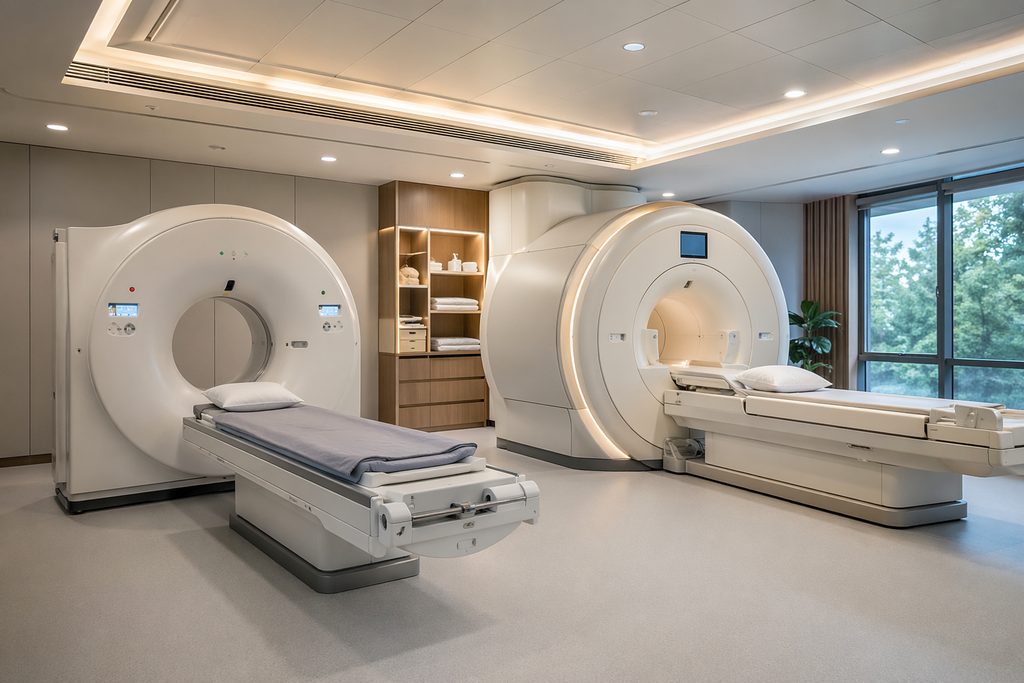
Executive packages at top-tier hospitals can include MRI, low-dose CT, coronary calcium scoring, and same-day specialist consultations. The scope is genuinely customizable — you are not locked into a fixed menu.
Why the Scope Varies So Much
Chinese hospitals build screening packages around age bands and risk profiles. A 45-year-old with no family history gets a different panel than a 60-year-old with a smoking history. That flexibility is an advantage — but it also means you should never assume a package is standardized across institutions.
Full Body Checkup Cost China: What You Should Expect to Pay
This is the question most international patients ask first, and the honest answer is that pricing depends on hospital tier, package depth, and whether you use the standard or international channel.
| Package Tier | Typical Price Range (USD) | What’s Usually Included |
|---|---|---|
| Basic screening | $300 – $600 | Blood panel, urinalysis, chest X-ray, abdominal ultrasound, ECG, physical exam |
| Comprehensive | $800 – $1,500 | All of the above plus thyroid panel, tumor markers, cardiac evaluation, carotid ultrasound |
| Executive / premium | $1,800 – $4,000+ | MRI, low-dose CT, coronary calcium score, endoscopy, same-day specialist consults |
For comparison, an equivalent executive physical in the United States frequently runs $2,500 to $8,000, and often is not covered by insurance. In China, the same depth of testing at a top-ranked public hospital typically lands at one-fifth to one-third of that figure. Prices vary by hospital and case complexity, and the international department channel generally costs 1.5 to 2 times the standard rate — because you are paying for English-speaking staff, shorter waits, and a more private environment.
Private international hospitals such as United Family, Jiahui, and Parkway sit at the higher end but offer direct insurance billing and a Western-style experience. Public tertiary hospitals offer the best value but require more navigation.
A Realistic Timeline
Here is what the calendar actually looks like. Ranges, not best-case numbers.
| Stage | Typical Duration |
|---|---|
| Records collection and translation | 3 – 7 days |
| Written review and package recommendation | 2 – 5 business days |
| Appointment coordination and confirmation | 1 – 3 weeks (varies by hospital and season) |
| Visa application (S2 category) | 1 – 3 weeks depending on consulate |
| The checkup itself | 1 – 2 days on site |
| Preliminary results | 24 – 72 hours |
| Full translated report | 1 – 2 weeks |
Add buffer time. Appointment slots at the most sought-after hospitals fill up, particularly in spring and autumn. Visa processing times fluctuate. If you are traveling with family, coordinate everyone’s documents early.
What Can Go Wrong — and What Happens Then
Not everything runs smoothly, and you deserve to know the failure modes before you commit.
The appointment you wanted isn’t available. Top hospitals have limited international department slots. If we cannot secure the booking you requested, the coordination fee is refunded in full. We do not promise a specific date or a specific physician — only our best effort and a clear refund policy.
A test finds something unexpected. This is the entire point of screening, but it can be unsettling. If a result needs follow-up, the reviewing physician outlines options. That may mean an additional test during your trip, or a recommendation to consult a specialist after you return home. We do not diagnose or treat. We connect you with the people who do.
Language breaks down. Even with English-speaking staff, hospital logistics can be confusing — payment windows, queue numbers, department locations. This is where a bilingual companion earns their keep. Without one, a routine screening can turn into a full day of guesswork.
Results take longer than expected. Complex imaging or pathology can add days. Build flexibility into your travel plans. Do not schedule your return flight for the day after your checkup.
Choosing the Right Hospital: What Actually Matters
If you are searching for the best hospitals for full body checkup in Beijing, you will find a long list. Here is how to narrow it.
Look at the specialty rankings, not just the brand name. A hospital may be famous overall but mediocre in the specific area you care about. If cardiac screening is your priority, check the cardiology rankings. If you want a colonoscopy, look at gastroenterology. The Fudan specialist rankings by department are a useful starting point.
Decide between public and private. Public tertiary hospitals offer the best value and the deepest expertise. Private international hospitals offer convenience, English-speaking staff, and direct insurance billing. Neither is universally better — it depends on your priorities.
Check whether the hospital has a dedicated international department. This matters more than the hospital’s overall reputation. A world-class hospital without an international channel can be frustrating to navigate. One with a well-run international department makes the entire process smoother.
Ask about the report format. Some hospitals provide English-translated reports as standard. Others do not. If you need documentation for your physician at home, confirm this before booking.
Beijing, Shanghai, or Somewhere Else?
Beijing and Shanghai have the densest concentration of top-ranked hospitals. Beijing leads with the most Fudan Top 100 institutions, followed by Shanghai and Guangzhou. If you are searching for medical tourism full body checkup packages in Shanghai, you will find strong options at hospitals like Ruijin and Zhongshan. But cities like Chengdu, Hangzhou, and Nanjing also have excellent facilities, often with shorter wait times and lower prices. Our database of 340+ top-ranked hospitals across 37 cities lets you compare by city and specialty.
Practical Considerations: Records, Visas, Payment, and Follow-Up
Records. Bring everything. Prior imaging, lab results, medication lists, vaccination history. If your records are not in English or Chinese, arrange translation in advance. This can take a week or more.
Visa. International patients traveling to China for medical treatment typically use the S2 visa category, which covers short-stay medical treatment and private affairs. Accompanying family members apply under the same category. Requirements vary by consulate, and supporting documents from the hospital are usually needed. The M visa is for commercial and trade activities — it is not a medical visa. Always check the latest requirements with your nearest Chinese embassy or consulate.
Payment. Public hospitals require prepayment. Insurance reimbursement happens after you return home, and not all insurers cover overseas screening. Private international hospitals often bill insurance directly. Confirm coverage with your insurer before you travel.
Language. Even at hospitals with English-speaking staff, the day-to-day logistics — registration, payment, finding the right department — can be challenging. A bilingual medical companion handles this so you can focus on the medical part.
Follow-up at home. Get your full report in English before you leave. Share it with your primary care physician. A screening is only useful if someone acts on the findings.
Frequently Asked Questions
For many international patients, yes — particularly if cost is a factor or if you want access to high-volume hospitals with deep diagnostic experience. The trade-off is navigation: language, logistics, and appointment coordination require more planning than a local clinic. If you value convenience over cost, a private international hospital may suit you better. If you want the best value and the deepest expertise, a top public hospital is hard to beat.
The on-site portion usually takes four to eight hours, often spread across one or two mornings. Add one to two weeks for the full translated report. If you need a visa, add another one to three weeks. Total planning time from first inquiry to completed checkup is typically three to six weeks.
You can initiate the process from overseas, but most top public hospitals do not allow direct online booking for standard outpatient screening. The practical route is through the hospital’s international department or a coordination service. Our team handles registration, appointment scheduling, and preparation instructions on your behalf. Any admission or treatment beyond the screening remains subject to hospital rules.
The reviewing physician will outline next steps, which may include additional testing, a specialist consultation, or a recommendation to follow up at home. We do not provide treatment or guarantee outcomes. What we can do is coordinate further appointments and help you understand the findings in plain English.
Most international patients use the S2 visa category for short-stay medical treatment. Requirements vary by consulate and supporting hospital documents are typically needed. Check with your nearest Chinese embassy or consulate for the latest rules. Do not assume a tourist visa will cover medical activities.
Your Next Step
A full body checkup in China can deliver comprehensive, high-quality screening at a fraction of Western pricing — but only if you plan the logistics properly. The medical part is straightforward. The navigation is where most international patients get stuck. Our team connects you with top-ranked hospitals, coordinates appointments, and provides bilingual support on the ground. We do not diagnose or treat. We handle the logistics so you can focus on your health. If you would like to explore whether a checkup in China makes sense for your situation, start with a free consultation — no pressure, no obligation, just a conversation about your options.
For more medical information and treatment options in China, visit chinamedservices.com (China Medical Services).
