Hospital of Chengdu University of TCM International Patient Service: Acupuncture and Herbal Medicine
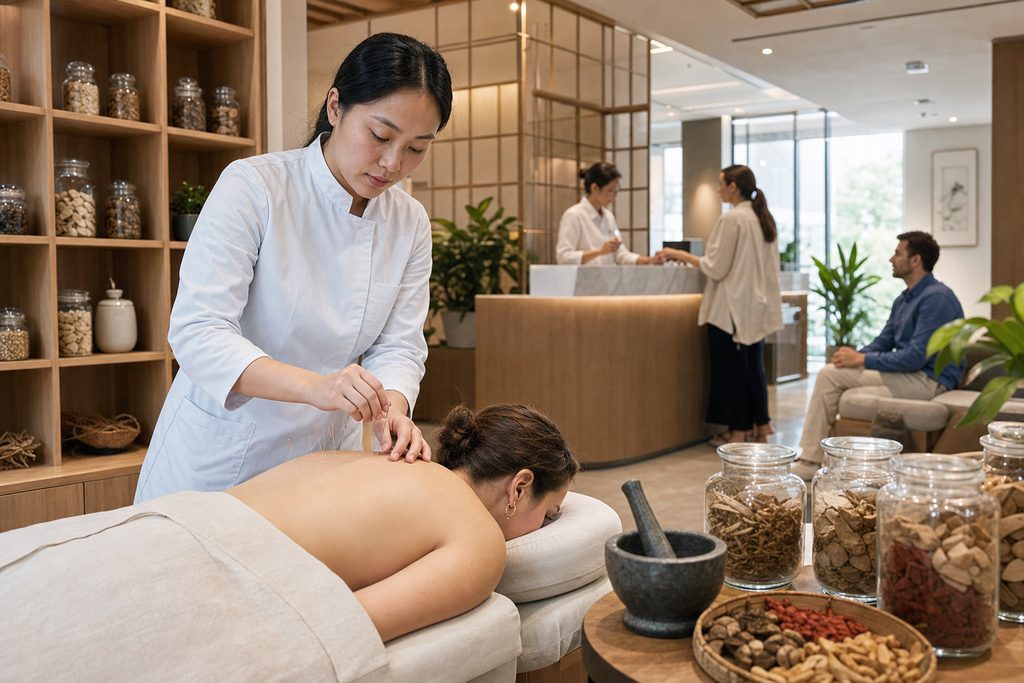
What if the chronic pain that has followed you for years could be addressed by a system of medicine with over 2,000 years of documented clinical observation behind it? That is not a rhetorical question. It is the precise reason approximately 1 in 10 adults globally now seeks some form of traditional or complementary medicine annually, according to the World Health Organization. And yet, for a Western patient, the distance between curiosity and actually walking into a Traditional Chinese Medicine hospital in China can feel insurmountable.
We understand that gap intimately. Our team has spent years building the logistical bridges that make it crossable. The Hospital of Chengdu University of TCM represents one of the most complete integrations of classical herbal knowledge and modern clinical acupuncture you will find anywhere. But accessing it as an international patient requires navigating a system that was not designed for you. That is where we come in. We do not provide medical treatment. We do not diagnose. We are the case management layer that translates your needs into a workable clinical plan, with transparent pricing and zero surprises.
Key Takeaways
- The Hospital of Chengdu University of TCM treats over 2 million outpatient visits annually, making it one of the highest-volume TCM clinical centers globally, with dedicated international departments for acupuncture and herbal prescriptions.
- An acupuncture treatment price in China at a top-tier university hospital typically ranges from $30 to $80 per session, with comprehensive herbal medicine packages costing significantly less than equivalent integrative programs in the US or Europe.
- The single biggest barrier for foreign patients is not clinical quality — it is the administrative chaos of registration, payment systems that reject international cards, and the near-total absence of English-language signage or forms.
- You should understand that TCM diagnosis operates on a completely different framework than Western medicine. A “kidney yin deficiency” diagnosis is not a statement about your kidneys — it is a functional pattern that guides treatment. Expect to learn a new vocabulary for your own body.
The Problem: Chronic Pain Management Is Failing Millions
Roughly 20% of adults in the United States live with chronic pain, a figure that translates to over 50 million people. The economic burden — between treatments, lost productivity, and disability — exceeds $600 billion annually. Opioid prescriptions, once the default response, have created a secondary public health crisis. Many patients are left cycling through NSAIDs, physical therapy, and nerve blocks with diminishing returns.
Something breaks when pain becomes chronic. The nervous system rewires itself. Peripheral sensitization lowers the threshold for pain signals. Central sensitization amplifies them. Standard pharmacological approaches often target the symptom, not the dysregulated system underneath. This is where a different clinical logic becomes relevant. TCM does not ask “where does it hurt and how do we block the signal?” It asks “what pattern of disharmony is producing this pain, and how do we restore balance?”
That shift in framing is not mystical. It has measurable clinical correlates. Functional MRI studies have shown that acupuncture modulates activity in the limbic system and default mode network — brain regions involved in pain processing and emotional regulation. A 2018 meta-analysis published in the Journal of Pain covering nearly 21,000 patients found that acupuncture was superior to sham acupuncture and standard care for chronic musculoskeletal pain, with effects that persisted at 12-month follow-up. The evidence base is not thin. It is just poorly understood in Western clinical settings.
Who We Are
We are not a hospital. We do not employ doctors, we do not prescribe herbs, and we do not make clinical decisions. What we do is remove every logistical obstacle between you and the care you need. We translate medical records into Chinese clinical terminology that TCM physicians can actually work with. We coordinate with the hospital’s international patient office to schedule appointments that align with your travel dates. We put a bilingual medical companion at your side who handles registration, payment, pharmacy queues, and real-time interpretation during your consultation. And we do this across 37 cities and a network of 340+ top-ranked hospitals, including the Hospital of Chengdu University of TCM. You arrive with a clinical question. We make sure nothing gets lost in translation.
Why the Hospital of Chengdu University of TCM Delivers Results
Clinical Volume That Builds Pattern Recognition
There is a quiet truth in medicine: the clinician who has seen 10,000 cases of a condition simply recognizes patterns that a clinician who has seen 100 cases cannot. The Hospital of Chengdu University of TCM operates at a scale that is hard to internalize until you see it. Over 2 million outpatient visits per year. The acupuncture department alone handles hundreds of patients daily. The herbal pharmacy dispenses raw herbs, granules, and prepared medicines on a scale that rivals some pharmaceutical distribution centers.
This volume matters for two reasons. First, it means the senior physicians — especially those in the international department — have encountered an enormous range of clinical presentations. They have seen how a particular herbal formula needs to be modified for a patient from a cold, dry climate versus a hot, humid one. They have treated chronic migraine patterns, post-herpetic neuralgia, and chemotherapy-induced peripheral neuropathy at volumes that generate genuine expertise. Second, the hospital’s integration with Chengdu University of TCM means that clinical practice is constantly informed by research. This is not a small clinic operating on tradition alone. It is a teaching hospital where treatment protocols are studied, refined, and published.
How Does Acupuncture Work for Chronic Pain? The Clinical Reality
The mechanism is more concrete than most patients assume. When a fine-gauge needle is inserted at specific anatomical points, it stimulates A-delta and C-fibers, which transmit signals to the spinal cord and trigger the release of endogenous opioids — endorphins, enkephalins, and dynorphins. It also increases local blood flow and reduces pro-inflammatory cytokines at the site of pain. The cumulative effect over a course of treatment is neuromodulation: the nervous system literally recalibrates its pain signaling thresholds.
At Chengdu, acupuncture is not delivered as a standalone, one-size-fits-all intervention. The physicians assess your tongue, pulse, and symptom pattern to determine which meridians are involved and what type of needle manipulation is indicated. A patient with osteoarthritis of the knee and a patient with fibromyalgia may both receive acupuncture — but the point selection, needle depth, and retention time will differ substantially. This is the clinical sophistication that a high-volume university hospital can offer.
Best Chinese Herbal Medicine Clinic Abroad: The Chengdu Advantage
Herbal medicine at this hospital is not a retail transaction. You do not walk in, describe your symptoms, and walk out with a pre-packaged bottle. The consultation typically involves a detailed history, tongue and pulse diagnosis, and a custom-written formula that may combine 8 to 15 individual herbs in specific ratios. The pharmacy fills the prescription while you wait — raw herbs for decoction at home, or concentrated granules that dissolve in hot water.
Chengdu occupies a special position in Chinese herbal medicine. The region is one of China’s most biodiverse, and Sichuan province has been a center of herbal cultivation and processing for centuries. The hospital’s pharmacy maintains rigorous quality control standards, testing for heavy metals, pesticide residues, and microbial contamination — concerns that are top of mind for any international patient wondering “is traditional Chinese medicine safe for foreigners.” The answer is that safety depends entirely on sourcing and prescribing expertise. A formula prescribed by a senior physician at a university hospital, dispensed from a quality-controlled pharmacy, is a fundamentally different product from an unregulated supplement ordered online.
Acupuncture Treatment Price China: What to Actually Expect
Let us address the financial question directly. The acupuncture treatment price in China at a top-tier university hospital like Chengdu typically runs between $30 and $80 per session, depending on the complexity and duration. A standard session lasts 30 to 45 minutes. If electro-acupuncture or moxibustion is added, the cost may be slightly higher. A course of 10 sessions — a common initial treatment plan — would therefore range from roughly $300 to $800.
Herbal medicine costs vary more widely. A week’s supply of custom-prescribed granulated herbs might range from $40 to $120, depending on the specific ingredients. Some classic formulas use relatively inexpensive herbs. Others, particularly those containing rare or slow-growing botanicals, cost more. Your physician should be able to discuss cost trade-offs during the consultation.
The Chengdu University TCM international patient cost structure also includes hospital administrative fees for the international department, which typically add $50 to $100 per visit. These fees cover English-language coordination, priority scheduling, and longer consultation times compared to the standard domestic outpatient visit. It is worth noting that even with these additional fees, the total cost of a full treatment course in Chengdu is often less than what a patient might pay for a single consultation and a few acupuncture sessions at a private integrative clinic in New York or London.
| Service | Chengdu University TCM (USD) | US Private Clinic (USD) | UK Private Clinic (USD) |
|---|---|---|---|
| Initial TCM Consultation (60 min) | $50 – $100 | $150 – $350 | $120 – $280 |
| Acupuncture Session (45 min) | $30 – $80 | $75 – $150 | $60 – $130 |
| Herbal Formula (1 week supply) | $40 – $120 | $60 – $200 | $50 – $180 |
| 10-Session Acupuncture Package | $300 – $800 | $750 – $1,500 | $600 – $1,300 |
These figures are estimates based on our case management experience. Final costs always depend on the specific diagnosis, treatment plan, and hospital department involved. We provide a detailed cost breakdown before you commit to anything.
What You Need to Know Before Going Alone
We have seen patients attempt to navigate this hospital independently. Some succeed. Most lose days to administrative friction that could have been avoided. Here is what you are up against:
- Registration Requires a Chinese Phone Number and Local ID Logic: The hospital’s registration system is built for domestic patients. It expects a Chinese mobile number for SMS verification and a national ID number format that foreign passport numbers do not match. The international department bypasses this, but you need to know it exists and how to reach it — the main hospital switchboard often cannot transfer you to the right office in English.
- Payment Systems Routinely Reject International Cards: Hospital payment terminals in China predominantly process UnionPay, WeChat Pay, and Alipay. Visa and Mastercard are accepted at some international department counters, but not all. We have seen patients stand at a payment window for 45 minutes cycling through cards that all decline. We carry local payment methods and reconcile with you afterward.
- Clinical Communication Goes Beyond Language: A TCM consultation involves describing sensations — heat, cold, pressure, tingling, the exact quality of your pain — in ways that a standard medical interpreter may not be trained to handle. “My pain feels like a dull ache that moves from my lower back to my knee when the weather changes” is a clinically meaningful statement in TCM. Translating it accurately requires familiarity with both the terminology and the diagnostic framework.
How We Help You Navigate This
These barriers exist for structural reasons, not because anyone is trying to make it difficult. The hospital serves a primarily domestic patient population of enormous scale. The international patient pathway is a specialized channel that requires advance coordination.
We start with your clinical history. You send us your relevant medical records, imaging reports, and a description of what you have tried and what you are hoping to achieve. We translate these into Chinese clinical summaries formatted for TCM physicians. We then coordinate with the hospital’s international patient office to schedule your consultations — typically an initial TCM evaluation followed by acupuncture sessions and herbal prescription review. We confirm dates, times, and the specific department before you book a flight.
When you arrive in Chengdu, a bilingual medical companion meets you at the hospital entrance. This person handles registration, guides you to the correct department, stays with you during the consultation to interpret in real time, escorts you to the pharmacy, and ensures you understand exactly how to take your herbs — decoction times, dosage, dietary considerations. After you return home, we can coordinate follow-up video consultations if your physician recommends ongoing treatment adjustments.
We also handle the unglamorous details. Airport transfer. Hotel recommendations within walking distance of the hospital. Visa guidance — you will need an S2 visa with a medical treatment annotation, and we provide the hospital invitation letter that supports your application. None of this is clinical. All of it determines whether your treatment experience is focused and calm or scattered and stressful.
Is Traditional Chinese Medicine Safe for Foreigners? Addressing the Core Concern
This question deserves a direct answer. Safety in TCM depends on three factors: the quality of the herbal products, the competence of the prescribing physician, and the patient’s full disclosure of their medical history and current medications.
At the Hospital of Chengdu University of TCM, herbal products are sourced through regulated supply chains with testing for contaminants. The physicians are licensed practitioners with years of formal training, not short-course certificate holders. The international department is specifically accustomed to treating patients who may be on Western pharmaceuticals, and the physicians routinely check for herb-drug interactions. Certain herbs can potentiate or inhibit cytochrome P450 enzymes, affecting how your body metabolizes prescription medications. A competent TCM physician will ask about every medication you take and adjust the formula accordingly.
Acupuncture carries a very low risk profile when performed by trained practitioners using single-use, sterile needles. The most common adverse events are minor bruising or transient soreness at needle sites. Serious complications — pneumothorax from improper needling depth, for example — are extremely rare in a hospital setting with proper training and anatomical knowledge.
The honest caveat: TCM is not risk-free. No medical intervention is. But the risk profile at a top-tier Chinese university hospital is fundamentally different from what you might encounter buying unregulated herbal products online or visiting an under-qualified practitioner abroad. The institutional infrastructure — quality control, peer review, standardized training — is what makes the difference.
Book TCM Treatment Package Chengdu Hospital: What That Actually Means
The phrase “treatment package” can be misleading. TCM is inherently individualized. You are not booking a spa package with a fixed menu. What you can do — and what we help facilitate — is coordinate a structured treatment plan over a defined period.
A typical two-week plan might include an initial comprehensive TCM evaluation, 8 to 10 acupuncture sessions scheduled every weekday, a custom herbal formula dispensed at the start with a follow-up adjustment after one week, and a closing consultation to assess progress and provide a written summary for any follow-up care at home. The hospital’s international department can structure this as a coordinated program with scheduled appointments, which is as close to a “package” as clinical TCM gets.
Costs for such a program, including all consultations, acupuncture sessions, and two weeks of herbal medicine, typically range from $1,200 to $2,500 depending on the specific treatments and herbal ingredients involved. This does not include travel, accommodation, or our coordination services. We provide a detailed estimate before any commitment is made.
Frequently Asked Questions
Most patients report some change — not necessarily pain resolution, but a shift in intensity or quality — within 4 to 6 sessions. Chronic conditions that have been present for years typically require a longer course. A common initial plan is 10 sessions over two weeks, with reassessment at the end. Some conditions respond faster than others. Acute musculoskeletal pain often improves more quickly than neuropathic pain or long-standing autoimmune-related pain. Your physician should give you a realistic prognosis after the initial evaluation.
Most Western insurance plans do not directly cover treatment at Chinese public hospitals. Some international health insurance policies with out-of-network benefits may reimburse a portion of the cost if you submit detailed receipts and clinical documentation. We provide the itemized invoices and medical summaries you need for reimbursement claims, but we cannot guarantee coverage. Check with your insurer before traveling. For patients paying out of pocket, the total cost is often manageable even without insurance — and substantially lower than equivalent care in the US or Europe.
This is rare but not impossible. Some patients experience mild digestive upset when starting a new formula, which often resolves within a few days as the body adjusts. More significant reactions — allergic responses to a specific herb, for instance — should be reported to your physician immediately. The hospital’s international department provides contact information for after-hours concerns. If you have known allergies to plants, foods, or medications, disclose them fully during your initial consultation. The prescribing physician can often substitute ingredients to avoid known allergens.
In most cases, yes — and you should. TCM is typically complementary, not a replacement for essential pharmaceuticals. Do not stop taking prescribed medications without consulting the physician who prescribed them. The TCM physician at Chengdu will ask for your complete medication list and consider potential interactions when designing your acupuncture protocol and herbal formula. Some herbs can affect blood clotting or blood pressure, so full transparency about anticoagulants, antihypertensives, and all other medications is critical.
The herbal formula you receive can be taken home with you, and the hospital pharmacy can often arrange to ship refills internationally — though customs regulations vary by country, and some herbs may be restricted. Your physician can provide a written summary of your diagnosis and treatment plan in both Chinese and English, which you can share with a local TCM practitioner for continuity of care. We also coordinate follow-up video consultations if your physician determines that ongoing adjustments to your formula are needed. The goal is not a one-time intervention but a treatment arc that continues after you leave Chengdu.
Your Next Step
The distance between chronic pain and effective treatment is not measured in miles. It is measured in the quality of the clinical reasoning you can access and the logistical support that gets you in front of the right physician without exhaustion. Chengdu offers something genuinely distinct: a high-volume university hospital where classical herbal knowledge and modern acupuncture research coexist, at a cost that makes extended treatment courses financially feasible.
If you are considering TCM treatment in China, start with a conversation. Tell us about your condition, what you have tried, and what you are hoping for. We will tell you honestly whether the Hospital of Chengdu University of TCM is a good fit — and if it is, we will handle the rest. Contact our team for a free initial consultation about your treatment options in China. No pressure. No pitch. Just a clear path forward.
Disclaimer: This article is for informational purposes only and does not constitute medical advice. Traditional Chinese Medicine treatments, including acupuncture and herbal medicine, carry risks and may not be appropriate for all patients. Always consult a qualified healthcare provider before beginning any new treatment. Treatment outcomes vary by individual. Cost estimates are provided for reference and may differ based on your specific diagnosis, treatment plan, and the hospital’s current fee schedule.
For more medical information and treatment options in China, visit chinamedservices.com (China Medical Services).
