Jiahui International Hospital Shanghai: Premium Private Care and Real Costs for International Patients
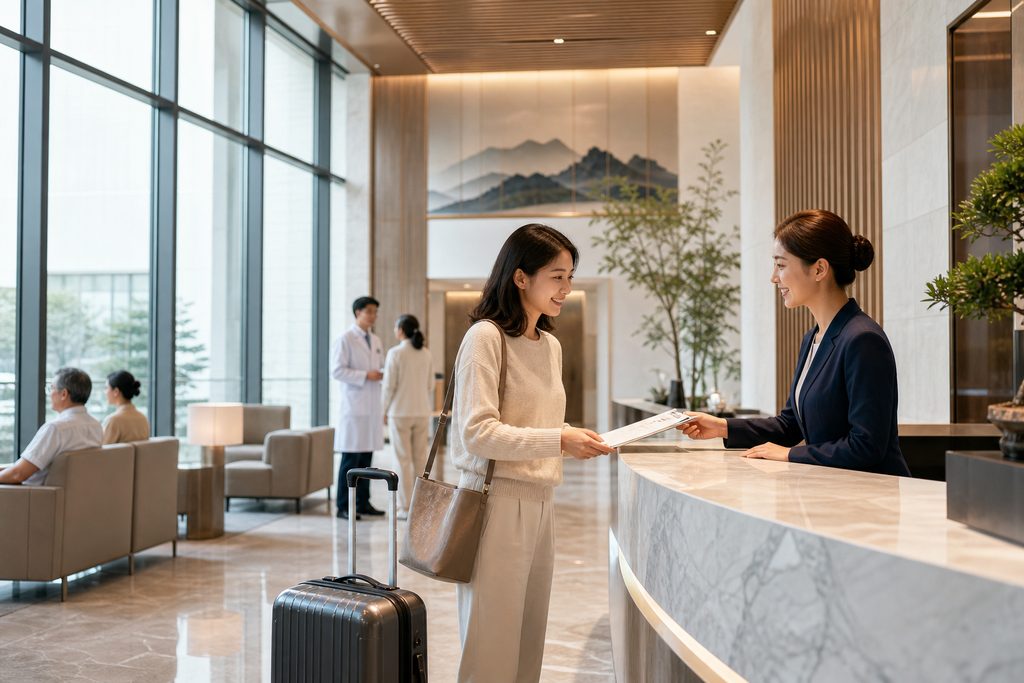
When 42-year-old Michael first heard the diagnosis—advanced osteoarthritis in his left hip—he had no idea where to start looking for treatment. His surgeon in Manchester told him the wait for a total hip replacement on the NHS would be at least 14 months. Going private in the UK meant £14,000 out of pocket. He started searching for alternatives. That search led him to Shanghai.
Michael is not alone. Approximately 1 in 8 adults in the US and Europe now face joint replacement surgery at some point in their lives. Wait times in Canada average 6 to 12 months for non-emergency orthopedic procedures. In the UK, the NHS backlog for joint replacements passed 800,000 patients in early 2025. People are looking beyond their borders. They are looking for quality, speed, and value.
And increasingly, they are looking at one name: Jiahui International Hospital.
Key Takeaways
- Jiahui International Hospital is one of only a handful of JCI-accredited private hospitals in mainland China, with full English-speaking staff and direct insurance billing with over 40 global insurers.
- A total hip replacement at Jiahui typically costs between $18,000 and $28,000 USD—roughly 40-60% less than comparable private care in the United States or United Kingdom.
- International patients cannot simply book surgery online. You must complete an in-person consultation first. We handle the entire coordination process, from visa guidance to post-operative recovery logistics.
- The hospital operates on a transparent, package-based pricing model. But published price lists rarely tell the full story. Your actual cost depends on implant choice, surgeon seniority, and case complexity.
The Problem: Premium Private Care Is Out of Reach for Too Many People
Let us be blunt. The global market for private healthcare has split into two extremes. On one end, you have public systems buckling under demand—14-month waits for hips, 9-month waits for cardiac consultations, emergency rooms overflowing. On the other end, you have elite private hospitals in London, New York, and Singapore charging $50,000 to $70,000 for procedures that, clinically speaking, should not cost anywhere near that much.
There is a structural reason for this. In the US, hospital charges are inflated by a labyrinth of insurance negotiations, administrative overhead, and defensive medicine practices. A 2023 study in Health Affairs found that administrative costs alone account for roughly 25% of total hospital spending in the United States. The UK private sector, meanwhile, operates on relatively low surgical volumes, which pushes per-procedure costs higher. Neither system was designed for value.
What if you could access a hospital built to international standards, staffed by surgeons trained in the US and Europe, with outcomes comparable to top Western centers—at roughly half the cost? That is not marketing language. That is the structural reality of Shanghai’s premium private hospital sector.
Who We Are
We are China Medical Services. We are not a hospital. We do not provide medical treatment, clinical diagnoses, or surgical care. We are your logistical architects—the team that bridges the gap between you and China’s top-tier medical institutions. Our database covers 340+ top-ranked hospitals across 37 cities, including Jiahui International Hospital and other JCI-accredited private facilities. We handle hospital matching, appointment coordination, bilingual medical companionship, visa guidance, and travel logistics. Think of us as your local partner on the ground—the people who make sure you walk into the right hospital, see the right specialist, and understand every word spoken along the way.
Why Jiahui International Hospital Delivers Results for International Patients
JCI Accreditation and Western-Trained Clinical Leadership
A common question we hear from patients researching options in China: is Jiahui International Hospital JCI accredited? Yes. Jiahui earned full Joint Commission International accreditation in 2021 and has maintained it since. That matters. JCI is the global gold standard for hospital quality and patient safety. Fewer than 1% of Chinese hospitals hold this credential. It means the hospital meets the same standards for infection control, medication safety, surgical protocols, and patient rights as top hospitals in the US and Europe.
But accreditation is just paper if the people are not right. Jiahui’s clinical leadership includes physicians who trained at Massachusetts General Hospital, Johns Hopkins, and leading European teaching hospitals. The orthopedic surgery department, for example, is led by surgeons who completed fellowships in the US and Germany. Nursing protocols follow international standards. All clinical documentation is available in English and Chinese. This is not a hospital that merely accepts foreign patients. It was designed for them.
A Premium Private Hospital Built for the International Patient Experience
Walk into Jiahui’s main campus in Xuhui District and you will notice something immediately. It does not feel like a Chinese public hospital. There are no crowds of hundreds jostling at a registration window. No shared recovery rooms with eight beds and no privacy. Jiahui was purpose-built as a premium private facility. Private patient rooms. On-site international patient coordinators. A dedicated executive health screening center. Direct insurance billing with over 40 global carriers, including Aetna, Cigna, Bupa, and Allianz. The pharmacy stocks FDA and EMA-approved medications.
For international patients, this changes everything. You are not navigating a system designed for locals. You are entering a facility where English is spoken at every touchpoint, from the registration desk to the operating theater.
Cost Transparency and Package-Based Pricing
When patients search for a Jiahui hospital Shanghai price list, they are usually trying to answer one question: can I afford this? The honest answer is that published price lists exist, but they rarely capture the full picture. Jiahui operates on a package-based pricing model for most surgical procedures and health screenings. This means you are quoted an all-inclusive price covering the surgeon’s fee, anesthesia, operating theater costs, implant or device costs, nursing care, and a standard length of stay.
Let us talk real numbers. A total hip replacement at Jiahui typically ranges from $18,000 to $28,000 USD. The variation depends on three factors: the implant system you choose (ceramic-on-ceramic costs more than metal-on-polyethylene), the seniority of your surgeon, and whether your case involves complications like severe bone loss or prior surgeries. Compare that to $40,000 to $65,000 for the same procedure at a private hospital in the US, or £14,000 to £18,000 in the UK private sector. The cost advantage is structural, not promotional. China’s lower labor costs for nursing and support staff, combined with high surgical volumes, drive per-case costs down without cutting corners on implant quality or clinical standards.
| Procedure | Jiahui (USD) | US Private (USD) | UK Private (USD equiv.) |
|---|---|---|---|
| Total Hip Replacement | $18,000 – $28,000 | $40,000 – $65,000 | $18,000 – $24,000 |
| Total Knee Replacement | $20,000 – $30,000 | $45,000 – $70,000 | $19,000 – $26,000 |
| Executive Health Screening (Full Day) | $1,200 – $2,500 | $3,000 – $6,000 | $2,500 – $5,000 |
| Cardiac CT Angiography | $800 – $1,200 | $2,500 – $4,000 | $1,800 – $3,000 |
These are reference ranges. Every case is different. Implant choice alone can swing the price by $5,000 or more. We help you get a binding quote before you travel.
What You Need to Know Before Going Alone
We want to be completely straightforward about this. Jiahui is an excellent hospital. But accessing it as an international patient involves friction that no hospital website will tell you about.
- Visa Requirements: Medical treatment in China requires an S2 visa, specifically annotated for medical purposes. You cannot enter on a tourist L visa and then check into a hospital for surgery. The S2 application requires an invitation letter from the hospital—something Jiahui can provide, but only after you have completed a formal registration and consultation scheduling process. Wait times for visa processing vary by consulate. We handle this end-to-end.
- Payment Systems: Jiahui accepts international credit cards and direct insurance billing with partner insurers. But here is the catch: most Chinese hospitals, including Jiahui, require a deposit before admission for self-pay patients. That deposit can be 50% to 100% of the estimated procedure cost, paid upfront. International wire transfers take 3-5 business days. Alipay and WeChat Pay—the dominant payment platforms in China—are difficult for foreigners to set up without a Chinese bank account. If your insurance requires pre-authorization, the timeline can stretch further. We help you navigate the payment pathway before you arrive so there are no surprises at the registration desk.
- Medical Records and Imaging Standards: Chinese surgeons require specific imaging protocols. An MRI done in Germany or the US may not meet the slice thickness or sequence requirements that a Jiahui orthopedic surgeon needs for surgical planning. You may need repeat imaging on arrival. That adds time and cost. We coordinate with the hospital’s clinical team to review your existing records before you travel, flagging any gaps early.
How We Help You Navigate This
These barriers exist for structural reasons. They are not designed to keep you out. They are simply the reality of crossing borders for healthcare. Our job is to make them disappear.
Before you travel, we collect and translate your medical records, imaging, and referral letters. We present your case to the relevant department at Jiahui and secure a confirmed consultation appointment—not a vague “show up and queue” arrangement. We work with the hospital’s international patient office to generate the invitation letter you need for your S2 visa application. We advise on travel insurance, accommodation near the Xuhui campus, and realistic recovery timelines.
During your stay, a bilingual medical companion accompanies you to every appointment. This person handles registration, payment, prescription collection, and real-time interpretation between you and your clinical team. You focus on your health. We handle everything else. After discharge, we coordinate follow-up consultations—either in-person if you remain in Shanghai, or via video consultation if you have returned home. Any video consultation fee you pay is credited in full toward future on-the-ground coordination services within 90 days.
Executive Health Screenings: A Different Kind of Value Proposition
Not every patient comes to Jiahui for surgery. A growing number of international visitors book executive health screening Shanghai packages as part of a broader medical tourism trip. These are comprehensive, full-day assessments that include advanced imaging (low-dose chest CT, cardiac calcium scoring, whole-abdomen ultrasound), extensive blood panels, cardiopulmonary exercise testing, and same-day consultations with internal medicine specialists.
The price range is $1,200 to $2,500 USD depending on package depth. Comparable screenings at US executive health programs—like the Mayo Clinic’s Executive Health Program or Cleveland Clinic’s offering—run $3,000 to $6,000. The difference is not in the quality of the imaging equipment. Jiahui uses Siemens and GE machines identical to those in top Western hospitals. The difference is in labor costs and operational efficiency. You get the same CT scan, read by a radiologist trained in the US, for a fraction of the price.
One practical note: these screenings are designed for asymptomatic individuals seeking preventive assessment. If you have active symptoms or a known condition, you need a diagnostic workup, not a screening package. We help you distinguish between the two and book the right type of appointment.
Premium Medical Care China Package: What Does That Actually Include?
The phrase premium medical care China package gets thrown around a lot in marketing materials. Let us define what it actually means at Jiahui. A premium care package typically bundles the following: a private room for the duration of your stay, a dedicated nurse coordinator, all meals, Wi-Fi, in-room entertainment, daily consultant rounds, and post-discharge physiotherapy sessions. For surgical patients, the package covers the implant, operating theater costs, anesthesia, and standard recovery stay.
What it does not cover: extended stays beyond the standard recovery period, complications requiring ICU admission, custom implants, or experimental treatments. These are billed separately. We make sure you understand exactly what is included before you commit. Transparency is not just a nice-to-have in this context. It is the foundation of trust when you are traveling 6,000 miles for surgery.
Why Jiahui Stands Out Among Private Hospitals in Shanghai
Shanghai has several private hospitals that cater to foreigners. United Family Healthcare, ParkwayHealth, and Raffles Medical all operate facilities in the city. So why do many international patients and our team consider Jiahui the best private hospital Shanghai for foreigners? Three reasons.
First, scale. Jiahui’s main campus is a 500-bed facility—large enough to house comprehensive specialty departments under one roof. Smaller private clinics often lack in-house surgical suites or advanced imaging. Jiahui has both. Second, clinical depth. The hospital employs full-time, salaried specialists across more than 35 departments, including oncology, orthopedics, cardiology, neurology, and obstetrics. You are not seeing a rotating roster of part-time physicians. Third, integration. Jiahui operates its own international cancer center in partnership with US-based academic medical centers, giving patients access to multidisciplinary tumor boards and clinical trial matching—a level of sophistication rare in private Chinese hospitals.
What About Orthopedic Surgery Specifically?
Since Michael’s case opened this article, let us stay with orthopedics. The question how much does a hip replacement cost in Shanghai is one of the most frequent queries we receive. We have given the price range. But price without context is noise.
Jiahui’s orthopedic surgeons use implant systems from Stryker, Zimmer Biomet, and DePuy Synthes—the same manufacturers supplying US and European operating rooms. The anterior approach for hip replacement, which avoids cutting major muscles and enables faster recovery, is standard practice among Jiahui’s senior surgeons. Post-operative infection rates at Jiahui are below 1%, consistent with international benchmarks. The hospital’s physiotherapy team begins mobilization on post-op day one, following enhanced recovery protocols developed in the UK and Scandinavia.
One difference worth noting: Chinese surgeons tend to be more conservative about discharge timelines. Where a US hospital might discharge a hip replacement patient on day two, Jiahui often keeps patients for three to five days. This is not a sign of complications. It reflects a different clinical culture that prioritizes supervised early recovery. For international patients, the extra days can actually be reassuring—you are not being rushed out the door before you feel ready.
Frequently Asked Questions
No. Jiahui requires an in-person consultation with the operating surgeon before any procedure is scheduled. This is standard practice at all reputable hospitals in China. The surgeon must examine you, review your imaging personally, and confirm the surgical plan. We can arrange that consultation appointment before you travel, but the surgery itself cannot be locked in until the surgeon signs off after seeing you. This is a patient safety measure, not a bureaucratic hurdle.
Yes, Jiahui holds full JCI accreditation. Practically speaking, JCI accreditation means the hospital follows standardized protocols for patient identification, surgical time-outs, medication reconciliation, infection prevention, and fall risk assessment. These are the same safety practices required at JCI-accredited hospitals in the US, Singapore, and Europe. For you as a patient, it means a lower risk of preventable errors. It also means the hospital’s clinical documentation and discharge summaries will be formatted in a way your home-country physician can understand.
Jiahui has an on-site intensive care unit, 24-hour in-house physician coverage, and transfer agreements with major public hospitals in Shanghai for sub-specialty emergencies. The hospital carries international medical malpractice insurance. That said, no hospital in the world can guarantee zero complications. We advise all patients to carry comprehensive medical travel insurance that covers complication management and, in rare cases, medical evacuation. We can recommend insurers who specialize in medical tourism coverage. We never minimize the risks of traveling for surgery. We help you plan for them.
It depends entirely on your specific plan. Jiahui has direct billing agreements with over 40 international insurers, including major carriers like Cigna, Aetna, Bupa, and Allianz. If your insurer is on that list and your plan covers overseas treatment, Jiahui will bill them directly. If your insurer is not partnered, you pay out of pocket and seek reimbursement. We strongly recommend confirming coverage and obtaining pre-authorization before you book any flights. We assist with the documentation insurers typically require—procedure codes, cost estimates, and hospital credentialing information.
Plan for a minimum of three weeks. That breaks down roughly as follows: two to three days for pre-operative consultation and any repeat imaging, three to five days for the hospital stay itself, and ten to fourteen days for early recovery and physiotherapy before you are cleared to fly. Long-haul flights immediately after joint replacement carry an elevated risk of deep vein thrombosis. Most surgeons want you mobile, off heavy pain medication, and past the peak DVT risk window before you board a plane. Some patients stay longer to complete a more intensive physiotherapy program before returning home.
Your Next Step
Michael had his hip replaced at Jiahui in March 2025. He was walking without crutches by week six. He paid roughly half what he would have paid privately in the UK, and he waited three weeks from first contact to surgery—not fourteen months. That outcome is not exceptional. It is what a well-coordinated international patient journey looks like when the right hospital meets the right logistical support.
You have questions. We have answers grounded in real experience coordinating care at Jiahui and across Shanghai’s top hospitals. A conversation costs nothing. It might save you months of waiting and tens of thousands of dollars. Get a free consultation with our team. We will help you understand your options, your costs, and your timeline—clearly, honestly, and without pressure.
For more medical information and treatment options in China, visit chinamedservices.com (China Medical Services).
