Peking University Cancer Hospital International Patient Service: What to Know Before You Go
Have you ever stared at a treatment estimate from a Western hospital and felt the numbers simply do not add up to a life you can afford? A cancer diagnosis is heavy enough without the financial gut punch that follows.
What if the barrier is not the medicine itself, but the system you are standing in?
Key Takeaways
- Peking University Cancer Hospital handles over 750,000 outpatient visits annually, ranking it among China’s top-tier oncology centers by clinical volume and the Fudan specialty reputation list.
- International patient access runs through the hospital’s official VIP International Medical Center channel — walk-in general registration is not available to overseas patients without local documentation.
- Treatment costs for common oncology procedures typically range from 30% to 70% less than comparable US or UK private-sector rates, but payment is required upfront before admission.
- Language barriers, visa requirements, and hospital payment systems create genuine logistical hurdles. None are insurmountable, but planning changes everything.
The Problem: Cancer Care Costs Are Breaking People — Before Treatment Even Starts
In 2023, the American Cancer Society reported that roughly 1 in 3 cancer survivors in the United States carried medical debt directly tied to their treatment. The average cost of a single course of immunotherapy in the US now exceeds $150,000. A PET-CT scan? Anywhere from $3,000 to $6,000, depending on the facility. These are not abstract numbers. They are the reason families drain retirement accounts, sell homes, or worse — delay care until it is too late.
Wait times compound the damage. In Canada, the median wait between specialist referral and first oncology consultation stretched past 27 days in 2022, according to the Fraser Institute. The UK’s NHS target of 62 days from urgent GP referral to first cancer treatment has been missed consistently since 2019. Cancer does not wait for bureaucratic clearance. Every week matters.
And yet, there is a parallel reality most patients never explore. China’s top oncology hospitals perform staggering clinical volumes. They deploy advanced radiotherapy platforms — proton systems, TomoTherapy, Gamma Knife — at a pace that builds deep procedural expertise. The physicians here see more rare tumor presentations in a single quarter than many Western oncologists encounter in a decade. The question is not whether the clinical capability exists. The question is whether an international patient can access it without losing months to confusion and paperwork.
Who We Are
We are not a hospital. We do not provide medical treatment, prescribe therapies, or diagnose conditions. China Medical Services operates as a medical concierge and case management organization — we bridge the gap between international patients and China’s top-ranked hospitals. Our team handles hospital matching, appointment coordination through official international department channels, bilingual medical companion services, visa guidance, and logistical support across 37 cities. We exist because excellent oncology care should not be locked behind language barriers and unfamiliar administrative systems.
Why Peking University Cancer Hospital Draws International Attention
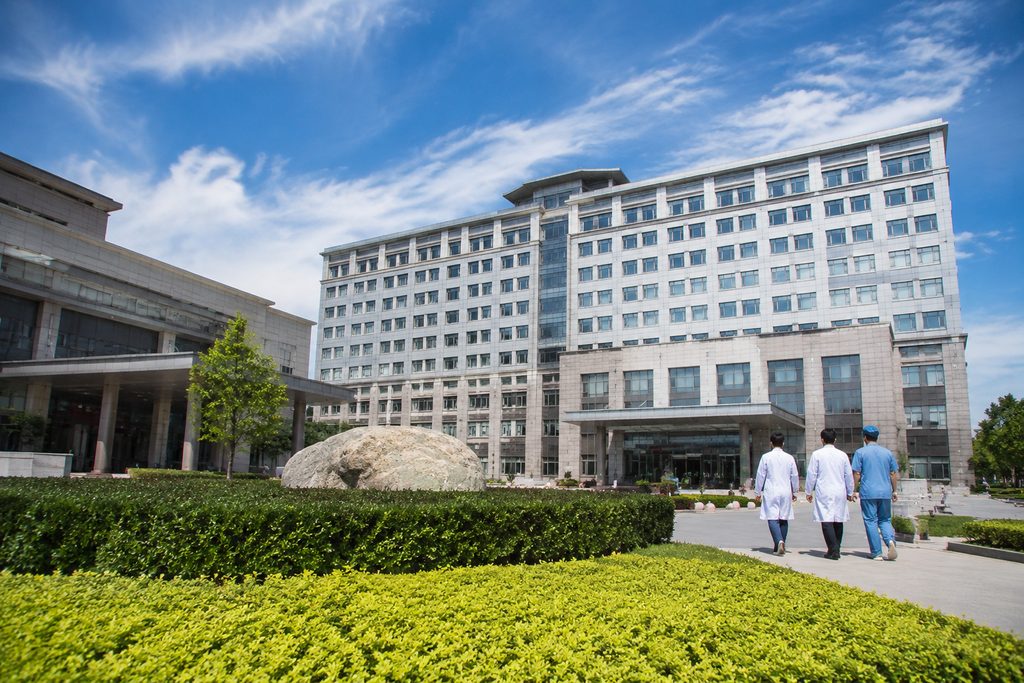
Peking University Cancer Hospital — also known as Beijing Cancer Hospital — sits inside a concentrated ecosystem of clinical research and high-volume surgical practice. It is consistently ranked among China’s top 10 hospitals for oncology by the Fudan University Hospital Reputation Rankings, a classification system that evaluates over 35,000 hospitals nationwide and places only the top 5% in its published specialty lists. That reputation is not built on marketing. It is built on cases. Thousands and thousands of them.
Clinical Volume That Builds Pattern Recognition
The hospital manages approximately 750,000 outpatient visits and admits more than 60,000 inpatients each year. Its surgical teams perform over 16,000 cancer surgeries annually. These numbers translate into something real: a thoracic surgeon here may complete more esophagectomies in a year than a surgeon at a respected regional US center performs in five. Volume does not guarantee outcomes. But in complex oncology, pattern recognition — the ability to spot complications before they spiral — correlates with experience, and experience correlates with caseload.
The hospital houses 35 clinical departments and operates one of China’s most active clinical trial programs, with over 200 ongoing trials at any given time. For patients with advanced or treatment-resistant cancers, this means potential access to next-generation therapies years before they receive FDA or EMA approval. That access is not automatic. It requires proper screening, documentation, and coordination — but the pipeline exists.
Technology Infrastructure That Rivals Any Western Center
The radiation oncology department runs multiple linear accelerators, including Varian TrueBeam and Edge systems capable of stereotactic radiosurgery. The imaging center deploys PET-CT, 3.0T MRI, and spectral CT platforms that generate the kind of high-resolution tumor mapping precision oncology demands. These are the same machines you would find at MD Anderson or Memorial Sloan Kettering. The difference is throughput. A single machine here might scan 40 patients in a day. That efficiency drives down per-procedure cost without cutting corners on image quality.
Also notable: the hospital’s multidisciplinary team model is standard practice, not an upsell. For complex cases — pancreatic cancer, glioblastoma, metastatic disease with unclear primaries — tumor boards convene regularly, pulling in surgical oncology, medical oncology, radiation oncology, pathology, and imaging specialists to hash out treatment sequencing. This is how top-tier oncology should work everywhere. The fact that it is routine here matters.
The Peking University Cancer Hospital International Patient Price Reality
Let us address the question most readers search for directly: what does treatment actually cost? The Peking University Cancer Hospital international patient price structure differs from domestic billing. International patients access care through the VIP International Medical Center, which charges at approximately 1.5 to 2 times the standard domestic rate. That premium covers English-language coordination, expedited appointment scheduling, and access to senior specialists. Even with that multiplier, the numbers remain dramatically lower than Western private-sector equivalents.
| Procedure | Estimated Cost at Peking University Cancer Hospital (International Patient) | Approximate US Private-Sector Cost |
|---|---|---|
| PET-CT Scan (whole body) | $800 – $1,200 | $3,000 – $6,000 |
| Radical Gastrectomy (stomach cancer) | $12,000 – $18,000 | $60,000 – $100,000+ |
| Lobectomy (lung cancer, VATS) | $15,000 – $22,000 | $70,000 – $120,000+ |
| Course of Chemotherapy (6 cycles, standard regimen) | $8,000 – $15,000 | $30,000 – $80,000+ |
| IMRT Radiation Therapy (full course) | $10,000 – $18,000 | $50,000 – $100,000+ |
These figures are estimates. Final pricing varies by case complexity, length of stay, and specific treatment protocols. But the pattern holds: Beijing oncology treatment cost for foreigners typically lands at one-third to one-half of comparable US rates, and often below what self-paying patients face in the UK, Australia, or Singapore. The cost advantage is structural — driven by lower labor costs, higher patient throughput, and a hospital financing model that does not carry the same administrative overhead burden as Western systems. Lower cost here does not signal lower quality. It signals a different economic architecture entirely.
What Is the Best Cancer Hospital in Beijing for International Patients?
This question has no single answer. Beijing hosts multiple oncology centers ranked in the Fudan specialty reputation top 10, and the “best” choice depends entirely on tumor type, stage, and treatment goals.
Peking University Cancer Hospital excels in gastrointestinal oncology — gastric cancer, colorectal cancer, esophageal cancer — as well as thoracic oncology and breast cancer. Its hepatobiliary and pancreatic surgery program is among the strongest in northern China. For hematological malignancies, patients often look toward Peking University People’s Hospital. For neurosurgical oncology, Tiantan Hospital carries the stronger reputation. For rare sarcomas or pediatric solid tumors, the landscape shifts again.
This is precisely where hospital matching matters. A patient with stage III esophageal squamous cell carcinoma should not simply search “what is the best cancer hospital in Beijing for international patients” and pick the top result. They need to know which center performs the highest volume of that specific surgery, which department runs active clinical trials for that histology, and which international patient pathway actually accepts overseas cases for that indication. General reputation is a starting point. Specific matching is what avoids wasted trips.
How to Get Cancer Treatment at Peking University Cancer Hospital: The Real Pathway
Here is the process that actually works, stripped of wishful thinking.
First, understand what does not work. You cannot walk into the general outpatient hall, queue at a registration window, and book an appointment as a foreign passport holder without Chinese residency documentation. The hospital’s standard registration system requires a Chinese ID number or a local residence permit linked to the national health insurance platform. International patients without these credentials must go through the VIP International Medical Center — a designated channel built specifically for overseas cases. This is not a loophole. It is the official route.
Second, you need medical records translated into English or Chinese before any oncologist will review your case. The hospital requires pathology reports, imaging studies (preferably on CD in DICOM format), surgical notes if applicable, and a summary of prior treatments including drug names, dosages, and cycles. Incomplete records cause delays. Sometimes weeks of them.
Third, the hospital will not schedule surgery or inpatient admission remotely based on documents alone. A face-to-face consultation with the treating specialist must happen first. This is standard across all Chinese public hospitals. The doctor evaluates the patient in person, orders any additional tests deemed necessary, and only then confirms a treatment plan and admission timeline. Patients who try to book a Peking University Cancer Hospital appointment overseas patient slot without understanding this two-step reality often arrive expecting immediate admission and leave frustrated.
The practical sequence looks like this: submit translated records for preliminary review → receive a consultation appointment date → travel to Beijing on an S2 visa annotated for medical treatment → attend the specialist consultation → complete any required pre-admission tests → receive admission date → begin treatment. The entire process from initial inquiry to treatment start can take two to four weeks, depending on case complexity and specialist availability.
What You Need to Know Before Going Alone
We are direct about barriers because surprises help no one. Here is what catches international patients off guard.
- Visa Requirements Are Specific and Non-Negotiable: Medical treatment in China requires an S2 visa with a clear annotation indicating the purpose as “medical treatment” or “for medical reasons.” The accompanying family member also needs an S2. An M visa — the business visa — will be rejected at hospital registration. Consulates typically require an official invitation letter from the hospital, a treatment plan summary, and proof of financial capacity. Obtaining that invitation letter without a local coordinator on the ground can take weeks of back-and-forth.
- Payment Is Upfront, and the Systems Are Local: The hospital requires a deposit before admission — typically 50% to 100% of the estimated treatment cost, paid via bank transfer or at the hospital cashier. International credit cards are not reliably accepted at public hospital counters. WeChat Pay and Alipay dominate daily transactions, but these platforms are difficult for foreigners to set up without a Chinese bank account. Large payments require wire transfers that can take three to five business days to clear. Getting the payment timing wrong means waiting in a hotel room while treatment sits on hold.
- Language Barriers Extend Beyond the Consultation Room: The VIP International Medical Center provides English-speaking staff, but that coverage does not extend to every corridor. Radiology, blood draw stations, pharmacy counters, and inpatient ward nursing stations operate primarily in Mandarin. A patient who can communicate during the doctor’s visit may still find themselves unable to understand discharge instructions, dietary guidelines, or medication schedules. A bilingual medical companion — someone who physically accompanies the patient through each step — changes this from a source of constant anxiety to a non-issue.
- Medical Records and Follow-Up Continuity Require Active Management: Chinese hospitals discharge patients with records in Chinese. Translating those records accurately for a home-country oncologist is essential for continuity of care. Lab reference ranges differ. Drug names differ. Without proper medical translation and documentation handoff, the home oncologist may struggle to pick up where the Beijing team left off. This is not a failure of care quality — it is a handoff problem that someone needs to own.
How We Help You Navigate This
Our team exists because the gap between “excellent oncology care exists in Beijing” and “I successfully received that care” is filled with logistical obstacles that have nothing to do with medicine. We handle those obstacles so patients and families can focus on treatment decisions.
Before travel, we translate and format medical records according to the receiving hospital’s specifications, submit them through the official international department channel, and coordinate the specialist consultation appointment. We secure the hospital invitation letter required for the S2 visa application and guide patients through the consular documentation process. We do not issue visas — only consulates do — but we ensure the paperwork package meets the standards that avoid rejection.
During the hospital stay, a bilingual medical companion accompanies the patient to consultations, takes real-time notes, translates physician explanations, and handles every administrative touchpoint — registration queues, payment counters, pharmacy pickups, test scheduling. This is not interpretation by phone. It is physical presence, all day, across every department the patient visits. For patients who book a coordinated pathway, the Peking University Cancer Hospital international patient price structure becomes predictable rather than opaque, because someone is tracking every charge and explaining it in real time.
After discharge, we arrange translated discharge summaries, coordinate follow-up teleconsultations if needed, and ensure the home-country oncology team receives a complete, professionally translated treatment record. The goal is not just successful treatment in Beijing. The goal is seamless continuity of care afterward.
And for patients considering the full logistical package: any remote consultation fee — whether a written second opinion or a video consultation with a top specialist — is credited in full toward on-the-ground coordination services if the patient travels for treatment within 90 days. This applies to the coordination fee only, never to hospital treatment charges. It is a one-time credit. It exists because we believe the right decision starts with good information, and we do not want financial friction to prevent anyone from getting that information first.
Frequently Asked Questions
Not in the way some countries market all-inclusive surgical packages. Chinese public hospitals do not sell pre-bundled “cancer treatment packages” with fixed prices. Treatment unfolds sequentially: consultation, diagnostic workup, treatment plan, admission, procedure, recovery. Costs accumulate at each stage. What you can do is work with a case management team that provides transparent estimates based on your specific diagnosis and coordinates each step so the process feels structured rather than chaotic. Anyone offering a flat “Beijing medical tourism package” for complex oncology without reviewing your records first is not being honest about how cancer care actually works.
Peking University Cancer Hospital has an emergency department equipped to handle oncological emergencies — febrile neutropenia, tumor lysis syndrome, acute bleeding, severe treatment-related complications. The international medical center staff can facilitate emergency department admission. For non-oncological emergencies, Beijing’s public hospital emergency network is extensive, but ambulance dispatch operates in Mandarin. Having a local contact who can call emergency services and communicate your location and condition is essential. This is one of the practical reasons patients do not navigate treatment alone.
Look at the data points that matter in oncology: surgical volume, clinical trial density, multidisciplinary tumor board frequency, and published outcomes in international journals. Peking University Cancer Hospital contributes regularly to peer-reviewed oncology literature, participates in multinational clinical trials, and maintains accreditation standards that align with international norms. The Fudan ranking methodology evaluates peer reputation among China’s leading specialists — essentially, “where would top doctors send their own family members.” That methodology has limitations, but it is not arbitrary. The hospital also holds National Clinical Research Center status for oncology, a designation awarded to only a handful of institutions nationwide. Independent verification of quality exists. It just requires looking at the right metrics rather than relying on brand familiarity.
You can secure a consultation appointment remotely through the international medical center channel, but you cannot complete treatment planning or receive inpatient admission without an in-person visit. The initial appointment confirms that the hospital will review your case. The face-to-face consultation is where the actual treatment plan takes shape. Patients sometimes ask whether a video consultation can substitute for this step. It cannot — not for surgical planning, not for admission. The hospital requires physical examination and on-site diagnostic confirmation before committing to a treatment pathway. Plan for at least one pre-treatment trip, and budget time accordingly.
Your Next Step
Accessing oncology care at one of China’s top cancer centers is not a theoretical possibility. It is a logistical challenge with a clear solution. The hospital has the clinical volume, the technology, and the specialist expertise. The barrier is not medicine. It is navigation.
If you are weighing treatment options and want to understand whether Peking University Cancer Hospital fits your diagnosis, start with a conversation. Request a free consultation with our team. We review your records, explain the realistic pathway, and give you the information you need to make a clear-headed decision — no pressure, no vague promises, just the facts as they stand.
For more medical information and treatment options in China, visit chinamedservices.com (China Medical Services).
