Colonoscopy Prep: What to Eat in China — A Foreign Patient’s Guide
Key Takeaways
- Clear liquids dominate the 24 hours before your colonoscopy — and in China, that means plain water, clear broth, and strained juice, not milk tea or soy milk.
- A colonoscopy at a top-tier Chinese public hospital typically costs a fraction of U.S. pricing, often under $500 for the procedure itself when no polyps require removal.
- The real barrier isn’t the exam — it’s the language and logistics. Most public hospital gastroenterology departments don’t take overseas bookings in advance, so you’ll need a plan for registration day.
- Never adjust your bowel-prep medication or diet without confirming the exact instructions from the endoscopy unit handling your case.
You’ve probably heard that getting medical care in China means cutting corners. The reality runs the other way. China’s top hospitals perform enormous volumes of endoscopic procedures every year, and a colonoscopy there can cost a tenth of what you’d pay in the United States. But here’s the catch nobody mentions: the prep diet is where foreign patients get tripped up, not the procedure itself.
The colonoscopy prep diet in China follows the same medical logic as anywhere else. Clear liquids. No solids. Complete bowel cleansing. What changes is the food environment around you. The corner shop sells soy milk. The hotel breakfast buffet has congee and steamed buns. Your instinct is to trust familiar-looking items. That instinct can wreck your prep and force a repeat procedure.
The Problem: A Clean Colon Is Non-Negotiable
Roughly 1 in 4 colonoscopies performed worldwide is repeated or delayed because of inadequate bowel preparation, according to gastroenterology literature. That number matters more than it sounds. An unclean colon hides polyps. Missed polyps mean missed precancerous lesions. The entire value of the screening depends on whether your bowel is actually clear when the scope goes in.
For a foreign patient in China, the challenge compounds. You’re navigating unfamiliar food labels, a language barrier at the pharmacy, and instructions that may only exist in Chinese. A patient from Australia told our team she drank a “clear” bottled beverage she assumed was fine — it contained pulp. Her procedure was rescheduled. She lost a day, paid for a second prep kit, and had to rearrange her flight.
So what actually goes into a proper prep diet here? And how do you manage it when you don’t read Chinese?
Why China’s Hospitals Handle This Well — If You Prepare
Chinese tertiary hospitals process colonoscopies at a scale Western clinics rarely match. A single gastroenterology department at a major Shanghai or Beijing hospital may run dozens of endoscopies daily. That volume builds procedural skill and standardization.
Clinical Volume and Experienced Endoscopists
High-volume centers develop muscle memory. Endoscopists who perform thousands of colonoscopies develop sharper polyp detection rates. This isn’t a marketing claim — it’s a well-documented pattern in procedural medicine globally. China’s top hospitals, including those listed in the Fudan rankings, sit firmly in this high-volume category.
Equipment and Technique
Major Chinese hospitals use the same endoscope platforms as leading U.S. and European centers — Olympus and Fujifilm systems are standard. Sedation protocols vary by hospital, but many international departments now offer monitored anesthesia care on request. You’ll want to confirm this in advance, since not every public hospital sedates by default.
Cost Without a Quality Trade-Off
The cost gap is real. A screening colonoscopy in the U.S. frequently runs $1,500 to $3,000 before insurance. In China, the same procedure at a reputable public hospital commonly falls in the $200 to $500 range, depending on sedation, polyp removal, and pathology. Private international hospitals charge more — often $800 to $1,500 — but include English-speaking staff and direct insurance billing.
| Setting | Typical Cost (USD) | English Support | Booking Lead Time |
|---|---|---|---|
| U.S. hospital (no insurance) | $1,500–$3,000 | Yes | Weeks to months |
| Chinese public tertiary hospital | $200–$500 | Limited | Same-day or short |
| Chinese private international hospital | $800–$1,500 | Yes | Days to weeks |
The Prep Diet, Day by Day: What to Eat Before a Colonoscopy in China
Here’s the practical timeline. It assumes a standard split-dose prep, which most Chinese endoscopy units now use. Your specific instructions will come from the hospital — follow those over anything you read online, including this article.
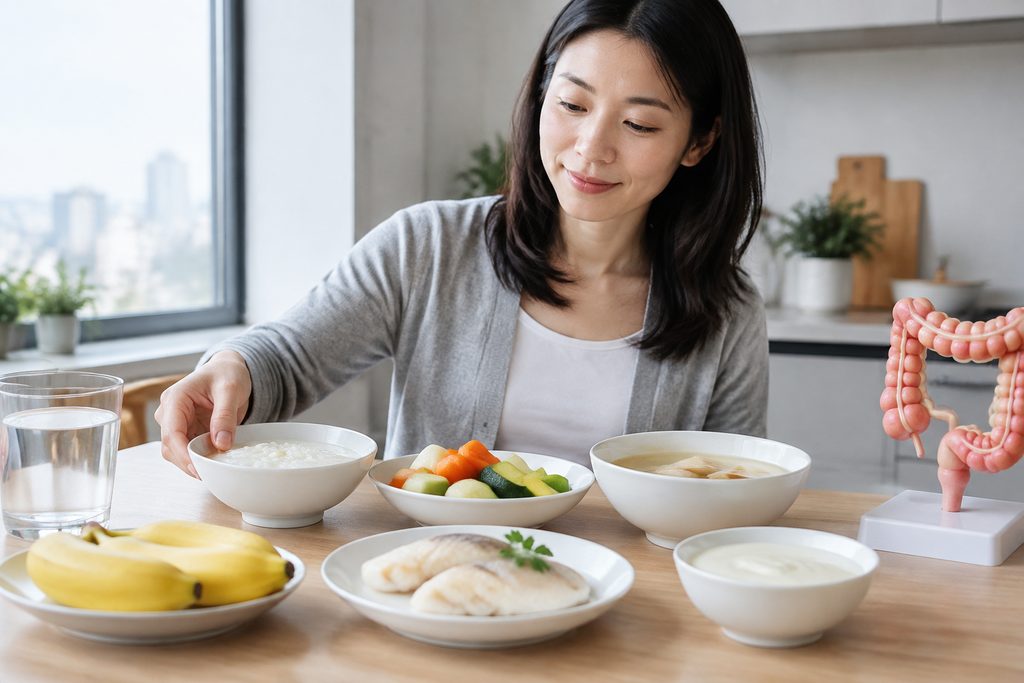
Two days before. Cut fiber. No whole grains, nuts, seeds, raw vegetables, or fruit with skin. In China, that rules out most congee toppings, lotus seed snacks, and the ubiquitous fruit platters. Plain white rice, steamed fish, and well-cooked eggs are safe. So is plain chicken without bones.
The day before. Clear liquids only after breakfast, or as directed. “Clear” means you can read a newspaper through the glass. Water, clear broth, black tea without milk, strained apple juice, and clear sports drinks all qualify. Here’s where China-specific traps appear:
- Soy milk (豆浆) — not clear, contains protein and sediment. Avoid.
- Milk tea and bubble tea — dairy and tapioca pearls. Absolutely not.
- Aloe vera drinks — the pulp is visible. Skip it.
- Bottled herbal teas — some contain flower petals or seeds. Check the label or avoid.
- Coconut water — usually fine if strained and pulp-free.
The day of. Nothing by mouth after the cutoff time your hospital gives you — typically 4 to 6 hours before the procedure. This includes water. If you’re on morning medications, ask the endoscopy unit which ones you can take with a small sip.
How to Actually Book a Colonoscopy Appointment in Shanghai or Elsewhere
This is the part that frustrates most foreign patients. Chinese public hospitals generally don’t accept overseas appointments for routine outpatient procedures in advance. You register on the day, in person, and the queue can be long.
Your realistic options come down to three paths.
Walk-in at a public hospital. Cheapest. You’ll need to navigate registration, payment, and the endoscopy unit in Chinese. Feasible if you speak Mandarin or bring a fluent companion.
Private international hospital. English-speaking staff, direct insurance billing, and online booking. Higher cost, smoother experience. Hospitals like United Family and Jiahui in Shanghai operate this way.
Public hospital international or VIP department. A middle path. You get senior specialists and English service, typically at 1.5 to 2 times the standard public fee. Booking still requires coordination, but it’s more accessible to foreigners than the general queue.
For a broader look at how hospital selection works across the country, our guide to China’s top-ranked hospitals by city breaks down which institutions serve international patients and where they’re located.
What “Colonoscopy Medical Tourism Package China” Actually Means
You’ll see this phrase in search results, and it deserves a straight answer. There is no single standardized product called a “colonoscopy tourism package” in China. What exists is a spectrum of coordination services — some offered by hospitals directly, some by third-party facilitators.
A legitimate coordination arrangement typically covers hospital matching, appointment scheduling, medical-record translation, and a bilingual escort on procedure day. It does not include the procedure fee itself, which you pay to the hospital. Be cautious with any provider that promises a guaranteed specialist or a fixed procedure date before reviewing your records. Reputable coordinators say “we’ll try” and mean it.
What should you check before committing? Ask whether the coordinator works through the hospital’s official international department, whether interpretation is included on the day, and what happens if your appointment can’t be secured. A transparent provider will answer all three without hesitation. Our own patient consultation page lays out how we structure these arrangements, including the option to start with a written second opinion before committing to travel.
Practical Considerations for Foreign Patients
Visa. Medical treatment in China falls under the S2 visa category for short stays, with S1 for stays exceeding 180 days. Accompanying family members apply under the same category. Note that the M visa is for commercial and trade activities — it is not a medical visa, despite what some outdated online guides claim. Always confirm current requirements with your nearest Chinese embassy or consulate, and bring supporting documents from the hospital.
Payment. Chinese public hospitals require prepayment. Foreign credit cards work at some counters but not all — bring a card that supports international transactions and have a backup payment method. Private international hospitals more often accept direct insurance billing, but verify your specific insurer is on their list before you arrive.
Records. Bring your prior colonoscopy reports, pathology results, and any relevant imaging. If they’re not in Chinese, a certified translation helps the endoscopist enormously. Ask whether the hospital requires this in advance.
Follow-up. If polyps are removed, pathology results typically take 3 to 7 working days. Plan your departure accordingly, or arrange for results to be sent to you. Some hospitals release them electronically; others require an in-person pickup.
Frequently Asked Questions
Yes, at accredited hospitals. China’s top tertiary centers use internationally recognized endoscope platforms and follow standard safety protocols. Complication rates at high-volume centers are comparable to Western benchmarks. The main variable is communication — make sure you understand the sedation plan and consent form before the procedure.
At a public tertiary hospital, expect roughly $200 to $500 depending on sedation and whether polyps are removed. Private international hospitals typically charge $800 to $1,500. These figures vary by hospital and case complexity, so confirm pricing directly with the facility.
Generally not through the standard public queue, which operates on same-day registration. You can pre-arrange through a private international hospital or a public hospital’s international department. A coordination service can help secure a slot, but no provider can guarantee a specific specialist or date before reviewing your case.
You’ll need interpretation for registration, consent, and the procedure itself. Private hospitals and international departments provide English-speaking staff. At standard public hospitals, bring a fluent companion or arrange a bilingual medical escort for the day.
Plain white rice is generally acceptable up to the day before your prep begins. Noodles are riskier — many contain egg or additives, and the texture can leave residue. When in doubt, follow the written instructions from your endoscopy unit, which override general guidance.
Your Next Step
Bowel prep rewards precision, and precision is easier when someone has walked the path before you. The diet itself is manageable — the harder part is knowing which hospital fits your case, how to register as a foreigner, and what to expect on procedure day. China Medical Services connects international patients with 340+ top-ranked hospitals across 37 cities, and we handle scheduling, record translation, and bilingual accompaniment. We’re not a hospital and we don’t provide medical diagnoses or treatment. If you’d like to talk through your options before booking anything, start with a free consultation — no pressure, just a clear picture of what’s possible.
For more medical information and treatment options in China, visit chinamedservices.com (China Medical Services).
