Why Chinese Hospitals Keep Patients Longer: The Observation Advantage Explained
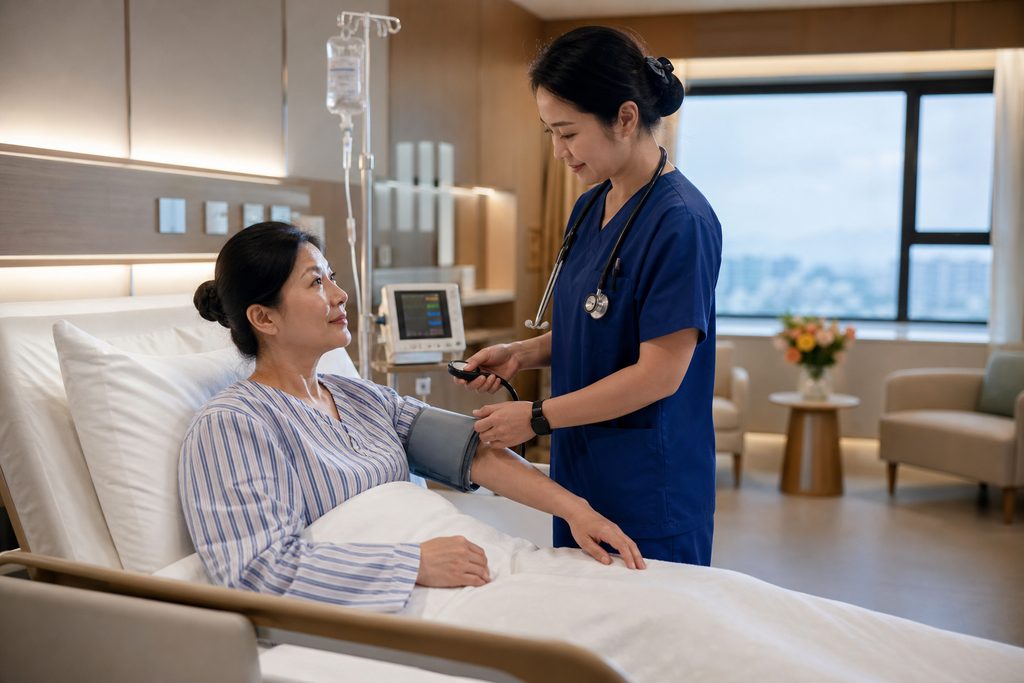
Have you ever been discharged from a hospital feeling like you were barely past the anesthesia, clutching a stack of papers and a vague instruction to “follow up if anything seems off”? That knot in your stomach isn’t unfounded. In many Western systems, discharge happens fast—driven by insurance algorithms and bed shortages. Now flip the script. What if the standard protocol treated the immediate post-operative days not as a cost to be minimized, but as a critical phase of recovery that demands in-hospital vigilance?
That’s the philosophy underpinning a widespread practice in Chinese hospitals. It’s not about inefficiency. It’s about a fundamentally different clinical calculus where the observation period after surgery in a China hospital is built into the treatment plan, not tacked on as an afterthought. For international patients, this raises a cascade of questions: Is it worth the extra days? Who pays for it? And does staying longer actually heal you faster?
How This Actually Works, Step by Step
The process begins before you ever board a plane. Let’s walk through the real sequence for an international patient considering treatment in one of China’s 340+ top-ranked hospitals.
You start with a remote evaluation. Our team coordinates a written second opinion using your existing medical records, imaging, and pathology reports. A specialist at a hospital like Peking Union Medical College Hospital or Ruijin Hospital reviews your file. The report you receive outlines whether your case is suitable for treatment in China and, if so, what the recommended inpatient timeline looks like. This document often specifies the expected observation window upfront—sometimes 5 to 10 days for a procedure that might see a 48-hour discharge elsewhere.
Once you decide to proceed, the hospital’s international department requires a deposit. This is not an estimate. It’s a pre-calculated amount covering the surgeon’s fee, operating theater, implants or consumables, and the full anticipated bed stay, including the observation period. Payment is made before admission. For patients accustomed to post-discharge billing, this upfront model can feel foreign. But it eliminates the dread of a surprise invoice arriving weeks later.
Admission day involves pre-operative testing that may already exceed what you’d experience as outpatient prep elsewhere. A full cardiac workup, pulmonary function tests, and cross-sectional imaging are common even for non-cardiac surgeries. The surgical team wants a complete physiological baseline. After the procedure, you’re moved to a recovery ward where the observation clock starts ticking. Nurses check vitals at intervals that feel frequent by Western standards. Daily blood draws are routine. The attending surgeon rounds every morning, often with a team of residents who examine the wound and ask detailed questions about pain levels, bowel function, and appetite.
Discharge isn’t triggered by an insurance adjuster’s algorithm. It’s triggered by clinical milestones: wound drainage below a specific threshold, oral intake sufficient to sustain nutrition, mobility restored to a defined level, and lab values trending in the right direction. When those criteria are met, the discharge paperwork begins. Not before.
Why Do Chinese Hospitals Keep Patients Longer
The answer sits at the intersection of medical tradition, payment structure, and liability management. In China’s top-tier public hospitals, the physician’s reputation hinges on outcomes, not throughput. A readmission for a post-operative infection or complication directly reflects on the department’s quality metrics—metrics that influence hospital rankings like the authoritative Fudan Hospital Ranking, which evaluates China’s 35,000+ hospitals and designates only the top 5% as elite institutions.
Payment models reinforce this. China’s domestic health insurance and the out-of-pocket systems that international patients typically use do not penalize hospitals for longer stays the way DRG-based systems in the United States or Europe might. The hospital bills for the bed, the nursing care, the medications, and the monitoring. There’s no financial incentive to rush a patient out the door to free up a bed for the next admission. Beds turn over more slowly by design.
Then there’s the cultural dimension. Chinese patients and their families often view a hospital stay as a necessary protective bubble. Leaving too soon can feel like abandonment. Physicians, aware of this expectation, err on the side of caution. The result is a system where the question “why do Chinese hospitals keep patients longer” has a straightforward answer: because the entire ecosystem—clinical, financial, and cultural—rewards vigilance over velocity.
This doesn’t mean every extra day is medically necessary by Western evidence standards. But it does mean the default setting is observation, not early discharge. For international patients, understanding this upfront prevents the anxiety of wondering whether a longer stay signals a complication. It usually doesn’t. It usually signals protocol.
A Realistic Timeline
Here’s what a typical surgical journey looks like for an international patient factoring in the extended observation norm. Timelines assume no major complications.
| Phase | Duration | What Happens |
|---|---|---|
| Remote evaluation & second opinion | 1–3 weeks | Records sent, translated, reviewed. Written report with treatment plan and estimated observation period provided. |
| Visa processing (S2) | 2–4 weeks | Hospital invitation letter issued. S2 visa application submitted to Chinese embassy or consulate. Processing times vary by country. |
| Arrival & pre-admission testing | 2–3 days | In-person consultation with surgeon. Full pre-operative workup. Deposit payment. Admission scheduled. |
| Surgery | 1 day | Procedure performed. Patient transferred to recovery ward. |
| Active observation period | 5–14 days | Daily surgeon rounds, blood work, wound care, mobility assessment. This is the phase that extends well beyond Western norms. |
| Discharge & local recovery | 3–7 days | Patient discharged to hotel or serviced apartment. Follow-up outpatient visit scheduled before departure clearance. |
| Total in-country stay | 4–6 weeks | From landing to departure clearance. Includes buffer for unexpected observation extensions. |
The timeline reveals a truth that catches many first-time visitors off guard. The surgery itself may take a few hours. But the commitment of being physically present in China spans a month or more. This isn’t padding. It’s the reality of a system that wants to see you walk, eat, and produce clean lab results before it signs off on your fitness to fly home.
What Can Go Wrong — and What Happens Then
Extended observation is not a guarantee against complications. It’s a safety net that catches problems earlier. Here’s what can go wrong and how the system responds.
A wound infection that might only become apparent after discharge in a fast-track system gets caught during a routine dressing change on day six. The surgical team can open the wound, culture the drainage, and start targeted antibiotics before you’ve even left the hospital. That’s the upside of the longer stay. The downside is that you’re already in the hospital when the complication is discovered, which means your discharge date moves. Sometimes by a week. Sometimes longer.
What if the complication requires a second surgery? This is rare but real. The hospital’s international department will communicate the situation directly. The original deposit may need to be supplemented. Our team steps in to help navigate the financial conversation and, if needed, coordinate with your insurance provider back home. Most international insurance policies have provisions for extended inpatient stays due to complications, but the paperwork burden falls on you unless someone is there to manage it.
A more mundane but equally stressful scenario: the observation period reveals nothing wrong, but the surgeon still won’t discharge you. You feel fine. You want to go to your hotel. The surgeon wants one more day of labs. This is the culture clash in microcosm. There’s no clinical emergency. Just a difference in risk tolerance. In these moments, patience is the only strategy. Arguing with a Chinese attending surgeon about discharge readiness rarely ends in your favor. The system defaults to caution.
Is Longer Hospital Stay in China Better for Recovery
The evidence is mixed, and honest clinicians on both sides of this debate acknowledge it. Some studies suggest that for certain procedures—joint replacements, complex abdominal surgeries—prolonged inpatient monitoring reduces 30-day readmission rates. A 2019 analysis published in *The Lancet* examining surgical outcomes across health systems found that countries with longer average post-operative stays often reported lower rates of post-discharge emergency department visits. But correlation isn’t causation. Countries with longer stays also tend to have different patient demographics, different surgical volumes, and different thresholds for what counts as a readmission.
So is longer hospital stay in China better for recovery? The answer depends on what you’re measuring. If the metric is early detection of wound complications, the answer leans yes. If the metric is patient anxiety, the answer is more complicated. Some patients find the extended monitoring deeply reassuring. Others find the hospital environment—noisy, brightly lit, with limited privacy—actively detrimental to rest and recovery. Sleep disruption in Chinese hospital wards is a real issue that can undermine the benefits of observation.
There’s also the muscle atrophy problem. Bed rest, even with daily physiotherapy, leads to deconditioning. A patient who would be up and walking around their home on day three post-op is instead confined to a hospital room, moving between bed and bathroom. The physical therapy available in top Chinese hospitals is excellent, but it can’t fully replicate the activity of normal daily life.
The honest assessment: for patients with complex medical histories, multiple comorbidities, or procedures with high complication rates, the extended observation model offers genuine clinical value. For young, healthy patients undergoing straightforward procedures, the extra days may feel like overkill. Neither perspective is wrong. The key is knowing which category you fall into before you commit to the timeline.
Practical Considerations: Costs, Insurance, and the Observation Package Reality
Let’s talk numbers. The extended hospital stay cost China international patient varies widely by hospital, procedure, and ward class. But some reference points help frame expectations.
A standard inpatient bed in a top-tier public hospital’s international department runs approximately $300 to $800 per night. This includes nursing care, three meals, and basic monitoring. Add medications, daily labs, and specialist consultations, and the daily cost for an observation day can reach $1,000 to $2,000. For a 10-day observation period following a major surgery, that’s $10,000 to $20,000 just for the post-operative stay. This is often still dramatically less than the equivalent duration in a US hospital, where ICU-level monitoring can exceed $10,000 per day. But it’s not trivial.
Some hospitals offer what amounts to a medical observation package price Shanghai or Beijing patients can reference. These are not official “packages” in the tourism sense. They’re bundled estimates provided by the international department that include the surgery, the expected observation stay, and basic post-operative care. A cardiac surgery package at Fuwai Hospital, for example, might quote $25,000 to $35,000 inclusive of a 7- to 10-day observation period. The equivalent procedure in the United States often exceeds $120,000 for the surgery alone, with observation costs billed separately.
Insurance coverage for extended observation is a gray area for international patients. Most international health insurance policies cover medically necessary inpatient stays. The question is whether every day of a Chinese hospital’s standard observation protocol meets the insurer’s definition of medical necessity. Our team has seen cases where insurers pushed back on days 8 through 10 of an observation stay, arguing that the patient could have been discharged to a hotel with outpatient follow-up. Before committing to treatment, request a pre-authorization that explicitly includes the full anticipated observation period. Get it in writing.
For patients paying out of pocket, the upfront deposit model means you need liquidity. The hospital wants the full estimated amount in its account before the first incision. This can be $30,000, $50,000, or more depending on the procedure. Wire transfers take days to clear. Plan accordingly.
Frequently Asked Questions
Can I negotiate a shorter observation stay if I feel ready to leave?
Technically, you can request early discharge against medical advice. Practically, this is a bad idea. Leaving against medical advice in a Chinese hospital voids the hospital’s liability for subsequent complications and complicates your insurance claim. The better approach is to discuss your concerns with the attending surgeon early in the observation period. Some departments are willing to transition stable patients to a “day patient” model where you sleep at a nearby hotel but return each morning for labs and wound checks. This isn’t universally available, but it’s worth asking about.
What if I develop a complication after I return home?
This is the scenario that keeps international patients up at night. Chinese hospitals typically provide a detailed discharge summary in both Chinese and English, including operative notes, lab trends, imaging on CD, and medication lists. You bring this to your local physician. Some Chinese surgeons are willing to conduct follow-up video consultations—a service we can coordinate—to review your recovery with your home doctor. But the reality is that once you leave China, continuity of care transfers to your local system. The extended observation period is designed in part to minimize the likelihood that you’ll need urgent intervention after departure.
Are the observation wards private, or will I be sharing a room?
International department wards in top-tier hospitals are predominantly private rooms with en-suite bathrooms. This is not universal, but it’s the norm at institutions like West China Hospital, Ruijin Hospital, and Peking Union Medical College Hospital’s international wing. If a private room matters to you—and for a multi-week stay, it matters a lot—confirm this before sending your deposit. Some hospitals have a limited number of private rooms and allocate them on a first-come basis.
How do I book extended medical observation China package arrangements in advance?
You don’t book an observation package the way you’d book a hotel. The observation period is an integral part of the surgical admission, not a separate product. When you work with a medical concierge service, the coordination process includes confirming the expected observation duration with the hospital’s international department before you travel. The deposit you pay covers the full stay. What you’re really booking is the surgical admission, which includes the observation component by default. The phrase “book extended medical observation China package” is a search query that reflects a patient’s desire for predictability. The real-world process delivers that predictability through the pre-admission estimate and deposit structure.
Does the longer stay mean better surgical outcomes?
The honest answer is that the evidence is suggestive but not definitive. What the longer stay undeniably provides is more granular post-operative data. Surgeons see how your body responds day by day, not just at a single follow-up appointment two weeks later. This data-rich recovery period allows for earlier intervention when problems arise. Whether that translates to better long-term outcomes depends on the procedure, the patient, and the specific complication being prevented. It’s reasonable to view the extended observation as an investment in risk reduction, not a guarantee of superior results.
Your next step doesn’t need to be a commitment. If the observation model described here aligns with how you’d prefer to recover—monitored, cautious, with time to heal before facing a long-haul flight home—then the next conversation is about whether your specific case is a good fit for treatment in China. Our team coordinates the remote evaluations that answer that question, connecting you with specialists at hospitals ranked among China’s top institutions. We don’t provide medical advice, and we don’t promise outcomes. What we do is handle the logistical complexity so you can focus on the decision that matters: whether this path makes sense for your health. When you’re ready to explore it, we’re here to walk you through the first step.
For more medical information and treatment options in China, visit chinamedservices.com (China Medical Services).
