Why Choose China for Treatment Instead of Turkey: Our Comparison
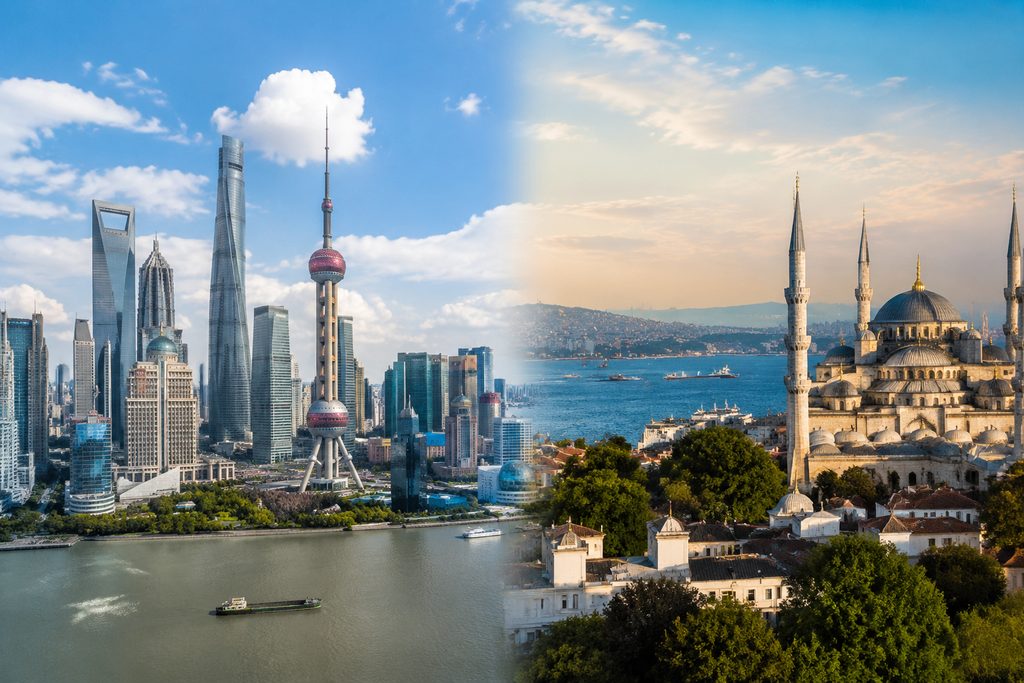
Why Choose China for Treatment Instead of Turkey: Our Comparison
Have you been quoted $45,000 for a procedure in Istanbul and wondered whether the same money could buy a deeper level of expertise somewhere else? The cancer treatment cost China vs Turkey comparison is not just about line items on an invoice. It is about surgical volume, subspecialty depth, and what happens when something goes wrong at 2 a.m. in a foreign hospital. We coordinate care for international patients across 37 Chinese cities, and we have seen how this decision plays out in practice.
Turkey has built an efficient medical tourism industry around hair transplants, rhinoplasty, and dental work. China has built something different: massive tertiary hospitals that perform heart surgeries, complex orthopedic reconstructions, and cancer resections at volumes no European clinic can match. The question is not which country is “better” in the abstract. The question is which country is better for your specific condition, your budget, and your tolerance for risk.
How This Actually Works, Step by Step
You send existing medical records — imaging, pathology reports, blood work, prior surgical notes. Our team translates them into Chinese and routes them to the relevant specialty department at one or more of the top-ranked public hospitals we work with. A written second opinion typically costs $300–500 and comes back within 5–10 business days. If you want to speak directly with the medical team, a video consultation runs $100–300 for a general specialist or $500–800 for a top-tier expert.
What happens next depends on what the review finds. If surgery is indicated, the hospital will require an in-person consultation before any admission. Public hospitals in China do not allow overseas patients to book operating rooms remotely. That is a hard rule. What we can do is coordinate the international department or VIP channel so your first visit is with the right specialist, not a random resident at 7 a.m. registration. The coordination fee starts at $300, and any consultation fee you paid is credited in full toward on-the-ground coordination if you proceed within 90 days.
Then comes the S2 visa. Not an M visa — that is for commercial trade. Medical travelers apply for an S2 short-stay visa with supporting documents from the hospital. Processing usually takes 1–3 weeks depending on your consulate. Family members accompanying you apply for the same S2 category.
Cancer Treatment Cost China vs Turkey: Where the Numbers Land
Turkey’s private hospital groups quote aggressively for oncology packages. A course of radiotherapy might run $8,000–15,000 in Istanbul. In China, the same treatment at a top-tier public hospital typically costs $5,000–12,000. Chemotherapy regimens vary widely, but the pattern holds: China’s public system prices procedures at 20–50% below Turkish private rates for comparable technology.
But the cost comparison misses the more important variable. China’s National Cancer Center reports over 4.5 million new cancer cases annually. That patient load means oncologists at hospitals like Fudan University Shanghai Cancer Center or Peking Union Medical College Hospital see more rare presentations in a month than a Turkish private oncologist sees in a year. Volume is not a marketing slogan. It is the difference between a surgeon who has performed 200 Whipple procedures and one who has performed 2,000.
| Procedure | China (Top Public Hospital) | Turkey (Private Hospital) | United States |
|---|---|---|---|
| Cardiac bypass surgery | $12,000–20,000 | $15,000–25,000 | $120,000+ |
| Total knee replacement | $10,000–18,000 | $9,000–16,000 | $35,000–50,000 |
| Radiotherapy course | $5,000–12,000 | $8,000–15,000 | $50,000–80,000 |
| Complex spinal fusion | $15,000–25,000 | $18,000–30,000 | $80,000–150,000 |
Prices vary by hospital and case complexity. Anyone who quotes you a single fixed number without seeing your imaging is guessing.
Is Heart Surgery in China Better Than Turkey?
For cardiac surgery, the evidence points one direction. Fuwai Hospital in Beijing performs over 14,000 cardiac surgeries annually — the highest volume of any heart center in the world. That is more than the entire annual cardiac surgical volume of most European countries. When a complication arises, the team has seen it before. Probably that week.
Turkey has competent cardiac surgeons. But no Turkish center approaches Fuwai’s volume or its subspecialty depth in complex congenital repairs, valve reconstruction, or aortic surgery. If your question is is heart surgery in China better than Turkey, the honest answer is: for routine CABG, both countries produce good outcomes. For complex or redo cases, China’s top centers operate in a different statistical universe.
So why would anyone choose Turkey? Proximity to Europe. Familiarity. Lower language barrier for some patients. Those are real factors. But they are logistical factors, not medical ones.
How Does Medical Care in China Compare to Turkey?
The structural difference is simple. Turkey’s medical tourism sector is built on private hospitals that cater to foreigners. China’s system is built on public hospitals that serve 1.4 billion citizens, with international departments layered on top. That means two things.
First, China’s top public hospitals are not designed for medical tourists. Registration is chaotic. Language is a genuine problem. The average outpatient hall at West China Hospital in Chengdu sees 20,000 people a day. Without a bilingual companion, you will struggle. That is not a sales pitch — it is the reality of navigating a system built for scale, not comfort.
Second, the medical depth is unmatched. The Fudan University hospital rankings evaluate 45 clinical specialties across China’s 35,000+ hospitals. The top 100 institutions are spread across 23 cities, with Beijing hosting 21 and Shanghai 18. Turkey has excellent hospitals in Istanbul and Ankara. It does not have 340+ top-ranked institutions across 37 cities.
For complex conditions — rare cancers, revision orthopedic surgery, advanced cardiac procedures — how does medical care in China compare to Turkey comes down to this: China has more specialists who have seen more cases. For cosmetic or low-complexity procedures, the gap narrows considerably.
A Realistic Timeline
| Stage | What Happens | Duration |
|---|---|---|
| Day 1–7 | Collect and translate medical records; submit for review | 1 week |
| Week 2–3 | Written second opinion from Chinese specialty team | 5–10 business days |
| Week 3–4 | Video consultation (optional but recommended) | Schedule within 1–2 weeks |
| Week 4–6 | S2 visa application with hospital invitation documents | 1–3 weeks |
| Week 6–8 | Travel to China; in-person consultation at hospital | 2–3 days |
| Week 8–12 | Surgery or treatment admission (if indicated) | Varies by hospital schedule |
| Month 3+ | Post-treatment follow-up; return home or extended recovery | Ongoing |
People forget the document translation step. It adds a week. They forget that top specialists have waiting lists for non-urgent consultations. It adds another week. Budget realistically: from first contact to surgery is rarely less than 6–8 weeks, and often longer.
What Can Go Wrong — and What Happens Then
The specialist reviews your records and says surgery is not indicated. That happens. The written second opinion is not a prescription — it is an expert assessment. You are out $300–500 and you have learned something valuable: you avoided flying 8,000 miles for a procedure that would not have helped.
The visa gets delayed. Consulates move at their own pace. We provide hospital documentation and guidance, but we cannot guarantee approval. If the visa is denied, you lose travel costs but not hospital fees — treatment charges are only incurred once you are admitted.
You arrive and the surgeon wants additional imaging. This is common. Chinese hospitals often prefer their own scans for surgical planning. That means another 2–3 days and $200–500 in imaging costs before any decision is finalized.
Complications occur. No honest provider promises otherwise. What China’s top hospitals offer is volume-driven complication management — dedicated ICU teams, 24-hour subspecialty coverage, and the ability to handle rare adverse events without transferring you elsewhere. That is the argument for choosing a high-volume center in the first place.
Book Orthopedic Surgery Package Beijing: What That Actually Means
Patients searching for book orthopedic surgery package Beijing often imagine a fixed-price bundle: flight, hotel, surgery, recovery. China does not work that way at top public hospitals. You cannot book a “package” for a total knee replacement at Peking University Third Hospital the way you might book a rhinoplasty package in Istanbul.
What exists instead is a staged process. You send imaging. An orthopedic specialist reviews it. You have a video consultation. You travel for an in-person evaluation. Then, and only then, is surgery scheduled. The coordination service can arrange everything around that process — specialist matching, appointment scheduling, bilingual accompaniment, accommodation recommendations — but the surgery itself is priced by the hospital after evaluation.
That is less convenient than a Turkish package deal. It is also more honest. A surgeon who quotes a fixed price before seeing your MRI is making assumptions about your anatomy that may not survive contact with reality.
China Medical Tourism Package Price Quote: Reading Between the Lines
When you request a China medical tourism package price quote, you will receive a range, not a number. A cardiac bypass at Fuwai might be quoted as $12,000–20,000. A complex spinal fusion at a top Beijing orthopedic hospital: $15,000–25,000. The final figure depends on implant choice, length of stay, and whether complications arise.
Anyone who quotes you a precise total before seeing your records is not working with a real hospital. Real hospitals price after evaluation. That is frustrating for budgeting. It is also the reason outcomes at top Chinese centers are as good as they are: treatment is tailored to the patient, not to a package template.
Practical Considerations: Records, Visa, Payment, Language
Bring everything. Imaging on CD or cloud link. Pathology slides if applicable. A detailed medication list. Prior surgical reports. The more complete your file, the faster the review.
The S2 visa is the correct category for medical treatment. Processing times vary by consulate. Supporting documents from the hospital — an invitation letter or treatment confirmation — strengthen the application. Family members apply separately under the same S2 category.
Payment at public hospitals is prepaid. You deposit funds at admission and are billed against that deposit. Insurance reimbursement happens afterward — Chinese public hospitals do not bill Western insurers directly. Private international hospitals like United Family or Jiahui offer direct billing, at roughly 1.5–2 times public hospital prices.
Language is the single biggest practical barrier. Top hospitals have international departments with English-speaking staff. But the moment you leave that department — for imaging, for pharmacy, for billing — you are in a Chinese-language environment. A bilingual companion who handles registration, queueing, payment, and translation costs from $300 per day. For most patients, it is not a luxury. It is the difference between a functional visit and a stressful mess.
Frequently Asked Questions
For most solid tumor treatments, yes. China’s public hospital pricing for radiotherapy, chemotherapy, and surgical oncology runs 20–50% below Turkish private hospital rates. But “cheaper” only matters if the treating team has depth in your specific cancer type. That is where China’s case volume becomes the decisive factor.
No. Chinese public hospitals require an in-person consultation before any surgical admission. The international department or VIP channel can streamline that first visit, but no legitimate service can book an operating room remotely. Be skeptical of anyone who claims otherwise.
That is a useful outcome. A second opinion that confirms your plan gives you confidence. One that diverges gives you information you did not have before. Either way, you make the final decision. The written opinion is for reference only — it is not a prescription and does not obligate you to anything.
Honestly, yes. Turkey’s medical tourism infrastructure is built around foreign patients, so English is more widely spoken in private hospitals. China’s top public hospitals serve primarily Chinese patients. International departments bridge the gap, and a bilingual companion makes the experience manageable. But if you want a fully English-speaking environment from check-in to discharge, China’s public system will challenge you.
Your Next Step
The choice between China and Turkey is not a contest between two tourism industries. It is a decision about what kind of medical problem you have and what kind of institution you want treating it. For high-volume, high-complexity procedures, China’s top hospitals operate at a scale that Turkey cannot match. For cosmetic and low-acuity procedures, Turkey’s convenience advantage is real.
We are China Medical Services — a coordination team that connects international patients with 340+ top-ranked Chinese hospitals. We do not perform surgery. We do not promise outcomes. We handle records translation, specialist matching, appointment coordination, visa guidance, and bilingual accompaniment on the ground. If you want an honest assessment of whether a Chinese hospital makes sense for your case, send your records for review. The consultation is free. The clarity is worth more than the flight.
For more medical information and treatment options in China, visit chinamedservices.com (China Medical Services).
