How Many PRP Sessions Do I Need? Real Timelines, Costs, and What Affects Results
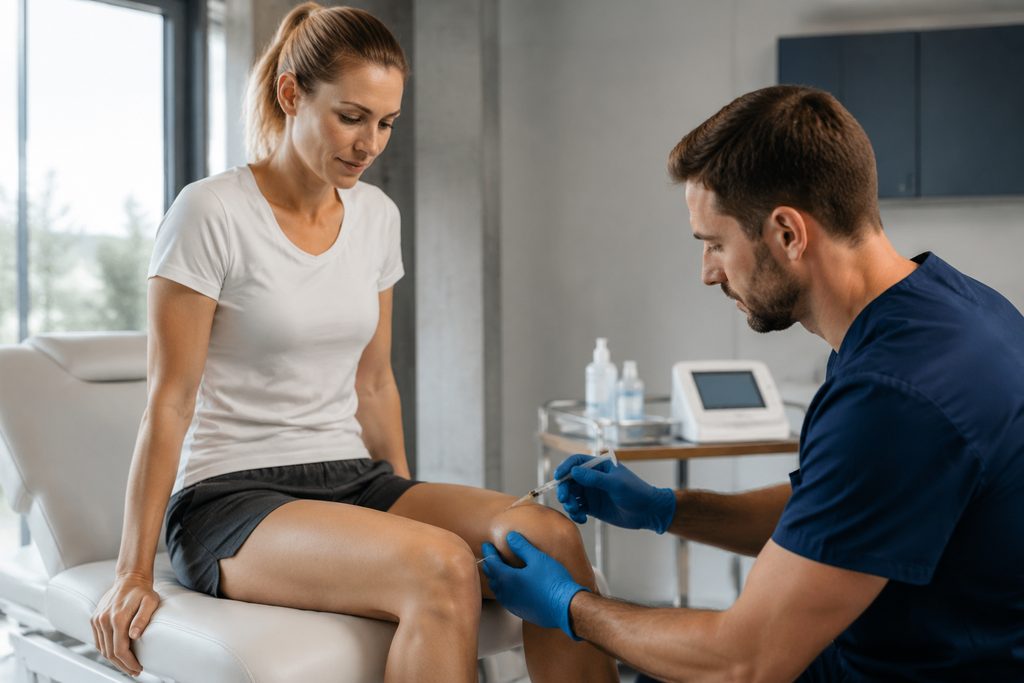
While a patient in the United States might pay $800 to $1,500 for a single platelet-rich plasma injection, the same procedure at a top-tier Chinese hospital often costs between $150 and $400. That stark difference reshapes the entire conversation about treatment plans. Because when the per-session price drops, the question “how many PRP sessions do I need?” stops being purely financial and becomes a clinical optimization problem.
Most patients need 3 sessions for meaningful results. That is the clinical consensus for both knee osteoarthritis and androgenetic alopecia. But the honest answer is more textured. The number depends on the tissue being treated, the severity of your condition, how your body responds after the first injection, and the preparation method the clinic uses. At China Medical Services, we help international patients navigate these variables by connecting them with orthopedic and dermatology departments that perform PRP at high volume.
Key Takeaways
- Three sessions spaced 2 to 4 weeks apart is the standard starting protocol for both knee osteoarthritis and hair loss, though some chronic knee cases need 4 to 6 total injections.
- Prp injection cost China ranges from $150 to $400 per session at public hospital international departments, versus $800 to $1,500 in the United States — a 70% to 80% reduction that makes full protocols financially accessible.
- PRP is not a quick fix. Structural changes in cartilage take 6 to 12 weeks to manifest, and hair regrowth typically becomes visible at 3 to 4 months after the first session.
- Not all PRP is equal. Leukocyte-rich versus leukocyte-poor preparations, platelet concentration factor, and activation method all change clinical outcomes — and most patients never ask about these variables.
The Problem: Paying Western Prices for a Treatment Protocol You Cannot Finish
Roughly 1 in 4 adults over 45 has knee osteoarthritis, and by age 50, approximately 40% of men show visible hair loss. For many, PRP represents a compelling middle ground between conservative care and surgery — or between topical minoxidil and a hair transplant. The catch? The evidence base says one injection is rarely enough.
A 2021 systematic review in the American Journal of Sports Medicine found that single-injection PRP protocols produced significantly worse functional outcomes for knee osteoarthritis than multi-injection protocols. Most studies showing durable benefit used 2 to 3 injections. So the patient faces a dilemma: commit to a $2,400 to $4,500 protocol at US prices, or abandon treatment halfway when the first injection does not produce dramatic change.
That financial barrier is real. A 2023 survey of American orthopedic clinics found the average PRP injection price was $967 per session, with some metropolitan practices charging over $1,800. For a 3-session protocol, that is $2,900 to $5,400 — almost always out of pocket, since most US insurers classify PRP as experimental.
Why China’s PRP Landscape Changes the Math
The structural economics of Chinese healthcare make full PRP protocols viable for patients who would otherwise skip treatment or under-treat. But cost is only part of the story. Volume matters too.
Clinical Volume Builds Injection Skill
PRP is operator-dependent. The quality of the draw, the centrifuge settings, the precision of the injection — all of it affects outcomes. At major Chinese orthopedic centers like Beijing Jishuitan Hospital or Shanghai’s Sixth People’s Hospital, PRP injections are performed daily, often dozens per week. A physician who performs 300 PRP injections a year develops a level of procedural fluency that a Western clinician doing 30 a year cannot match.
That volume extends to the full spectrum of applications. Chinese sports medicine departments treat professional athletes, weekend warriors, and elderly osteoarthritis patients in the same week. Dermatology departments run busy hair-loss clinics where PRP is a routine offering alongside microneedling and low-level laser therapy. This breadth means you are not getting a physician who “occasionally does PRP” — you are getting one for whom it is a core procedure.
Cost Advantage Without Quality Compromise
The prp injection cost China offers is not lower because the product is inferior. It is lower because of structural factors: lower physician labor costs, higher patient throughput, and hospital purchasing power for centrifuges and kits. A standard double-spin centrifuge used in China is the same device class used in American clinics. The platelet concentration protocols follow the same published guidelines.
What you get at a top Chinese hospital’s international department is a board-certified orthopedic surgeon or dermatologist, a properly equipped procedure room, and a documented preparation protocol — at roughly one-fifth to one-quarter of the US price. For a 3-session knee protocol, the total cost in China typically runs $450 to $1,200. In the US, the same protocol runs $2,900 to $5,400.
Access Without the Six-Month Wait
In Canada and the UK, PRP for osteoarthritis is often only available through private clinics, with public system access essentially nonexistent. Private clinic wait times for an initial consultation can stretch 6 to 10 weeks in major Canadian cities. In China, international patients can typically schedule a PRP consultation and first injection within 1 to 2 weeks of arrival, with follow-up sessions booked in advance to match their travel window.
This matters because PRP protocols are time-sensitive. The spacing between sessions — usually 2 to 4 weeks — is part of the therapeutic design. If you cannot complete the protocol on schedule, you compromise the outcome.
How Many PRP Sessions for Knee Osteoarthritis: The Evidence-Based Answer
For knee osteoarthritis, the standard protocol is 3 injections spaced 2 to 4 weeks apart. This is not a marketing number. It is the most common protocol in published randomized controlled trials. A 2020 meta-analysis in Orthopaedic Journal of Sports Medicine examined 23 RCTs and found that 3-injection protocols produced significantly better WOMAC scores (a standard measure of knee pain and function) at 6 months than single-injection or 2-injection protocols.
But here is the nuance. Some patients need more. A 2022 study in Regenerative Medicine followed knee osteoarthritis patients for 12 months and found that those with Kellgren-Lawrence grade 3 (moderate to severe) osteoarthritis benefited from a second cycle of 3 injections at the 6-month mark. So the realistic answer for moderate knee OA is: 3 sessions initially, with a possible additional 3 sessions at 6 months if the first cycle helped but plateaued.
What about the gap between sessions? For knees, the evidence supports a 2 to 4 week interval. Shorter than 2 weeks does not give the inflammatory response time to resolve. Longer than 4 weeks may lose the cumulative regenerative signal. Most Chinese orthopedic departments we work with recommend a 3-week interval for knees.
How Many PRP Sessions for Hair Loss: A Different Timeline Entirely
Hair restoration PRP follows a different rhythm. The standard initial protocol is 3 to 4 sessions spaced 4 weeks apart, followed by maintenance injections every 3 to 6 months. A 2019 systematic review in Dermatologic Surgery found that studies using 3 or more monthly sessions reported significantly higher hair density improvements than single-session studies.
The biology explains why. Hair follicles cycle through growth (anagen), regression (catagen), and rest (telogen) phases over months. PRP does not instantly grow hair. It prolongs the anagen phase and revives miniaturized follicles. That process requires repeated growth factor exposure over 12 to 16 weeks — hence the monthly protocol.
Patients often ask is prp treatment effective for hair loss in the first place. The honest answer: yes, for androgenetic alopecia, with caveats. A 2021 meta-analysis in the Journal of Cosmetic Dermatology pooled 15 studies and found PRP increased hair density by an average of 30 to 40 hairs per square centimeter compared to baseline. That is meaningful but not dramatic. PRP works best for patients with early to moderate thinning, not advanced baldness. It is also a good adjunct to hair transplant surgery, improving graft survival and accelerating healing.
How Long Between PRP Sessions: The Timing That Determines Success
Session spacing is not arbitrary. It tracks the biology of tissue repair. After a PRP injection, platelets degranulate and release growth factors over roughly 7 to 10 days. The cellular response — stem cell recruitment, angiogenesis, collagen synthesis — peaks at 2 to 3 weeks. Injecting too early re-triggers inflammation before the repair cascade completes. Injecting too late loses the cumulative effect.
Here is the practical breakdown by indication:
| Indication | Initial Protocol | Interval Between Sessions | Maintenance |
|---|---|---|---|
| Knee Osteoarthritis | 3 injections | 2–4 weeks | Optional 3 more at 6 months if response plateaus |
| Hair Loss (Androgenetic Alopecia) | 3–4 injections | 4 weeks | Every 3–6 months |
| Tendinopathy (Tennis Elbow, Achilles) | 2–3 injections | 2–3 weeks | Case-dependent; sometimes 1 booster at 3 months |
| Facial Rejuvenation | 3 injections | 4 weeks | Every 6–12 months |
These are starting points, not rigid rules. A good clinician adjusts based on your response after the first or second injection. If you have significant improvement after session 2, the third session may be spaced further out. If you have minimal response, the clinician may switch to a leukocyte-rich preparation or increase platelet concentration.
What Determines Whether PRP Works: Variables Most Patients Never Ask About
The single biggest variable is platelet concentration factor. PRP is not just “your plasma with platelets.” It is plasma concentrated to a specific multiple of baseline. Most published protocols use a 3x to 5x concentration. Below 3x, outcomes weaken. Above 7x, some studies suggest an inhibitory effect. Ask your provider what concentration their system produces. If they cannot answer, that is a red flag.
The second variable is leukocyte content. Leukocyte-rich PRP (LR-PRP) contains white blood cells and is more inflammatory. For knee osteoarthritis, some studies suggest leukocyte-poor PRP (LP-PRP) produces less post-injection pain and better long-term function. For tendinopathy, the evidence is mixed. For hair loss, most protocols use LP-PRP to minimize scalp inflammation. The point: the “right” preparation depends on your condition, and a skilled clinician matches the preparation to the indication.
The third variable is activation method. Some clinics inject PRP without activation (the platelets activate naturally upon contact with tissue). Others pre-activate with calcium chloride or thrombin, causing immediate growth factor release. Pre-activation produces a faster but shorter-lived release; natural activation is slower but more sustained. There is no universal winner — but there should be a reason for whichever method your provider uses.
Finally, injection technique matters enormously. For knees, intra-articular injection under ultrasound guidance improves accuracy. A 2020 study in Pain Physician found that ultrasound-guided PRP knee injections produced significantly better outcomes than landmark-guided injections. For hair loss, the depth of injection (intradermal vs. subcutaneous) and the pattern of microinjections across the scalp affect distribution and results. At the specialist departments we work with, ultrasound guidance is standard for joint injections.
Practical Considerations: Getting PRP in China as an International Patient
If you are considering traveling to China for a PRP protocol, the logistics are manageable but require planning. The visa category for medical treatment is the S2 visa, which covers short-term private affairs including medical treatment. You will need supporting documentation from the hospital — usually an appointment confirmation and a treatment plan letter. Our team helps patients obtain these documents from the hospital’s international department.
Payment is typically required upfront at public hospitals. International departments accept major credit cards and sometimes bank transfer. Private international hospitals like those on our private hospital directory may offer direct insurance billing if your policy covers PRP — but most international insurers classify PRP as experimental and will not reimburse. Check your policy before you travel. Do not assume.
Language is the biggest practical barrier. Public hospital registration desks, payment windows, and procedure rooms operate in Mandarin. Even at hospitals with English-speaking physicians, the administrative layer is Chinese-only. A bilingual medical companion — available from $300 per day — handles registration, payment, queue navigation, and interpretation during the procedure. It is not mandatory. But without it, a 45-minute injection appointment can become a 4-hour ordeal of finding the right floor, waiting in the wrong line, and misunderstanding post-procedure instructions.
Practical tip: If you are traveling for a 3-session knee protocol, plan for a 6 to 8 week stay. That covers the first injection, the 3-week interval, the second injection, another 3-week interval, and the third injection — with buffer time for initial consultation and any scheduling adjustments. For hair loss protocols, the 4-week spacing means a 12 to 16 week stay for the full initial course, which is impractical for most travelers. Many international patients do the first 2 sessions in China and complete the remaining sessions with a local provider back home, using the written protocol from the Chinese clinic.
Frequently Asked Questions
For knee osteoarthritis, most patients notice functional improvement after the second session — typically 4 to 6 weeks after the first injection. For hair loss, visible changes take longer. Expect to see reduced shedding at 2 to 3 months and new hair growth at 3 to 4 months. The full effect of a 3-session protocol usually peaks at 6 months.
PRP is genuinely effective for androgenetic alopecia, but it is not a miracle. Published meta-analyses show average density gains of 30 to 40 hairs per square centimeter. That is clinically meaningful but not dramatic. PRP works best for early to moderate thinning and as an adjunct to transplant surgery. For advanced baldness, it will not restore a full head of hair.
A standard package at a Chinese hospital international department includes the consultation, blood draw, centrifuge processing, the injection itself, and a follow-up assessment. Prices range from $150 to $400 per session depending on the hospital tier and the indication. Some departments offer package pricing for a 3-session protocol, typically $400 to $1,000 total. Always confirm whether ultrasound guidance is included — it should be for joint injections.
Yes. PRP is not appropriate for patients with active infections, blood disorders like thrombocytopenia, or those on high-dose anticoagulants who cannot safely pause medication. Patients with advanced osteoarthritis (Kellgren-Lawrence grade 4, bone-on-bone) typically see limited benefit — PRP cannot regenerate cartilage that is already gone. And patients with unrealistic expectations about speed or magnitude of results are often better served by a frank conversation before committing to a protocol.
Ask three questions: What platelet concentration factor does your system produce? What is the leukocyte profile of your preparation? Do you use ultrasound guidance for joint injections? A legitimate clinic answers all three with specific numbers and protocols. If the answers are vague — “we use a standard kit” or “it depends” — consider that a warning sign. The best PRP clinic Shanghai offers, like the top departments in Beijing and Guangzhou, will document their preparation protocol in writing.
Your Next Step
The number of PRP sessions you need is not a mystery — it is a clinical decision based on your condition, your response to the first injection, and the preparation quality at your chosen clinic. What changes everything is whether you can afford to complete the recommended protocol. At China Medical Services, we help international patients evaluate PRP options at top-ranked Chinese hospitals, coordinate appointments, and arrange bilingual support for the full treatment course. We are not a hospital and we do not provide medical advice — but we do help you get clear answers from physicians who perform PRP every week. If you want to understand your options, start with a conversation.
For more medical information and treatment options in China, visit chinamedservices.com (China Medical Services).
