Gastroscopy in China: What the Report Shows and What It Costs
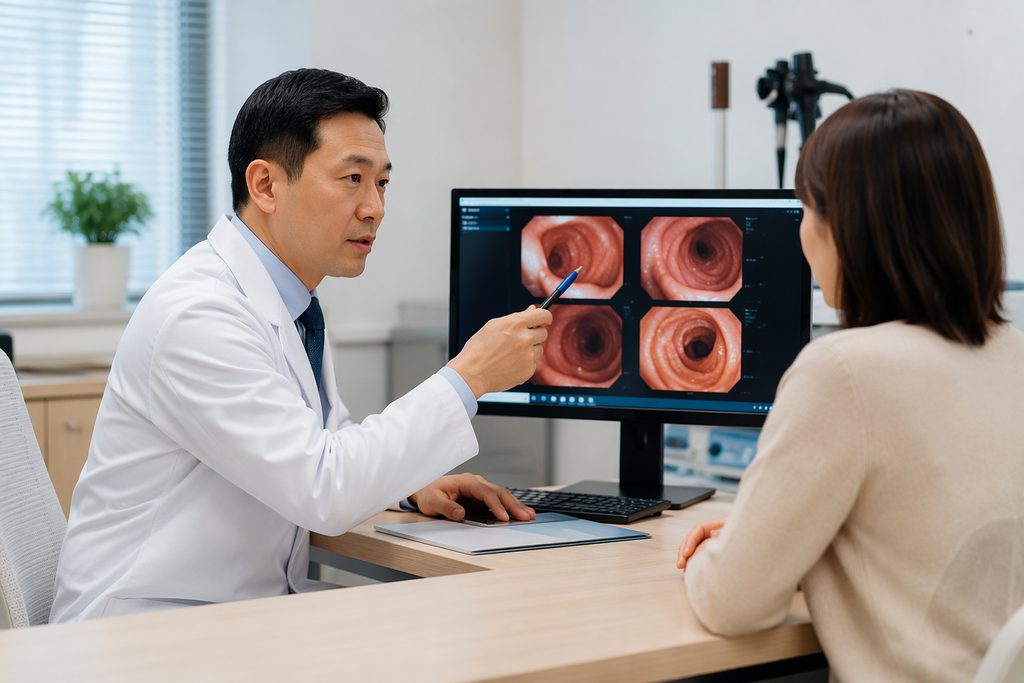
When 47-year-old Daniel from Portland started feeling a persistent gnawing pain under his ribs, his primary care doctor ordered a simple blood test and told him to wait six weeks. The pain didn’t wait. By the time he started searching for answers, he had already spent three weeks on a gastroenterology waiting list in the US, staring at a calendar slot that was still two months out. That was the moment he typed “gastroscopy cost China” into a search bar at two in the morning. He wasn’t looking for a bargain. He was looking for a date on the calendar.
That same search brings thousands of international patients to China every year. And most of them arrive with the same two questions: how much will this cost, and what will the piece of paper at the end actually tell me? The second question is the one nobody answers well online. So let’s answer it properly.
How This Actually Works, Step by Step
Here is the real sequence, from your couch to a printed report in your hand.
Step one: you send records. You email your existing blood work, prior imaging, symptom history, and any medication list. A bilingual coordinator translates the relevant parts and routes them to a gastroenterology department at a hospital that matches your case.
Step two: a specialist reviews remotely. Within a few business days, the department tells us whether a gastroscopy is actually indicated, whether they want additional tests first, and roughly what the procedure will involve. This is a written second opinion, not a diagnosis. It exists to stop you from flying 7,000 miles for a procedure you may not need.
Step three: appointment coordination. If the plan makes sense, we coordinate a registration slot through the hospital’s official international or VIP channel. You get a confirmed date range, not a vague promise.
Step four: you arrive, and the scope happens. A standard diagnostic gastroscopy takes roughly 10 to 20 minutes of actual scope time. The full visit — check-in, sedation, recovery, waiting for the report — typically eats half a day.
Step five: the report. You leave with a written endoscopy report, usually with images, and biopsy results follow in about 3 to 7 days if samples were taken.
Reading Your Gastroscopy Report: What Each Line Actually Means
This is the part patients underestimate. A Chinese endoscopy report follows a structured format, and once you know the vocabulary, it stops being intimidating.
The esophagus section describes the mucosal lining. Phrases like “smooth mucosa” or “no obvious abnormality” mean normal. If you see “erythema” or “hyperemia,” that means redness — often from reflux or mild inflammation, not cancer.
The stomach section is where most findings live. “Atrophic gastritis” describes thinning of the stomach lining and is graded mild, moderate, or severe. “Intestinal metaplasia” means stomach cells have changed to resemble intestinal cells; it’s a marker that warrants surveillance, not panic. “Erosion” means a superficial break in the lining. “Ulcer” means the break goes deeper.
The duodenum section covers the first part of the small intestine, where ulcers and celiac-related changes often show up.
Then comes the part that confuses everyone: the Helicobacter pylori result and the biopsy summary. If the endoscopist took samples, the visual description is preliminary. The pathology report overrides it. A visual impression of “suspicious lesion” can come back benign. A calm-looking “mild gastritis” can carry H. pylori that needs treatment.
What a Gastroscopy Costs in China Compared to Home
Here is the honest range. A standard diagnostic gastroscopy in China’s top public hospitals typically runs $150 to $400, including sedation and basic materials. Add biopsies and you’re looking at $250 to $600. Through a private international hospital with English-speaking staff and direct insurance billing, expect $800 to $1,800.
The same procedure in the United States, without insurance, commonly lands between $1,500 and $4,500. In the UK privately, £1,200 to £2,500. So the gastroscopy cost China comparison is roughly one-fifth to one-tenth of US pricing — but the price gap is not the real story. The real story is the calendar.
| Setting | Typical Cost (USD) | Typical Wait |
|---|---|---|
| US hospital, uninsured | $1,500 – $4,500 | 3 – 10 weeks |
| UK private | $1,500 – $3,200 | 2 – 6 weeks |
| China top public hospital | $150 – $600 | Days to 2 weeks |
| China private international hospital | $800 – $1,800 | Days to 1 week |
Prices vary by hospital and case complexity. If polyps are removed or the procedure becomes therapeutic rather than diagnostic, costs rise.
A Realistic Timeline
Here’s what the calendar actually looks like for a foreign patient, including the steps people forget.
- Days 1–3: You gather and send records. Translation of a 20-page file takes 1–2 business days.
- Days 3–7: Remote specialist review. Written opinion comes back.
- Days 7–14: Appointment coordination through the international channel. Public general clinics cannot be pre-booked from overseas — this is a real constraint, and it’s why the international channel matters.
- Weeks 2–4: Visa. Medical travel uses the S2 visa with a medical-treatment annotation; stays over 180 days use S1. Accompanying family members also apply for S2. Processing usually takes 4–10 business days, longer in peak season.
- Procedure day: Half a day at the hospital.
- Days 3–7 after: Biopsy results, if taken.
- Week 4–6: Follow-up consultation, in person or by video, to interpret the pathology and set treatment.
What Can Go Wrong — and What Happens Then
Honesty matters here more than reassurance.
The scope finds nothing. This happens more often than patients expect. A normal gastroscopy is a good result, not a wasted trip. It rules out ulcers, tumors, and significant inflammation — which is itself diagnostic information.
Sedation isn’t tolerated well. Some patients react poorly to sedation or prefer to stay awake. Unsated gastroscopy is uncomfortable but routinely done in China, and the procedure can proceed without it.
Biopsy results are inconclusive. Roughly a small share of samples come back “indeterminate” or “insufficient for diagnosis.” The recourse is a repeat biopsy, usually scheduled within a few weeks, sometimes at no additional procedure fee.
The appointment slips. Public hospital scheduling can move. If a confirmed slot is not delivered, our coordination fee is refunded in full. That is the actual recourse, and it is written into the service terms.
The finding is serious. If the report suggests malignancy, the next step is staging imaging and a multidisciplinary review — not immediate surgery. Nothing about a gastroscopy report commits you to treatment in China or anywhere else.
Choosing Where to Have It Done: Public vs. Private, Beijing vs. Shanghai
Patients searching for the best hospital for gastroscopy in Shanghai usually mean one of two things: the strongest gastroenterology department, or the easiest experience for a non-Chinese speaker. Those are different answers.
For clinical depth, the gastroenterology departments at major Fudan-ranked hospitals in Shanghai and Beijing carry enormous case volume — which matters, because endoscopists who perform hundreds of scopes a month tend to spot subtle lesions others miss. You can browse the ranked departments on our specialty rankings page.
For comfort, English service, and insurance handling, private international hospitals in Shanghai and Beijing are the smoother path. Higher price, less friction.
If you want to book gastroscopy in Beijing specifically, the practical difference from Shanghai is mostly logistics: Beijing has the denser concentration of top-ranked public hospitals, while Shanghai tends to have a slightly easier setup for short-stay international patients. Both work. Neither is objectively “better” without knowing your case.
The decision criteria that actually matter: Does the hospital have an international department that can pre-register you? Is there pathology support with a fast turnaround? Can they communicate findings in English? Those three questions filter the list faster than any ranking.
Is Gastroscopy Safe in China?
Through the general public outpatient channel, no — registration happens on the day. Through a hospital’s international or VIP department, appointments can often be coordinated in advance. That is the practical route for foreign patients.
Then you get a staging plan, not an immediate commitment. A gastroscopy report is diagnostic information. It tells you what is happening, not what you must do next, and you are free to take that information anywhere.
Reports are issued in Chinese. International departments frequently provide English versions or summaries; otherwise, translation is straightforward and we handle it as part of coordination.
Your Next Step
A gastroscopy report is only as useful as the plan that follows it — and the plan is easier to build when someone who knows the system is walking beside you. China Medical Services connects international patients with 340+ top-ranked hospitals across 37 cities, and we tell you honestly when a procedure isn’t worth the trip. We are not doctors and we don’t practice medicine; we handle records, coordination, and the ground-level logistics so your energy goes into the medical decision, not the paperwork. If you’d like a straightforward read on whether this makes sense for your situation, start with a free consultation — no pressure, no obligation, just a clear answer.
Frequently Asked Questions
Yes. The hospitals used for international patients are JCI-accredited and follow the same international safety standards as top hospitals in the US and Europe. Surgical teams perform high volumes of procedures — often more than their Western counterparts — which studies show leads to better outcomes.
Costs vary by procedure and hospital, but international patients typically save 40-80% compared to US prices — even when factoring in travel and accommodation. A consultation with our team will give you an exact, all-inclusive quote with no hidden fees.
Send us your existing medical reports to get started. We handle everything from hospital selection and appointment scheduling to visa assistance and post-operative recovery planning. Your medical records are reviewed by the specialist before you even book a flight.
For more medical information and treatment options in China, visit chinamedservices.com (China Medical Services).
