Remote Stem Cell Consultation in China: Review Your Case Before Travel
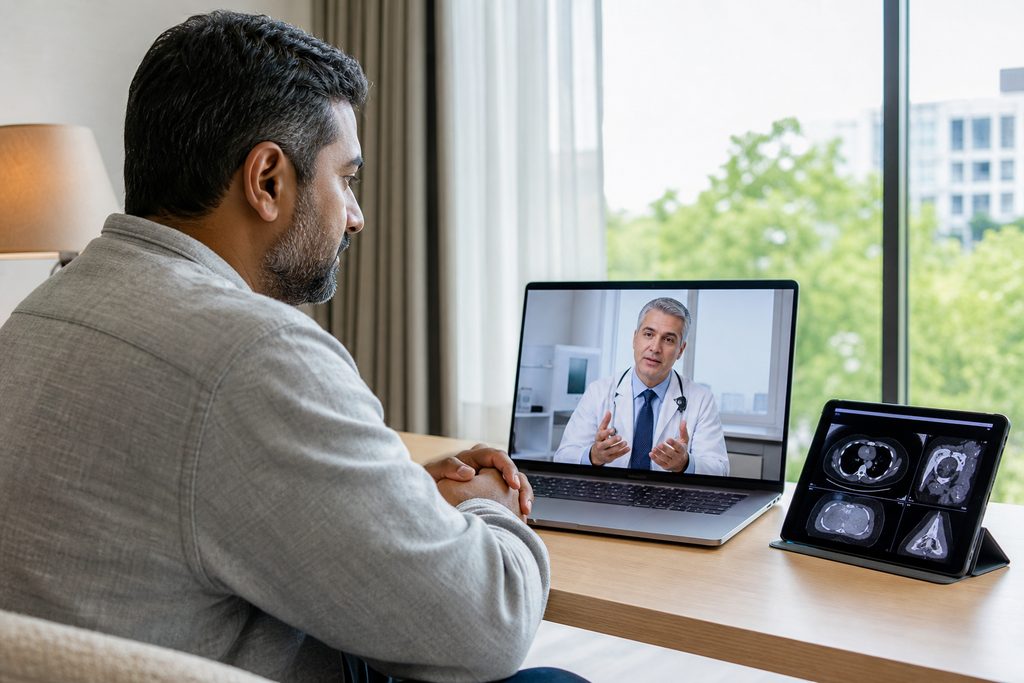
While a single stem cell injection at a clinic in the Cayman Islands can run past $25,000, the same broad category of investigational treatment in China often starts at a fraction of that figure. But price is not the only variable that matters. A patient in London searching for a “stem cell clinic near me” will find almost nothing, while our team at China Medical Services regularly fields inquiries from patients who have already found the opposite problem: too many options, too little clarity, and no way to know which ones are legitimate. The gap between what is advertised and what is actually delivered is where most people lose money—and sometimes more than money. A remote stem cell consultation in China exists to close that gap before you ever board a plane.
Key Takeaways
- China has over 35,000 hospitals, but only a small subset—roughly the top 5%—are ranked by Fudan University or accredited by JCI. Stem cell therapy is tightly regulated and mostly confined to clinical trials or hospital-affiliated programs.
- A remote consultation costs $100–300 for a standard international department review or $500–800 for a top-specialist video session. Written second opinions from senior experts run $300–500.
- Stem cell therapy in China is legal only within specific frameworks: registered clinical trials, hospital ethics committee approvals, or designated medical programs. Unlicensed “stem cell tourism” clinics exist and should be avoided.
- No legitimate provider can guarantee an outcome. Anyone who promises a cure, a specific stem cell count, or a fixed price before reviewing your records is a red flag.
The Problem: You Cannot Evaluate a Stem Cell Program From a Brochure
Stem cell therapy has a credibility problem. For every peer-reviewed study showing progress in osteoarthritis, spinal cord injury, or autoimmune conditions, there are a dozen overseas clinics selling “anti-aging stem cell packages” with stock photos and a payment link. The International Society for Stem Cell Research (ISSCR) has repeatedly warned patients about unproven interventions, and the U.S. FDA has issued consumer alerts about clinics marketing unapproved stem cell products. Yet the global market for stem cell tourism continues to grow, driven by patients who are out of options at home.
Here is the uncomfortable truth: most patients cannot tell the difference between a registered clinical trial and a marketing operation. They do not know what questions to ask about cell source, dose, viability, or follow-up. They cannot verify whether a clinic’s “partnership” with a hospital actually exists. And they are making these decisions under emotional pressure, often with a progressive disease in the background.
That is exactly the scenario where a remote consultation earns its keep.
Why a Remote Stem Cell Consultation in China Makes Sense
Chinese hospitals run at a scale that most Western institutions cannot match. A single top-tier hospital in Shanghai may see more outpatient visits in one day than a mid-sized European hospital sees in a month. That volume translates into something specific for stem cell research: larger patient registries, faster recruitment for clinical trials, and more accumulated experience with cell processing and delivery.
According to ClinicalTrials.gov data, China has registered hundreds of stem cell-related trials in the past decade, spanning conditions like knee osteoarthritis, diabetes, liver cirrhosis, and spinal cord injury. Not all of these are open to international patients. But the infrastructure exists, and a remote consultation is how you find out which programs are actually enrolling.
A Different Cost Structure
Let’s talk about stem cell therapy cost China directly. The numbers vary enormously because “stem cell therapy” is not one thing. A single intra-articular injection for knee osteoarthritis at a hospital-affiliated program might run $8,000–$15,000. A more complex intravenous protocol for an autoimmune condition could reach $20,000–$40,000. Compare that to unlicensed clinics in Mexico or the Caribbean, which often charge $20,000–$30,000 for a single infusion with no hospital affiliation and no published outcomes data.
And the remote stem cell consultation price is modest: $100–300 for a standard video consultation with an international department, or $500–800 if you want a top specialist from a Fudan-ranked department. A written second opinion from a senior expert runs $300–500. These are not treatment costs. They are the cost of finding out whether treatment is even worth pursuing.
Regulatory Clarity—or the Lack of It
A question we hear constantly: is stem cell treatment legal in China? The short answer is yes—within specific frameworks. China’s National Medical Products Administration (NMPA) regulates stem cell products as drugs, and since 2015, the government has cracked down on unapproved clinical applications. Hospitals must obtain approval for any stem cell procedure outside a registered trial. That means the legitimate options are mostly hospital-based, ethics-committee-approved, and documented.
The gray market still exists. It always will. But a remote consultation with a hospital-affiliated team is one of the few ways to verify that a program is operating inside the lines.
How a Remote Stem Cell Consultation Actually Works
The process is less complicated than most patients expect. But it is also not instant. Here is the step-by-step reality.
First, you gather your records. This means your complete medical history, current diagnosis, imaging reports (MRI, CT, X-ray), blood work from the past six months, and any prior treatments or surgeries. If your records are not in English, they will need to be translated into Chinese for the reviewing team. Our case managers handle this.
Second, the records go to a specialty department. If you have knee osteoarthritis, it goes to orthopedics or sports medicine. If you have a neurological condition, it goes to neurology. The reviewing team looks at your case from the perspective of: is there a registered stem cell program in China that addresses this condition, and is this patient a reasonable candidate?
Third, you get a video consultation. This is where you ask the hard questions. What is the cell source? How many cells per dose? What is the evidence for this specific condition? What are the known risks? What happens if it does not work? A good specialist will answer all of these without flinching.
Fourth, you receive a written summary. This is not a prescription. It is a treatment review: what the team recommends, what they do not recommend, and what the next steps would look like if you decided to proceed.
What to Look for in a Stem Cell Program—and What to Avoid
If you are comparing options, here is what separates a legitimate program from a marketing operation.
| Factor | Legitimate Hospital-Affiliated Program | Unlicensed “Stem Cell Tourism” Clinic |
|---|---|---|
| Location | Inside a Fudan-ranked or JCI-accredited hospital | Standalone clinic, often in a hotel or office building |
| Cell source | Documented: mesenchymal stem cells, specific tissue origin | Vague: “stem cells” with no specification |
| Regulatory status | Registered trial or hospital ethics approval | No verifiable approval |
| Outcomes data | Published or in-progress clinical data | Testimonials only |
| Price transparency | Itemized, with consultation first | Package deals, discounts for cash |
| Promises | None beyond what evidence supports | “Cure,” “guaranteed improvement,” “anti-aging” |
One more thing. The phrase best stem cell clinic Shanghai gets searched a lot. Shanghai does have strong hospital-based programs, particularly at institutions affiliated with Fudan University and Shanghai Jiao Tong University. But “best” is the wrong word. The right question is: which Shanghai hospital has a registered program for my specific condition, and will they review my case remotely? That question has an answer. “Best” does not.
And if you are wondering how much does stem cell therapy cost abroad, the honest answer is that it depends entirely on the country, the regulatory environment, and whether you are getting a hospital-based treatment or a clinic-based injection. Panama, Mexico, Japan, South Korea, and China all have different price points and different rules. Comparing them without understanding the regulatory context is like comparing surgery prices without knowing if the surgeon is licensed.
Practical Considerations: Records, Visas, and Follow-Up
If the remote consultation leads to a recommendation to travel, several practical matters come into play.
Medical records must be complete and translated. Chinese hospital departments will not evaluate a case based on a summary paragraph. They want the actual imaging files, the actual lab values, the actual surgical notes. Incomplete records lead to incomplete reviews.
For travel, foreign patients coming to China for medical treatment use an S2 visa, which covers short-term private affairs including medical treatment. Family members accompanying the patient also apply for S2 visas. The hospital or coordinating service provides supporting documentation, but approval is always at the discretion of the Chinese embassy or consulate. No one can guarantee a visa.
Payment is another consideration. Public hospitals in China generally require prepayment for services, and international patients typically pay out of pocket, then seek reimbursement from their home insurance if applicable. Private international hospitals in China—like United Family or Jiahui—often have direct billing arrangements with major insurers, which can simplify the process considerably.
Follow-up after returning home is the part most patients forget to plan. Stem cell therapy is not a one-and-done event. You need imaging at 3, 6, and 12 months. You need someone to interpret those results. If your home physician is not familiar with the treatment you received, that follow-up becomes complicated. A good remote consultation should include a discussion of what follow-up looks like and who will manage it.
Frequently Asked Questions
Can I book a stem cell consultation online before traveling to China?
Yes. Most hospital international departments and affiliated coordination services accept remote consultations. You submit your records, they are reviewed by the relevant specialty team, and you schedule a video call. This is the standard first step for international patients considering treatment in China.
Is stem cell treatment legal in China for international patients?
Stem cell treatment is legal within registered clinical trials, hospital ethics committee approvals, and designated medical programs. International patients can participate in some of these programs, but eligibility depends on the specific condition, the trial protocol, and the hospital’s policies. Unlicensed clinics operating outside hospital systems are not legal and should be avoided regardless of what they advertise.
How much does a remote stem cell consultation cost?
A standard video consultation with an international department costs $100–300. A written second opinion from a top specialist runs $300–500. A top-specialist video consultation costs $500–800. These fees are separate from any treatment costs and are credited toward coordination services if you later travel to China for treatment.
What if the specialist says I am not a candidate for stem cell therapy?
Then you have saved yourself an expensive trip and an ineffective treatment. A legitimate consultation will sometimes end with a recommendation against stem cell therapy. That is not a failure of the consultation. It is the consultation doing its job. You should be far more suspicious of a consultation that always ends with a treatment recommendation.
Does China Medical Services provide stem cell therapy?
No. We are not a hospital and we do not provide any medical treatment. We connect international patients with hospital-based departments in China that offer stem cell programs, and we coordinate the consultation, translation, and logistics. All medical decisions are made by the treating physicians.
Your Next Step
Stem cell therapy is a serious decision with real risks and real costs. The smartest first move is not to book a flight. It is to get your case reviewed by a team that sees these cases every day. Start with a free consultation to discuss your condition and find out whether a remote stem cell consultation is the right step for you.
For more medical information and treatment options in China, visit chinamedservices.com (China Medical Services).
