PRP Therapy in China: How We Arrange Your Platelet Treatment from Consultation to Recovery
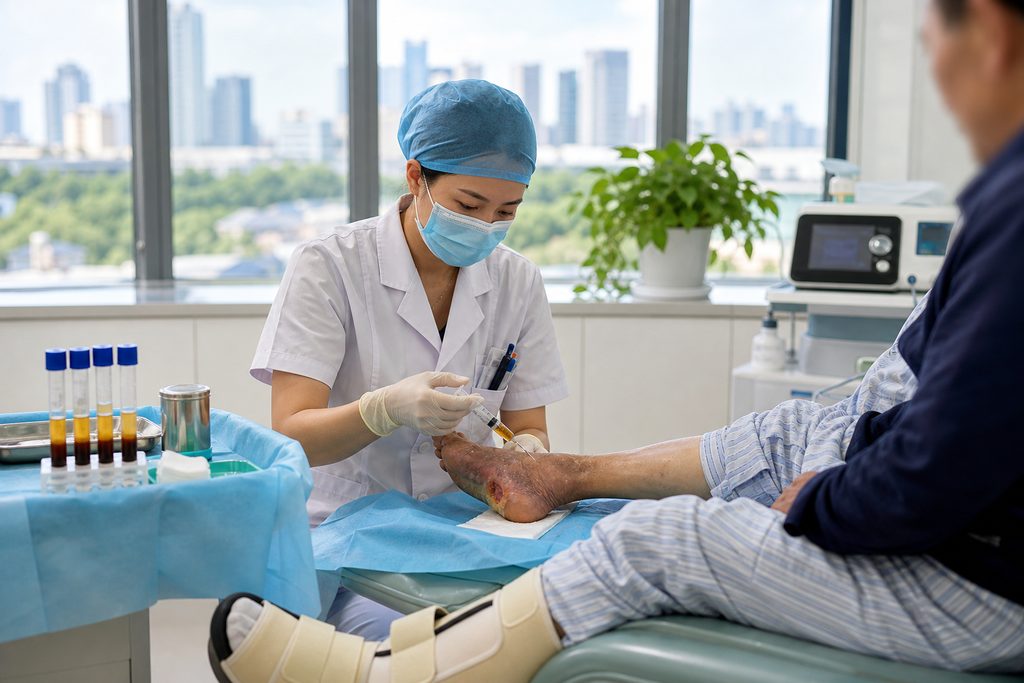
More than 500,000 platelet-rich plasma injections are performed globally each year, with demand growing at roughly 9% annually according to data from Grand View Research. Some of the most experienced centers for this procedure now sit in Shanghai, Beijing, and Guangzhou. The prp injection cost China typically runs between $300 and $1,200 per session — a fraction of what patients pay in the United States or Western Europe. But cost is only one part of the equation. Getting the right diagnosis, the right preparation protocol, and the right post-procedure follow-up matters just as much.
We coordinate PRP treatment for international patients at 340+ top-ranked hospitals across 37 cities in China. That network includes public teaching hospitals with some of the highest procedure volumes in the world, as well as JCI-accredited private international facilities with English-speaking staff. This article walks through what PRP actually does, who benefits, what it costs, and how we arrange the entire pathway — from remote evaluation to your first injection.
PRP Therapy in China: The Short Answer
Platelet-rich plasma therapy concentrates your own blood platelets — typically 3 to 5 times baseline levels — and reinjects them into damaged tissue to stimulate repair. In China, the procedure is widely available at major orthopedic, sports medicine, dermatology, and rehabilitation departments. A single session costs $300 to $1,200 depending on the hospital tier and the body area treated. Most patients need 2 to 3 injections spaced 4 to 6 weeks apart for meaningful results.
That’s the simple version. The reality is more nuanced: not every hospital offers the same preparation method, not every condition responds equally well, and the quality gap between a top-tier academic center and a small private clinic can be substantial. That’s precisely why patients come to us for hospital matching rather than booking blindly.
Who This Is Right For — and Who It Isn’t
PRP has the strongest evidence base for a specific set of conditions. If you fall into one of these categories, you’re likely a reasonable candidate for evaluation:
- Mild to moderate knee osteoarthritis (Kellgren-Lawrence grade 1–3), where multiple randomized trials show PRP outperforms hyaluronic acid injections for pain relief at 6 and 12 months.
- Chronic tendinopathy — lateral epicondylitis (tennis elbow), Achilles tendinopathy, patellar tendinopathy — particularly when conservative therapy has failed.
- Androgenetic alopecia (pattern hair loss), where PRP combined with microneedling shows measurable increases in hair density after 3 to 6 sessions.
- Sports-related partial ligament or muscle injuries where the patient wants to accelerate return-to-play timelines.
- Facial rejuvenation and acne scarring, when performed by dermatology departments with standardized preparation protocols.
But PRP is not for everyone. Here’s who should not pursue this treatment without a thorough specialist review:
- Patients with active systemic infections, blood cancers, or platelet dysfunction disorders.
- Anyone on anticoagulant therapy who cannot safely pause medication under physician supervision.
- People with severe anemia (hemoglobin below 10 g/dL) or thrombocytopenia (platelet count below 100,000/μL).
- Those with unrealistic expectations — PRP is not a cure for advanced osteoarthritis, and no responsible physician will promise otherwise.
- Patients seeking PRP for conditions with no meaningful clinical evidence, such as generalized chronic fatigue or non-specific back pain without a clear structural diagnosis.
Being honest about who should not do this is what makes the rest of this guide trustworthy. We’d rather tell a patient to stay home than arrange a treatment that won’t help them.
The Options, Compared
If you’re considering PRP abroad, you’re really choosing between four pathways. Here’s how they stack up:
| Option | Cost per Session (USD) | Wait Time for First Injection | Key Advantage | Key Limitation |
|---|---|---|---|---|
| US orthopedic clinic | $700–$2,500 | 1–3 weeks | No travel required | Insurance rarely covers PRP; highest cost |
| Western Europe (Germany, UK private) | $500–$1,800 | 2–6 weeks | Strong regulatory oversight | Still expensive; limited package options |
| China — top public hospital (international/VIP department) | $300–$800 | 3–10 days after remote evaluation | High procedure volume; academic expertise; lowest cost | Requires travel; public hospital environment can feel unfamiliar |
| China — JCI-accredited private international hospital | $500–$1,200 | 2–7 days | English-speaking staff; Western-style care; direct insurance billing | Higher cost than public tier; fewer academic research programs |
Which column fits you? If budget is the primary driver and you’re comfortable with a bilingual companion guiding you through a large public hospital, the public international department route delivers the best value. If you want the smoothest possible experience with minimal friction, a private international hospital in Shanghai or Beijing makes more sense. Many patients actually combine both: remote evaluation with a top academic specialist, then the procedure at whichever facility that specialist recommends.
How We Arrange Your Platelet Treatment: The Step-by-Step Pathway
This is the section unique to this article — the actual coordination process we run for every PRP patient. It’s not a generic “how medical tourism works” explanation. It’s the specific sequence we follow for platelet therapy, from first email to post-injection follow-up.
Step 1: Remote records review. You send us your existing imaging (MRI or ultrasound reports), blood work if available, and a brief description of your condition and treatment history. Our team translates these documents into Chinese and forwards them to the relevant department — typically sports medicine, orthopedics, dermatology, or rehabilitation — at one or more hospitals in our network. This written second opinion costs $300–$500 and gives you a clear preliminary assessment: whether PRP is appropriate, how many sessions are likely needed, and which preparation method the hospital uses.
Step 2: Video consultation with the treating specialist. For $100–$300, you speak directly with the physician who would oversee your injections. This is where you ask the questions that matter: What platelet concentration do you target? Do you use single-spin or double-spin preparation? What’s your complication rate? What should I expect in the first week? The specialist can also flag any red flags in your history that would change the plan.
Step 3: Scheduling and logistics. Once you approve the plan, we coordinate dates with the hospital’s international department. We also handle the supporting pieces: S2 visa documentation (the hospital issues an invitation letter confirming your treatment appointment), accommodation recommendations near the hospital, and airport transfer if needed. Our bilingual medical companion fee starts at $300 per day and covers registration, queue management, payment, translation, and accompaniment throughout your visit.
Step 4: The injection day. You’ll arrive at the hospital, have blood drawn (typically 15–60 mL depending on the treatment area), wait 30–60 minutes while the lab concentrates your platelets, then receive the injection — often under ultrasound guidance for joint or tendon applications. The entire visit usually takes 2 to 3 hours.
Step 5: Follow-up and return planning. Before you leave, the specialist gives you written post-procedure instructions. We translate them and remain available for follow-up questions. If additional sessions are needed, we schedule them before you depart or plan your return visit. Any remote consultation fees you paid are credited in full toward our on-the-ground coordination service if you proceed with treatment within 90 days.
What It Costs: prp injection cost China vs. Abroad
Most hospitals don’t sell “packages” the way medical tourism agencies do. What you’re actually booking is a treatment course: the specialist consultation, the injections themselves, and follow-up. We can bundle the logistics — airport transfer, hotel, bilingual companion, hospital coordination — into a single coordinated itinerary, but the medical fees are always paid directly to the hospital at their published rates. If you want to book PRP therapy package China, think of it as us assembling the pieces rather than selling a fixed-price product. Final costs vary by hospital and case complexity.
Here’s the mechanism in plain terms: we draw your blood, spin it in a centrifuge to separate the components, and extract the platelet-rich layer. Platelets contain growth factors — PDGF, TGF-β, VEGF, and others — that signal your body’s repair cells to migrate to the injection site. When concentrated platelets are injected into damaged tissue, they release these growth factors over several days, triggering a localized healing response. It’s not adding anything foreign to your body; it’s concentrating what’s already there. That’s why allergic reactions are essentially nonexistent.
Shanghai has several excellent options, and the right choice depends on your condition. For orthopedic and sports medicine applications, the public teaching hospitals with Fudan-ranked sports medicine and orthopedics departments — including those affiliated with Fudan University and Shanghai Jiao Tong University — handle some of the highest PRP volumes in the country. For dermatological applications (hair restoration, facial rejuvenation), the dermatology departments at these same academic centers are strong choices. For a Western-style experience with English-speaking staff throughout, Jiahui International Hospital and United Family Shanghai both offer PRP with JCI accreditation. See our Shanghai hospital guide for a detailed comparison.
Let’s run the math for a typical 3-session knee OA course. In the US: $2,100–$7,500 for injections alone, no travel costs. In China: $900–$3,600 for injections, plus roughly $1,500–$2,500 for round-trip flights, a 5–7 day hotel stay, and our coordination services. Total China cost: $2,400–$6,100. You save money at the high end, break even at the low end, and the real value emerges when you need multiple courses or combine PRP with other treatments. For patients already planning travel to Asia, the savings are more dramatic. For a deeper dive, see our guide to top-ranked Chinese hospitals and specialty department rankings.
Your Next Step
PRP therapy in China offers genuine value: experienced specialists, high procedure volumes, and costs that undercut Western pricing by 50–70% in most cases. But the value only materializes if you choose the right hospital and prepare properly. We’re not a hospital, and we don’t provide medical advice or diagnoses. What we do is handle the coordination — hospital matching, records translation, appointment scheduling, visa documentation, bilingual accompaniment, and follow-up communication. If you’re considering PRP and want to know whether a Chinese hospital makes sense for your specific situation, request a free consultation with our team. We’ll review your case and give you an honest assessment, including whether you should stay home.
Frequently Asked Questions
Yes. The hospitals used for international patients are JCI-accredited and follow the same international safety standards as top hospitals in the US and Europe. Surgical teams perform high volumes of procedures — often more than their Western counterparts — which studies show leads to better outcomes.
Costs vary by procedure and hospital, but international patients typically save 40-80% compared to US prices — even when factoring in travel and accommodation. A consultation with our team will give you an exact, all-inclusive quote with no hidden fees.
Send us your existing medical reports to get started. We handle everything from hospital selection and appointment scheduling to visa assistance and post-operative recovery planning. Your medical records are reviewed by the specialist before you even book a flight.
For more medical information and treatment options in China, visit chinamedservices.com (China Medical Services).
