Aftercare: Remote Follow-Up After You Leave China
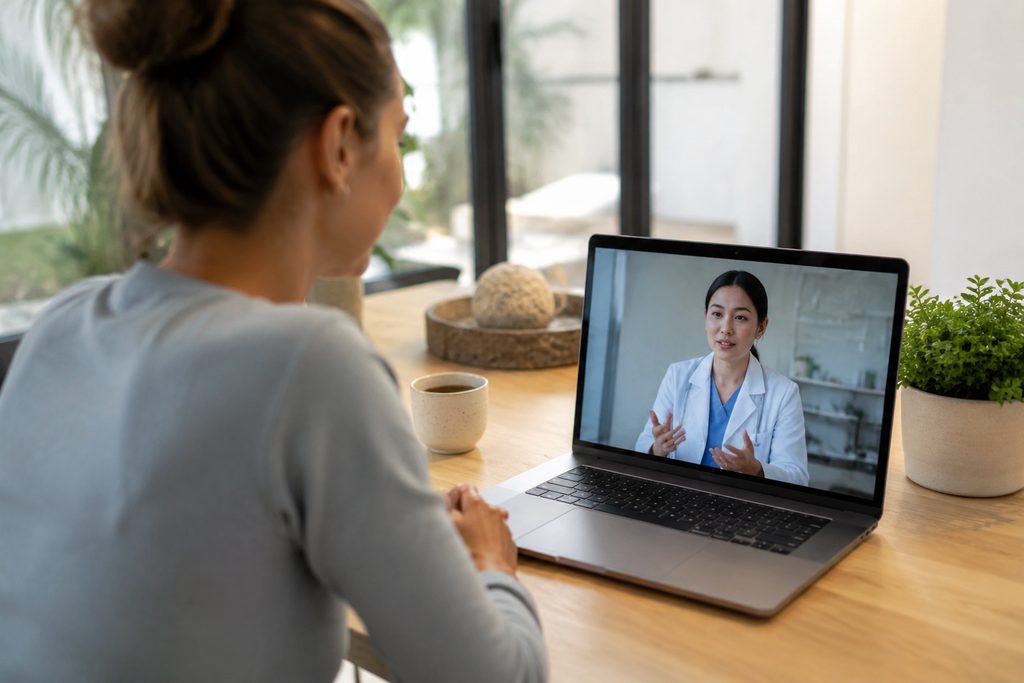
When 42-year-old Daniel from Manchester landed back at Heathrow after a spinal fusion in Shanghai, the relief was real. The surgery went well. The hospital stay was fine. But as the taxi pulled into his driveway, a quieter question surfaced: what happens now? His surgeon was 5,700 miles away. The wound was still healing. And the physiotherapy plan he’d been handed was written for a body that still felt foreign to him.
This is the part of medical travel nobody posts about on Instagram. The aftercare. The remote follow-up. The “who do I call at 2 a.m. when something feels off” part.
Here’s the short answer: a post surgery follow up package China typically includes scheduled video consultations with your original surgical team, review of local imaging and lab reports, medication adjustments, and a written recovery summary for your home doctor. Most packages run 3 to 12 months after discharge. The cost ranges from $100 to $800 per consultation, depending on whether you’re speaking with a resident, a specialist, or the surgeon who operated on you.
But it’s not automatic. You have to set it up before you leave. And the quality varies enormously depending on which hospital you chose and whether you used their international department.
Post Surgery Follow Up Package China: The Short Answer
A post surgery follow up package China is a structured series of remote touchpoints between you and the Chinese medical team that treated you. Think of it as a bridge. On one side is the hospital where the actual cutting, stitching, and implanting happened. On the other side is your living room, your local GP, and the slow slog of recovery.
Most packages include three things. First, scheduled video consultations at fixed intervals — usually 2 weeks, 6 weeks, 3 months, and 6 months post-discharge. Second, a document review channel where you upload local X-rays, MRIs, or bloodwork and the Chinese team reads them. Third, a written summary after each consult that you can hand to your home physician.
The caveat: these packages are not standardized across Chinese hospitals. Some top-tier public hospitals offer them only through their international VIP departments. Others don’t offer them at all unless you ask. And a few private international hospitals, like United Family or Jiahui, build remote follow-up into their surgical pricing from day one.
Who This Is Right For — and Who It Isn’t
Remote follow-up after surgery abroad works well for a specific kind of patient. Not everyone.
Good candidates:
– You had a planned, elective procedure — orthopedic, cardiac, oncology-adjacent, or reconstructive — with a predictable recovery curve
– Your home country doctor is competent but unfamiliar with the specific technique or implant used in China
– You can reliably send high-resolution imaging files and articulate your symptoms in English or through a translator
– You’re within 3 to 12 months of surgery and still have questions about medication, activity restrictions, or wound healing
Who should not rely on remote follow-up alone:
– You had complications during or immediately after surgery — bleeding, infection, implant failure, or neurological changes
– Your recovery is not following the expected trajectory and you need hands-on physical examination
– You have a condition requiring urgent intervention, like suspected deep vein thrombosis or wound dehiscence
– You don’t have a local doctor willing to order imaging and labs and share results with an overseas team
Remote follow-up is a supplement to local care, not a replacement for it. If your incision is gaping open, no video call fixes that.
The Options, Compared
When you leave China after surgery, you’ve got four realistic paths for follow-up care. They’re not equal. Here’s how they stack up.
| Option | Who You Talk To | Typical Cost | Best For | Limitation |
|---|---|---|---|---|
| Hospital remote follow-up package | Your original surgical team | $100–$800 per consult | Continuity of care, implant-specific advice | Time zone gaps, language friction, no physical exam |
| Local home-country doctor | GP or specialist near you | Covered by insurance or $50–$300 per visit | Hands-on exam, wound checks, emergency access | May not know the Chinese surgical technique |
| Independent telehealth platform | Third-party physician | $40–$150 per consult | Quick questions, medication refills | No access to your Chinese records |
| Written second opinion service | Chinese specialist reviewing your file | $300–$500 per report | When local and Chinese advice conflict | No live conversation, slower turnaround |
If you had a straightforward procedure and your home doctor is engaged, the local route may be enough. If you had a complex reconstruction or a technique that’s rare in your home country, the hospital remote package earns its keep. The written second opinion is the tiebreaker when two doctors disagree.
Remote Consultation After Medical Tourism China: What Actually Happens
Let’s be concrete about what a remote consultation after medical tourism China looks like in practice.
You’ll usually get a WeChat link or a hospital portal login before you leave. At the scheduled time, you click in. The surgeon or their deputy appears on screen. You’ll have 15 to 30 minutes. You’ll show them the wound on camera if it’s visible. You’ll describe pain levels, range of motion, sleep quality, any new symptoms. They’ll ask about your local bloodwork if you’ve sent it ahead.
Then they’ll tell you things like: reduce the anticoagulant from twice daily to once daily. Start bearing weight at 50 percent. Send new X-rays at the six-week mark. Stop the nerve pain medication if tingling has resolved.
After the call, you get a written summary — usually in English if you went through an international department — that you can forward to your GP. That document matters more than the call itself. It’s the artifact that keeps your home care aligned with the surgical plan.
But here’s the friction nobody advertises. Time zones. A Shanghai surgeon at 9 a.m. is a London patient at 1 a.m. You’ll be doing some early-morning or late-night calls. And if you need an urgent answer on a Friday night your time, you may wait until Monday morning Beijing time. That’s the reality.
Can My Doctor Do Telehealth Follow Up in China?
The question can my doctor do telehealth follow up in China has two readings. One: can your Chinese surgeon do telehealth with you after you leave? Yes — this is common, though not universal. Two: can your home doctor do telehealth with you while you’re still in China recovering? That depends on your home country’s licensing rules and your doctor’s comfort level.
Most Western doctors won’t do cross-border telehealth with a patient who is physically in China. Licensing rules get murky. Malpractice coverage usually doesn’t extend abroad. So if you’re still in China during recovery and something feels wrong, your first call should be to the Chinese hospital that treated you, not your GP back home.
Once you’re home, the direction flips. Your Chinese surgeon can speak with you via telehealth. But they can’t prescribe medication in your home country. They can’t order labs. They can only recommend. The prescription power sits with your local doctor.
This is why the best remote follow-up arrangements are triangular: you, your Chinese surgeon, and your local physician all reading the same summaries.
Cost of Virtual Check Up After Surgery China
The cost of virtual check up after surgery China varies by hospital tier and who’s on the call.
A video consultation with a standard international department physician runs $100 to $300. That’s the workhorse option — good for routine check-ins, medication adjustments, and reviewing normal imaging.
A top-specialist video consultation, where you’re speaking with the actual surgeon or a senior specialist, runs $500 to $800. Worth it at the 6-week and 6-month marks when surgical decisions are being made.
A multidisciplinary team video consultation, where two or more specialists join the same call, runs $1,500 to $2,000. This is for complex cases — oncology patients with new findings, cardiac patients with rhythm issues, spinal patients with neurological symptoms.
A written second opinion from a top hospital expert costs $300 to $500. You send records, they send a written analysis. No live call.
These prices are for the consultation itself. They don’t include the cost of local imaging or labs you’ll need to get on your own. They don’t include translation if your case file isn’t already in English or Chinese. And they don’t include the coordination fee if a service like China Medical Services is arranging the calls and managing the document flow for you.
Medical Tourism Aftercare Services Price: What Drives the Number
The medical tourism aftercare services price isn’t a fixed menu. It shifts based on four things.
First, hospital tier. A public top-ranked hospital’s international department charges more than a mid-tier private clinic. Second, who you need on the call. A resident costs less than a department chief. Third, frequency. A 3-month package with four calls costs more than a single 6-week check-in. Fourth, complexity. If your case requires a translator on the line, or if multiple specialists need to review imaging before the call, that adds labor.
Some private international hospitals bundle follow-up into the surgical package. You pay more upfront, but the aftercare is already covered. Public hospitals typically charge per consult. Neither model is inherently better — it depends on how much follow-up you’ll actually use.
A realistic budget: $300 to $2,500 for a full remote follow-up period, depending on intensity. That’s on top of what you already paid for surgery and travel.
Practical Considerations: Records, Visas, and the Paper Trail
Before you leave the hospital in China, get your documents in order. This is the step people skip, and it’s the step that makes or breaks remote follow-up.
Ask for: a discharge summary in English, the full operative report, a list of implants with serial numbers and manufacturer details, all imaging on a CD or USB drive, and a medication list with generic drug names. Generic names matter. A Chinese brand name means nothing to your pharmacist in Ohio or Manchester.
On the visa side: if you need to return to China for a follow-up procedure or an in-person review, you’ll apply for an S2 visa with a medical treatment annotation. Your hospital can provide the supporting documents. If your stay exceeds 180 days, it’s an S1. The M visa is for commercial and trade activities — it has nothing to do with medical travel. Don’t let anyone tell you otherwise.
Payment for remote consultations is usually by international bank transfer or card through the hospital’s international billing office. Some hospitals accept WeChat Pay or Alipay, but those are hard to fund from outside China. Ask about payment methods before you leave.
Insurance is another wrinkle. Most Western insurers won’t cover a remote consultation with a Chinese hospital unless it was pre-authorized as part of a medical tourism package. Some will. Check before you book the call.
Frequently Asked Questions
How does aftercare work after surgery abroad?
You’ll typically have a scheduled series of video calls with your original surgical team, plus a channel for sending local imaging and lab results. The Chinese team reviews your file, advises on medication and activity, and sends a written summary to your home doctor. The arrangement works best when your local physician is looped in from the start.
Is a remote follow-up package included in my surgery price?
Sometimes. Private international hospitals in China often bundle one or two follow-up consultations into the surgical fee. Public hospital international departments usually charge per consultation. Always ask before you pay for surgery — get it in writing.
What if my local doctor disagrees with the Chinese surgeon’s advice?
This happens. When it does, a written second opinion from the Chinese hospital can clarify the reasoning behind the original surgical plan. Send both doctors the same imaging and labs. Ask each to respond to the other’s concerns in writing. You’re looking for the medical logic, not a popularity contest.
Can I get a prescription from a Chinese doctor after I go home?
No. A Chinese physician cannot write a prescription that’s valid in your home country. They can recommend a medication and dosage. Your local doctor must write the actual prescription. Bring the Chinese medication list with generic names to your first local appointment.
What if I need emergency care at home and my Chinese surgeon can’t be reached?
Go to your local emergency department. Do not wait for a video call. The Chinese team can review what happened afterward and adjust the recovery plan. Remote follow-up is for planned, non-urgent care. Emergencies always go to the nearest hospital.
Your Next Step
Remote follow-up after surgery in China is not a luxury add-on. For many procedures, it’s the difference between a smooth recovery and months of confusion. The key is setting it up before you leave the hospital, getting your records in order, and keeping your local doctor in the loop.
We help international patients coordinate remote follow-up packages with Chinese hospitals — scheduling calls, managing document translation, and making sure your home physician receives clear summaries. We’re not a hospital. We don’t diagnose or treat. We handle the logistics so you can focus on recovery.
If you’re planning surgery in China or have already returned home and need a structured follow-up plan, start with a conversation. Tell us where you are in the process and we’ll help you figure out the next step.
For more medical information and treatment options in China, visit chinamedservices.com (China Medical Services).
