West China Hospital Neurosurgery for International Patients: Costs, Process, and What to Expect
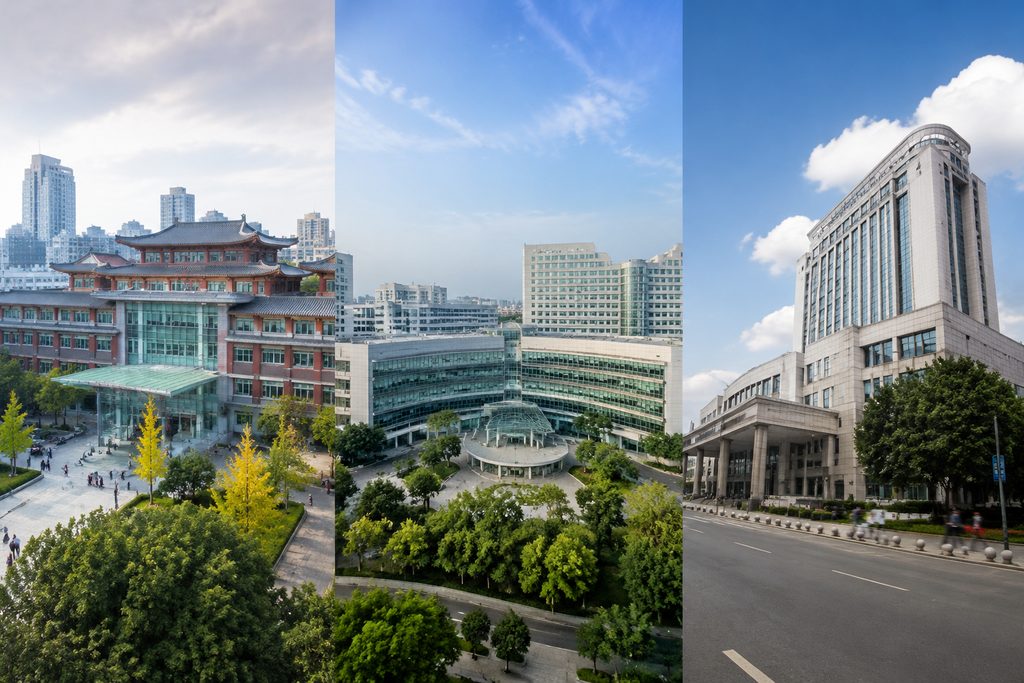
You’ve probably heard that surgery in China means compromising on quality. The reality is exactly the opposite for a handful of institutions. West China Hospital in Chengdu is one of them. Its neurosurgery department handles a patient volume most Western centers never see, which translates into surgical experience that is difficult to match anywhere else. But getting there as a foreigner requires knowing exactly how the system works, what the West China Hospital neurosurgery price looks like, and where the hidden friction points are.
West China Hospital Neurosurgery: The Short Answer
West China Hospital of Sichuan University operates one of the largest neurosurgery departments in the world. It consistently ranks among China’s top neurosurgery centers in the Fudan University hospital rankings, which evaluate clinical reputation and research output across 45 specialties. For international patients, the West China Hospital neurosurgery price typically ranges from $15,000 to $45,000 for complex cranial procedures, depending on the specific operation and whether you use the standard public pathway or the international VIP channel. That figure is roughly one-fifth to one-third of what the same procedure costs in the United States.
The caveat: you cannot simply book a surgery slot from abroad through the standard public system. Chinese public hospitals require an in-person consultation before scheduling any operation. That means your first trip to Chengdu is for evaluation, not surgery. The second trip is for the procedure itself. Some patients combine these into one extended stay, but you should plan for at least two weeks in the city.
Who This Is Right For — and Who It Isn’t
Neurosurgery in China makes sense for a specific profile of patient. You need a clear diagnosis, stable enough health to travel, and the financial flexibility to pay upfront. Public hospitals in China do not bill international insurance directly. You pay, then seek reimbursement from your insurer.
Who is typically a good candidate:
- Patients with a confirmed diagnosis from their home country and imaging (MRI, CT, angiography) that is less than three months old
- Patients facing long wait times for non-emergency cranial procedures in their home country
- Patients who need high-volume surgical experience for complex cases like skull base tumors, cerebrovascular malformations, or trigeminal neuralgia
- Patients comfortable with cultural and language differences, or willing to hire a bilingual medical companion
Who should not pursue this path:
- Patients with unstable neurological status requiring immediate intervention — you cannot fly safely
- Patients whose condition requires a multidisciplinary team that includes oncology, radiation, and rehabilitation in their home country for ongoing management
- Patients expecting a Western-style private hospital experience at public hospital prices — that combination does not exist
- Patients who need guaranteed specific dates for surgery before booking flights — public hospital scheduling is fluid
The Options, Compared
When international patients consider neurosurgery in China, they are really choosing between three pathways. Each has a different cost structure, service level, and booking process. Understanding this before you contact anyone will save you weeks of back-and-forth.
| Pathway | West China Hospital Neurosurgery Price Range | Booking Lead Time | English Support | Payment Model |
|---|---|---|---|---|
| Standard public pathway | $15,000–$30,000 | 2–6 weeks after in-person consult | Minimal — bring your own translator | Full prepayment at admission |
| International/VIP department | $25,000–$45,000 | 1–3 weeks after in-person consult | Dedicated English-speaking coordinators | Full prepayment at admission |
| Private international hospital (non-West China) | $40,000–$80,000 | 1–2 weeks | Full English service | Direct insurance billing available |
The standard pathway gets you the same surgeons and the same operating rooms at the lowest cost. But you will navigate registration, payment, and pre-operative testing almost entirely in Mandarin. The VIP pathway adds a coordination layer that handles scheduling and communication, which is why the West China Hospital neurosurgery price roughly doubles. Private international hospitals like United Family or Raffles offer Western-style care and direct insurance billing, but they are not West China Hospital — the surgical volume and specific subspecialty expertise differ.
What Makes West China Hospital Neurosurgery Different
West China Hospital sits in Chengdu, the capital of Sichuan province and the medical hub for over 80 million people in western China. The neurosurgery department performs more than 10,000 procedures annually across subspecialties including cerebrovascular surgery, skull base surgery, functional neurosurgery, and neuro-oncology. That volume is not a marketing number. It is the reason surgeons here have seen rare presentations that a typical Western neurosurgeon might encounter a handful of times in a career.
The hospital is part of the Fudan-ranked Top 100 hospital network we cover, and its neurosurgery department appears in the Fudan specialty reputation rankings for neurosurgery. For foreigners asking whether West China Hospital is good for international patients, the honest answer is nuanced. The clinical quality is world-class. The patient experience in the public wing is not. You will share waiting areas with hundreds of local patients daily. The efficiency is remarkable, but the comfort level is basic by Western standards.
That trade-off is exactly why some patients choose the VIP pathway. You get the same surgical team with a calmer, more guided experience. The cost difference reflects service, not clinical quality.
What It Costs: Breaking Down the Numbers
The question “how much does brain surgery cost in Chengdu” has no single answer. Your final bill depends on the procedure, the pathway, and the length of hospital stay. Here is what we see across typical cases, based on current hospital pricing structures.
For a standard craniotomy for tumor resection through the public pathway, expect $15,000 to $25,000 including operating room fees, surgeon fees, anesthesia, standard ward stay of 7–14 days, and basic post-operative imaging. Complex skull base procedures or cerebrovascular surgeries like aneurysm clipping run $25,000 to $45,000. Functional neurosurgery such as microvascular decompression for trigeminal neuralgia typically lands between $15,000 and $22,000.
These figures exclude international travel, accommodation in Chengdu, and any rehabilitation after discharge. They also exclude the cost of a bilingual medical companion, which runs from $300 per day if you need translation and logistical support. The VIP pathway adds roughly 50–100% to the base surgical cost, but includes English coordination, priority scheduling, and a private room.
Practical Considerations: Records, Visa, and Payment
You will need a complete medical dossier before any Chinese neurosurgeon will review your case. That means all imaging in DICOM format on a CD or USB drive, not just printed reports. Bring pathology reports if you have had a biopsy. Bring a summary letter from your home neurologist or neurosurgeon outlining the diagnosis, prior treatments, and current medications. Translation into Chinese is not required for the initial review — most West China neurosurgeons read English medical records — but it speeds things up.
For the visa, you apply for an S2 visa with a note indicating medical treatment as the purpose. You will need supporting documents from the hospital, typically an invitation letter or appointment confirmation from the international department. Family members traveling with you also apply for S2 visas. The process takes one to four weeks depending on your home country’s Chinese embassy or consulate. Do not book flights until the visa is in your passport.
Payment is upfront. Chinese public hospitals require a deposit at admission, often 50–100% of the estimated total, with the balance settled at discharge. Bring a credit card with a high limit or arrange a wire transfer in advance. International insurance is not billed directly by West China Hospital’s public wing. You pay, then submit claims. The VIP international department may offer more flexible payment arrangements, but direct billing is still uncommon outside private international hospitals.
Language is the single biggest practical barrier. Even in the VIP pathway, nurses and junior staff may have limited English. A bilingual medical companion handles registration, payment queues, pre-operative testing navigation, and communication with the care team. It is not a luxury. For neurosurgery, where miscommunication about symptoms or post-operative instructions carries real risk, it is a safety measure.
How to Book Neurosurgery at West China Hospital
You cannot book neurosurgery at West China Hospital from abroad through the public registration system. The process starts with a remote review of your records. Several coordination services, including ours, can submit your imaging and medical history to the neurosurgery department for a preliminary assessment. If the department agrees your case is appropriate, you schedule an in-person consultation.
That consultation is not a formality. The surgeon will review your scans, order additional testing if needed, and decide whether surgery is indicated. If yes, the surgical date is set based on operating room availability and urgency. For non-emergency cases, expect a wait of two to six weeks from consultation to surgery. Some patients return home between the consultation and the surgery date. Others stay in Chengdu.
For those asking about a “neurosurgery medical tourism package China,” the honest answer is that packaged neurosurgery does not exist in the way packaged cosmetic surgery or health checkups do. Brain surgery is not a commodity. What exists is coordination: someone who handles records translation, appointment scheduling, hospital registration, and on-the-ground support. That coordination is what turns a confusing process into a manageable one.
If you are comparing hospitals, our specialty rankings pages show which Chinese hospitals rank in the Fudan top 10 for neurosurgery and other departments. West China Hospital appears consistently, as do several Beijing and Shanghai institutions. The question is not just which hospital is best, but which one will actually accept your case and match your logistical constraints.
Frequently Asked Questions
Clinically, yes. West China Hospital is one of China’s top-ranked neurosurgery centers with surgical volume that exceeds most Western hospitals. Operationally, it is a Chinese public hospital. Expect efficiency, not comfort. The international VIP department improves the experience significantly, but at a higher price point. If you want Western-style service with English-speaking staff throughout, a private international hospital in Shanghai or Beijing may suit you better, though the surgical volume for complex neurosurgery cases is typically lower.
A craniotomy for tumor resection at West China Hospital costs roughly $15,000 to $30,000 through the public pathway. The same procedure in the United States typically runs $50,000 to $150,000 depending on the hospital and insurance negotiation. The gap narrows when you factor in travel, accommodation, and coordination services, but the total out-of-pocket cost for uninsured or high-deductible patients is usually still 60–80% lower in Chengdu.
No. Chinese public hospitals require an in-person consultation before scheduling surgery. You can submit your records for a remote preliminary review, which helps you avoid traveling if your case is clearly not suitable. But the surgical decision and scheduling happen only after you meet the surgeon in Chengdu. Plan for at least one trip for evaluation, and possibly a second for surgery.
Post-operative follow-up with your Chinese surgical team is typically done through remote imaging reviews and video consultations. You will need a local neurologist or neurosurgeon in your home country to manage day-to-day recovery and any complications. Before you travel, establish that local follow-up. If a complication requires re-operation, most patients are treated in their home country, not flown back to China. This is a real limitation of medical travel for neurosurgery, and you should discuss it with both your home physician and the West China team before committing.
International patients pay the same base rates as Chinese patients in the public pathway. The difference is that international patients typically use the VIP or international department, which charges higher service fees for English coordination, priority scheduling, and private rooms. That brings the total West China Hospital neurosurgery price for international patients to roughly $25,000–$45,000 for major cranial procedures, depending on complexity and length of stay.
Your Next Step
West China Hospital offers something rare: neurosurgical volume and expertise at a fraction of Western prices. The trade-off is a system that demands patience, preparation, and on-the-ground support. If you are considering this path, start by getting your records in order and having an honest conversation about whether your case is appropriate for travel.
We are China Medical Services, a coordination team that helps international patients navigate Chinese hospitals. We are not a hospital, we do not employ doctors, and we do not make diagnoses. What we do is handle the logistics — records submission, appointment coordination, bilingual companionship, and honest guidance on which hospital and pathway fits your situation. You can learn more about our patient coordination services or explore our hospital database to compare options across China.
The decision to have brain surgery abroad is never easy. But with the right information and the right support, it can be a rational, well-planned choice rather than a leap of faith.
For more medical information and treatment options in China, visit chinamedservices.com (China Medical Services).
