Remote Second Opinion in China: How It Works, What It Costs, Who It Helps
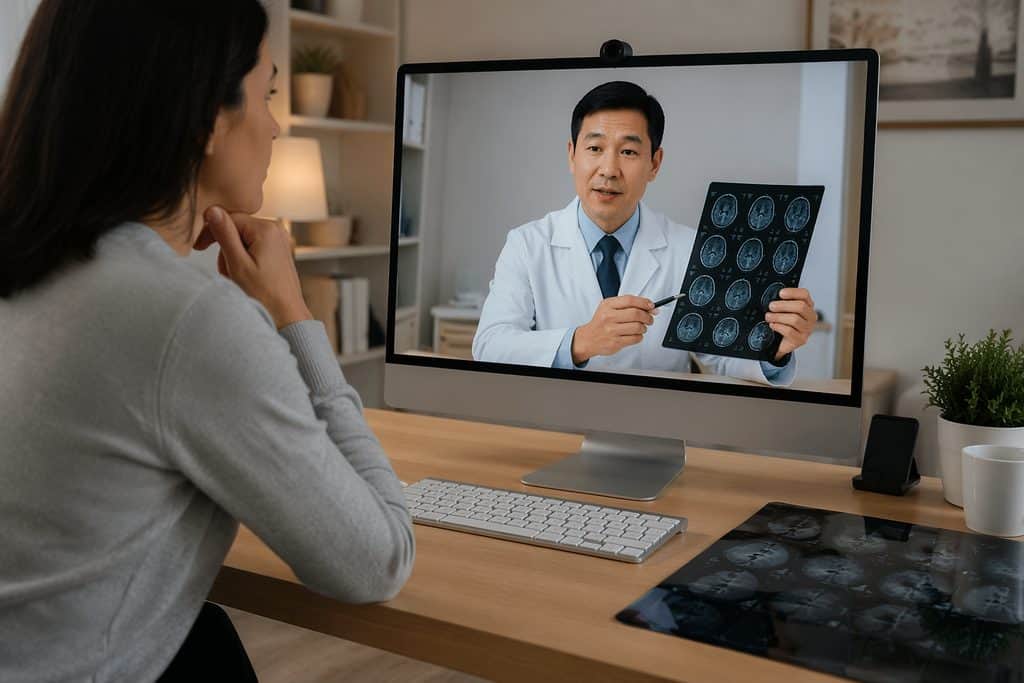
Can I Get a Remote Second Opinion in China? Yes — Here Is Exactly How It Works
You have imaging results, a diagnosis, and a treatment plan. But something does not sit right. Maybe the recommended surgery feels aggressive. Maybe you want to know whether a less invasive option exists. Or perhaps the wait to see a specialist at home is measured in months while your anxiety is measured in days. The remote second opinion China cost — typically between $300 and $800 depending on the specialist tier — has made this a realistic option for thousands of international patients. But the process is not as simple as emailing an MRI file to a random hospital address. Here is what actually happens, what it costs, and how to avoid the mistakes that waste time and money.
Key Takeaways
- A written second opinion from a top-tier Chinese hospital specialist typically costs $300–$500; a video consultation runs $500–$800.
- China’s top 5% of hospitals — 340+ institutions ranked by Fudan University and JCI — handle patient volumes that Western centers rarely match, which translates into deep clinical experience in oncology, cardiology, and orthopedics.
- You cannot simply email an MRI to a hospital and expect a response. The process requires translated records, a formal channel (usually the hospital’s international department), and a clear clinical question.
- Written opinions are for reference only. They are not prescriptions, and no reputable service will promise a specific treatment outcome based on a remote review.
The Problem: A Second Opinion at Home Can Take Months — and Cost You More Than Money
In Canada, the median wait time between a specialist referral and actual treatment was 27.7 weeks in 2023, according to the Fraser Institute. In the United Kingdom, NHS data shows more than 7.5 million people were waiting for elective care as of mid-2024. For patients with a new cancer diagnosis, waiting 12–16 weeks for a second opinion is not an inconvenience. It is a clinical risk.
And the financial math is just as stark. A second opinion at a major US academic medical center often costs $2,000–$5,000 without insurance, and many insurers restrict which centers you can use. That means the patient pays twice: once in money, once in time.
But here is what most patients do not realize. A remote second opinion does not require you to travel. It requires the right records, the right hospital, and the right channel. And the cost of getting a specialist review from a top Chinese hospital — where oncologists routinely see more gastric, liver, and esophageal cancer cases in a month than many Western oncologists see in a year — is a fraction of what you would pay at home.
Why Chinese Hospitals Are a Serious Option for Remote Second Opinions
Clinical Volume That Changes How Doctors See Disease
Fuwai Hospital in Beijing performs more than 14,000 cardiac surgeries annually — the highest volume of any heart center in the world. A cardiac surgeon there sees more complex valve cases in a single year than many Western surgeons encounter in a decade. That volume matters. Studies in The Lancet and JAMA Surgery have repeatedly linked higher surgical volume to lower complication rates and better survival outcomes.
The same pattern holds in oncology. China accounts for approximately 24% of the world’s new cancer cases and 30% of cancer deaths, according to GLOBOCAN 2022 data. That is a heavy burden — but it also means Chinese oncologists at centers like Peking Union Medical College Hospital and Fudan University Shanghai Cancer Center accumulate clinical experience at a pace that is difficult to match elsewhere.
Infrastructure Built for High-Throughput Precision
China’s top hospitals operate on a scale that forces efficiency. A single outpatient department at West China Hospital in Chengdu can see more than 20,000 patients in a day. That sounds overwhelming — and for a foreign patient navigating it alone, it is. But for a remote second opinion, that scale translates into something useful: radiologists who read thousands of scans per year, pathologists who process enormous specimen volumes, and specialists who have seen rare presentations of common diseases.
And it is not just volume. Many of the 340+ top-ranked hospitals in our database have invested heavily in digital infrastructure. DICOM imaging systems, telemedicine platforms, and electronic medical record integration are standard at the international departments of major centers in Beijing and Shanghai. That means your MRI or CT scan can be reviewed remotely without physical film or courier delays.
Cost Without the Compromise Narrative
Let us address the obvious question directly: why is the remote second opinion China cost so much lower than Western equivalents? The answer is structural, not qualitative. Chinese specialist salaries are lower than US or European equivalents. Hospital overhead is different. And the sheer volume of patients spreads fixed costs across far more cases. None of that reduces the quality of a written opinion. It reduces the price.
A written second opinion from a top Chinese specialist — reviewed against your existing imaging, pathology, and clinical history — typically costs $300–$500. A video consultation with a senior specialist costs $500–$800. A multidisciplinary team review costs $1,500–$2,000. Compare that to $2,000–$5,000 for a single US academic center review, and the value proposition is clear.
How to Get a Second Opinion From a Chinese Doctor: The Step-by-Step Process
The mechanics of a remote second opinion in China are not mysterious, but they are specific. You cannot skip steps. Here is the sequence that actually works.
Step 1: Gather and Organize Your Records
You will need the following, in digital form:
- All imaging studies — CT, MRI, PET-CT, ultrasound — in DICOM format, not just printed films or JPEG screenshots
- Pathology reports, including immunohistochemistry and molecular testing results if available
- Operative reports from any prior surgeries
- Discharge summaries and current medication lists
- A concise clinical summary: when symptoms started, what has been done, what the current treating physician recommends
This is the step where most remote second opinions stall. Incomplete records force the reviewing specialist to ask clarifying questions, which adds days or weeks to the process. If your records are in a language other than English or Chinese, professional medical translation is required — not machine translation.
Step 2: Select the Right Hospital and Department
This is where the how to get a second opinion from a Chinese doctor question gets real. You do not just pick a famous hospital name. You pick a department. Fudan University’s hospital rankings evaluate 45 specialties separately. A hospital that is excellent for liver surgery may be average for breast oncology. Our specialty rankings break this down by discipline — oncology, cardiac surgery, orthopedics, reproductive medicine, and more.
For cancer cases, the best Chinese hospitals for remote cancer second opinion are typically those with high case volumes in your specific tumor type. Fudan University Shanghai Cancer Center, Peking Union Medical College Hospital, and Sun Yat-sen University Cancer Center in Guangzhou consistently rank among China’s top oncology centers. But the right choice depends on your diagnosis, not on brand recognition alone.
Step 3: Submit Through a Formal Channel
Here is the hard truth: you cannot email a DICOM file to a hospital’s general inbox and expect a specialist to review it. Chinese public hospitals operate through their international departments or designated telemedicine platforms. These departments receive your records, route them to the appropriate specialty, coordinate the specialist’s review, and return the written opinion with translation if needed.
Some patients ask: can I send my MRI to a hospital in Beijing directly? The short answer is no — not without a coordinating channel. The hospital’s international department is that channel. It handles record intake, specialist assignment, and quality control. That is not bureaucracy for its own sake. It is how a high-volume hospital ensures your case reaches the right person.
Step 4: Receive and Interpret the Written Opinion
A written second opinion from a Chinese hospital typically includes:
- Confirmation or revision of the diagnosis based on the submitted records
- Assessment of the current treatment plan’s appropriateness
- Alternative treatment options, including those not widely available in the patient’s home country
- Recommendations for additional testing or imaging if the records are insufficient
- A clear statement of limitations — what cannot be determined without an in-person examination
This document is for reference only. It is not a prescription, and it does not replace the relationship with your treating physician. But it can give you something invaluable: a second set of expert eyes on a decision that may shape the rest of your life.
What a Remote Second Opinion Cannot Do — and What It Can
That is not a failure — it is the point. A second opinion is only useful if it gives you a genuinely independent perspective. If the Chinese specialist disagrees with your local physician, you now have two expert views to weigh. You can bring the written opinion back to your local doctor and discuss the differences. In some cases, the Chinese specialist may recommend a treatment approach that is standard in China but less common elsewhere. That is information you did not have before. What you do with it is your decision.
Stick to hospitals that appear on the Fudan University hospital rankings or hold JCI accreditation. Our top hospital database covers 340+ institutions across 37 cities, all ranked in the top 5% of China’s 35,000+ hospitals. Legitimate remote consultation services route your case through the hospital’s official international department — not through personal contacts or unofficial channels. If someone offers to arrange a specialist review without going through the hospital’s formal system, walk away.
The reviewing specialist will tell you what is missing and what additional tests or imaging are needed. That is useful information in itself — it tells you what a Chinese specialist considers essential before making a treatment recommendation. But it also adds time. The best way to avoid delays is to submit complete, well-organized records from the start.
Your Next Step
A remote second opinion from a top Chinese hospital is not a substitute for your local medical team. It is a tool — one that can confirm your plan, challenge it, or open doors you did not know existed. The cost is a fraction of what you would pay at home, and the clinical experience behind it is substantial.
We are not a hospital, and we do not provide diagnoses or treatment. What we do is help international patients navigate the Chinese healthcare system — from selecting the right department to submitting records through the proper channels to arranging follow-up if you decide to travel. If you want to explore whether a remote second opinion makes sense for your case, start with a conversation. It costs nothing to ask.
To learn more about how we support international patients through every stage of the process, visit our patient services page or explore the full China Medical Services resource library.
Frequently Asked Questions
Yes. The hospitals used for international patients are JCI-accredited and follow the same international safety standards as top hospitals in the US and Europe. Surgical teams perform high volumes of procedures — often more than their Western counterparts — which studies show leads to better outcomes.
Costs vary by procedure and hospital, but international patients typically save 40-80% compared to US prices — even when factoring in travel and accommodation. A consultation with our team will give you an exact, all-inclusive quote with no hidden fees.
Send us your existing medical reports to get started. We handle everything from hospital selection and appointment scheduling to visa assistance and post-operative recovery planning. Your medical records are reviewed by the specialist before you even book a flight.
For more medical information and treatment options in China, visit chinamedservices.com (China Medical Services).
