Brain Tumor Surgery China vs US: Access Top Neurosurgeons Without the Wait
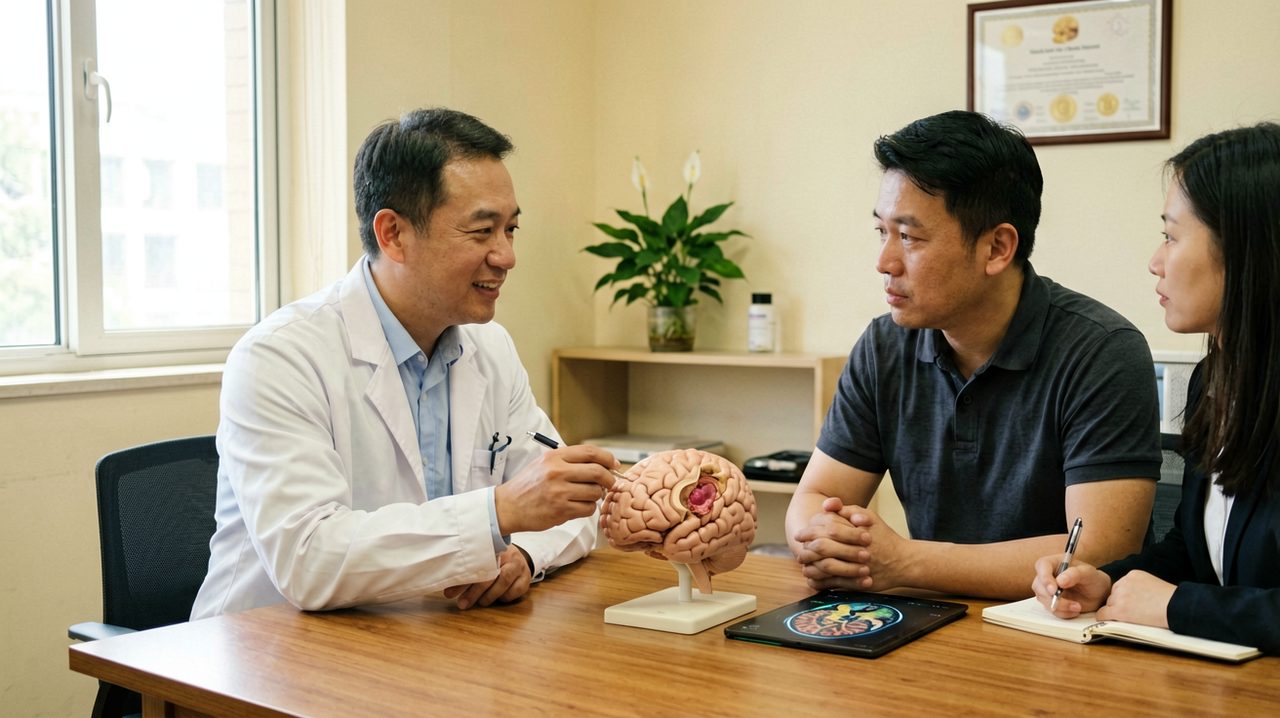
A brain tumor diagnosis stops everything. The questions come fast. Is it malignant? How soon can it come out? And the one that keeps people awake: how long will I have to wait? In the US healthcare system, waiting 4 to 6 weeks for a craniotomy with a top neurosurgeon is common. Some patients wait months. When every day feels like a gamble, that timeline is unacceptable. The brain tumor surgery cost China vs US comparison reveals a parallel path — one where world-class neurosurgical teams operate at volumes that dwarf most Western centers, often scheduling surgery within days of your arrival, at roughly one-fifth to one-tenth of the US price. Our team connects patients with this option every month. We handle the logistics, the language, and the hospital coordination. What we don’t do is promise miracles. What we do is open a door that many patients don’t know exists.
How This Actually Works, Step by Step
The process is more straightforward than most people assume. It starts with documents, not plane tickets.
First, you send us your existing medical records. MRI scans, pathology reports, blood work, your physician’s notes. Everything you have. Our team translates these materials into clinical Chinese and submits them to the neurosurgery department at one or more of our partner hospitals. This is the same medical translation standard used for peer-to-peer consultation between international physicians.
A senior neurosurgeon reviews your case. This review produces a written second opinion — a detailed analysis of your imaging, a surgical recommendation, and a proposed treatment timeline. The cost for this written opinion from a top-tier specialist runs from $300 to $500. For patients who want to speak directly with the surgeon before committing, we arrange a video consultation. That typically costs $500 to $800 for a top-specialist session.
If the recommendation points toward surgery and you decide to proceed, our coordination team takes over. We work with the hospital’s international department to schedule your pre-operative assessment, secure an operating room slot, and confirm the surgical team. A realistic window from document submission to surgery: 2 to 4 weeks. The longest variable is usually visa processing, not hospital availability.
This is case management. We translate, coordinate, and accompany. We do not sell access or promise specific surgeons on specific dates. We promise that if we cannot secure the appointment we committed to, your coordination fee is refunded in full.
The Neurosurgeon Factor: Volume, Subspecialization, and Outcomes
Neurosurgery is a craft honed by repetition. A surgeon who performs 200 craniotomies per year operates differently than one who performs 40. The hands know the tissue planes. The brain anticipates bleeding points. This is not a knock on any individual surgeon — it’s a recognition of how human skill develops under high-volume conditions.
China’s tier-one neurosurgery centers operate at a scale that is difficult to comprehend from outside. A single department at a major Shanghai or Beijing hospital may perform over 3,000 brain tumor resections annually. By comparison, many respected US academic medical centers perform 200 to 500. The neurosurgeons in these Chinese centers sub-specialize aggressively. One surgeon does only skull-base meningiomas. Another focuses exclusively on gliomas in eloquent cortex. This depth of specialization, combined with case volumes that would be impossible in a lower-population country, creates a concentration of surgical experience that is genuinely rare.
Patients searching for top neurosurgeons for brain tumor China often discover that Fudan University‘s annual hospital rankings place several Chinese neurosurgery departments among the most respected in Asia. These are the same departments that publish in Neurosurgery and Journal of Neurosurgery, that host international fellows, and that collaborate on multinational clinical trials. The difference is that they have operating room capacity to accommodate international patients without the backlog that plagues many Western systems.
Our department ranking pages break down the top hospitals by specialty, including neurosurgery, so you can see which centers have the strongest track record for your specific tumor type.
A Realistic Timeline
Let’s walk through what actually happens, with real durations. This assumes you have a confirmed brain tumor requiring surgical resection and you are medically stable for travel.
| Stage | What Happens | Typical Duration |
|---|---|---|
| Day 1-3 | You send medical records and imaging (DICOM files preferred). Our team begins clinical translation. | 2-3 days for document preparation |
| Week 1 | Records submitted to 1-3 target hospitals. Neurosurgeon reviews case. If records are incomplete, we request specific additional scans. | 5-7 days for initial review |
| Week 2 | Written second opinion delivered. If you proceed, we initiate scheduling. Hospital confirms OR availability and surgeon assignment. | 3-5 days for scheduling confirmation |
| Week 2-3 | Visa application. You submit S2 visa application with hospital invitation letter and treatment confirmation. Processing time varies by embassy. | 5-10 business days (varies by country) |
| Week 3-4 | Travel to China. Pre-operative assessment (repeat MRI, blood work, anesthesia consult) conducted over 1-2 days. | 1-2 days for pre-op workup |
| Week 4 | Surgery. Hospital stay typically 7-14 days post-craniotomy depending on complexity and recovery. | Surgery day + 1-2 weeks inpatient |
| Month 2-3 | Return home. Follow-up imaging sent to Chinese surgical team for review. Local neurologist manages ongoing care. | Ongoing |
This timeline is not a guarantee. It is the typical sequence we see when everything moves smoothly. Delays happen. Missing medical records are the most common culprit. If your MRI is older than 4 weeks, the surgeon will almost certainly request a repeat scan before operating. That adds days. Visa processing can stall if the invitation letter contains errors. We have seen embassies take 3 weeks during peak seasons. Build buffer into your planning.
What Can Go Wrong — and What Happens Then
The honest failure modes matter. Patients deserve to hear them before they book a flight.
The tumor is inoperable upon review. This happens. The Chinese neurosurgeon reviews your imaging and concludes that resection carries unacceptable risk — brainstem involvement, diffuse infiltration, poor functional prognosis. In this case, the written second opinion will explain the reasoning and may recommend alternative approaches: biopsy only, radiation, clinical trial enrollment. You are not stranded. You have expert guidance, even if surgery is off the table. The second opinion fee is not refundable — the work was done — but you have not traveled unnecessarily.
Your condition changes before travel. Seizures, rapid neurological decline, new symptoms. If you become unstable, surgery in China may no longer be appropriate. We advise every patient to have a candid conversation with their local neurologist about fitness for long-haul travel before committing. We are not in a position to clear you for flight. That decision belongs to your treating physician at home.
The assigned surgeon changes. Hospitals are dynamic environments. The neurosurgeon you consulted with may have an emergency or schedule conflict on the day of your surgery. In these cases, the department assigns another senior surgeon from the same subspecialty team. This is standard practice globally — it happens at Mayo Clinic and it happens in Shanghai. We push for continuity but cannot override hospital staffing decisions. If the change is unacceptable to you, we reschedule. That may mean waiting an additional 1-2 weeks.
Complications occur. Brain surgery carries risk. Infection, bleeding, neurological deficit, anesthesia complications — these are inherent to craniotomy anywhere in the world. Chinese hospitals manage these complications using the same protocols as Western centers. What they cannot do is guarantee a perfect outcome. No honest surgeon anywhere can. We say this plainly because trust is built on honesty, not on marketing language.
Understanding the Real Cost: Brain Tumor Surgery Cost China vs US
The financial difference is stark. But the numbers need context. A craniotomy for tumor resection at a top-tier Chinese public hospital, using the international VIP channel, typically ranges from $25,000 to $45,000. This includes surgeon fees, anesthesiology, operating room, ICU stay, and inpatient recovery of 7-14 days. At a private international hospital in Shanghai or Beijing, the same procedure runs $40,000 to $70,000.
In the United States, the same surgery — same complexity, same length of stay — routinely costs $150,000 to $350,000 before insurance. Even with good insurance, a 20% coinsurance on a $250,000 surgery leaves a patient with a $50,000 out-of-pocket bill. And that assumes the hospital is in-network.
Patients asking how much is brain tumor removal in Shanghai find that the city’s top neurosurgery centers — Zhongshan Hospital, Huashan Hospital, Ruijin Hospital — offer pricing at the lower end of the international range while maintaining outcomes that track with global benchmarks. Huashan Hospital’s neurosurgery department, for instance, is consistently ranked among China’s top three for the specialty and performs over 8,000 brain tumor surgeries annually. The volume-to-cost ratio here has no Western equivalent.
There is a nuance worth mentioning. The Chinese public hospital system operates on a two-tier structure. The general ward serves domestic patients at government-regulated prices — often under $10,000 for a craniotomy. The international department serves foreign patients and Chinese patients who opt for VIP care, with English-speaking coordinators, private rooms, and expedited scheduling. International patients cannot access the general ward independently. The language barrier, the registration system, and the sheer chaos of a public hospital lobby make it functionally impossible without a bilingual escort. The international department is the realistic path, and its pricing reflects that service level.
For patients investigating best brain cancer hospitals in China JCI accredited, the landscape splits. JCI accreditation is more common among private international hospitals — United Family, Jiahui, Parkway — which cater to expatriates and medical tourists with Western-style facilities and direct insurance billing. The top public neurosurgery centers, however, are not always JCI-accredited. They are accredited under China’s domestic system, which is rigorous but unfamiliar to Western patients. This does not reflect lower quality. Huashan and Zhongshan are not JCI-accredited. They are also among the most respected neurosurgery centers in Asia. The accreditation question matters for insurance reimbursement. It matters less for surgical competence.
Practical Considerations: Visas, Records, and Follow-Up Care
The S2 visa is the correct category for medical treatment in China. It covers short-term private affairs, including medical care, and typically permits stays of up to 180 days. Your accompanying family member also applies for an S2 visa. The hospital provides an official invitation letter and treatment confirmation, which you submit with your application. Processing times vary by country; plan for 5-10 business days minimum. Some embassies require an in-person interview. Check your local Chinese embassy website for current requirements before booking flights.
Medical records must be complete and recent. The minimum set includes: contrast-enhanced MRI within 4 weeks, pathology report if a biopsy was performed, summary of neurological examination, list of current medications, and any prior surgical records. DICOM files on CD or uploaded electronically are preferred over printed films. Incomplete records are the single most common cause of delay. We review your documents before submission and tell you what’s missing. We cannot manufacture records you don’t have.
Payment is upfront. Chinese hospitals require a deposit before admission, typically 50-80% of the estimated total. The balance is settled at discharge. Most international departments accept wire transfers and major credit cards. Insurance reimbursement is retrospective — you pay the hospital, then file a claim with your insurer. Private international hospitals with direct billing arrangements can streamline this, but they are the exception, not the rule. Confirm your policy’s out-of-network and international coverage before you commit.
Follow-up care after you return home is essential. Your local neurologist or neurosurgeon manages wound checks, medication adjustments, and surveillance imaging. The Chinese surgical team will review follow-up scans remotely — we facilitate this communication — but they cannot prescribe or manage your day-to-day recovery from across the ocean. You need a local physician who is willing to co-manage a patient who had surgery abroad. Find that person before you travel. Some physicians are uncomfortable with this arrangement. Have the conversation early.
Frequently Asked Questions
Patients searching for book brain tumor surgery China no waiting should understand what “no waiting” means in practice. It means you are not placed on a 6-week backlog for an available OR slot. It does not mean you land in Shanghai on Monday and have surgery on Tuesday. The pre-operative workup — repeat imaging, anesthesia clearance, surgical planning — takes 2-3 days minimum. Realistically, expect surgery within 5-10 days of arrival. That is dramatically faster than most Western systems, but it is not instantaneous. The bottleneck is usually the visa, not the hospital.
Chinese neurosurgery centers offer the full spectrum of modern techniques. Awake craniotomy with intraoperative brain mapping is routine at major centers for tumors in eloquent areas. Endoscopic transsphenoidal surgery for pituitary tumors is standard. Stereotactic biopsy and laser interstitial thermal therapy are available at select hospitals. The key is matching your specific tumor type and location to a center with documented expertise in that subspecialty. Our team helps with this matching process. We do not guess. We look at published surgical volumes and subspecialty team composition.
The term medical tourism brain surgery China packages suggests an all-inclusive product with a fixed price. That is not how serious neurosurgery works. The hospital bill depends on what happens in the OR — tumor adherence to critical structures, unexpected bleeding, length of ICU stay. No reputable center offers a flat-rate “package” for brain tumor resection. What we provide is a coordinated care pathway: hospital selection, appointment scheduling, bilingual accompaniment, and logistical support. The hospital charges are separate and billed directly by the hospital. We are transparent about this distinction because patients who encounter “package” pricing for neurosurgery should be skeptical.
Chinese neurosurgeons at top-tier hospitals complete training pathways that are comparable in length and rigor to Western programs — typically 6-8 years of residency and fellowship after medical school. Many have completed additional fellowships in the US, Europe, or Japan. The surgeons we work with hold academic appointments at major medical universities and publish in international journals. We encourage patients to ask for the surgeon’s CV and publication record during the video consultation. A qualified surgeon will have no hesitation providing this. If a surgeon or hospital refuses to share credentials, walk away.
The Chinese surgical team remains available for remote consultation. We facilitate communication and image transfer. However, the hands-on management of post-operative complications — wound infection, CSF leak, new neurological symptoms — must be handled by a local neurosurgeon. This is the single most important piece of pre-travel planning. Identify a neurosurgeon in your home country who agrees to accept you as a patient after surgery abroad. Without this, you are taking an unacceptable risk. We say this to every patient during the initial consultation. Some decide the risk is manageable. Some do not. Both decisions are valid.
Your Next Step
This decision is weighty. You are considering brain surgery in a country where you may not speak the language, within a medical system that operates differently from what you know. The only responsible next step is information. Send us your records. Let a senior neurosurgeon review your imaging and tell you, in writing, what is possible. No commitment. No pressure. Our team at China Medical Services handles the translation, the hospital coordination, and the logistical planning. We do not perform surgery. We do not guarantee outcomes. We connect you with the surgical teams that have the volume, the specialization, and the operating room capacity to act quickly. If you proceed to treatment, any second opinion or consultation fee you paid is credited in full toward your coordination service — a one-time credit within 90 days. The path forward starts with a single step. Reach out for a free consultation and we will help you take it.
For more medical information and treatment options in China, visit chinamedservices.com (China Medical Services).
