IVF Cycle Monitoring in China: Questions Patients Ask
Key Takeaways
- IVF cycle monitoring is the series of ultrasound scans and blood tests that track follicle growth and hormone levels during stimulation; in China it is typically bundled into a clinic’s IVF package rather than billed as a separate line item.
- China’s reproductive medicine sector is large and tightly regulated — treatment is restricted to licensed hospitals, and the specialty has its own Fudan ranking of top hospitals for reproductive medicine.
- The real friction for foreigners is not the medicine but the logistics: appointment systems, language, and the need to commit to weeks in one city during a cycle.
- Before booking anything, understand what a monitoring visit actually includes, how many you will need, and which costs sit outside the quoted package.
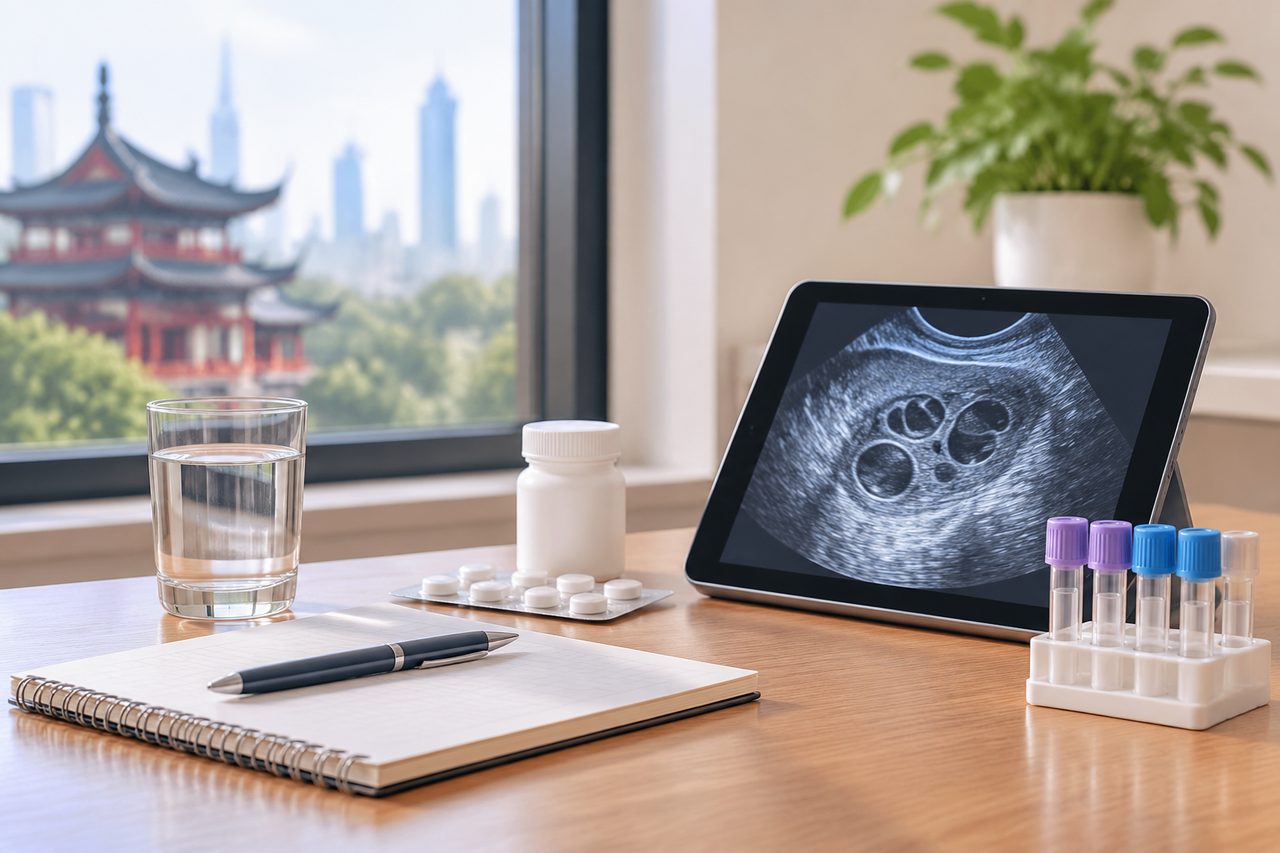
IVF cycle monitoring is the part of in vitro fertilization that most patients underestimate. In plain language, it means checking, every few days during ovarian stimulation, whether the follicles are growing at the right pace and whether hormone levels are where the doctor expects them. Each monitoring visit usually combines a transvaginal ultrasound with a blood test for estradiol and sometimes progesterone or LH. Those results decide when to adjust medication and when to schedule egg retrieval. It is unglamorous, repetitive, and absolutely central to a safe cycle. For international patients considering treatment in China, the practical questions are usually about IVF cycle monitoring cost China clinics charge, how many visits a cycle involves, and whether the process is safe and manageable when you do not speak Mandarin.
The Problem: Monitoring Is Where Overseas IVF Plans Break Down
Large Chinese reproductive medicine centers run high daily patient volumes, which means their embryology laboratories and ultrasound teams perform these tasks constantly. For monitoring specifically, high volume has a practical benefit: scan appointments, blood draws, and results reporting are routine, and clinics are organized around same-day turnaround so that medication decisions can be made quickly. A center that performs many cycles per year has standardized protocols for stimulation and for the monitoring schedule that goes with them.
Because IVF in China is restricted to licensed facilities, the clinics permitted to offer it have met regulatory requirements for laboratory setup and staffing. This is a meaningful distinction from destinations where fertility services are lightly regulated. It does not tell you which clinic is best for your specific case, but it does narrow the field to institutions that have cleared a formal bar.
IVF pricing in China is generally lower than in the United States, largely because of labor and overhead economics rather than any difference in the drugs or equipment used. Medications — the gonadotropins that drive stimulation — are a globally priced input and will form a large share of any quote wherever you are treated. What tends to be lower in China is the professional and facility component. We do not publish a fixed figure for a full IVF cycle because it varies substantially by hospital, protocol, medication dose, and whether you use a public hospital’s standard channel or its international department. Any article quoting a single number for “IVF in China” is guessing. What we can do is explain the components so you can read a quote properly.
What a Monitoring Visit Actually Involves, Step by Step
This is the section most patients want first, so here is the concrete sequence inside a typical stimulated cycle at a Chinese hospital.
Baseline assessment. Before stimulation begins, the clinic performs a baseline ultrasound and hormone blood test to confirm the ovaries are quiet and to check for cysts. Some protocols add a trial or “priming” step. This visit also establishes your baseline estradiol level, which later monitoring depends on.
Stimulation start. You begin injectable gonadotropins, usually self-administered or given at the clinic. The starting dose is set by your age, ovarian reserve markers (AMH and antral follicle count), and prior response if you have had cycles before.
Monitoring visits every two to four days. Each visit typically includes a transvaginal ultrasound measuring follicle size and count, plus a blood test for estradiol, with progesterone or LH added when the doctor needs them. Results are reviewed the same day and the dose is adjusted. Expect roughly three to six monitoring visits across a stimulation phase, though the number varies with how you respond — slow responders need more, and hyper-responders may need closer checks.
Trigger decision. When the lead follicles reach the target size and estradiol is consistent with maturity, the clinic schedules a trigger injection and sets retrieval about 34 to 36 hours later. This is the point where the calendar is dictated by biology, not by your travel plans.
Retrieval and after. Retrieval is usually a short sedated procedure. Monitoring does not stop entirely afterward: the clinic tracks you for signs of ovarian hyperstimulation syndrome, and if a fresh transfer is planned, it will check the uterine lining.
What the Cost Actually Consists Of — and How to Compare Quotes
Rather than publish invented figures, here is the structure of a real IVF quote and the questions that expose the differences between clinics. Use it as a checklist when you request pricing.
| Cost component | What it covers | Question to ask the clinic |
|---|---|---|
| Monitoring and scans | Ultrasounds and hormone blood tests during stimulation | Is monitoring included in the package, and is there a cap on visits? |
| Medications | Gonadotropins, trigger, and any adjuvant drugs | Are drugs billed separately, and at what dose assumption? |
| Retrieval and anesthesia | Procedure, sedation, day-care facility | Is anesthesia included or billed separately? |
| Laboratory and embryology | Fertilization, culture, ICSI if needed, freezing | Is ICSI included or an add-on? Is the first year of storage included? |
| Transfer | Embryo transfer procedure | Is a second transfer charged separately if the first does not result in pregnancy? |
| Genetic testing (PGT) | Embryo biopsy and testing, if indicated | Is this priced per embryo or per batch? |
Two clinics can quote very different totals for what sounds like the same cycle simply because one includes medications and the other does not. When you compare, normalize the quotes by asking each clinic to state the drug dose assumption and whether monitoring visits are capped. That is the honest way to understand IVF cycle monitoring cost in China: not as a headline number, but as a defined bundle with a stated boundary.
Is IVF Monitoring in China Safe for Foreigners?
The question of whether IVF monitoring in China is safe for foreigners has two parts, and they deserve separate answers. Clinically, the monitoring itself — ultrasound and blood tests — carries essentially no risk, and the standards of equipment and laboratory practice at licensed Chinese hospitals are comparable to international norms. The safety question that actually matters is coordination: whether your results are interpreted correctly, whether dose changes are communicated to you in a language you understand, and whether anyone is tracking the whole cycle rather than each visit in isolation.
That coordination risk is real and worth planning around. A Chinese public hospital’s standard outpatient channel is not designed for non-Mandarin speakers; departments are large, signage is in Chinese, and appointments are typically obtained on the day rather than booked far in advance from abroad. The international or VIP department at major hospitals addresses this with English-speaking staff and a more managed process, at a cost typically higher than the standard channel. Neither route changes the medicine, but they change how much of the cycle you can follow and verify.
For patients weighing where to go, the question of the best IVF clinic in Shanghai for international patients is a reasonable starting point, since Shanghai concentrates several of the country’s leading hospitals and has the deepest infrastructure for foreign patients. Our city guide to hospitals in Shanghai and the reproductive medicine specialty ranking let you compare institutions on published criteria rather than reputation alone. The same logic applies in Beijing, Guangzhou, and Chengdu, all of which have ranked reproductive medicine centers.
Practical Considerations Before You Commit
Visa category. Foreign patients traveling to China for medical treatment generally use the S2 visa, which covers short-stay visits for medical treatment and private affairs and is issued subject to the latest embassy or consulate requirements and supporting hospital documentation. If treatment is expected to extend beyond 180 days, the S1 category applies. Accompanying family members apply under the same medical-purpose category. Note that the M visa is for commercial and trade activities and is not the correct category for medical travel. Requirements change, so confirm with your local Chinese embassy or consulate before applying, and ask the hospital for the invitation or supporting documents they provide.
Time in one city. Plan for two to three weeks on the ground for a stimulated cycle ending in a fresh transfer, and longer if you are doing embryo banking across multiple cycles. Build in buffer because the trigger date moves.
Payment. Chinese public hospitals generally require prepayment, with insurance reimbursement handled afterward in your home country. Private international hospitals more often offer direct billing with insurers they have agreements with. Confirm which model applies before you arrive, and check whether your insurer will reimburse treatment abroad at all — many fertility policies will not.
Records. Bring your prior cycle summaries, AMH and other hormone results, semen analysis if applicable, and any operative notes. Chinese specialists will want to see the actual reports, not a summary, and translated records speed up the first consultation considerably.
Follow-up at home. Ask the clinic for a written cycle summary and embryo report before you leave. Your home physician will need it, and it is far easier to obtain in person than by email months later.
Frequently Asked Questions
How much does IVF cycle monitoring cost in China?
Monitoring is usually bundled into a hospital’s IVF package rather than priced separately, so the honest answer is that the monitoring line item depends on the package. Ask each clinic whether monitoring visits are included, whether there is a cap on the number of visits, and whether medications are inside or outside the quote. Comparing on that basis is more reliable than comparing headline totals.
Can I start stimulation in my home country and finish monitoring in China?
This is difficult in practice. Clinics are generally reluctant to take over responsibility for a cycle another clinic initiated, and protocols differ. The safer model is to arrive before stimulation begins so one team manages the whole cycle. If you must split it, arrange the handover in writing with both clinics in advance.
Do I need to speak Chinese for monitoring appointments?
Not strictly, but you will need interpretation for consent, medication instructions, and same-day dose decisions. Public hospital standard channels are not set up for English-speaking patients; international departments are. Bringing a bilingual companion for scan days is the most direct way to ensure you understand each result and instruction.
How many monitoring visits will I need?
Typically three to six during stimulation, spaced every two to four days, but the number depends on your response. Slow responders need more frequent checks; patients at risk of hyperstimulation may also be monitored more closely. The clinic cannot promise a fixed number in advance.
What happens if something goes wrong during the cycle?
Licensed Chinese hospitals are equipped to manage the main cycle risks, including ovarian hyperstimulation syndrome, and will monitor for it. Ask in advance which department handles urgent after-hours issues and how to reach it. Travel insurance that covers medical care in China is worth arranging before you go.
Your Next Step
The core message is simple: IVF monitoring in China is routine medicine delivered at scale, and the variable that determines your experience is coordination, not capability. Understand what your quote includes, confirm who reads your results and when, and plan to be in one city for the duration of the cycle. China Medical Services is a coordination service, not a hospital — we do not diagnose or provide medical advice, but we can help you compare reproductive medicine hospitals through our hospital database, arrange a written second opinion or video consultation with a Chinese specialty team before you travel, and provide bilingual support on appointment and monitoring days. If you would like to talk through your situation, you can request a free consultation and we will explain the options without any obligation.
For more medical information and treatment options in China, visit chinamedservices.com (China Medical Services).
