Full Body Checkup in China: Real Screening Value and Costs
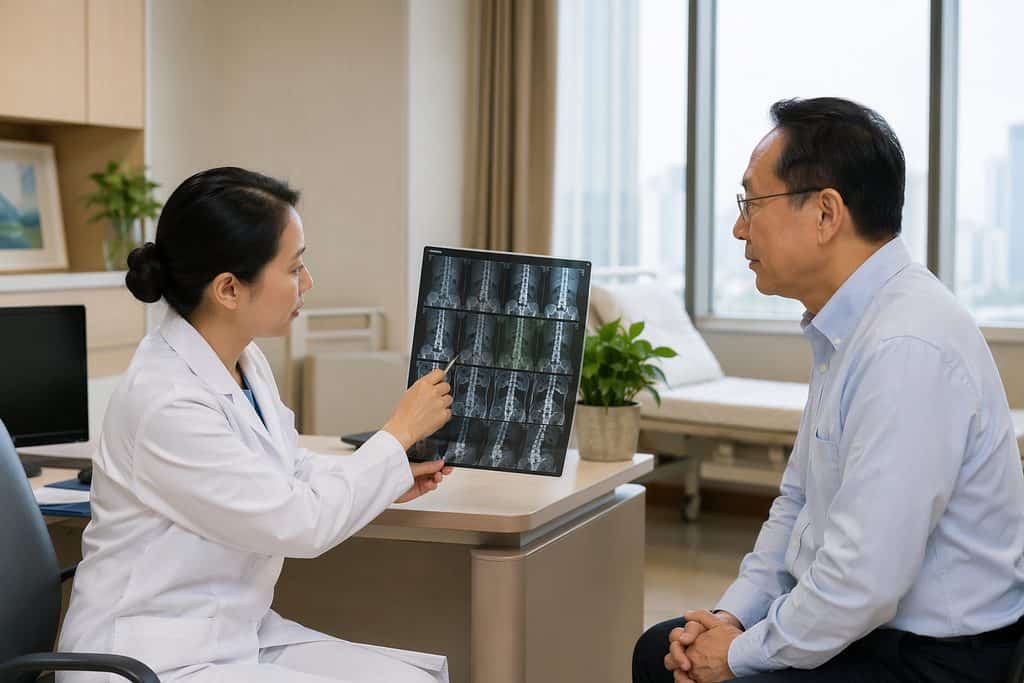
When 47-year-old Daniel from Manchester started researching executive health screenings, the quotes from private London clinics stopped him cold. A comprehensive package with cardiac CT, abdominal MRI, and same-day specialist review ran north of £4,000. A colleague mentioned having a full screening done during a business trip to Shanghai. Daniel assumed it would be complicated. It was not. The full body checkup cost China for a comparable package at a top-ranked public hospital’s international department came in around $800 to $1,500 — imaging, labs, and specialist consultation included.
That price gap is real. It is also only part of the story. The screening value depends on what gets measured, who reads the results, and whether anything actionable comes out of the day. This article breaks down what a full body checkup in China actually includes, what it costs, where to book one, and when it is genuinely worth the trip.
We coordinate screening packages for international patients across China Medical Services‘ network of 340+ top-ranked hospitals in 37 cities. We have seen what works and what wastes money. Here is the honest picture.
How This Actually Works, Step by Step
The process starts with you sending us basic information: age, sex, medical history, current medications, and any specific concerns. You also tell us which city you can reach — Beijing, Shanghai, Guangzhou, or elsewhere. We then match you with an appropriate hospital international department or private international clinic from our database.
Step two: we send you the screening package options with itemized inclusions and prices. You choose. We book the appointment and arrange an English-speaking medical companion for the day. The hospital confirms the date.
Step three: you arrive. Depending on the package, the screening takes half a day to a full day. Blood draws, imaging, and specialist consultations happen in sequence. You are not navigating this alone — the companion handles registration, queues, payment counters, and translation.
Step four: results. Most centers provide a written report within 3 to 7 days. Many include a same-day preliminary review with a physician. You leave with a document you can take to your doctor at home.
What a Full Body Checkup in China Actually Includes
Not all “full body” packages are equal. A budget package at a private clinic might include basic labs, chest X-ray, and abdominal ultrasound — useful, but limited. A top-tier package at a hospital like Peking Union Medical College Hospital or a JCI-accredited private facility includes far more.
Typical comprehensive packages include:
- Complete blood count, metabolic panel, lipid profile, thyroid function, tumor markers (AFP, CEA, CA19-9, PSA for men, CA-125 for women)
- Chest CT (low-dose where available)
- Abdominal ultrasound or MRI
- Cardiac assessment: ECG, echocardiogram, and sometimes coronary calcium scoring
- Carotid artery ultrasound for stroke risk
- Gastroscopy and colonoscopy (often optional add-ons, done under sedation)
- Whole-body MRI or PET-CT in premium packages
- Same-day or next-day physician review of all findings
The depth of specialist review is what separates a useful screening from a pile of raw data. A radiologist reading a CT and flagging a 6mm lung nodule is one thing. A pulmonologist explaining what that nodule means, what follow-up interval is appropriate, and whether a biopsy is warranted — that is clinical value.
One question we hear often: is a full body scan in China worth it compared to doing the same tests at home? For patients paying out of pocket in the US, UK, or Australia, the answer is usually yes on cost alone. But the value proposition is not just price. It is the bundling. In many Western systems, you cannot simply order a cardiac CT and a whole-body MRI in one morning without a referral cascade. In China’s international departments, these packages are standardized, bookable, and completed in a single visit.
A Realistic Timeline
Here is what a typical process looks like from first inquiry to receiving your report. These are realistic ranges, not optimistic promises.
| Stage | What Happens | Typical Duration |
|---|---|---|
| Inquiry and package selection | You send medical history; we recommend packages and hospitals | 2–5 days |
| Booking confirmation | Hospital confirms date; payment deposit made | 3–10 days |
| Visa processing | S2 visa application with hospital invitation letter | 1–3 weeks |
| Travel and screening day | Arrival, screening (half to full day) | 1 day |
| Report delivery | Preliminary review same day; full written report | 3–7 days after screening |
The step people forget is document translation. If your existing records are not in English or Chinese, they need translation before the reviewing physician can use them. Budget a few extra days for that.
Visa timing deserves attention. For medical travel to China, the applicable short-stay category is the S2 visa, issued for private affairs including medical treatment. The hospital provides a supporting letter. Processing times vary by embassy and country, but plan for at least two weeks and preferably four. We provide guidance on documentation but never guarantee approval — that decision rests solely with the consulate.
What Can Go Wrong — and What Happens Then
Screenings are not risk-free, and we would rather you know the failure modes before you book.
Incidental findings. This is the big one. A full body scan frequently finds things that were never causing symptoms: small lung nodules, liver cysts, thyroid nodules, adrenal adenomas. Most are benign. But every incidental finding triggers follow-up. Sometimes that means a repeat scan in six months. Sometimes it means a biopsy. The anxiety and downstream cost are real. A good screening package includes physician interpretation that puts findings in context. A bad one dumps raw imaging on you with no guidance.
False reassurance. A normal screening does not mean you are disease-free. CT and MRI miss things. Blood tests have false negatives. A clean report is a snapshot, not a guarantee.
Package mismatch. A 35-year-old with no symptoms does not need a PET-CT. That test carries radiation exposure and a high false-positive rate in low-risk populations. A 60-year-old smoker needs a low-dose chest CT, not a generic “wellness scan.” If a clinic pushes the most expensive package without asking about your risk profile, walk away.
Language and logistics breakdowns. Public hospital international departments generally have English-speaking staff. But the moment you step outside that unit — to the imaging floor, the lab, the pharmacy — English coverage thins out. Our bilingual companions exist precisely because of this gap. They handle registration, queueing, and translation so the day does not stall.
What happens if something goes wrong? If a screening identifies a serious abnormality, the hospital’s international department can usually arrange a same-week specialist consultation. If you are already back home, we can coordinate a written second opinion or video consultation with the relevant Chinese specialist. The screening is not the end of the road — it is the start of a diagnostic path.
How Much Is a Comprehensive Health Checkup in Beijing
Beijing hosts the highest concentration of Fudan-ranked top hospitals in China — 21 of the Top 100. That density shows up in screening availability. So how much is a comprehensive health checkup in Beijing?
At a public hospital international department, expect these ranges:
| Package Tier | What It Includes | Typical Cost (USD) |
|---|---|---|
| Basic wellness | Labs, chest X-ray, abdominal ultrasound, ECG, physician review | $300–$600 |
| Standard comprehensive | Adds cardiac echo, carotid ultrasound, tumor markers, chest CT | $600–$1,200 |
| Executive | Adds whole-body MRI or PET-CT, gastroscopy/colonoscopy, specialist consultations | $1,200–$2,500 |
| Private international clinic | Comparable to executive tier, Western-style service, insurance direct billing | $1,500–$3,500 |
These figures vary by hospital and case complexity. A patient with a complex cardiac history needs a longer specialist review than a healthy 40-year-old. Prices shift accordingly.
For comparison, an executive physical at a major US academic medical center typically runs $3,000 to $10,000. The same depth of imaging and specialist review at a top Beijing hospital costs a fraction of that. That is the core of China medical tourism health screening prices: comparable or superior imaging density at one-fifth to one-third the cost.
Best Hospital for Executive Health Screening Shanghai
Shanghai has 18 hospitals on the Fudan Top 100 list — second only to Beijing. The best hospital for executive health screening Shanghai depends on what you prioritize.
If you want a public hospital with deep specialist bench strength, Zhongshan Hospital Fudan University runs a well-regarded international medical center. Its cardiology and oncology departments are among China’s strongest, which matters if your screening turns up something needing follow-up. Ruijin Hospital, affiliated with Shanghai Jiao Tong University, is another heavyweight with a long-established international department.
If you prefer a Western-style experience with direct insurance billing, the private international clinics — United Family, Jiahui, Parkway — offer polished executive screening packages. English-speaking staff throughout, shorter waits, and a more familiar patient experience. You pay for that comfort. Prices run two to three times the public hospital international department rates.
The right choice depends on your risk profile and your tolerance for friction. A healthy executive wanting a smooth, hotel-like experience may prefer a private clinic. A patient with a family history of cancer or cardiac disease may be better served by a public hospital where the specialists reading the scans are the same ones who would treat any finding.
We have written more about the broader hospital landscape in our guide to China’s top-ranked hospitals by city, including how the Fudan rankings work and what the tier labels actually mean.
How to Book a Full Body Checkup Package in China
You cannot simply walk into a top Chinese hospital and ask for an executive screening. The international departments handle foreign patients, and they work by appointment. That is where coordination matters.
To book full body checkup package China, you have two main routes:
Direct booking. Contact the hospital’s international medical center by email or phone. You will need to describe your needs, receive the package list, choose one, and arrange payment. Some hospitals require a deposit. Response times vary widely — some reply within 48 hours, others take a week or more. Language can be a barrier even at international departments.
Coordinated booking. We handle the matching, communication, and scheduling on your behalf. Our team knows which hospitals offer which packages, which ones have English-speaking radiologists on site, and which ones can turn around a report within a week. We also arrange the bilingual companion for the screening day. Our appointment coordination service starts from $300, with a full refund if we cannot secure the booking you approved.
One note on public hospital reality: ordinary outpatient departments do not allow overseas patients to pre-book appointments from abroad. The international department or VIP channel is the only route for advance scheduling. That is not a markup trick — it is how the system is structured. The international channel costs more, but it is also where the English-speaking staff and expedited pathways live.
Practical Considerations: Visa, Payment, Insurance, and Follow-Up
Visa. You need an S2 visa for a short medical trip to China. The hospital issues an invitation letter confirming your appointment. Apply at the Chinese embassy or consulate in your home country. Processing takes one to three weeks depending on location. Bring your passport, the invitation letter, a completed application form, and a recent photo. Requirements change, so check the latest consulate guidance before applying.
Payment. Public hospital international departments generally require prepayment or a deposit. Most accept international credit cards and bank transfers. Private international clinics often bill insurance directly. If you plan to claim reimbursement from your insurer at home, get an itemized invoice and the official diagnosis or screening report before you leave.
Insurance. Most Western health insurers do not cover elective full body screenings abroad. Some executive health plans do. Check with your insurer before booking. If you are paying out of pocket, the cost advantage of China still holds — but do not assume coverage.
Language. International departments have English-speaking coordinators and physicians. Outside those units, expect Chinese-only signage and staff. A bilingual companion removes that friction. It is not a luxury for most patients — it is the difference between a smooth half-day and a frustrating full day.
Follow-up at home. Bring your report to your primary care physician. Chinese screening reports are generally issued in English at international departments, but the format and reference ranges may differ from what your home doctor expects. A good report includes raw data, not just conclusions. If your home doctor has questions, we can arrange a written second opinion or video consultation with the Chinese physician who reviewed your results.
Frequently Asked Questions
At top-ranked hospitals, the imaging technology and specialist expertise are comparable. What differs is the system: China’s international departments bundle tests into single-day packages at prices well below Western private clinics. The quality of interpretation depends on who reads the scans — at Fudan-ranked hospitals, that reader is typically a senior specialist.
A standard comprehensive screening at a top Chinese hospital costs roughly $600 to $1,200. An equivalent executive physical in the US commonly runs $3,000 to $10,000. Private international clinics in China sit between those ranges, typically $1,500 to $3,500. All figures vary by hospital and case complexity.
Yes, through a hospital’s international department or a coordination service like ours. Ordinary public outpatient departments do not accept overseas pre-booking. The international channel is the standard route for foreign patients and requires advance scheduling, usually one to four weeks ahead.
The hospital’s international department can usually arrange a specialist consultation within days. If you have already returned home, remote options exist: a written second opinion or video consultation with the relevant Chinese specialist. A screening finding is a starting point, not a verdict.
You need an S2 visa for a short medical trip, including screenings. The hospital provides a supporting invitation letter. Approval is at the consulate’s discretion — we guide the process but cannot guarantee outcomes.
Your Next Step
A full body checkup in China offers genuine screening value: deep imaging, bundled labs, and specialist review at a fraction of Western private-pay prices. The catch is logistics — booking, language, and follow-up coordination. That is what we handle. China Medical Services connects international patients with 340+ top-ranked hospitals across 37 cities, from package selection to on-the-ground bilingual support. We do not provide medical advice or guarantee clinical outcomes. If you are weighing a screening and want honest guidance on packages, hospitals, and pricing, start with a free consultation. Tell us your history and your concerns. We will tell you what makes sense — and what does not.
For more medical information and treatment options in China, visit chinamedservices.com (China Medical Services).
