Hormone Blood Tests Abroad: What Your Results Reveal and Costs Compared
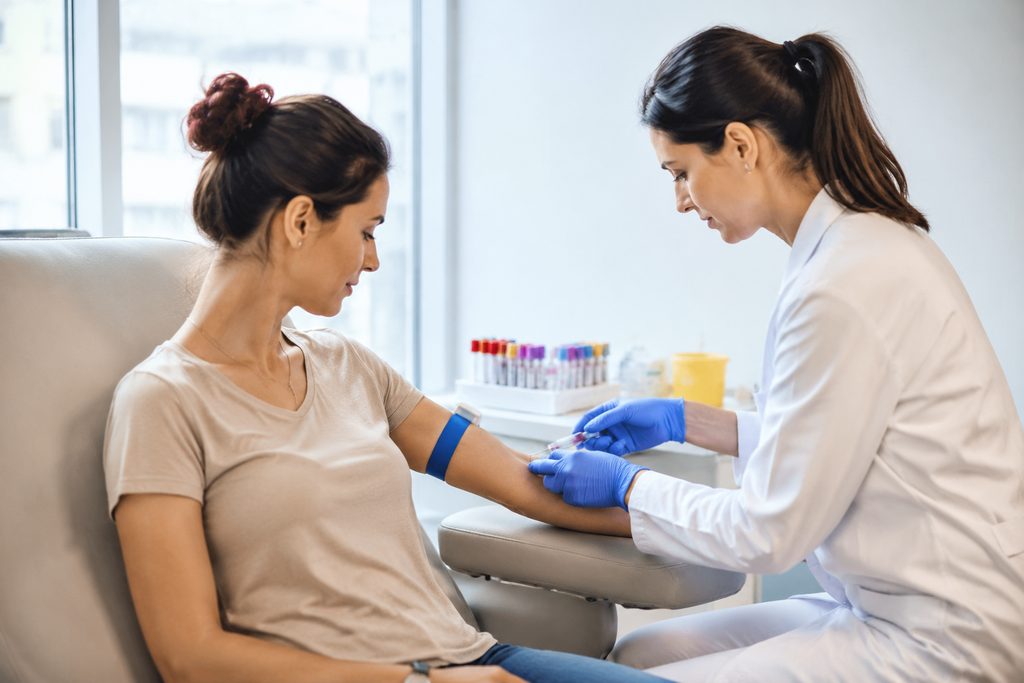
When 34-year-old Sarah from Manchester finally got her thyroid panel results back after a 14-week NHS wait, her doctor glanced at the numbers and said, “Everything looks normal.” But Sarah hadn’t felt normal in two years. She was exhausted, her hair was thinning, and she couldn’t lose weight no matter what she tried. What Sarah didn’t know was that her GP had only ordered a basic TSH test — not the full hormone panel that would have revealed her actual problem. A comprehensive hormone blood test cost China would have given her answers in days, not months.
If you have searched “can a blood test check my hormones,” you are probably frustrated with vague symptoms and even vaguer answers. The short answer is yes — blood tests can measure most key hormones with remarkable precision. But which hormones get tested, how the results are interpreted, and what you pay for the privilege varies wildly depending on where you live. In the United States, a full hormone panel without insurance runs $500 to $1,200. In the UK, you might wait months for a limited NHS panel or pay £300–£600 privately. The hormone blood test cost China at top-tier hospitals typically ranges from $80 to $250 for a comprehensive panel — and results often come back within 24 to 48 hours.
Our team at China Medical Services has coordinated hormone testing for hundreds of international patients. We have seen the confusion firsthand. This guide explains exactly what a hormone blood test can and cannot tell you, what panels actually include, how to interpret your numbers, and how the cost and process compare across borders.
Key Takeaways
- A comprehensive hormone panel in China costs $80–$250 at top-ranked hospitals — roughly 70–85% less than uninsured US pricing.
- Blood tests accurately measure thyroid hormones, sex hormones, cortisol, insulin, and more — but reference ranges differ by lab and population.
- Shanghai hosts several Fudan-ranked endocrinology departments with same-week appointment availability for international patients.
- No blood test diagnoses “hormone imbalance” in isolation — results must be interpreted alongside symptoms and clinical history by a qualified endocrinologist.
The Problem: Vague Symptoms, Limited Testing, and Long Waits
Approximately 1 in 8 adults will experience a thyroid disorder in their lifetime, according to the American Thyroid Association. Yet most never receive a complete evaluation. Primary care protocols typically start with a single marker — TSH — and stop there if the number falls within a broad reference range. For patients with subclinical dysfunction, that approach misses real pathology.
Sex hormone testing is even more inconsistent. A 2023 survey by the British Menopause Society found that 41% of UK women who sought help for menopause symptoms were offered no blood testing at all, while others received only FSH measurements that provide limited clinical value during perimenopause. Men face similar gaps. Testosterone testing guidelines vary so much between NHS trusts that two men with identical symptoms in different postcodes could receive completely different evaluations.
The consequences of delayed or incomplete testing are real. Untreated hypothyroidism raises cardiovascular risk. Undiagnosed polycystic ovary syndrome affects metabolic health, fertility, and mental wellbeing. Chronic cortisol elevation from Cushing’s syndrome — rare but serious — can go undetected for years. Each month of delay compounds the physical and emotional toll.
And then there is the cost barrier. In the United States, even insured patients frequently face $200–$400 out-of-pocket for hormone panels after deductibles. Uninsured patients often skip testing entirely. A 2022 Kaiser Family Foundation analysis found that 28% of American adults reported delaying medical care due to cost — and diagnostic testing is among the first things people cut.
Why China Delivers Results for Hormone Testing
China’s top-tier hospital system has invested heavily in laboratory diagnostics over the past decade. The result is a testing infrastructure that rivals — and in some areas exceeds — what most Western patients can access at home. Here is what that means in practical terms.
Clinical Volume Drives Diagnostic Precision
A single endocrinology department at a major Shanghai hospital processes more hormone assays in one week than a typical regional UK hospital processes in a month. Fudan-ranked hospitals like Ruijin Hospital and Huashan Hospital run endocrinology departments that each see over 300,000 outpatient visits annually. That volume matters for two reasons. First, laboratory technicians develop deep proficiency with the assays themselves. Second, the physicians interpreting your results have seen thousands of cases — including the subtle presentations that generalists often miss.
Ruijin Hospital’s Department of Endocrinology, consistently ranked among China’s top 10 for endocrinology by Fudan University, operates one of the largest endocrine testing laboratories in Asia. Their thyroid function panels include TSH, free T3, free T4, reverse T3, and both thyroid antibody markers as standard — not as add-ons.
Technology and Efficiency at Scale
Chinese hospital laboratories run on modern automated immunoassay platforms — the same Roche, Abbott, and Siemens systems used in Western reference labs. But the workflow is fundamentally different. At a top Shanghai hospital, you can typically have blood drawn in the morning and receive a full hormone panel result by the next afternoon. Some markers are available same-day.
That speed comes from structural efficiency. Chinese public hospitals centralize laboratory services within the hospital campus. There is no outsourcing to a third-party reference lab, no shipping samples across the country, no 10-day turnaround. The entire process — collection, processing, analysis, reporting — happens in one building. For international patients who travel for testing, that means a single visit, not a week of waiting.
Cost Advantage Without Quality Compromise
Let us address the obvious question. How can a comprehensive hormone panel cost $150 in Shanghai when the same tests run $800 in New York? The answer is structural, not qualitative. Chinese hospital laboratories operate at enormous scale with lower labor costs and no insurance billing overhead. A phlebotomist’s salary, a lab technician’s time, the amortized cost of a $500,000 immunoassay analyzer — all of it costs less in China’s healthcare economy.
But the assays themselves are identical. Roche Elecsys, Abbott Architect, Siemens Atellica — these are the same platforms used in Mayo Clinic and Charité Berlin. External quality assessment programs, including those run by the College of American Pathologists, include Chinese hospital laboratories among their participants. Lower cost does not mean lower quality here. It means a different economic model.
What a Hormone Blood Test Actually Measures
If you are wondering “can a blood test detect hormone imbalance,” the answer depends on which hormones you test and how the results are interpreted. A well-designed panel covers the major endocrine axes. Here is what a comprehensive workup at a Chinese top-tier hospital typically includes.
| Hormone Category | Common Markers Tested | What Abnormal Results May Indicate |
|---|---|---|
| Thyroid Function | TSH, Free T3, Free T4, Reverse T3, Anti-TPO, Anti-Tg | Hypothyroidism, hyperthyroidism, Hashimoto’s, Graves’ disease |
| Female Sex Hormones | Estradiol, Progesterone, FSH, LH, Prolactin, AMH | Menopause status, PCOS, ovarian reserve, pituitary dysfunction |
| Male Sex Hormones | Total Testosterone, Free Testosterone, SHBG, DHEA-S | Hypogonadism, androgen deficiency, adrenal disorders |
| Adrenal Function | Cortisol (morning), ACTH, DHEA-S | Cushing’s syndrome, Addison’s disease, chronic stress response |
| Metabolic Hormones | Insulin, Fasting Glucose, HbA1c, IGF-1 | Insulin resistance, diabetes, growth hormone abnormalities |
Not every patient needs every marker. A 28-year-old woman with irregular periods needs a different panel than a 55-year-old man with fatigue and low libido. The key is matching the panel to your symptoms and clinical history — which is where a proper pre-test consultation makes the difference.
How to Check Hormone Levels in China: The Step-by-Step Process
Many international patients assume the process is complicated. It is not — but it does require planning. Here is how to check hormone levels in China as a foreign patient, based on the standard workflow we coordinate for our clients.
Step 1: Choose your hospital and department. For hormone testing, you want a hospital with a strong endocrinology or reproductive medicine department. In Shanghai, Ruijin Hospital, Huashan Hospital, and Zhongshan Hospital all have Fudan-ranked endocrinology programs. You can review options by specialty on our department rankings pages.
Step 2: Prepare your existing records. Bring any previous hormone test results, medication lists, and a summary of your symptoms. If you have a specific concern — thyroid, fertility, menopause, testosterone — note it clearly. This helps the physician order the right panel.
Step 3: Attend your outpatient consultation. At a public hospital, you will see an endocrinologist who reviews your history and orders the appropriate tests. At a private international hospital, the process is similar but with more English-speaking support and faster scheduling. You can compare public and private options on our private hospital guide.
Step 4: Blood draw and results. Blood is drawn on-site, typically the same day as your consultation. Most hormone panels return within 24–48 hours. Some urgent markers — cortisol, for instance — can be available same-day.
Step 5: Interpretation and follow-up. Your results are reviewed by the endocrinologist, who explains what the numbers mean in the context of your symptoms. If treatment is indicated, a plan is discussed. If not, you have baseline data for future comparison.
Timing matters. Cortisol must be drawn in the morning (ideally 8–9 AM). Female sex hormones should be tested at specific points in the menstrual cycle — FSH and LH on day 2–3, progesterone on day 21. Testosterone is best drawn before 10 AM. A good endocrinologist will schedule your blood draw accordingly.
Best Hospital for Hormone Testing Shanghai: What to Look For
If you are specifically searching for the best hospital for hormone testing Shanghai, the answer depends on your clinical needs. Shanghai is home to several institutions with world-class endocrinology departments, and the right choice varies by patient.
Ruijin Hospital (affiliated with Shanghai Jiao Tong University School of Medicine) operates the Shanghai Institute of Endocrine and Metabolic Diseases — one of the largest endocrine research and clinical centers in China. Their thyroid and diabetes programs are particularly strong. The hospital sees enormous patient volume, which translates to experienced clinicians and efficient laboratory processing.
Huashan Hospital (affiliated with Fudan University) has a strong endocrinology department with particular expertise in pituitary and adrenal disorders. For patients with suspected Cushing’s, acromegaly, or other complex endocrine conditions, Huashan is a frequent referral destination.
Zhongshan Hospital (also Fudan-affiliated) combines strong endocrinology with excellent general internal medicine. For patients whose hormone symptoms overlap with cardiovascular or metabolic concerns, Zhongshan offers integrated evaluation.
For English-speaking patients who prefer a Western-style environment, private international hospitals like Jiahui and United Family offer endocrinology consultations with shorter wait times and direct insurance billing. Testing costs run higher — typically $300–$600 for a full panel — but the convenience can be worth it. You can explore both public and private options across Shanghai’s hospital landscape.
Hormone Imbalance Test Price Abroad: A Global Comparison
The hormone imbalance test price abroad varies more than most patients expect. Here is what a comprehensive panel — thyroid, sex hormones, adrenal markers — typically costs in major medical destinations.
| Country | Typical Cost (Comprehensive Panel) | Typical Wait for Results | Notes |
|---|---|---|---|
| United States (uninsured) | $500–$1,200 | 3–7 days | LabCorp/Quest pricing; specialist consult additional $200–$500 |
| United Kingdom (private) | £300–£600 ($380–$760) | 5–10 days | NHS testing limited to basic panels; private clinics add consult fees |
| Germany (private pay) | €250–€500 ($270–$540) | 2–5 days | Public insurance covers basic panels only |
| Thailand (private hospital) | $200–$400 | 1–3 days | Strong medical tourism infrastructure; English widely spoken |
| China (top public hospital) | $80–$250 | 24–48 hours | Consultation and blood draw included in panel pricing at many hospitals |
The numbers tell a clear story. China offers the lowest cost among destinations with internationally recognized laboratory quality. And the speed — 24 to 48 hours for a full panel — is unmatched in most Western systems.
But cost is not the only factor. If you are considering medical tourism for hormone testing, you need to weigh the full picture: travel expenses, language support, follow-up logistics, and whether your home physician will accept foreign lab results. Most will — the major Chinese hospital laboratories report results in standard international units, and many provide English-language reports. But it is worth confirming before you book.
Practical Considerations: Booking, Visas, and Follow-Up
If you decide to book a hormone panel test in China, here is what you need to handle on the practical side.
Visa. For medical treatment in China, the applicable short-stay visa category is S2, which covers private affairs including medical treatment. You will need supporting documentation from the hospital — typically an appointment confirmation or treatment invitation letter. Requirements vary by embassy, so check with your local Chinese consulate before booking flights. Do not apply for an M visa; that category is for commercial and trade activities and does not cover medical travel.
Payment. Chinese public hospitals require upfront payment at the time of service. Most accept international credit cards at their international patient departments, but it is wise to carry some cash or set up a payment method in advance. Private international hospitals often bill insurance directly — check with your insurer before you travel.
Language. Public hospital staff may have limited English, particularly in laboratory and billing departments. International patient departments exist at most top-tier Shanghai hospitals and can provide interpretation. If you are navigating the system independently, a bilingual medical companion can handle registration, queue management, and translation — this service typically starts from $300 per day.
Follow-up. Your results belong to you. Request both printed and electronic copies of your lab report. Most hospitals provide results through a mobile app or patient portal. Share the results with your home physician for continuity of care. If treatment is recommended in China, you can decide whether to proceed there or return home with your diagnosis in hand.
One caveat: Reference ranges vary by laboratory and population. A “normal” TSH in Shanghai may use a slightly different range than a lab in London or New York. Always review your results with a physician who understands the specific reference ranges used by the testing laboratory.
Frequently Asked Questions
Yes — but with an important caveat. Blood tests measure hormone levels precisely. Whether those levels represent a clinically significant “imbalance” requires interpretation by a qualified endocrinologist who understands your symptoms, age, sex, medical history, and the specific reference ranges used by the laboratory. A blood test is a diagnostic tool, not a diagnosis in itself.
At top-tier public hospitals in Shanghai and Beijing, a comprehensive hormone panel typically costs $80 to $250, including the consultation and blood draw. Private international hospitals charge more — generally $300 to $600 — but offer English-speaking staff and direct insurance billing. Final pricing varies by hospital and the specific markers ordered.
Will my doctor at home accept Chinese lab results?
In most cases, yes. Major Chinese hospital laboratories use the same testing platforms as Western reference labs — Roche, Abbott, Siemens — and report results in
For more medical information and treatment options in China, visit chinamedservices.com (China Medical Services).
