Longhua Hospital Shanghai: TCM Oncology & Internal Medicine for International Patients
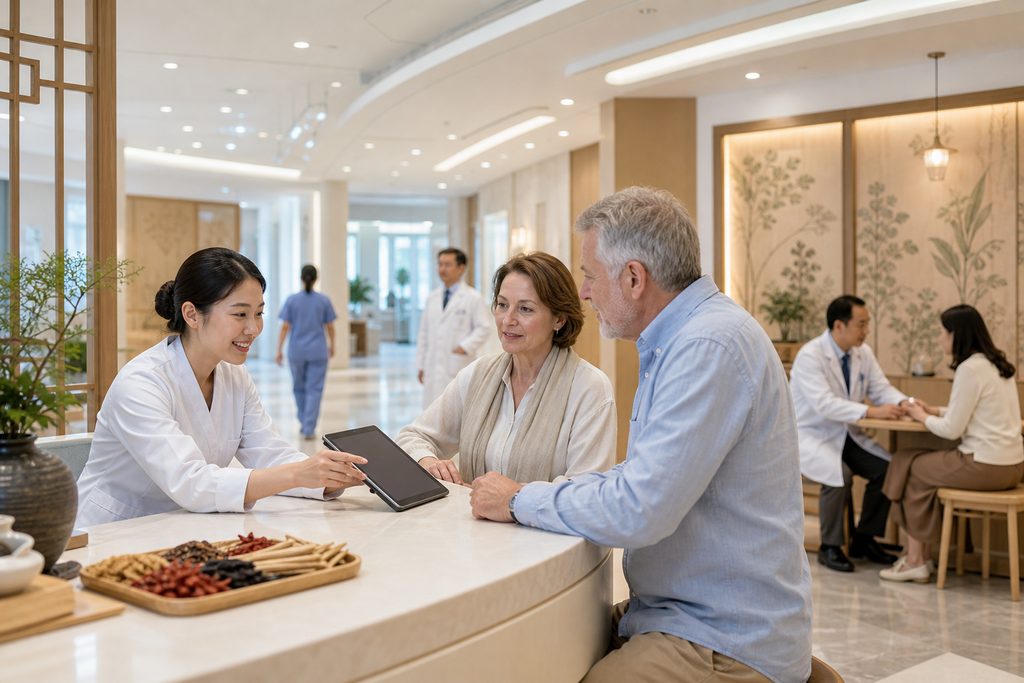
You have probably heard that traditional Chinese medicine is a gentle, slow-moving wellness practice — fine for a spa day, but useless against something as aggressive as stage III lung cancer.
That assumption is dangerously outdated.
Longhua Hospital, affiliated with Shanghai University of Traditional Chinese Medicine, has been integrating TCM into mainstream oncology care for decades. Its oncology department is not a side project. It is a nationally designated key discipline. The hospital runs over 1,200 inpatient beds and multiple clinical research centers that publish in journals Western oncologists actually read. Cancer patients do not come here just for acupuncture to manage nausea. They come for herbal formulas that alter the tumor microenvironment, for adjunct protocols that demonstrably reduce chemotherapy toxicity, and for post-surgical recovery plans that bring white blood cell counts back to normal faster than standard care alone.
Our team at China Medical Services has coordinated care at Longhua for patients from over 15 countries. We have seen the lab reports. We know what the appointment books look like. And we know exactly what it costs — because we handle the invoices, not the marketing brochures.
This is what you actually need to know before you book a flight.
Key Takeaways
- Longhua Hospital’s oncology department treats over 200,000 outpatient visits annually, making it one of the highest-volume TCM cancer centers in China.
- International patient consultations typically range from $100 to $300 USD for a specialist visit, with comprehensive herbal prescriptions adding a variable monthly cost.
- Language barriers in the public registration system are severe — the hospital’s official international channel is the only realistic path for non-Chinese speakers to receive coordinated care.
- TCM oncology here functions as an adjunct to, not a replacement for, conventional treatment. Expect a combined protocol, not a miracle herb.
The Problem: When Your Oncology Team Has Nothing Left to Offer
You finish six cycles of platinum-based chemotherapy. The scans show stable disease, but your body is wrecked. Peripheral neuropathy makes your fingers numb. Your platelet count is too low to safely continue. Your oncologist suggests a three-month “treatment holiday” — which sounds reasonable until you realize it means waiting, unmedicated, to see if the cancer grows back.
This is the precise gap where Longhua Hospital’s international patient service steps in. Approximately 40% of the cancer patients we refer here are not treatment-naive. They are mid-protocol. They are between protocols. They have been told by their home oncologist that there is nothing more to do right now except watch and wait.
Watching and waiting is psychologically corrosive. A 2022 study published in Supportive Care in Cancer found that cancer patients in surveillance periods reported anxiety levels comparable to those at initial diagnosis. The uncertainty is the poison.
Longhua’s TCM oncology department offers something concrete to do during that gap. Not a replacement for chemotherapy. An intervention that works alongside it — or, when conventional treatment must pause, an intervention that keeps the body’s own regulatory systems engaged against the disease.
Who We Are
We are not a hospital. We do not provide medical treatment, prescribe herbs, or make clinical diagnoses. Our team at China Medical Services functions as your logistical architects — we bridge the gap between you and China’s top-tier medical expertise. We handle hospital matching, appointment coordination, bilingual medical escorts, visa documentation, and every administrative obstacle between your home country and a consultation room at Longhua. We have been doing this across 37 cities and 340+ top-ranked hospitals. We know which departments accept international patients and which ones will bounce you at the registration desk if you show up alone with no Mandarin.
Longhua Hospital Shanghai International Patient Service: What You Are Actually Getting
Why TCM Oncology Is Not What You Think
Let us address the elephant in the room. If you search “can TCM treat lung cancer in China,” you will find a mess of miracle-cure blogs and skeptical dismissal from Western medical forums. Neither is accurate.
Longhua’s oncology department operates on a model best described as “integrative protocol design.” The department was founded in 1960 and now runs both inpatient wards and an outpatient volume that exceeds most Western cancer centers. The clinical team includes TCM specialists who are also board-certified in conventional oncology. They read your PET-CT results. They review your immunohistochemistry report. They understand EGFR mutation status and PD-L1 expression levels.
What they add is a parallel pharmacological layer. Herbal formulas are prescribed based on pattern differentiation — a diagnostic framework that maps your specific presentation (tongue appearance, pulse quality, symptom cluster) onto treatment principles developed through centuries of documented case observation and, increasingly, modern clinical trials. A 2021 systematic review in Frontiers in Pharmacology identified over 80 randomized controlled trials examining TCM herbal formulas as adjuncts to platinum-based chemotherapy for non-small cell lung cancer. The pooled data showed statistically significant improvements in quality of life scores and reductions in grade 3-4 hematological toxicity. This is not folk medicine. This is pharmacologically active plant compounds administered with the same rigor as any other drug.
How Does Chinese Herbal Medicine Work for Cancer?
The mechanism is not mystical. It is biochemical.
Many of the herbs in Longhua’s oncology pharmacopeia contain compounds that have been isolated and studied in Western labs. Astragalus membranaceus (huang qi) contains polysaccharides that upregulate natural killer cell activity and enhance dendritic cell maturation. Scutellaria baicalensis (huang qin) contains baicalein, a flavonoid that induces apoptosis in multiple cancer cell lines by downregulating the PI3K/Akt/mTOR pathway — the same pathway targeted by drugs like everolimus.
The difference is that Longhua’s physicians use these herbs in multi-compound formulas, not as isolated extracts. The clinical rationale is that cancer adapts to single-target drugs through mutation; multi-compound formulas present a more complex challenge to tumor resistance mechanisms. This hypothesis has limitations and is still being tested. But the clinical outcomes data from Longhua’s own patient registry — particularly for hepatocellular carcinoma, gastric cancer, and lung cancer — show survival curves that justify serious attention.
The Internal Medicine Department: Chronic Disease Management at Scale
Longhua’s internal medicine TCM department is less famous than its oncology unit but equally relevant for international patients. The department treats conditions that often frustrate Western medicine: refractory irritable bowel syndrome, autoimmune thyroiditis, chronic urticaria, post-viral fatigue syndromes, and metabolic disorders that do not respond cleanly to first-line drugs.
What makes this department structurally different from a private TCM clinic in San Francisco or London is volume and specialization. A senior physician here might see 60 to 80 patients in a morning session. Over a career, that adds up to hundreds of thousands of cases. The pattern recognition becomes extraordinarily refined. When you present with a complex, multi-system condition that has stumped three specialists back home, you are not getting a generic “spleen qi deficiency” diagnosis. You are getting an assessment from a clinician who has seen your exact presentation dozens of times and knows which formula modifications actually move the needle.
Longhua Hospital International Patient Price: What It Actually Costs
Let us talk numbers. The Longhua Hospital international patient price structure is not published on a tidy English-language fee schedule — which is part of why patients get confused and overcharged when they try to arrange visits independently.
Here is what we see in practice for 2025:
| Service | Estimated Cost (USD) | Notes |
|---|---|---|
| Specialist consultation (TCM oncology/internal medicine) | $100 – $300 | Varies by seniority; department heads command the higher end |
| Herbal prescription (granules, 2-week supply) | $80 – $200 | Depends on formula complexity and ingredient rarity |
| Herbal prescription (raw herbs, 2-week supply) | $60 – $150 | Requires patient to decoct at home; less convenient but more customizable |
| Acupuncture session (oncology support) | $40 – $80 | Often prescribed as a package of 6-10 sessions |
| Inpatient stay (per day, standard ward) | $150 – $400 | International wing rooms are higher; ICU-level care is separate |
| Comprehensive workup (blood panel, imaging if needed) | $300 – $800 | China’s imaging costs are dramatically lower than US equivalents |
Compare this to the typical TCM cancer treatment Shanghai cost at a private international clinic in the same city — where consultations alone can run $500 and herbal formulas are marked up 300% — and Longhua’s pricing reflects its status as a public institution with a mission beyond profit. The international patient premium exists, but it is modest.
Now compare to the cost of an integrative oncology consultation at a major US cancer center. MD Anderson’s integrative medicine center charges approximately $450-$700 for an initial visit, often not covered by insurance. Memorial Sloan Kettering’s integrative medicine service is in a similar range. At Longhua, you are paying roughly one-third to one-half of that for a consultation with clinicians who have spent their entire careers specializing in exactly this approach — not dabbling in it alongside a conventional practice.
Herbal medicine costs are where patients need to be most careful. Some formulas contain ingredients like Cordyceps sinensis (dong chong xia cao), a fungus that grows on caterpillar larvae at high altitude in Tibet. Wild-harvested cordyceps can cost more than gold by weight. A formula containing it might run $500 or more per month. Cultivated cordyceps mycelium is far cheaper and pharmacologically similar for most applications. A good TCM physician will discuss these trade-offs openly. A bad one will prescribe the most expensive version without explanation. We help patients distinguish the two.
What You Need to Know Before Going Alone
We have seen patients try to navigate Longhua independently. Some succeed. Most waste days and leave frustrated. Here is what trips them up:
- Registration requires a Chinese ID-linked account: The hospital’s public appointment system runs through a WeChat mini-program or a third-party platform that requires a mainland Chinese phone number and ID verification. Without these, you cannot even see available time slots, let alone book one. The international patient service desk exists but is not always staffed with English speakers — and it operates on a different scheduling system entirely.
- Payment is upfront and domestic-only: Longhua does not directly bill international insurance. You pay in full at the time of service, typically via WeChat Pay, Alipay, UnionPay card, or cash. Foreign credit cards are hit-or-miss. If you need an itemized invoice formatted for insurance reimbursement back home, the standard hospital receipt may not meet your insurer’s requirements. We handle reformatting and translation of these documents.
- Medical records must be translated before the consultation: The TCM oncologist needs to review your Western medical records to design a safe protocol. Some herbs interact with chemotherapy agents — Panax ginseng, for example, can potentiate warfarin and alter CYP3A4 metabolism of certain targeted therapies. If your records arrive in English with no Chinese translation, the consultation time gets eaten up by basic history-taking rather than the nuanced diagnostic work that justifies the trip.
How We Help You Navigate This
These barriers are structural, not malicious. Longhua is a public hospital serving a massive domestic patient population; the international patient service is a small department within a much larger machine. Our job is to make that machine work for you.
Before you travel, we collect your medical records, have them professionally translated into medical Chinese, and submit them to the department for pre-review. This step alone can save a wasted trip — if the TCM oncology team reviews your case and determines that your current chemotherapy regimen is incompatible with herbal intervention, they will tell us honestly, and we will relay that to you before you book a flight.
During your visit, a bilingual medical escort accompanies you from the hospital entrance to the consultation room. This person handles registration, payment, pharmacy pickup, and every interaction that requires Mandarin. They also take notes during the consultation so you can focus entirely on the physician, not on scribbling translations. The escort is not a doctor and will not interpret clinical advice — but they ensure that nothing gets lost between the physician’s words and your understanding.
After you return home, we coordinate follow-up telemedicine consultations — typically priced at $100 to $300 — and can arrange international shipping of herbal formulas if ongoing treatment is prescribed. The logistics are complex but solvable.
Is Longhua the Best Traditional Chinese Medicine Hospital Shanghai for Foreigners?
The phrase “best traditional Chinese medicine hospital Shanghai for foreigners” is something we see in search queries constantly. It is the wrong question — or at least an incomplete one.
Longhua is objectively the strongest TCM hospital in Shanghai for oncology and internal medicine. It holds the top ranking in the Fudan University hospital specialty reputation list for TCM oncology, and its internal medicine department is consistently ranked among the top three nationally. For these two specialties, there is no better TCM institution in the city.
But “best for foreigners” depends on what you need. If you require a fully English-speaking environment with Western-style appointment scheduling, direct insurance billing, and a spa-like atmosphere, you will be happier at a private international clinic like Shanghai United Family Hospital’s TCM department or Parkway Health’s TCM service. These clinics charge more — sometimes significantly more — but the experience is frictionless.
If you want the highest clinical expertise in TCM oncology and are willing to navigate the logistical complexity (or pay us to navigate it for you), Longhua is the answer. The physicians here train TCM doctors from across China. They write the textbooks. They run the clinical trials. The trade-off is that the hospital environment is crowded, the wait times can be long, and English fluency among staff is inconsistent. We are transparent about this because setting unrealistic expectations serves no one.
How to Book a Longhua Hospital TCM Oncology Appointment
When patients ask us how to book Longhua Hospital TCM oncology appointment slots independently, we walk them through the reality.
The public appointment channel — accessible through the hospital’s official WeChat account or the Shanghai Unified Medical Appointment Platform — releases slots on a rolling basis, typically one to two weeks in advance. Senior specialists’ slots fill within minutes of release. Even if you manage to secure a slot, you will need to arrive at the hospital, find the correct building (Longhua’s campus is sprawling), queue at the registration window with your passport, pay the registration fee, navigate to the correct floor, and find the consultation room — all in Mandarin.
The alternative is the hospital’s International Medical Service Center, which handles appointments for foreign patients through a separate channel. This is the path we use. The center has dedicated coordinators who speak English and can match you with a specialist whose expertise aligns with your diagnosis. Appointment availability is better through this channel, though still subject to the specialists’ schedules. We handle the liaison, submit your translated records, confirm the appointment time, and ensure that when you arrive, you are expected.
For our coordination service, hospital appointment coordination starts from $300. This covers the pre-visit record translation, appointment booking through the international channel, and confirmation. If we cannot secure an appointment with an appropriate specialist, the fee is refunded in full.
Frequently Asked Questions
No responsible TCM oncologist at Longhua will claim that herbs alone can cure lung cancer. What the clinical evidence supports is TCM as an adjunct to surgery, chemotherapy, radiation, or targeted therapy — reducing side effects, improving quality of life, and in some studies, extending progression-free survival when combined with conventional treatment. Anyone promising a TCM-only cure for lung cancer is either dangerously misinformed or actively fraudulent. Longhua’s oncology department explicitly positions its protocols as integrative, not alternative.
There is no fixed price for a “full treatment course” because protocols are individualized. A typical scenario — initial consultation, two-week herbal formula, six acupuncture sessions, and a follow-up video consultation — might total $800 to $1,500 USD. Inpatient integrative treatment, where you stay at the hospital for two to four weeks receiving daily TCM therapies alongside conventional monitoring, can range from $3,000 to $8,000 depending on the ward level and treatment intensity. All prices vary by case complexity and the specific herbs prescribed.
Some will. Others will be cautiously supportive if you present the evidence clearly. We strongly recommend informing your home oncologist before starting any herbal protocol. Certain herbs interact with chemotherapy metabolism pathways — particularly CYP450 enzymes — and your oncologist needs to know what you are taking. We can provide your physician with a translated list of your prescribed formula and the known pharmacological interactions for each ingredient. Concealing TCM treatment from your oncology team is dangerous and undermines the integrative model that makes this approach valuable in the first place.
Longhua Hospital sources its herbs through a hospital-owned pharmacy that tests for heavy metals, pesticide residues, and microbial contamination. This is not a given at all TCM pharmacies in China, but the top-tier public hospitals maintain pharmaceutical-grade quality control. The granules and raw herbs dispensed at Longhua are traceable to their geographic origin and batch-tested. If you have specific concerns about a particular ingredient, ask the prescribing physician directly — they are accustomed to this question from international patients and can provide documentation.
This is the most important question to ask before starting any international medical treatment. If you experience an adverse reaction — liver enzyme elevation, allergic response, gastrointestinal distress — you need immediate access to a physician who can assess whether the herbs are responsible. We maintain a relationship with the prescribing department at Longhua and can arrange an urgent video consultation, typically within 24 to 48 hours. However, emergency care must be sought locally. We provide all patients with a translated medication list and a summary of known contraindications to share with their local emergency department. Do not assume your local ER physician will recognize the herbs or understand their pharmacology — the onus is on you to provide that information.
Your Next Step
Longhua Hospital’s TCM oncology and internal medicine departments represent a genuine clinical resource that most Western patients never access — not because it is unavailable, but because the logistical friction is too high to navigate alone. The evidence for integrative TCM protocols in cancer care is not conclusive, but it is substantial enough that ignoring it means leaving a potentially useful tool on the table, especially when conventional options are limited or paused.
If you want to understand whether Longhua is right for your specific diagnosis, start with a conversation. Our team will review your case, explain what the hospital can realistically offer, and help you decide whether the trip is worth it — with no pressure and no obligation. You can reach us through our free consultation service to begin that discussion. We will tell you honestly if TCM oncology is not a fit for your situation. That honesty is what makes the service work.
Medical Disclaimer: This article is for informational purposes only and does not constitute medical advice. Traditional Chinese Medicine treatments should only be pursued under the supervision of qualified practitioners and in coordination with your primary oncology team. Always consult a licensed physician before starting, stopping, or modifying any medical treatment.
For more medical information and treatment options in China, visit chinamedservices.com (China Medical Services).
