Dermatology Care at Xijing Hospital, Xi’an: A Practical Guide
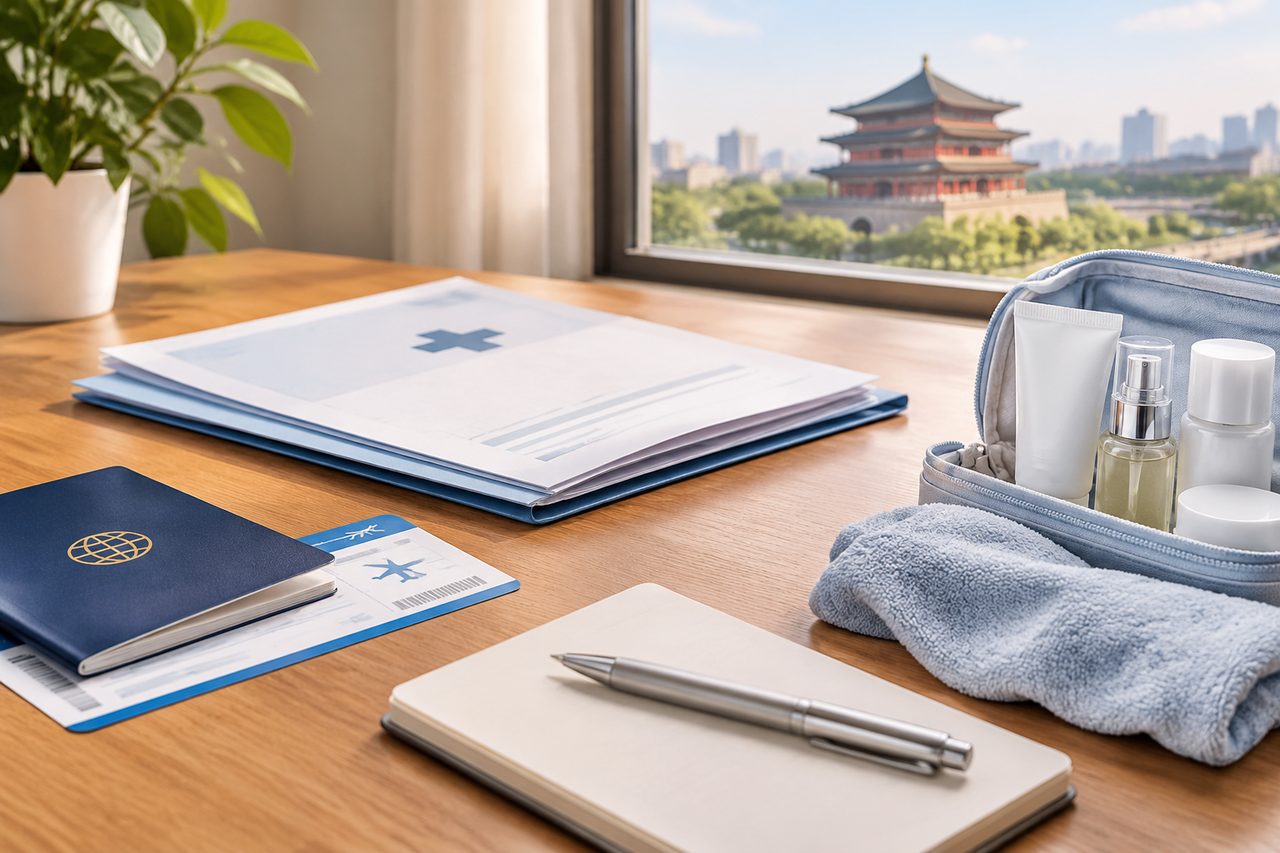
Dermatology care at The First Affiliated Hospital of Xi’an Jiaotong University — widely known as Xijing Hospital — is one of the realistic options for international patients who want a Chinese tertiary hospital for a skin problem. There is no single published “dermatology treatment cost China” figure, because consultation, testing, medication and procedure fees are billed separately and vary by hospital and case complexity. What follows explains what the hospital is, how foreign patients actually get in, what the fee structure looks like, and where the friction points are.
Dermatology Care at Xijing Hospital: The Short Answer
Xijing Hospital is a large public tertiary hospital in Xi’an, the capital of Shaanxi Province, and it has a dermatology department that handles both common skin disease and complex referred cases. For a foreign patient, the practical answer is this: you can be seen, but you cannot usually book a routine outpatient dermatology slot from overseas months in advance. Public-hospital outpatient registration in China is generally same-day or short-notice, and the standard route for an international patient who needs certainty is the hospital’s international or VIP channel, which costs roughly 1.5 to 2 times the ordinary channel.
That single fact shapes everything else — the timeline, the budget, and whether a trip to Xi’an makes sense at all versus a written second opinion or a video consultation first.
Who This Is Right For — and Who It Isn’t
Xijing is a reasonable destination for a defined set of dermatology problems, and a poor use of a long-haul flight for others.
Typically a good fit:
- Chronic conditions that have not responded to first- and second-line treatment at home — psoriasis, chronic eczema, hidradenitis suppurativa, vitiligo — where a tertiary center’s experience with combination and systemic therapy matters.
- Diagnostic uncertainty: a rash or lesion where repeated biopsies or pathology review have not settled the question.
- Patients already traveling to China for another reason and wanting a specialist opinion while there.
- Patients who want a Chinese specialist’s written view on records they already have, before deciding whether to travel at all.
Usually not a good fit:
- Acute emergencies — severe drug reactions, widespread infection with systemic symptoms, or rapidly spreading cellulitis. These need the nearest emergency department, not a planned trip.
- Anyone whose condition is well controlled at home. Travel adds cost and disruption without adding much.
- Patients expecting a guaranteed appointment with a named professor on a specific date. Public-hospital scheduling does not work that way, and no coordination service can promise it.
- Anyone seeking a diagnosis from a website. Dermatology is visual and tactile; a photograph and a paragraph are not a consultation.
The Options, Compared
Before committing to travel, it helps to see the realistic routes side by side. The table below compares the access channels and remote options that actually exist, not idealized packages.
| Route | What you get | Typical fee (USD, varies) | Best for |
|---|---|---|---|
| Written second opinion | Chinese dermatology specialist reviews your existing reports and images; written analysis and direction | $300–500 | Deciding whether travel is worth it; diagnostic uncertainty |
| Video consultation | Live discussion with the specialty team after records are sent | $100–300 (standard); $500–800 (top specialist) | Clarifying a treatment plan before booking flights |
| Proxy consultation | We register, create the hospital card and attend in person with your materials | Coordinated case by case | Patients who cannot travel but want an in-person review |
| Ordinary public outpatient | Same-day registration, Chinese-language queue, limited English | Low consultation fee; tests and drugs billed separately | Patients already in Xi’an with Chinese-language support |
| International / VIP channel | Senior specialist, English support, shorter waits | Roughly 1.5–2× the ordinary channel | Patients who need certainty and language support |
Which column suits you depends on one question: do you need an answer, or do you need to be physically examined? If it is the former, the remote routes are cheaper and faster. If it is the latter, the international channel is the only route that gives a foreign patient a predictable appointment.
How to Book a Dermatology Appointment at Xijing Hospital as a Foreign Patient
This is the part most guides skip. Chinese public hospitals do not run a self-service English booking portal for overseas patients. Registration typically happens through the hospital’s own app or WeChat account, in Chinese, tied to a Chinese mobile number and a hospital medical card. Walk-in registration on the day is possible but means queueing, and dermatology is a busy department.
In practice, foreign patients reach Xijing’s dermatology service through one of three doors:
- The international or VIP department, which handles foreign patients, provides interpretation, and can schedule ahead. This is the reliable route and the one that carries the 1.5–2× premium.
- A proxy visit, where a representative registers on your behalf, creates the medical card, and presents your records to the department. Any later admission remains subject to hospital rules.
- In-person registration on arrival, workable only if you have Chinese-language help and flexible dates.
Records matter more than most patients expect. Bring prior biopsy reports and the actual pathology slides if you can obtain them, a chronological photo log of the lesion or rash, a full medication history including biologics and their dates, and any allergy documentation. Chinese specialists read English-language pathology reports routinely, but a translated summary of the clinical history saves time.
What Dermatology Treatment Costs in China — and What Drives the Number
There is no honest single figure for how much skin treatment costs in China, because “skin treatment” spans a $15 consultation and a year of biologic therapy. What can be said precisely is how the bill is assembled.
Chinese public hospitals bill in components: registration and consultation fee, diagnostic tests (patch testing, blood work, dermatopathology), procedures (phototherapy sessions, cryotherapy, minor surgery, laser), and medication. Payment is generally upfront, with insurance reimbursement claimed afterward at home — public hospitals do not usually bill foreign insurers directly. Private international hospitals in China often do bill insurers directly, but Xijing is a public institution.
For context on the scale of Chinese public-hospital pricing, published comparisons of major surgical procedures put Chinese tertiary-hospital costs at roughly one-fifth to one-tenth of US charges — a coronary bypass, for example, runs about $12,000–20,000 in a top Chinese public hospital against $120,000 or more in the United States. Dermatology is a much lower-cost specialty in every country, so the absolute saving is smaller, but the same order-of-magnitude gap generally holds for procedures and diagnostics. Treat these as directional, not as a quote for your case.
Is Dermatology Care in China Safe for Foreigners?
The honest answer is that safety depends far less on the country than on the specific hospital, the specific procedure, and how well your history is communicated. Xijing is a large, established tertiary hospital with accredited specialty training and standard dermatopathology capacity; that is the relevant baseline.
The real risks for a foreign patient are practical, not institutional:
- Communication gaps. If your medication history arrives in fragments, a specialist may repeat a test or miss a contraindication. Interpretation is not a luxury here.
- Continuity. A Chinese hospital can start a systemic treatment, but monitoring and follow-up need to happen somewhere. Arrange who will monitor your labs after you fly home before you start anything.
- Expectation mismatch. Chinese dermatology combines standard Western evidence-based practice with some traditional approaches. Ask directly what is being prescribed and why, and decline anything you do not understand.
None of this argues against going. It argues for going with your records organized and a plan for what happens after.
Practical Considerations: Visas, Payment, and Follow-Up
Visa. For medical treatment in China, the applicable short-stay category is the S2 visa, issued for medical treatment and private affairs, subject to the latest embassy or consulate requirements and supporting hospital documents. Accompanying family members apply under the same category. Stays beyond 180 days fall under S1. The M visa is a commercial and trade visa and is not the medical route — if an agency tells you otherwise, that is a warning sign. Approval is never guaranteed.
Payment. Expect to pay at the point of service in Chinese public hospitals, by card or mobile payment. Carry a backup method; foreign cards do not always work in every hospital payment terminal.
Language. Xijing is a high-volume hospital. Signage and queues are in Chinese, and dermatology outpatient areas are busy. Bilingual accompaniment — someone who handles registration, payment, directions and interpretation alongside you — is the single highest-value practical add-on for a foreign patient.
Follow-up. Ask for your records, pathology reports and imaging on departure, in a form your home physician can read. Request a written summary of the treatment plan and monitoring schedule.
If you are still choosing a city, our overview of medical services in Xi’an and the wider directory of top-ranked Chinese hospitals put Xijing in context against alternatives in Beijing, Shanghai and Chengdu.
Frequently Asked Questions
Not through a self-service English portal. Public-hospital registration runs through Chinese-language hospital systems, and routine slots are generally released close to the date. The realistic routes are the hospital’s international or VIP channel, which can schedule ahead at roughly 1.5–2 times the ordinary fee, or a proxy visit on your behalf. Neither guarantees a specific doctor or date.
Dermatology is inexpensive in both countries relative to surgery, so the absolute saving is modest for consultations. Where the gap widens is diagnostics, pathology and procedures, where Chinese public-hospital pricing is generally a fraction of US charges. Your actual bill depends on what the examination finds — ask for a written breakdown rather than a package price.
This is why continuity planning matters more than the trip itself. Before starting any systemic therapy, confirm who will monitor your labs and manage adverse effects at home, and leave with your full records and a written plan. If a reaction occurs after you return, your local physician — not a Chinese hospital — is your first call.
The S2 category covers short-stay medical treatment, subject to current embassy or consulate requirements and supporting hospital documentation. Family accompanying you apply under the same category. The M visa is for commercial and trade activity and is not the medical route. Approval is decided by the visa authority, not by any hospital or agency.
Your Next Step
The core message is simple: Xijing Hospital is a credible dermatology destination, but the access route — international channel, proxy visit, or remote review — determines your cost and your timeline far more than the hospital’s reputation does. We are China Medical Services, a coordination service, not a hospital and not a source of diagnoses; we help international patients match to appropriate Chinese hospitals, arrange written second opinions, video consultations and proxy visits, and provide bilingual accompaniment on the ground. If you are weighing whether to travel, the lowest-pressure starting point is to send your existing reports for a written second opinion, then decide with real information in hand. You can start a free consultation here when you are ready.
This article is for general information only and is not medical advice. Dermatological conditions require examination by a qualified physician. Treatment decisions, fees and scheduling are determined by the treating hospital and vary by case.
For more medical information and treatment options in China, visit chinamedservices.com (China Medical Services).
