Hospital Privacy in China: What Curtains, Rooms, and Personal Space Really Look Like
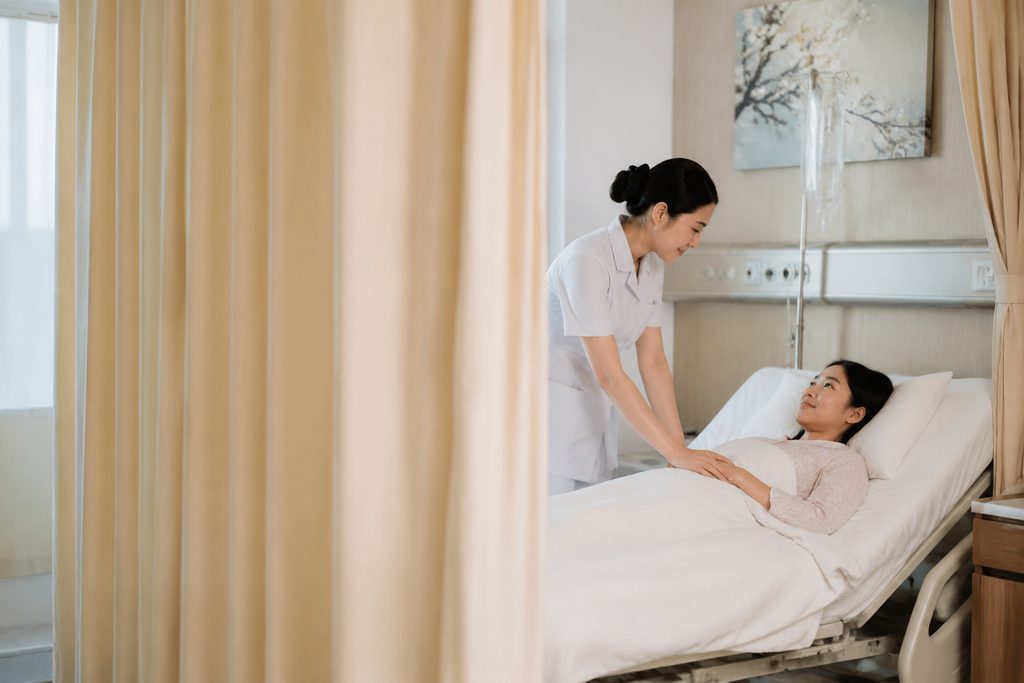
According to data from China’s National Health Commission, the country’s top-tier hospitals handled over 2.5 billion outpatient visits in 2023. When you picture that volume, the question of personal space becomes urgent, not theoretical. Many international patients searching for “hospital privacy in China” arrive with a specific image: crowded open wards with no barriers at all. The reality is more layered. China’s hospital system spans everything from six-bed shared rooms with curtain tracks to private suites that rival five-star hotels. The difference comes down to which hospital tier you access, which department you enter, and how much you budget for a private room. Hospital privacy in China exists. It just does not look the same everywhere.
Our team has walked through dozens of these facilities alongside patients from North America, Europe, and the Middle East. We have seen the curtain setups. We know which hospitals offer true single-occupancy rooms. And we understand that privacy is not a luxury concern—it is a dignity question that affects recovery, sleep quality, and the willingness to discuss sensitive symptoms with your doctor.
How This Actually Works, Step by Step
You send us your medical records and treatment goals. A bilingual case manager reviews them and identifies which of the 340+ top-ranked hospitals in our database match your needs. That match considers your diagnosis, your budget for accommodation, and your privacy requirements.
Then we present options. Not a single recommendation. A short list with clear trade-offs: this hospital has single rooms in the international wing but a two-week wait for the specialist you need; that hospital can see you faster but offers only semi-private rooms in the standard department.
Once you choose, we coordinate the appointment. For public hospitals, this means navigating the official international patient center. For private international hospitals like United Family or Jiahui, we confirm availability and insurance direct-billing arrangements. We handle document translation—discharge summaries, imaging reports, pathology slides—and submit them through the hospital’s required channel.
Visa processing runs in parallel. The S2 short-stay visa covers medical treatment and private affairs. Processing takes five to ten business days at most Chinese embassies. You will need an invitation letter from the hospital, which we help secure. Your accompanying family member applies for the same S2 category.
On arrival day, a bilingual medical companion meets you at the airport. They stay with you through registration, the first consultation, any diagnostic tests, and the admission process if you are being admitted. They translate. They explain what is happening. And they make sure the room you booked is the room you get.
Do Chinese Hospitals Have Curtains for Privacy? The Ward Reality
The short answer is yes. Almost every hospital bed in China’s accredited facilities has a ceiling-mounted curtain track. Pull the curtain closed and you create a temporary private space around your bed. The curtain is fabric, usually in muted blue or beige, and it wraps around three sides.
But the longer answer matters more.
A curtain blocks sight lines. It does not block sound. In a six-bed general ward, you will hear your neighbor’s phone conversations, their family visitors, their coughing at 3 a.m. The nurse station announces morning rounds over the PA system at 7 a.m. sharp. Privacy in this setting is visual, not acoustic.
General wards in public tertiary hospitals typically hold three to six patients. Each bed area includes a small bedside cabinet, an overhead shelf, and sometimes a fold-down chair for one family member. The bathrooms are shared, located down the hall. Hot water for showering is available during set hours—often 6 p.m. to 9 p.m.
This is the baseline. It is functional. It is clean. Chinese hospitals enforce strict hygiene protocols, and bed linens are changed daily. But if your expectation of “personal space” means a door that closes and silence when you need it, the general ward will fall short.
That is where the next tier comes in.
Is There Personal Space in China Hospital Wards? The Semi-Private Option
Semi-private rooms in Chinese hospitals usually hold two patients. A curtain divides the room down the middle. Each side has its own television, a guest chair, and sometimes a small wardrobe. The bathroom is shared between the two patients and their families.
These rooms appear most often in the international departments of public hospitals and in specialty units like cardiology or oncology where monitoring needs are higher but patient turnover is slower. The cost sits between the general ward and the full private room—typically an additional $80 to $150 per night above the standard bed rate.
Personal space here is real but negotiated. You and your roommate establish rhythms. Visiting hours, light preferences, TV volume. The curtain stays drawn most of the time. The nursing staff knocks before entering, a practice that is standard in international wings but less consistent in standard Chinese departments.
For a patient staying one week for a surgical procedure and recovery, a semi-private room often strikes the right balance. You have enough privacy to rest. You are not isolated. And the cost does not dwarf the treatment expense itself.
Private Room Hospital Cost China: What the Numbers Actually Look Like
Here is where the conversation gets concrete. The private room hospital cost China varies dramatically by city, hospital tier, and department type. A single-occupancy room in the international wing of a Fudan-ranked top-100 hospital in Shanghai costs more than a private room in a provincial capital city. A VIP suite in Beijing runs higher than a standard private room in Guangzhou.
| Room Type | Typical Nightly Rate (USD) | What You Get |
|---|---|---|
| General ward (3–6 beds) | $20–50 | Curtained bed area, shared bathroom, basic cabinet |
| Semi-private (2 beds) | $80–200 | Divided room, shared bathroom, TV, guest chair |
| Standard private room | $150–400 | Single bed, private bathroom, sofa, desk, TV, minifridge |
| VIP suite (international dept.) | $400–1,200 | Living area, private bath, guest bed, meal service, priority nursing |
These figures come from actual hospital rate cards we work with. They are self-pay rates for international patients. The range reflects the gap between a provincial capital like Wuhan and a Tier-1 city like Shanghai or Beijing.
To put this in perspective: a seven-day stay in a standard private room at a top Shanghai hospital might add $1,400 to $2,800 to your total bill. That same week in a VIP suite could reach $5,000 to $8,400. These are accommodation charges only. They sit on top of procedure fees, surgeon charges, anesthesia, and medication.
Insurance complicates things further. Most international insurers will cover a standard private room if it is medically necessary. They rarely cover VIP suites. We always recommend confirming room coverage with your insurer before booking, and we can provide the hospital’s room classification codes to help with that pre-authorization.
VIP Hospital Room Price Shanghai: The Premium Tier Explained
Shanghai has the highest concentration of international-standard private rooms in mainland China. Hospitals like Zhongshan Hospital Fudan University, Ruijin Hospital, and Huashan Hospital all operate dedicated international medical centers. These are separate wings or floors with their own nursing teams, English-speaking coordinators, and room inventories that lean heavily toward private and VIP configurations.
The VIP hospital room price Shanghai typically starts around $400 per night and climbs to $1,200 for a full suite. What does that buy you?
A VIP suite at the Shanghai International Medical Center at Huashan Hospital, for example, includes a patient bed plus a separate family sleeping area with a fold-out sofa. The bathroom is private, stocked with toiletries, and cleaned twice daily. Meals are ordered from a Western-friendly menu. The nursing ratio is lower than the general floor—fewer patients per nurse, which means faster response times when you press the call button.
These rooms also offer something less tangible: control. You control the thermostat. You control the lighting. You decide when visitors come and when the door stays closed. For a patient recovering from major surgery or managing a condition that requires frequent, sensitive examinations, that control translates directly into better rest and less stress.
Shanghai’s private international hospitals—Jiahui, United Family, Parkway—set their private room rates in a similar band, typically $300 to $800 per night. The advantage there is consistency: English as the working language throughout the facility, Western-style nursing protocols, and direct billing with major international insurers. The trade-off is that these hospitals may not have the same depth of subspecialty expertise as the Fudan-affiliated public giants for rare or complex conditions.
Best Hospitals in China with Private Rooms: Where to Look
The best hospitals in China with private rooms fall into three categories. Each serves a different patient profile.
Category one: Public top-100 hospitals with international wings. Peking Union Medical College Hospital in Beijing, West China Hospital in Chengdu, and Zhongshan Hospital in Shanghai all operate dedicated international patient centers. These centers offer private and semi-private rooms with English-speaking staff, separate billing offices, and appointment scheduling that bypasses the general outpatient chaos. You get the clinical firepower of China’s most respected institutions with accommodation that meets Western expectations for privacy.
Category two: JCI-accredited private international hospitals. United Family Healthcare operates facilities in Beijing, Shanghai, Guangzhou, and several other cities. Jiahui Health in Shanghai is another strong option. Parkway and Raffles have presences in multiple cities. These hospitals were built from the ground up for an international patient experience. Private rooms are the default, not the upgrade. The clinical staff includes both Chinese-trained and Western-trained physicians. For routine surgery, obstetrics, and general internal medicine, these hospitals deliver a seamless experience. For ultra-specialized care—complex cardiac surgery, rare oncology protocols, advanced neurosurgery—the public top-100 hospitals still hold the advantage in case volume and sub-specialist depth.
Category three: Specialty hospitals with premium wards. Fuwai Hospital in Beijing, the world’s highest-volume cardiac surgery center, operates a VIP wing with private recovery rooms. The Eye and ENT Hospital of Fudan University in Shanghai has a dedicated international clinic floor. These niche institutions combine unmatched procedural volume with accommodation options that most international patients find comfortable.
We maintain current room availability and rate information across all three categories as part of our hospital matching process. The right choice depends on your diagnosis, your budget, and how you weigh clinical specialization against hotel-like comfort.
A Realistic Timeline
| Stage | Duration | What Happens |
|---|---|---|
| Initial inquiry and record review | 2–5 days | You send records; our team translates and forwards to target hospitals for feasibility assessment |
| Hospital confirmation and quotation | 5–14 days | Hospital reviews your case, confirms they can treat, provides cost estimate including room options |
| Appointment scheduling | 3–10 days | We lock in the specialist consultation date; private room is reserved if available at booking |
| Visa processing (S2) | 5–10 business days | You apply with hospital invitation letter; processing speed varies by embassy |
| Travel and first consultation | Day 1–3 in China | Airport pickup, hospital registration, specialist meeting, any required pre-admission tests |
| Admission and treatment | Varies by procedure | Room assignment confirmed; surgery or treatment proceeds per hospital schedule |
| Recovery and discharge | Per physician order | Follow-up appointment booked before departure; discharge summary translated |
Note the waiting steps that first-time patients often overlook. Document translation takes real time—medical records must be precise, and a rushed translation can cause a hospital to reject the file and restart the review clock. Specialist availability is another variable. A top oncologist at a Shanghai hospital might be booked three weeks out during conference season. We track these patterns and can advise on realistic expectations for your specific timeline.
What Can Go Wrong — and What Happens Then
You booked a private room. You arrive and it is occupied. This happens. A patient’s discharge was delayed by a complication, and the room you reserved is not available on your admission day. The hospital’s fallback is usually a semi-private room with a promise to move you within 24 to 48 hours.
Our team pushes for the move. We speak with the nursing director, the international patient coordinator, and the admitting office. We confirm the timeline in writing. If the delay stretches beyond what is reasonable, we negotiate a room-rate adjustment for the nights you spent in the lower-tier accommodation.
A different failure mode: the private room exists but it is in the standard Chinese wing, not the international floor. The room itself is fine. The bathroom is private. But the nursing staff speaks only Mandarin, and the meal service is entirely Chinese. For a patient who does not speak the language and cannot eat congee three meals a day, this is a problem.
We flag this risk during the hospital selection phase. Some hospitals list “private room” on their international patient rate card but draw from a shared room inventory that spans both the international and standard floors. We ask the specific question: “Is this room on the international nursing unit?” If the answer is no, we tell you before you commit.
The third failure mode is cultural. Chinese hospital visiting culture is communal and loud. Even on a floor with private rooms, the hallway can fill with family members who bring food, stay all day, and talk at volumes that carry through doors. This is not a policy failure. It is a norm. We prepare patients for it and, when possible, request a room at the quiet end of the corridor.
How Private Are Hospital Rooms in China? The Cultural Dimension
Privacy means different things in different places. In a Chinese hospital, the clinical definition of privacy—a closed door during examinations, confidentiality of medical records, the right to refuse visitors—is increasingly protected by hospital policy and national regulation. The 2021 Personal Information Protection Law strengthened data privacy requirements across all sectors including healthcare.
The social definition of privacy is where expectations can diverge.
Chinese patients often view a hospital stay as a social event. Family members consider it their duty to be present. They bring meals, they sleep on fold-out cots, they participate in care discussions with the doctor. In a general ward, this means your neighbor’s extended family is effectively in the room with you.
International wings and private hospitals manage this differently. They enforce visiting hours. They limit the number of visitors per patient. They train staff to knock and wait for a response before entering. These protocols align more closely with what Western patients expect.
The question “how private are hospital rooms in China” therefore has two answers. Structurally, a private room in a top-tier international department is as private as a hospital room anywhere—door, bathroom, controlled access. Socially, the experience depends on which floor you are on and which hospital culture you are inside. We help patients choose the environment that matches their privacy needs, not just their clinical requirements.
Practical Considerations: Records, Visas, Payment, and Follow-Up
Medical records. Chinese hospitals require translated summaries of your diagnosis, treatment history, and recent imaging. Original imaging files on CD or USB are preferred—radiologists here want to review the raw DICOM data, not just the written report. Pathology slides must be sent as physical specimens or high-resolution digital scans. Our team handles the translation and formatting so the receiving hospital gets exactly what it needs on the first submission.
Visa. The S2 visa is the correct category for medical treatment. Processing takes five to ten business days. You need a passport valid for at least six months beyond your planned stay, a completed application form, a recent passport photo, and the hospital’s invitation letter. We provide guidance on the letter and can review your application package before submission. We do not guarantee visa approval—that decision rests solely with the Chinese embassy or consulate.
Payment. Public hospitals in China operate on a prepayment model. You deposit funds at admission, and the hospital draws down against that deposit as charges accrue. International wings accept wire transfers and major credit cards. Private international hospitals often bill insurers directly, but you should confirm coverage and any out-of-pocket obligations before travel.
Language. Even in international departments, not every staff member speaks English fluently. The international patient coordinator will. The lead physician usually will. The night-shift nurse might not. Our bilingual medical companion bridges those gaps during critical moments—admission, consent discussions, discharge instructions.
Follow-up at home. Before discharge, we ensure your home physician receives a translated discharge summary, medication list, and any relevant imaging. We can
Frequently Asked Questions
Yes. The hospitals used for international patients are JCI-accredited and follow the same international safety standards as top hospitals in the US and Europe. Surgical teams perform high volumes of procedures — often more than their Western counterparts — which studies show leads to better outcomes.
Costs vary by procedure and hospital, but international patients typically save 40-80% compared to US prices — even when factoring in travel and accommodation. A consultation with our team will give you an exact, all-inclusive quote with no hidden fees.
Send us your existing medical reports to get started. We handle everything from hospital selection and appointment scheduling to visa assistance and post-operative recovery planning. Your medical records are reviewed by the specialist before you even book a flight.
For more medical information and treatment options in China, visit chinamedservices.com (China Medical Services).
