Complex Mental Health Diagnosis China: Second Opinion at Peking University Sixth Hospital
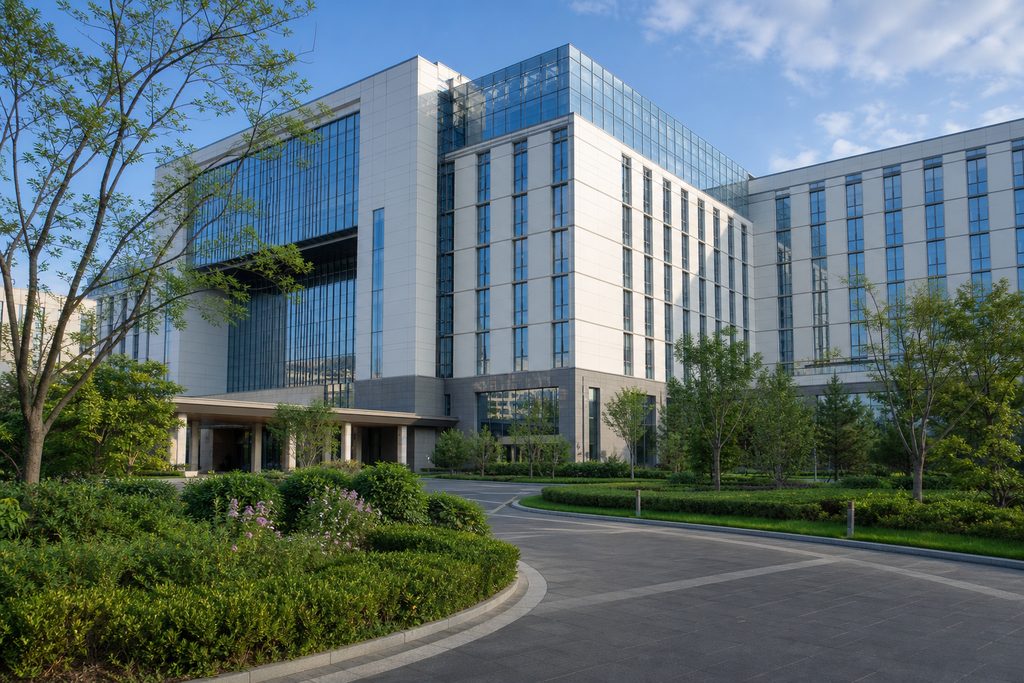
Have you been handed a diagnosis that doesn’t quite fit, or a treatment plan that hasn’t worked, and you’re left wondering if there’s a piece of the puzzle everyone is missing? That quiet doubt is a powerful signal. For complex mental health conditions, where symptoms overlap and standard protocols fail, a fresh set of expert eyes isn’t a luxury—it’s often the only way forward. Our team connects patients with the formal second opinion program at Peking University Sixth Hospital, one of China’s most authoritative psychiatric institutions. A written second opinion from a top specialist here typically starts at $300–500, and a remote video consultation ranges from $500–800. These are not casual reviews. They are deep, structured re-evaluations of your entire clinical picture.
Key Takeaways
- Peking University Sixth Hospital is ranked among China’s top two psychiatric hospitals and houses the National Clinical Research Center for Mental Disorders, making it a critical resource for challenging cases.
- A formal written second opinion from a senior specialist costs between $300 and $500, a fraction of what a comparable U.S. academic center re-evaluation would cost.
- The hospital’s public outpatient system cannot be pre-booked from overseas; accessing a specific senior specialist requires coordination through the hospital’s international or VIP channel.
- Any fees paid for a remote consultation or written second opinion are fully credited toward our on-the-ground coordination service if you later travel to China for in-person treatment within 90 days.
The Problem: When a Diagnosis Doesn’t Solve the Problem
Mental health diagnoses are not like identifying a fracture on an X-ray. They are clinical judgments built on patterns of reported experience, observed behavior, and a clinician’s theoretical framework. When the case is straightforward, the system works. But when it isn’t—when a patient presents with mixed features of bipolar disorder and ADHD, or when severe anxiety masks an underlying thought disorder—the margin for error widens dramatically. A 2018 study published in World Psychiatry found that diagnostic agreement for complex cases, even among experienced psychiatrists, can be surprisingly low. The consequences are not abstract. A wrong diagnosis means wrong medication. Wrong medication means months or years of suffering, lost employment, and fractured relationships.
Patients from the US, UK, Australia, and across Europe often reach a dead end. They have seen two, sometimes three, local specialists. They have tried the first-line treatments. They have tried the second-line treatments. Nothing has shifted. Or worse, the side effects have become a problem of their own. At this point, a second opinion is not about doubting a doctor’s competence. It is about adding a new perspective from a system that sees psychiatric presentations through a different cultural and clinical lens. China’s top psychiatric hospitals handle an immense volume of cases. Peking University Sixth Hospital alone manages over 300,000 outpatient visits annually. That volume creates a depth of pattern recognition that is hard to replicate in lower-volume settings.
Who We Are
We are not a hospital. We do not diagnose conditions, prescribe medications, or deliver therapy. We are a medical concierge service based in China, and our job is to solve the logistical puzzle that stands between you and a thorough re-evaluation at a top-tier Chinese institution. We translate and reformat your existing medical records into a structure Chinese specialists can work with efficiently. We identify the right department and the right senior clinician for your specific diagnostic question. We coordinate the appointment through the hospital’s official international channel. And if you decide to travel to China for an in-person assessment, we handle the visa guidance, airport transfers, bilingual accompaniment, and hospital navigation. We bridge the gap between your need for clarity and a system that can be impenetrable without local expertise.
Is Peking University Sixth Hospital Good for Complex Diagnosis?
The short answer is yes. The longer answer requires understanding what this institution actually is. Peking University Sixth Hospital, also known as the Institute of Mental Health of Peking University, is not a general hospital with a psychiatry wing. It is a dedicated psychiatric hospital and research institute. It holds the designation of National Clinical Research Center for Mental Disorders, one of only a handful in the country. In the Fudan University China Hospital Rankings, which is the most authoritative hospital ranking system in China, the hospital is consistently ranked in the top two nationwide for psychiatry, alongside Shanghai Mental Health Center.
What does that mean for a patient with a complex presentation? It means the clinicians here are not just treating common depression and anxiety. They are the receiving center for cases referred up from provincial hospitals across a country of 1.4 billion people. They see the rare presentations. The treatment-resistant cases. The diagnostic puzzles that have stumped multiple clinicians. The department heads and senior professors are often involved in drafting China’s national clinical guidelines for psychiatric disorders. A second opinion here carries weight. It is a document you can take back to your treating physician at home with confidence that it represents a rigorous, evidence-based re-analysis. That is what makes the Peking University Sixth Hospital second opinion cost a serious investment in clarity, not just another appointment.
How Does a Psychiatric Second Opinion Work in China?
The process is different from what many Western patients expect. In the US or UK, you might call a specialist’s office directly, schedule an appointment, and show up with your records. China’s top public hospitals do not work that way. There is no central overseas call center for the public outpatient department. You cannot email a professor’s office and book a slot. The public registration system is designed for domestic patients and often requires a Chinese ID number and a local payment method. For international patients, the route is through the hospital’s international department or a special needs clinic, which is a parallel system with dedicated staff, longer appointment slots, and, critically, the ability to pre-arrange a consultation with a specific senior specialist.
Here is the sequence we manage for our clients. First, we collect every relevant document: previous psychiatric evaluations, medication histories with dosages and durations, any neuropsychological testing reports, and relevant blood work or imaging. A partial record leads to a partial opinion, so we are meticulous at this stage. We have these documents professionally translated into clinical Chinese, ensuring that nuanced terms like “emotional dysregulation” or “ideas of reference” are rendered accurately. Then we submit the package to the hospital’s international coordination office with a clear, specific question. “We need a diagnostic re-evaluation for a 34-year-old male with an 8-year history of treatment-resistant depression and atypical features. The referring physician is specifically asking whether an underlying bipolar spectrum disorder has been adequately ruled out.” A vague request gets a vague answer. A specific question gets a targeted re-analysis.
The hospital assigns the case to a senior psychiatrist whose sub-specialty aligns with the clinical question. The specialist reviews the translated records in full. Then, depending on what you have chosen, you receive either a detailed written report in English or you have a live video consultation with the specialist, facilitated by a bilingual medical interpreter. The written report is not a prescription. It is a clinical opinion document that outlines diagnostic impressions, identifies potential gaps in the previous workup, and suggests avenues for further investigation or treatment modification. It is designed to be shared with your doctor at home. Afterward, if you decide to travel to Beijing for a face-to-face evaluation, we pivot to in-person coordination. And here is a detail that matters: any fee you paid for the remote second opinion is deducted from our on-the-ground coordination fee if you make the trip within 90 days. You are not paying twice for the same journey toward clarity.
Understanding the Peking University Sixth Hospital Second Opinion Cost
Let’s talk about money directly. The Peking University Sixth Hospital second opinion cost is not a single fixed number. It depends on the format, the seniority of the specialist, and whether you need a multi-disciplinary review. A written second opinion from a senior attending psychiatrist or associate professor typically falls in the $300–500 range. This includes the hospital’s professional fee, the full translation of your records, and the delivery of the final English report. A live video consultation with a top specialist—a full professor or department head—runs from $500 to $800. This is a 45- to 60-minute session with a bilingual interpreter present, where you can ask questions directly.
How does this compare? A formal second opinion at a major US academic medical center, such as Johns Hopkins or Massachusetts General Hospital, can cost $1,500 to $3,000 or more for the consultation alone, not including record retrieval, imaging review, or travel. The UK’s private sector is similarly expensive, and NHS second opinions, while free at the point of care, can involve waits of several months for a complex psychiatry referral. The structural reason for the cost difference is straightforward. China’s specialist physician salaries and hospital operational costs are lower than in the US or Western Europe. This does not reflect a difference in clinical training quality. The senior psychiatrists at Peking University Sixth Hospital are trained in China’s most rigorous MD and PhD programs, many with post-doctoral research experience in the US, UK, or Germany. You are paying for their expertise, not their overhead.
What about a multi-disciplinary team review? For cases that cross diagnostic boundaries—say, a patient with a complex trauma history, possible dissociative symptoms, and cognitive complaints that could be neurological or psychiatric—a multi-disciplinary video consultation is available. This brings together a psychiatrist, sometimes a neurologist, and a clinical psychologist to review the case together. The cost for this format ranges from $1,500 to $2,000. It is the most comprehensive option and is typically reserved for the most diagnostically challenging situations.
The Diagnostic Depth You Can Expect
This is not uncommon in complex cases, and it is precisely why you seek a second opinion. The written report will explain the clinical reasoning behind any diagnostic revision. You are not obligated to act on it. The document is designed to be shared with your treating clinician at home for collaborative discussion. A second opinion is a consultation between doctors, with you as the focus. It is not a binding directive.
For a diagnostic second opinion based on existing records, a video consultation can be highly effective. The specialist has already reviewed your full history and is using the video session to clarify points, observe your mental state, and ask targeted questions. However, for certain conditions where a full neurological exam or cognitive testing is needed, an in-person visit may be recommended as a follow-up. The specialist will tell you if they believe the remote format is insufficient for your specific case.
From the moment we receive your complete medical records, the translation and hospital coordination typically takes 5 to 7 business days. The specialist review and report writing takes an additional 5 to 10 business days, depending on the complexity of the case and the specialist’s schedule. For a video consultation, scheduling depends on the specialist’s availability and your time zone, but we usually secure a slot within two to three weeks. Urgent cases can sometimes be expedited, but we are honest about what is realistic.
Many international insurance plans with out-of-network mental health benefits will reimburse a portion of the hospital’s professional fee and the consultation cost. We provide a detailed, itemized receipt and the formal medical report, which you submit to your insurer. We cannot guarantee coverage, as every plan is different. We strongly recommend calling your insurer before proceeding and asking specifically about “out-of-network psychiatric second opinion consultation in China.” The hospital’s professional fee and our coordination fee are separate line items, which can be important for reimbursement purposes.
Getting a complex mental health diagnosis right can change the trajectory of a life. A second opinion at Peking University Sixth Hospital offers a level of clinical depth and an alternative diagnostic perspective that is difficult to find elsewhere at a comparable cost. The barriers to accessing it are real, but they are navigable. If you are ready to explore whether this is the right path for you, we are here to talk through your situation with no obligation. A clear, well-structured question is the beginning of a better answer. Learn more about how we support international patients on our patient coordination services page.
Frequently Asked Questions
Yes. We work with JCI-accredited and major Grade 3A tertiary hospitals that follow international safety standards comparable to top hospitals in the US and Europe. Surgical teams perform high volumes of procedures — often more than their Western counterparts — which studies show leads to better outcomes.
Costs vary by procedure and hospital, but international patients typically save 40-80% compared to US prices — even when factoring in travel and accommodation. A consultation with our team will give you an exact, all-inclusive quote with no hidden fees.
Send us your existing medical reports. The relevant specialty reviews them and gives you a written opinion, including treatment direction and options, before you commit to any travel. From there you can add a video consultation with the doctor, or have us attend an appointment on your behalf.
For more medical information and treatment options in China, visit chinamedservices.com (China Medical Services).
