Allergy and Immunology Hospitals in Wuhan: How to Choose
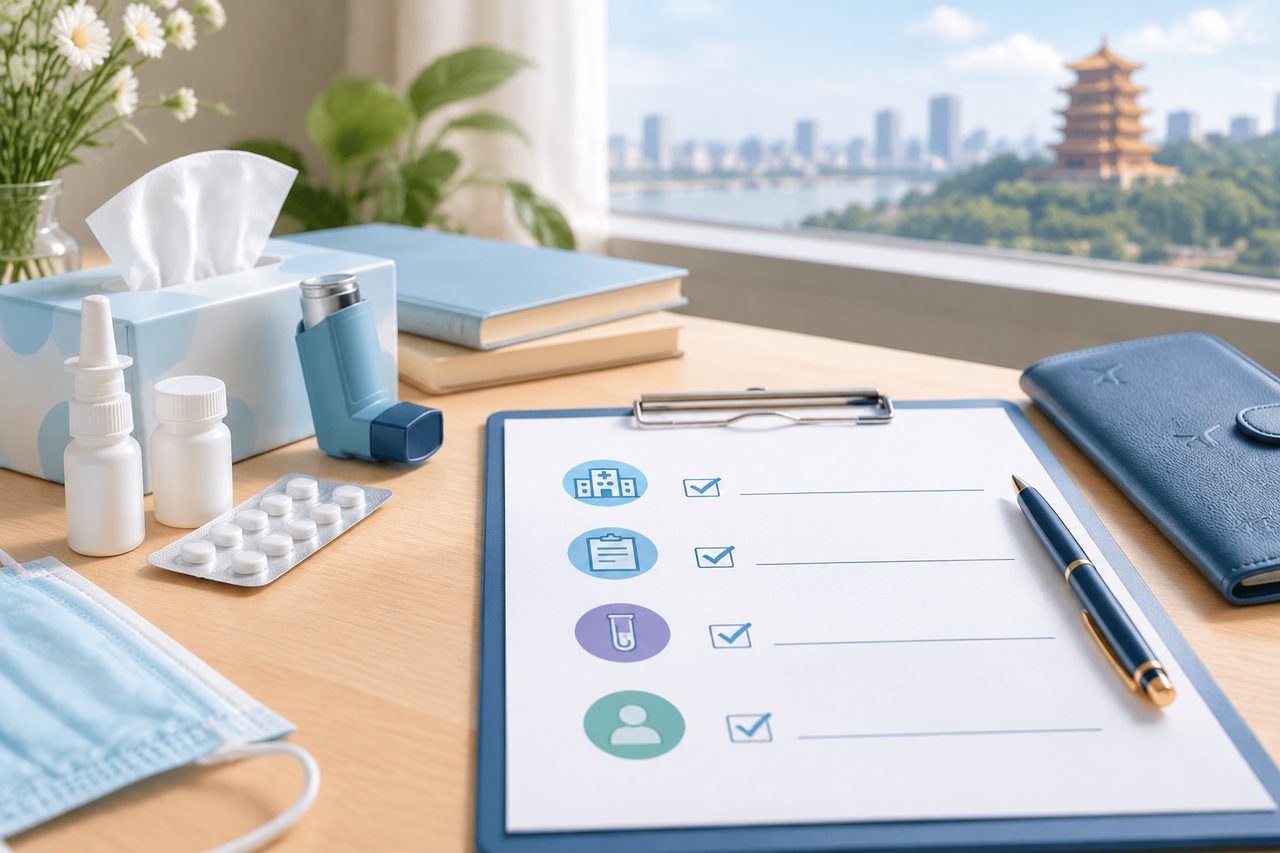
Allergy and Immunology Hospitals in Wuhan: How to Choose
Choosing an allergy and immunology hospital in Wuhan comes down to three practical checks: whether the hospital runs a dedicated allergy or immunology department rather than a general internal medicine clinic, whether its testing menu covers what your case actually needs, and whether it can support an international patient through registration, records and follow-up. Wuhan has a deep concentration of major teaching hospitals — the city is home to several institutions that appear in Fudan University’s hospital rankings and in the Top 100 list used across our China hospital directory. For most families, the harder question is not whether good care exists in Wuhan; it is how to tell one department from another and what the realistic allergy treatment cost China picture looks like before they commit to travel.
This guide is written for international patients who are comparing options from abroad. It explains how the process actually runs, what separates a strong allergy department from a weak fit, what a timeline looks like, and where things commonly go wrong. It is educational only and does not replace advice from a qualified physician who has reviewed your records.
How This Actually Works, Step by Step
The path from “I have a problem and I am searching for a hospital” to “I am sitting in a consulting room in Wuhan” is less mysterious than it looks. Here is the real sequence.
Step 1: Assemble your existing records. Before any hospital can evaluate you, you need a usable file: prior allergy test results, IgE lab values, a list of medications tried and their effects, symptom history with dates, and any imaging or pulmonary function reports if asthma is part of the picture. Records in English are workable; the hospital will need them summarized in a form its clinicians can read.
Step 2: Decide whether you need a remote opinion first. A written second opinion or a video consultation lets a Chinese specialty team review your file and tell you whether an in-person visit is genuinely useful, which tests would likely be repeated, and roughly what the workup would involve. This is often the single most cost-effective step, because it prevents a long-haul trip for a consultation that could have been answered remotely.
Step 3: Identify the right department, not just the right hospital. A large hospital may have a dedicated allergy department, an immunology division inside internal medicine, a respiratory department that handles allergic asthma, or a dermatology unit that manages atopic dermatitis and urticaria. Which one you need depends on your diagnosis. This is where a proxy consultation can help: you designate a city, hospital, department or specialist, and a representative visits in person with your materials.
Step 4: Registration and appointment coordination. Most Chinese public hospitals do not allow a foreign patient to book an ordinary outpatient slot from overseas in advance. Registration typically happens on the day, in person. If you want a confirmed appointment with a senior specialist and English-language support, the realistic route is the hospital’s international or VIP channel, which generally costs more than the standard queue. We can help coordinate this through the hospital’s official international office.
Step 5: In-person consultation and testing. Expect the first visit to be a history-taking and examination, with tests ordered afterward. Some tests can be done the same day; others require scheduling.
Step 6: Plan and follow-up. You leave with a written plan — medications, avoidance measures, and a schedule for immunotherapy or review if that is appropriate.
What “Allergy and Immunology” Covers in a Chinese Hospital
The single most common mistake international patients make is assuming that a hospital with a famous name automatically has the allergy service they need. Chinese hospitals organize departments differently from hospitals in the US or Europe, and the allergy specialty is not uniformly developed across every institution.
In practice, allergic disease in Wuhan is handled across several department types:
- Dedicated allergy or allergy-immunology departments — the best fit for comprehensive testing, allergen immunotherapy planning and complex allergic disease. Not every hospital has one.
- Respiratory medicine — often the entry point for allergic asthma and allergic rhinitis, with lung function testing and bronchial challenge available.
- Dermatology — the usual route for atopic dermatitis, chronic urticaria and contact dermatitis, including patch testing at some centers.
- Pediatrics — for food allergy and childhood asthma, where pediatric allergy expertise matters more than adult-focused departments.
- Clinical immunology / rheumatology-adjacent units — for suspected primary immunodeficiency or immune dysregulation, which is a different workup entirely from environmental allergy.
When people ask about the best immunology hospital in Wuhan, the honest answer is that “best” depends on which of these buckets your case falls into. A department that is excellent for allergic rhinitis may not be the right place for a suspected immunodeficiency. Ask specifically: does this department run skin prick testing, specific IgE panels, patch testing, food and drug challenge, and allergen immunotherapy? A department that cannot answer those questions clearly is probably not the right fit.
Is Allergy Testing Reliable in China?
Validated methods — skin prick testing, specific IgE assays, patch testing and supervised challenge — are used in major teaching hospitals and are reliable when performed with standardized reagents and interpreted alongside your clinical history. The variables to check are whether the specific allergen panel you need is stocked and whether results will be interpreted by an allergy-trained clinician rather than read in isolation.
Consultation and testing fees at Chinese public hospitals are generally lower than equivalent charges in the US or Western Europe, but the total depends on which tests you need, whether biologics are involved, and whether you use the international channel. We do not quote a single figure because the components vary so widely; a written estimate from the specific hospital after record review is the only meaningful number.
You can typically complete the workup and begin build-up under supervision, but maintenance usually continues for around three years and must be handed over to a physician where you live. Confirm before starting that your home clinician will continue the schedule and that the same allergen extract is available locally.
Major teaching hospitals in Wuhan generally maintain an international or VIP channel that offers English-language support and a more structured appointment process, priced above the standard outpatient route. The scope of these services varies by hospital, so confirm what is included — interpretation, appointment coordination, payment handling — before relying on it.
Your Next Step
The core message is simple: in Wuhan, the hospital name matters less than whether the specific department offers the testing and treatment your case requires, and whether the logistics around your visit are planned before you fly. China Medical Services helps international patients navigate that process — record review, written second opinions, video consultations, proxy visits and bilingual accompaniment — and we do not provide medical advice or promise appointments, admissions or outcomes. If you would like help comparing departments or understanding the likely shape of your workup, you can request a free consultation and we will walk through your options with you.
This article is for general information only and does not constitute medical advice. Always consult a qualified physician about diagnosis
For more medical information and treatment options in China, visit chinamedservices.com (China Medical Services).
