Preparing for a Chemotherapy Medical Escort in Shanghai: A Checklist
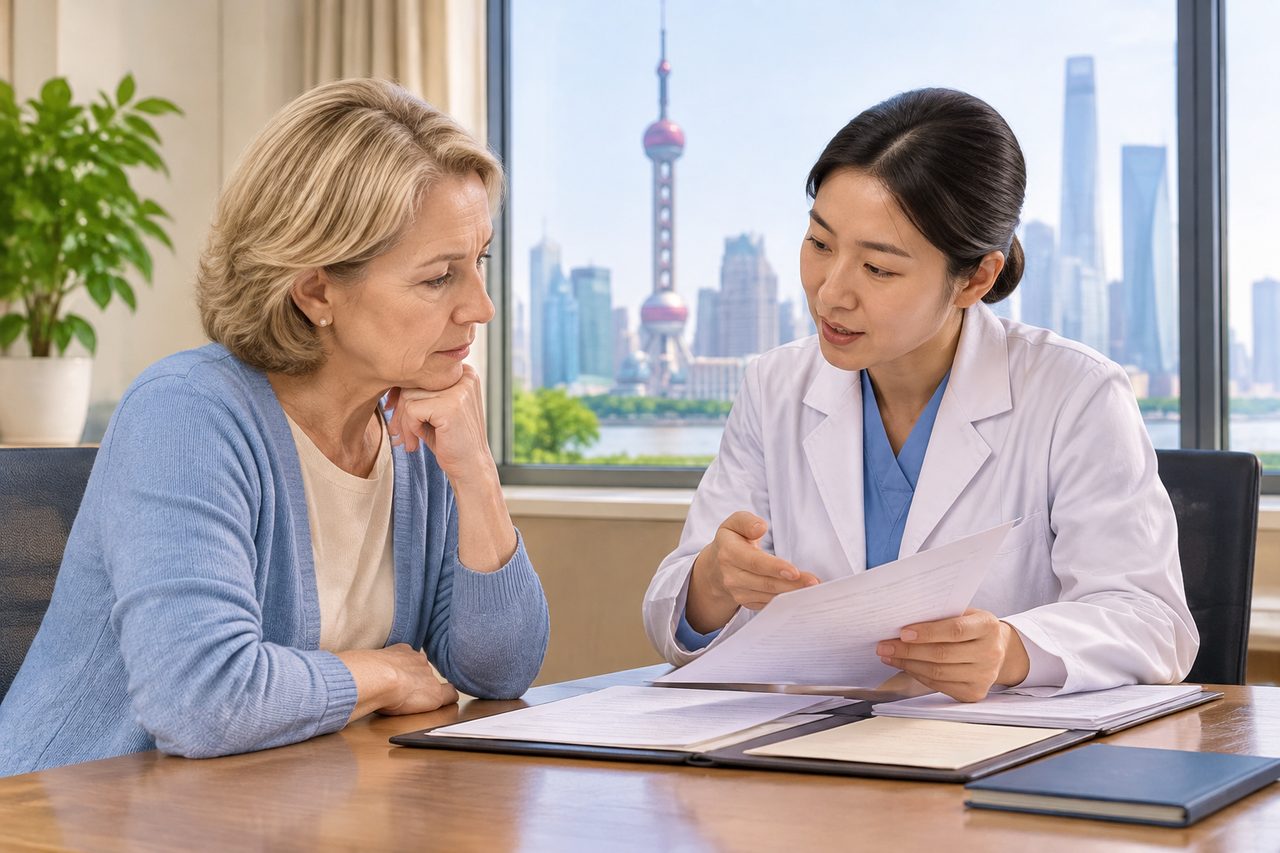
What to Prepare Before a Medical Escort for Chemotherapy Planning in Shanghai
What should be in your folder before a chemotherapy medical escort in Shanghai begins? At minimum: a translated pathology report, imaging on disc, the current medication list, recent blood counts, and a clear written question list for the oncology team. Those five items decide whether an escort day produces usable answers or just a long wait. The chemotherapy medical escort cost Shanghai patients encounter also depends on how complete that file is, because incomplete records trigger repeat tests and extra days.
The caveat is that no escort can book a specific professor or guarantee a same-week oncology appointment at a public hospital. Escorts handle language, navigation, registration, payment and translation of what is said. Clinical decisions stay with the treating hospital. Understanding that division early prevents most disappointment later.
Who This Is Right For — and Who It Isn’t
A chemotherapy planning escort tends to work well for patients who already have a diagnosis and need help turning it into a workable plan inside a large Chinese hospital. It suits people who cannot read Chinese, who are travelling with one family member, and who want a bilingual person in the room when the oncologist explains regimen, cycle length and monitoring.
It is typically a good fit for:
- Patients with a confirmed histopathological diagnosis who want a second planning opinion in Shanghai.
- Families who need help with registration, hospital card creation, payment queues and pharmacy pickup.
- People whose home oncologist has proposed a regimen and who want the reasoning explained in English.
- Patients who need existing reports translated accurately before any appointment is requested.
It is not the right tool for:
- Anyone needing emergency care. Go to the nearest emergency department, not to an escort booking.
- Patients hoping an escort will secure a named specialist or a fixed treatment start date. That is not what the service does.
- People who have not yet had a biopsy or imaging. Without a diagnosis there is nothing for an oncology department to plan.
- Anyone expecting the escort to give medical advice. Companions translate and coordinate; they do not interpret scans or adjust doses.
The Options, Compared
Before booking anything, it helps to see how the main routes into Shanghai oncology care differ. The table below compares realistic paths, not marketing promises. Figures are planning ranges and vary by hospital and case complexity.
| Route | Typical wait for an oncology appointment | Language support | What you handle yourself | Indicative cost |
|---|---|---|---|---|
| Public hospital standard outpatient, self-arranged | Same-day queueing; appointment slots are generally not reservable from abroad | Limited English; you bring your own translator | Registration, card creation, payment, pharmacy, all navigation | Hospital fees only |
| Public hospital international or VIP department | Usually bookable in advance through the department | English-speaking staff in most international departments | Records translation and trip logistics | Roughly 1.5–2 times standard-channel pricing |
| Private international hospital | Shorter booking windows, often days rather than weeks | English throughout | Trip logistics; direct insurance billing may be available | Highest hospital fees of the three |
| Any of the above plus a bilingual medical companion | Unchanged — the escort does not create appointments | Interpretation, form-filling, queue handling | Clinical decisions and consent | Companion from $300/day; half-day 4 hours or full day 8 hours |
Which column suits you depends on urgency and language confidence. A patient with fluent Mandarin and a simple re-staging question may manage the standard outpatient route. A patient arriving from abroad with a folder of English reports and one week in Shanghai is usually better served by an international department plus a companion, because the alternative is losing days to queues.
The Records File That Makes an Escort Day Work
This is the part most patients underestimate. Chinese oncology departments work from documents, and a folder assembled properly at home saves days. Prepare the following before you travel:
- Pathology report with the original block or slide if your home laboratory will release it, plus a certified English-to-Chinese translation where the hospital requests one.
- Imaging on disc — CT, MRI, PET-CT — in DICOM format, not screenshots. Reports alone are often insufficient for staging review.
- Operative and discharge summaries if any surgery has already taken place.
- Current medication list with generic drug names, doses and start dates, including anticoagulants and steroids.
- Recent blood work: complete blood count, liver and kidney function, and tumour markers if already measured.
- A one-page chronology in plain language: first symptom, date of diagnosis, treatments received, response, and current status.
If your records are in English, ask whether the receiving department wants translation before arrival. Our team can arrange document translation and a written second opinion from a relevant specialty, which lets the oncology team review your file before you fly. That step often clarifies whether travelling is worthwhile at all.
What It Costs and How Long It Takes
Two separate budgets matter here: the escort and coordination services, and the hospital’s own charges. They are billed separately, and coordination fees are not credited against later hospital or travel costs.
On the service side, current published starting points are:
- Bilingual medical companion: from $300 per day, covering registration, queueing, payment, wayfinding, interpretation and accompaniment.
- Hospital appointment coordination: from $300, with a full refund if the requested appointment cannot be obtained.
- Written second opinion from a top-hospital specialist: $300–500, for reference only and not a prescription.
- Video consultation with a specialist team: $100–300 at a standard international department, higher for top-specialist or multidisciplinary formats.
- Airport transfer: $200 round trip.
Hospital charges for chemotherapy itself depend on the regimen, whether drugs are imported or domestic, and whether treatment is delivered in a standard or international department. Ask the department for a written estimate once a regimen is proposed; do not rely on figures from a different hospital or a different cancer type.
On timing, a realistic sequence for a first planning visit looks like this. Days one to three at home: gather records, arrange translation, request an appointment. Day four to seven: travel and settle, with a rest day before any hospital visit. Day eight: registration, card creation and oncology consultation, usually a half-day to a full day. Days nine to twelve: any additional tests the team orders, such as repeat imaging or blood work. Day thirteen onward: a planning discussion, and if treatment is agreed, the first cycle is scheduled according to the department’s own calendar. Build slack into your ticket; test results rarely arrive on the day you hope.
Practical Considerations for Shanghai Oncology Visits
Visa category. Medical travel to China uses the S2 visa, annotated for medical treatment, with S1 for stays beyond 180 days. Accompanying family members apply for S2 as well. The M visa is for commercial and trade activity and is not a medical visa. Requirements change, so confirm current documentation with the nearest Chinese embassy or consulate and bring the hospital’s invitation or appointment confirmation if requested. Approval is never guaranteed.
Hospital scale. Top Shanghai hospitals see enormous daily outpatient volumes, and wayfinding inside them is genuinely difficult without Chinese. Allow more time than you think for the first visit, and expect separate queues for registration, consultation, payment and pharmacy.
Payment. Public hospitals generally require prepayment, with insurance reimbursement handled afterwards in your home country. Private international hospitals more often bill insurers directly. Carry a card that works internationally and confirm limits with your bank before travel.
Insurance and records for reimbursement. Ask the hospital for itemised invoices and English-language medical certificates as you go. Reconstructing these after you return home is far harder.
Language in the consultation room. Ask your companion to write down the regimen name, drug doses, cycle interval, anti-nausea plan and the specific blood tests required before each cycle. Verbal recall of a fifteen-minute oncology consultation is unreliable for anyone.
Follow-up after returning home. Before you leave Shanghai, request a written summary in English that your home oncologist can act on, including the exact regimen and monitoring schedule. Continuity between the two systems is the single most useful document you can carry back.
For hospital selection, our directory of top-ranked Chinese hospitals groups Fudan-ranked institutions by city, and the oncology department rankings list the leading centres by specialty reputation. Patients who prefer English-speaking staff and direct insurance billing often compare the private international hospitals as well. Shanghai itself has one of the deepest concentrations of top-ranked hospitals in the country, which is why so much oncology planning happens there.
Your Next Step
The core message is simple: an escort amplifies a well-prepared file and cannot compensate for a missing one. Assemble the pathology, imaging, medication list and chronology first; everything else follows faster. We are a coordination service, not a hospital and not a source of medical advice — we translate records, request appointments through official international departments, and provide bilingual accompaniment on the day. If you would like your documents reviewed before booking anything, start with a free consultation and we will tell you honestly what is realistic.
This article is for general information only and does not constitute medical advice. Treatment decisions should be made with a qualified oncologist who has reviewed your full records.
For more medical information and treatment options in China, visit chinamedservices.com (China Medical Services).
