Rare Disease Treatment in China: PUMCH National Rare Disease Center for International Patients
Key Takeaways
- Peking Union Medical College Hospital (PUMCH) operates China’s National Rare Disease Diagnosis and Treatment Center, managing over 30,000 rare disease cases annually with a multidisciplinary team covering 120+ conditions.
- The PUMCH rare disease center cost for international patients typically runs 50-70% lower than comparable US academic medical centers, with an initial comprehensive evaluation starting from $800-1,200.
- Language barriers and the absence of direct international appointment scheduling create significant friction—patients cannot simply email the hospital and book a slot without local coordination.
- Orphan drug access in China has improved dramatically since 2018, but not every medication approved in the US or EU is available; you need a pre-travel medication verification step.
The Problem: When a Diagnosis Remains Out of Reach
What if you have spent four years and $60,000 chasing a diagnosis that never comes? Approximately 1 in 10 Americans lives with a rare disease—roughly 30 million people—and the average diagnostic odyssey stretches across 7.6 years and eight different specialists. For patients outside major academic hubs, the numbers get worse. A 2022 survey by the EveryLife Foundation found that 38% of rare disease patients in the US saw more than six physicians before receiving a correct diagnosis. Some never get one.
The bottleneck is not just money. It is volume. A community rheumatologist in a mid-sized city might see two cases of systemic sclerosis in a year. A neurologist in a regional hospital may encounter one patient with stiff-person syndrome in an entire career. Rare diseases are rare for a reason—individual clinicians simply do not see enough cases to develop pattern recognition. That is the structural problem.
China has approached this differently. Not through magic. Through scale.
Who We Are
We are China Medical Services, a medical concierge organization that connects international patients with China’s top-tier hospitals. We are not a hospital. We do not provide medical treatment or clinical diagnoses. Our team handles the logistics that make treatment abroad possible: hospital matching based on your specific condition, appointment coordination through official international departments, bilingual medical companions who stay with you throughout every consultation, visa guidance, and accommodation planning. Think of us as the bridge—you bring the medical need, we bring the navigation expertise. Our database covers 340+ top-ranked hospitals across 37 cities, representing the top 5% of China’s 35,000+ hospitals ranked by Fudan University and JCI standards.
Why PUMCH Delivers Results for Rare Disease Patients
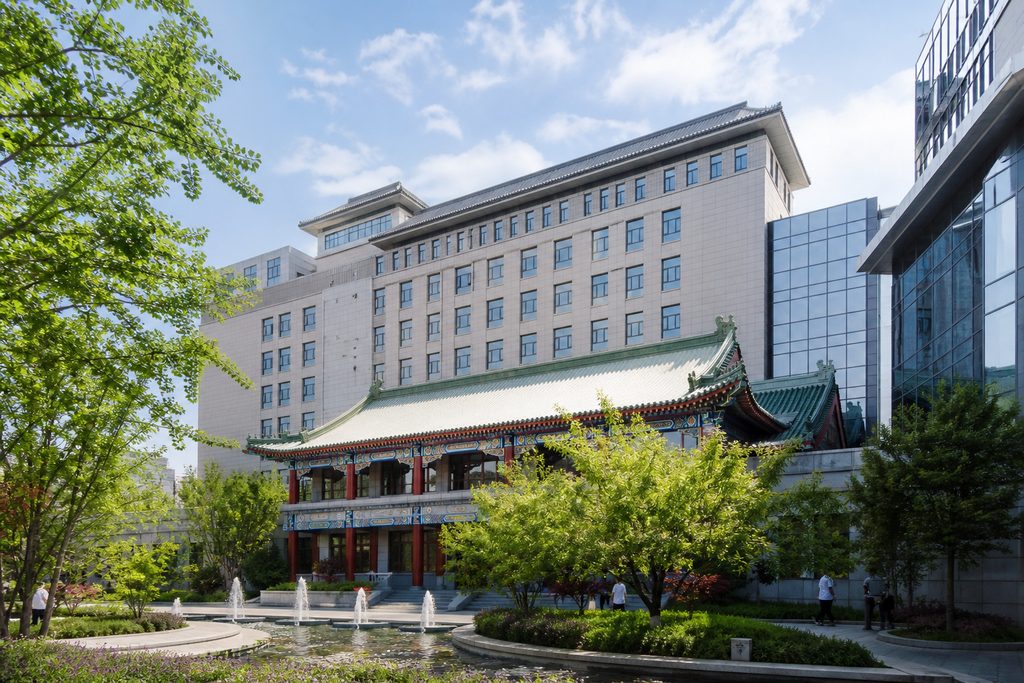
Peking Union Medical College Hospital sits at the top of China’s hospital system for a reason. Founded in 1921 by the Rockefeller Foundation, the institution has operated as China’s national referral center for complex cases for over a century. In 2019, the Chinese government designated PUMCH as the headquarters of the National Rare Disease Diagnosis and Treatment Network, connecting 324 member hospitals nationwide. The center sees volume that creates diagnostic fluency.
Clinical Volume That Reshapes Pattern Recognition
PUMCH’s rare disease center manages over 30,000 rare disease cases each year across more than 120 conditions. To put that in perspective: the NIH Undiagnosed Diseases Program in the US evaluates approximately 150 patients annually. The entire Undiagnosed Diseases Network across 12 US clinical sites has evaluated roughly 2,000 patients since 2014. PUMCH does those numbers in under a month.
Volume matters because rare disease diagnosis is fundamentally a pattern-matching exercise. A clinician who has seen 200 presentations of Castleman disease will catch subtle variants that someone who has seen five cases will miss. That is not a reflection on individual skill. It is a function of exposure. At PUMCH, the rheumatology department alone has published case series on conditions many Western rheumatologists encounter only in textbooks.
This is also where the question of how does PUMCH diagnose rare genetic disorders in foreigners becomes practical. The answer: the same way they diagnose them in domestic patients, but with additional steps. Whole-exome sequencing and whole-genome sequencing run through the hospital’s in-house genomics platform. Turnaround time for a comprehensive genetic panel is typically 3-4 weeks. For international patients, the process starts before you arrive—medical records and any existing genetic reports are reviewed by the relevant department head to confirm that PUMCH is the right destination. No one travels without that confirmation.
Multidisciplinary Coordination Under One Roof
Most rare diseases cross organ systems. A patient with sarcoidosis may need pulmonology, dermatology, ophthalmology, and cardiology input. In fragmented healthcare systems, the patient becomes the courier—shuttling records between specialists, repeating their story, reconciling contradictory advice. At PUMCH, the rare disease center operates a formal multidisciplinary team (MDT) model. When you book a rare disease specialist consultation Beijing PUMCH price inquiry with us, what you are often receiving is not a single appointment but a coordinated intake where multiple departments review your file and convene on the same day.
The MDT approach is structured. Monday mornings, the endocrinology and neurosurgery teams might jointly review pituitary tumor cases. Thursday afternoons, hematology and rheumatology collaborate on autoinflammatory syndromes. For international patients, these sessions can be scheduled in a compressed timeframe—two to three days of consultations rather than weeks of scattered appointments.
Orphan Drug Access: The Real Picture
This is where we need to be direct. The question can international patients get orphan drug treatment at PUMCH has a nuanced answer. Since 2018, China’s National Medical Products Administration has accelerated orphan drug approvals dramatically. The First National List of Rare Diseases, published in 2018, covers 121 conditions and has driven regulatory priority review for treatments targeting those diseases. Over 60 orphan drugs now have marketing authorization in China.
But—and this matters—the list is not identical to the FDA or EMA orphan drug catalogs. Some medications available in the US are not yet approved in China. Others are approved but in limited supply. A small number are available through special compassionate-use pathways that PUMCH can access as a national center.
We verify medication availability before you commit to travel. That is non-negotiable. You send us your current treatment regimen. Our team checks the hospital pharmacy formulary and, if needed, consults the relevant department about alternative protocols. No surprises at the consultation door.
What You Need to Know Before Going Alone
The clinical reputation of PUMCH is real. So are the barriers to accessing it independently. Here is what you face if you attempt to navigate this alone:
- No Direct International Appointment Channel: PUMCH does not have a public-facing international patient portal where you can book appointment PUMCH national rare disease center abroad. The hospital’s standard registration system requires a Chinese ID number or local phone verification. The international department exists but operates through partner channels, not walk-in booking. Calling the main hospital switchboard from overseas typically leads to a Mandarin-only response with no clear routing for English-speaking rare disease inquiries.
- Visa Requirements Are Specific: Medical treatment in China requires an S2 visa with a treatment-purpose annotation. This is not a tourist visa. The application requires an invitation letter from the receiving hospital—a document PUMCH can issue, but only after your case has been accepted and an appointment confirmed. The chicken-and-egg problem is real: you need the appointment to get the visa, but you cannot get the appointment without local coordination. Your accompanying family members also need S2 visas, each with their own documentation.
- Payment and Insurance Reality: Public Chinese hospitals, including PUMCH, operate on a prepayment model. You deposit funds at registration, and services draw down from that balance. Direct billing to international insurance is not standard in the public system. You pay upfront and seek reimbursement from your insurer afterward. The hospital provides detailed invoices and medical reports suitable for insurance claims, but the cash flow is yours to manage. A comprehensive rare disease evaluation—imaging, labs, genetic testing, and multi-specialty consultations—can require a deposit in the range of $3,000-5,000, with final costs reconciled at discharge.
How We Help You Navigate This
These barriers exist for structural reasons, not because anyone wants to exclude international patients. PUMCH’s primary mission is serving China’s population of 1.4 billion. International patients are welcome, but the system was not designed for self-service from abroad. That is where we fit.
Before you travel, our team translates and formats your medical records according to PUMCH’s submission standards. We present your case to the appropriate department director and obtain a preliminary opinion: is this a case the center can help with, and which specialists need to be involved? If the answer is yes, we coordinate the appointment schedule and secure the hospital invitation letter required for your S2 visa application.
During your stay, a bilingual medical companion stays with you. This person handles registration queues, payment windows, pharmacy pickups, and translation during every consultation. You speak directly with your physician through someone who understands both the language and the clinical context. After your visit, we collect all reports, translate the key findings into English, and arrange any follow-up video consultations your case requires. Our video consultation coordination starts from $500-800 for top-specialist sessions, and any amount paid toward consultations is credited in full toward on-the-ground coordination services within 90 days—applied to the coordination fee only, never to hospital treatment charges.
If you are still researching whether China is the right destination for your condition, our top-ranked hospital database provides detailed profiles organized by city and specialty. For patients weighing multiple options, the specialty-specific department rankings show which hospitals lead in each of the 45 clinical areas tracked by the Fudan rankings.
Frequently Asked Questions
An initial comprehensive evaluation—including specialist consultations across two to three departments, advanced imaging, and basic laboratory work—typically ranges from $800 to $1,200. If whole-exome or whole-genome sequencing is indicated, add approximately $600 to $1,000. These figures vary by case complexity and the number of specialists involved. For context, a comparable workup at a US academic rare disease center frequently exceeds $5,000 before genetic testing. Hospital deposits are prepaid and reconciled at the end of your visit, with unused funds refunded.
Plan for four to six weeks. One week for our team to translate and submit your records, one to two weeks for PUMCH to review and accept the case, one week to secure the visa invitation letter and your S2 visa appointment, and one week for travel logistics. Expedited timelines are sometimes possible but never guaranteed. The limiting factor is usually the hospital’s internal review cadence, not our processing speed.
Then we tell you before you spend a dollar on travel. Part of our case review process is confirming that the center has relevant expertise for your diagnosis or diagnostic question. If PUMCH is not the right fit, we may suggest another hospital in our network. The Beijing medical hub alone hosts 21 of China’s top 100 hospitals, and rare disease expertise is distributed across multiple institutions. If no Chinese hospital offers a meaningful advantage for your case, we say so directly. We do not benefit from bringing patients who will not receive value.
Look at the output. PUMCH’s rare disease center contributes to international diagnostic guidelines and publishes in journals like The Lancet, the New England Journal of Medicine, and Nature Genetics. The hospital participates in global rare disease registries and collaborates with institutions including the University of California and the Karolinska Institute. The clinical standards are the same. The difference is volume—PUMCH physicians see more rare disease patients in a month than many Western specialists see in a year—and cost structure, which reflects Chinese healthcare economics, not quality compromise. When patients search for the best hospital in China for rare disease treatment reviews, they find PUMCH consistently at the top of both official rankings and patient-reported outcomes.
Your Next Step
A rare disease diagnosis that has eluded you for years is not a failure of will. It is often a failure of volume—you simply have not yet been seen by a team that has encountered your condition enough times to recognize it. PUMCH offers that volume, and our team handles the logistics that would otherwise prevent you from accessing it. If you want to understand whether your case is a fit, reach out for a free consultation. No commitment. Just clarity on what is possible.
Submit your case details through our patient coordination page, and we will respond with an honest assessment within two business days.
For more medical information and treatment options in China, visit chinamedservices.com (China Medical Services).
