Complex Lung Infection China Diagnosis: Rare Pathogen Testing at Shanghai Huashan Hospital
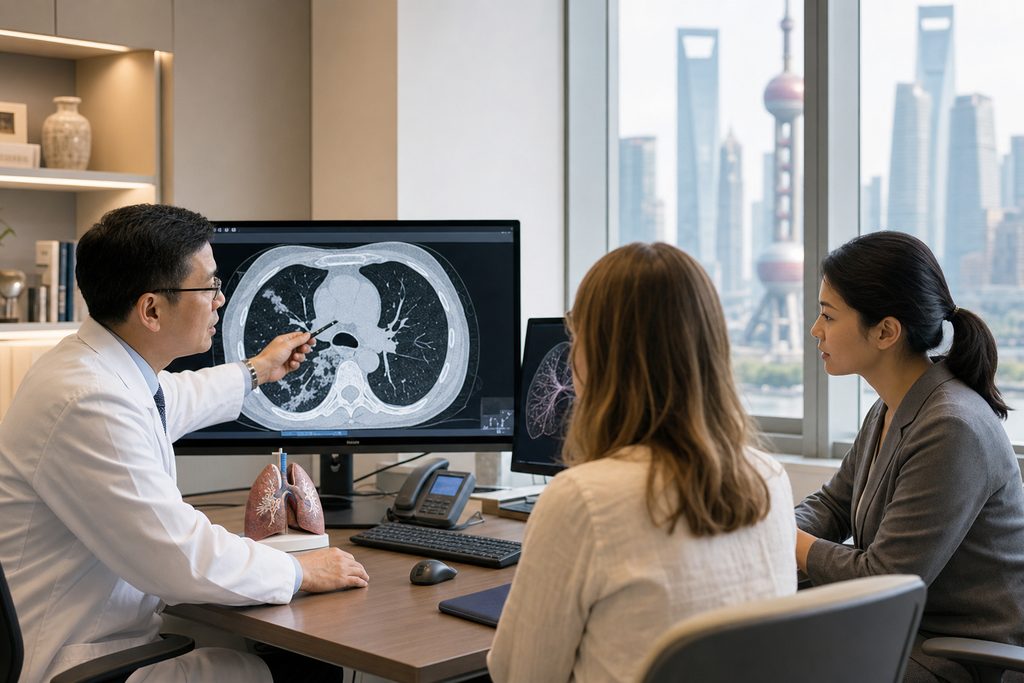
When 42-year-old Michael first heard the diagnosis, he had no idea where to start looking for treatment. A construction manager from Dublin, he had been battling a persistent cough and night sweats for seven months. Irish consultants had ruled out tuberculosis. They ruled out common bacterial pneumonia. They ruled out fungal infections typical to Northern Europe. His CT scans showed a strange, tree-in-bud pattern that didn’t match anything in the standard protocols. His pulmonologist finally admitted they were chasing a ghost. “We think it’s a nontuberculous mycobacterium,” the doctor said. “But we can’t tell you which one. And without knowing which one, we can’t treat it.”
Michael’s case is not an outlier. Approximately 1 in 12 pulmonary infections presenting with atypical radiographic features defies standard culture-based identification in Western laboratories. The pathogens are there. The tools to find them just aren’t.
Shanghai Huashan Hospital has built its reputation on solving exactly these cases.
Key Takeaways
- Huashan Hospital‘s Department of Infectious Diseases runs one of Asia’s largest pathogen metagenomic sequencing programs, identifying over 1,200 rare respiratory pathogens annually that standard labs miss.
- International patients access this expertise through the hospital’s International Medical Center, with coordinated appointments, translation, and logistical support from teams like ours.
- Diagnosis costs at Huashan for complex pulmonary cases range from $2,500 to $6,000 USD—a fraction of comparable US workups that often exceed $20,000.
- The hospital operates on a pre-payment model. No direct insurance billing. You need local coordination to navigate registration, payment, and follow-up—going alone is genuinely difficult.
The Problem: When Standard Labs Cannot Name the Invader
Most hospitals in the United States and Europe rely on culture-based diagnostics for lung infections. A sputum sample or bronchoalveolar lavage gets plated. Technicians wait for something to grow. Then they identify it. This works for Streptococcus pneumoniae. It works for Haemophilus influenzae. It fails spectacularly for a long list of organisms that either grow too slowly, require very specific media, or simply refuse to cooperate in a petri dish.
Nontuberculous mycobacteria. Nocardia species. Actinomyces. Certain endemic fungi that patients pick up while traveling. These organisms can colonize the lungs for months before causing symptoms severe enough to warrant a bronchoscopy. By the time a patient is sick enough to seek answers, the diagnostic clock has been ticking for a long time.
The American Thoracic Society acknowledges this gap. Their 2020 clinical practice guideline on nontuberculous mycobacterial pulmonary disease notes that species-level identification is essential for treatment selection—different NTM species have profoundly different drug susceptibility profiles. Treating Mycobacterium abscessus with a regimen designed for M. avium complex is not just ineffective. It breeds resistance.
And yet, many Western labs can only report “NTM present” or, at best, identify a handful of the most common species. The rarer ones get sent to reference laboratories. Results take weeks. Patients wait. Infections advance.
Who We Are
We are not a hospital. We do not provide medical treatment or clinical diagnoses. We are your logistical architects—we bridge the gap between you and China’s top-tier medical expertise. Our team has built working relationships with the international patient centers at hospitals across China, including Huashan. We handle appointment coordination, billing navigation, medical document translation, visa guidance, and bilingual accompaniment. When a patient like Michael needs answers that only a specialized center can provide, we make the connection happen and ensure nothing gets lost in translation. Our database covers over 340 top-ranked hospitals across 37 cities, representing the top 5% of China’s 35,000-plus hospitals as ranked by the Fudan University hospital rankings and JCI accreditation standards.
Why Shanghai Huashan Hospital Delivers Answers for Rare Pulmonary Pathogens
Metagenomic Next-Generation Sequencing Changes the Game
Huashan Hospital’s Department of Infectious Diseases, affiliated with Fudan University, was among the first centers in Asia to integrate metagenomic next-generation sequencing (mNGS) into routine clinical diagnostics for complex lung infections. Instead of waiting for a pathogen to grow in culture, mNGS extracts all DNA and RNA present in a patient sample—sputum, bronchoalveolar lavage fluid, even lung tissue—and sequences everything. Every bacterium. Every fungus. Every virus. Every parasite.
The bioinformatics pipeline then separates human genetic material from microbial genetic material and matches the microbial sequences against databases containing tens of thousands of known pathogens. A 2021 study published in the Journal of Infection by Huashan researchers reported that mNGS identified the causative pathogen in 62.5% of culture-negative pulmonary infection cases, with a turnaround time of 48 to 72 hours from sample receipt. That is the difference between an empirical guess and a targeted therapy.
For the rare lung infection diagnosis Shanghai Huashan Hospital cost, patients typically pay between $2,500 and $6,000 USD for the full diagnostic workup including bronchoscopy, mNGS testing, and specialist interpretation. This varies by case complexity and the specific panels ordered. In the US, mNGS alone can cost $3,000 to $8,000 out of pocket, and the full workup often exceeds $20,000.
Volume Builds Pattern Recognition No Textbook Can Teach
Huashan’s infectious disease wards see volumes that create clinical intuition. The department manages approximately 2,800 inpatient beds across its network and handles over 15,000 infectious disease consultations annually. Physicians here have seen Talaromyces marneffei infections in patients who traveled to Southeast Asia. They have managed pulmonary Cryptococcus in apparently immunocompetent hosts. They have untangled co-infections where two or three rare pathogens appeared simultaneously.
This matters because rare infections do not announce themselves with clear textbook presentations. A physician who has seen 200 cases of pulmonary NTM develops a sense for which CT patterns suggest M. abscessus versus M. kansasii. That pattern recognition accelerates the diagnostic process. It means the right test gets ordered faster. It means empiric treatment—when necessary—is more likely to hit the target.
Many international patients researching the best hospital in China for complex pulmonary pathogens find Huashan consistently ranked among China’s top institutions for infectious diseases in the Fudan University specialty reputation rankings. The hospital’s clinical microbiology laboratory maintains capabilities that rival or exceed those of major US academic medical centers, particularly for mycobacterial and fungal diagnostics.
Cost Advantage Without Quality Compromise
The structural reasons for lower costs at Chinese public hospitals are straightforward. Physician salaries in China’s public system are a fraction of those in the United States. Hospital infrastructure, while modern, was built at lower capital costs. The sheer patient volume spreads fixed equipment costs across far more cases. A bronchoscopy suite that performs 40 procedures daily has a very different cost per procedure than one performing eight.
Clinical outcomes for infectious disease diagnosis at Huashan are not lower than Western benchmarks. They are often better, precisely because the diagnostic toolkit is broader and the clinical experience with rare pathogens is deeper. The hospital participates in international quality assurance programs for its laboratory services. Its mNGS protocols have been validated in peer-reviewed publications.
For patients exploring lung infection treatment packages China medical tourism, the cost structure is transparent. Diagnostic workups are billed per test and procedure. Treatment costs—antimicrobial therapy, hospitalization if needed, follow-up imaging—are additional and depend entirely on the pathogen identified and the treatment duration required. Some NTM treatment courses run 12 to 18 months. The hospital’s international patient center provides detailed cost estimates before any commitment is made, and our team helps patients understand what each line item means.
What You Need to Know Before Going Alone
We believe in total honesty about the barriers. Huashan Hospital is a world-class institution. It is also a Chinese public hospital operating at enormous scale, and that creates friction points for international patients.
- Registration and Payment Systems: Huashan’s outpatient halls process over 10,000 patient visits daily. Registration kiosks, payment terminals, and appointment screens operate in Mandarin. The hospital uses a pre-paid card system for outpatient services—you load money onto a hospital card, then swipe it at each department. Topping up requires cash or Chinese bank cards. International credit cards do not work at most terminals. Without someone who knows the system, you can spend hours just trying to pay for a CT scan.
- Visa Requirements: Medical treatment in China requires an S2 visa with a specific annotation for medical purposes. This is different from the M visa used for business. The visa application requires an invitation letter from the treating hospital, proof of appointment, and documentation of the medical condition. Huashan’s International Medical Center can issue invitation letters, but the process takes time and requires accurate documentation. Getting this wrong means a visa rejection and a delayed trip.
- Language and Clinical Communication: Huashan’s top infectious disease specialists are brilliant clinicians. Most read English-language medical literature fluently. But spoken English proficiency varies widely. Discussing the nuances of a Nocardia farcinica susceptibility report requires precise terminology in both directions. A missed nuance in translation can affect treatment decisions. The International Medical Center provides interpretation, but demand is high, and availability is not guaranteed without advance coordination.
How We Help You Navigate This
These barriers exist for structural reasons. They are not designed to exclude international patients. They are the natural result of a system optimized for domestic scale. Our role is to bridge that gap.
Before you travel, we coordinate with Huashan’s International Medical Center to secure an appointment with the appropriate infectious disease specialist. We review your existing medical records—CT scans, lab reports, bronchoscopy results, previous treatment regimens—and ensure they are translated and formatted for Chinese clinical review. We handle the invitation letter process for your S2 visa application.
During your hospital visit, a bilingual medical companion from our team accompanies you. This person handles registration, payment card top-ups, queue management, and navigation between departments. They sit with you during consultations to ensure every question gets asked and every answer gets understood. They translate clinical terminology accurately, not approximately. After the consultation, they help you understand the diagnostic plan, the medication schedule, and the follow-up timeline.
After you return home, we remain a point of contact. If Huashan recommends a 12-month course of antibiotics with periodic CT monitoring, we help coordinate follow-up communications, relay questions to your specialist, and arrange remote consultations when needed. For patients considering a Shanghai Huashan Hospital pulmonary infectious disease specialist consultation via video before committing to travel, we facilitate that process too, with video consultations starting from $100 to $300 USD.
So how does Huashan Hospital diagnose unusual lung infections in practice? The pathway typically begins with a specialist consultation. The infectious disease physician reviews all prior imaging and lab work. If prior bronchoscopy samples were inadequate or did not include mNGS testing, a repeat bronchoscopy is scheduled—often within days, not weeks. Samples are split: one portion goes to conventional culture (which may take weeks but remains useful for drug susceptibility testing), and one portion goes directly to mNGS. Results from mNGS return in 48 to 72 hours. The physician interprets the mNGS report in the context of the patient’s clinical picture, distinguishing true pathogens from colonizers and contaminants—a skill that requires deep experience with the technology. Treatment begins once a pathogen is identified and susceptibility is known.
Patients often ask can Huashan Hospital identify rare respiratory pathogens that other centers miss. The answer, based on published data and clinical experience, is yes—with the important caveat that no test is perfect. mNGS can miss pathogens present at very low abundance. It can detect DNA from dead organisms that are not causing active infection. It requires a high-quality sample. But for patients who have exhausted standard diagnostic pathways without answers, the incremental yield is substantial. A 2022 meta-analysis in Clinical Infectious Diseases found that mNGS increased diagnostic yield by 35 to 45 percentage points over conventional methods in culture-negative pulmonary infections. That is not a guarantee. It is a statistically meaningful improvement in odds.
Frequently Asked Questions
The diagnostic workup, including specialist consultation, bronchoscopy with bronchoalveolar lavage, mNGS testing, and conventional cultures with drug susceptibility testing, typically ranges from $2,500 to $6,000 USD. The exact cost depends on which mNGS panels are ordered, whether additional biopsies are needed, and the complexity of the case. This is the out-of-pocket cost for international patients paying directly. Hospitalization, if required, adds approximately $300 to $800 per night depending on the ward class.
Yes. Medical treatment in China requires an S2 visa with a specific annotation for medical purposes. The application requires an invitation letter from the treating hospital, which Huashan’s International Medical Center can provide once an appointment is confirmed. Processing times vary by country but typically take one to four weeks. Your accompanying family members also apply for S2 visas. Our team guides you through the documentation requirements and coordinates with the hospital to secure the invitation letter.
This happens in approximately 30 to 40 percent of cases, even at top centers. A negative mNGS result does not mean nothing is wrong. It means the pathogen was either not present in the sample at detectable levels or is not in the reference database. In these cases, the Huashan team typically pursues additional diagnostic strategies: repeat bronchoscopy from a different lung segment, transbronchial biopsy for histopathology, or targeted PCR panels for specific organisms based on clinical suspicion. The hospital’s multidisciplinary approach means pulmonologists, infectious disease specialists, radiologists, and pathologists review difficult cases together. A negative result is not the end of the road. It redirects the investigation.
Yes, and we strongly encourage this. Better communication between your home physician and the Huashan team leads to better continuity of care. We facilitate this by arranging video consultations that include both you and your local doctor, translating written correspondence between physicians, and ensuring that treatment plans are documented in English for your home medical record. The goal is not to replace your local care team but to add Huashan’s diagnostic capabilities to the picture, then return you to your local physician with a clear treatment roadmap.
Most patients need approximately seven to ten days in Shanghai. This allows time for the initial consultation (day one or two), bronchoscopy (usually scheduled within two to three days of consultation), and receipt of mNGS results (48 to 72 hours after the procedure). The follow-up consultation to discuss results and treatment plans typically occurs on day six or seven. Some patients stay longer if additional testing is needed or if treatment initiation at Huashan is recommended. We help arrange accommodations near the hospital and can adjust the timeline if your schedule requires a shorter or longer stay.
Your Next Step
A lung infection without a name is exhausting. The uncertainty compounds the illness. Shanghai Huashan Hospital has the diagnostic tools and the clinical experience to identify pathogens that standard labs miss, at a cost that makes the journey feasible. The path is real. It also requires careful navigation—the language barrier, the payment systems, the visa process, the clinical communication. We handle those logistics so you can focus on getting answers and starting treatment. If you are ready to explore whether Huashan is the right next step for your case, reach out to our team for a free consultation. No pressure. Just a conversation about your situation and whether this path makes sense for you.
You can learn more about how we coordinate care at top-ranked Chinese hospitals on our patient services page. For a broader look at China’s leading institutions, including Huashan and other centers with strong infectious disease programs, visit our top hospitals directory. If you want to understand how Huashan compares to other hospitals in the region for pulmonary medicine, our Shanghai medical services overview provides additional context.
Medical Disclaimer: This article is for informational purposes only and does not constitute medical advice. We are a medical concierge service, not a healthcare provider. All treatment decisions should be made in consultation with qualified physicians. Diagnostic outcomes vary by individual case, and no guarantee of results is implied or should be inferred.
For more medical information and treatment options in China, visit chinamedservices.com (China Medical Services).
