Breastfeeding During Surgery in China: A Nursing Mother’s Complete Guide
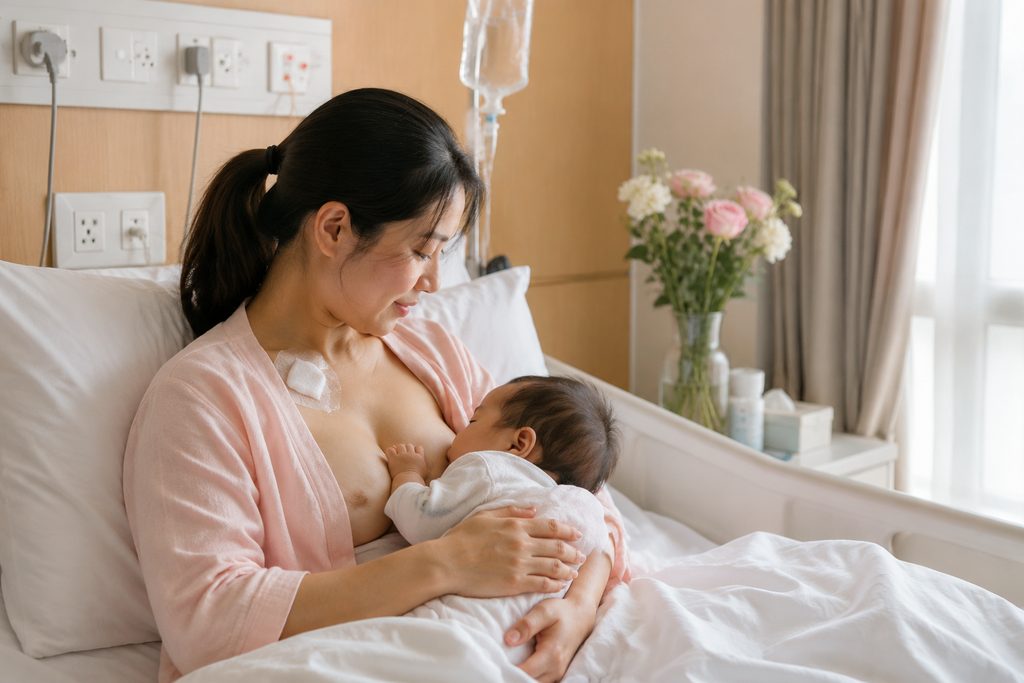
Finding out you need surgery is stressful. Finding out while you’re breastfeeding can feel overwhelming. Your mind floods with questions before the surgeon even picks up a scalpel. Will the anesthesia harm my baby? Can I breastfeed after surgery in China? How do I even coordinate this in a country where I don’t speak the language?
Let’s start with the core fact: having surgery while nursing is a logistical challenge, not a medical impossibility. Thousands of nursing mothers undergo procedures every year. The key is planning. And doing it in China’s hospital system—one of the most efficient and high-volume systems globally—adds a layer of coordination that most generic guides never address.
We are not doctors. We are the team that connects international patients with China’s top-ranked hospitals. Our job is to make the process clear. This guide walks through what actually happens, what it costs, how to keep your milk supply intact, and where things can go sideways.
How This Actually Works, Step by Step
The sequence matters. Skip a step and you’ll find yourself in a Chinese hospital lobby with a hungry baby and no plan. Here is the real flow, drawn from years of coordinating care for international families.
Step 1: Surgical evaluation comes first. Before any conversation about breastfeeding logistics, you need a clear surgical plan. What procedure? How long? Inpatient or outpatient? General anesthesia or local? These answers shape everything that follows. Most Chinese public hospitals require an in-person consultation before scheduling surgery. The international departments at hospitals like Peking Union Medical College Hospital or Shanghai’s Zhongshan Hospital can sometimes arrange preliminary remote reviews, but the final surgical clearance happens face-to-face.
Step 2: Anesthesia consultation with full disclosure. You must tell the anesthesiologist you are lactating. Not the receptionist. Not the nurse. The anesthesiologist. This is not a minor detail—it determines drug selection, timing, and post-op instructions. Modern anesthesia protocols for nursing mothers are well-established. Most agents leave breastmilk within 24 hours. But the specific drugs matter. Propofol, fentanyl, and midazolam transfer in negligible amounts. Older agents require longer pump-and-dump windows.
Step 3: Build your milk buffer. If you’ll be separated from your baby for any period, you need stored milk. Most international hospitals in China have breast pump access. Public hospitals typically do not. Plan to bring your own equipment. A double electric pump, storage bags, and a cooler are non-negotiable items in your hospital bag. Pump right before surgery. Label everything clearly.
Step 4: The 24-hour window. For most common anesthesia protocols, the standard advice is to pump and discard for 24 hours after surgery, then resume normal feeding. This is conservative. The American Society of Anesthesiologists notes that breastfeeding can often resume as soon as the mother is awake and alert. But Chinese hospitals tend to be more cautious. Follow your anesthesiologist’s specific instruction. They know what they administered.
Step 5: Post-operative pain management matters. Pain control after surgery often involves medications that require attention. Acetaminophen and ibuprofen are compatible with breastfeeding. Codeine and tramadol require caution. Stronger opioids mean a temporary pause. Your surgical team in China should coordinate with the hospital’s lactation consultant—if one is available. In public hospitals, this role may not exist. That’s where having a bilingual medical companion changes the equation.
What Nursing Mother Surgery Packages in China Actually Include
Searching for “nursing mother surgery packages China” returns a mix of real offers and marketing fluff. Let’s break down what you’ll actually encounter. Chinese hospitals do not sell a pre-labeled “breastfeeding surgery package.” What exists are international department service bundles that can be adapted to your needs.
A typical international department surgical package at a top-tier hospital covers the surgeon’s fee, anesthesia, operating room costs, and a private recovery room. Medications, diagnostic imaging, and extended stays are billed separately. The base package for a straightforward procedure—think laparoscopic gallbladder removal or a thyroidectomy—runs between $4,000 and $9,000 at a hospital like Shanghai’s Huashan Hospital International Medical Center. That’s the procedure itself. Not the coordination.
What’s missing from the standard package is the breastfeeding-specific support. Pump storage. Private pumping space. Lactation consultation. These are add-ons. Some private international hospitals like United Family Healthcare can arrange lactation support as part of a customized maternity-adjacent stay. Their facilities are designed with nursing mothers in mind. The cost runs higher—expect $12,000 to $25,000 for surgical care in a fully English-speaking private environment. But the infrastructure exists.
The real question is not whether a package exists. It’s whether the hospital can adapt its standard workflow to a nursing mother’s needs. That requires someone asking the right questions before you arrive.
A Realistic Timeline
The surgery itself ranges from $4,000 to $25,000 depending on the procedure and hospital tier. Public hospital international departments fall on the lower end. Private international hospitals on the higher end. Additional costs include document translation ($200–$500), visa fees, travel, accommodation, and coordination services. A realistic total budget for a straightforward procedure with a one-week hospital stay and two weeks of local accommodation is $8,000 to $18,000. Complex procedures cost more. Always get a detailed cost breakdown before committing.
The single most important step is an anesthesia consultation that explicitly addresses lactation. Do this before booking surgery. The second step is having pumping infrastructure in place—your own equipment, a private space, and a schedule. The third step is post-operative pain management using breastfeeding-compatible medications whenever possible. A coordinator who understands these requirements can confirm them with the hospital before you travel. Without that confirmation, you’re gambling.
Private international hospitals like United Family Healthcare and Jiahui International Hospital offer the most comprehensive support—English-speaking staff, lactation consultants, private rooms with pumping space, and international pharmacy access. Among public hospitals, those with large international departments and strong obstetrics programs are best equipped. Peking Union Medical College Hospital in Beijing and Huashan Hospital in Shanghai both have dedicated international wings and the clinical depth to handle complex cases. The best hospital for you depends on your specific surgery, not just your lactation needs. Match the surgical specialty first, then evaluate lactation support.
If your baby is traveling with you, you need a support person—your partner, a family member, or a hired caregiver—who can bring the baby to the hospital at scheduled times. Most international department private rooms allow visitors during designated hours. Some hospitals have family lounge areas where feeding can happen comfortably. Clarify the hospital’s policy on infants in patient rooms before admission. If you are temporarily unable to breastfeed due to post-operative medications, your support person will need to handle bottle feeding with your stored or formula milk. Plan for this scenario even if you hope to avoid it.
Your Next Step
Surgery while breastfeeding is a chapter in your life, not the whole story. The right planning makes it manageable. The wrong assumptions make it chaotic. China’s top hospitals have the surgical expertise. What they often lack is the bridge between their clinical workflow and your specific needs as a nursing mother. That’s the role we fill at China Medical Services. We do not perform surgery. We do not make medical decisions. We connect you with the right hospital, ensure your lactation requirements are communicated clearly, and provide bilingual support on the ground so you can focus on recovery—not on navigating an unfamiliar system. When you’re ready to explore your options, a conversation costs nothing. And it might save you weeks of frustration.
Frequently Asked Questions
Yes. The hospitals used for international patients are JCI-accredited and follow the same international safety standards as top hospitals in the US and Europe. Surgical teams perform high volumes of procedures — often more than their Western counterparts — which studies show leads to better outcomes.
Costs vary by procedure and hospital, but international patients typically save 40-80% compared to US prices — even when factoring in travel and accommodation. A consultation with our team will give you an exact, all-inclusive quote with no hidden fees.
Send us your existing medical reports to get started. We handle everything from hospital selection and appointment scheduling to visa assistance and post-operative recovery planning. Your medical records are reviewed by the specialist before you even book a flight.
For more medical information and treatment options in China, visit chinamedservices.com (China Medical Services).
