Dental Care in Suzhou for International Patients: What to Know
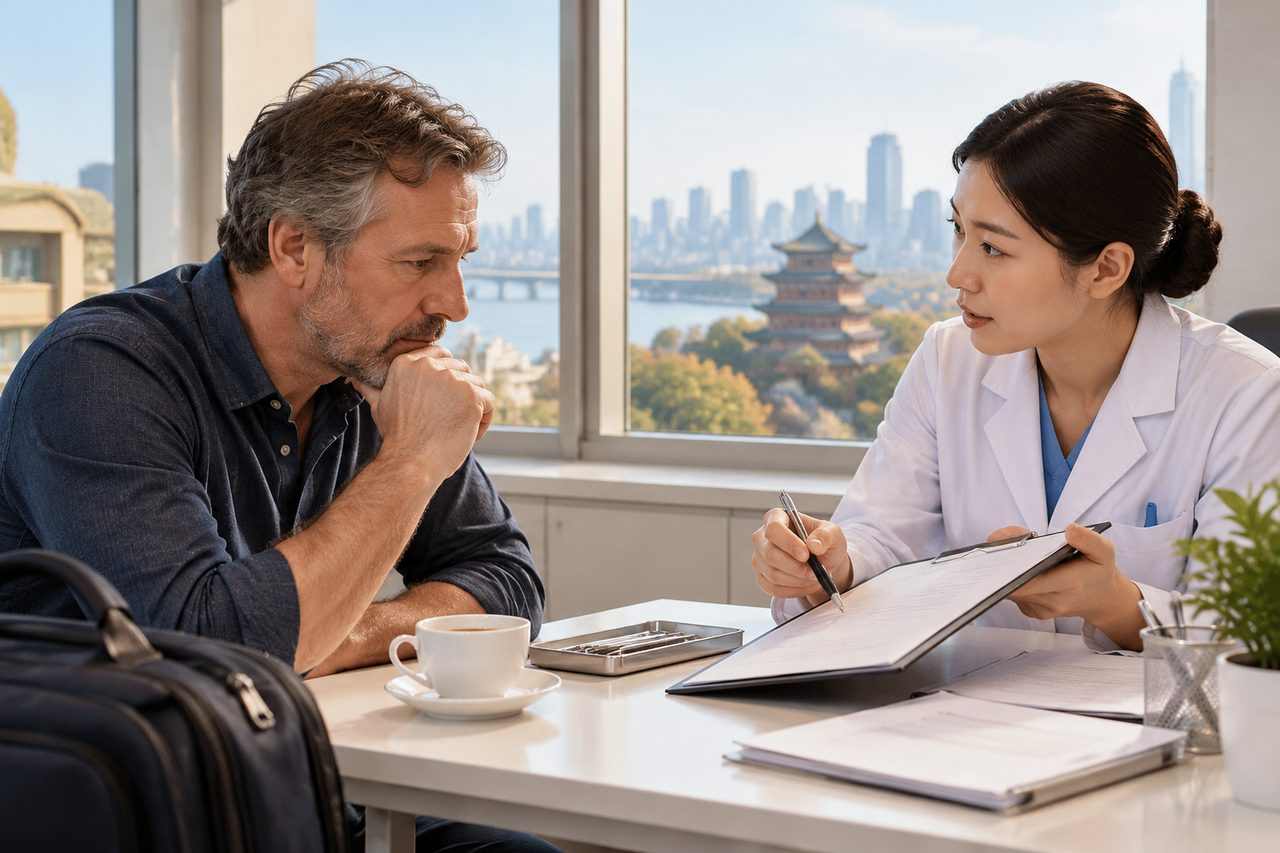
Where do you go for dental care in Suzhou when you do not speak Mandarin and your usual dentist is thousands of miles away? The short answer: international patients generally choose between a private or international dental clinic with English-speaking staff, a public hospital stomatology department (often the Stomatology Hospital affiliated with Soochow University), and a premium international hospital clinic. Each has a different booking path, price band and waiting pattern.
The caveat is that Chinese dental care is not one system. A cleaning at a private clinic can often be arranged within days, while a public hospital’s specialist department may require an in-person registration on the day, and complex work such as implants or orthodontics usually needs a consultation before any treatment date is fixed. Understanding which tier fits your need is the first practical step.
Where to Get Dental Care in Suzhou: The Short Answer
For most international patients, the most predictable route is a private or international dental clinic in Suzhou’s central districts, where English-speaking dentists and direct appointment booking are common. For complex oral surgery, orthodontics or implant planning, a public tertiary hospital’s stomatology department is the stronger clinical option, but expect a Chinese-language queue-based process unless you use the international or VIP channel.
Suzhou is a major city in Jiangsu Province, roughly 30 minutes from Shanghai by high-speed rail. That geography matters: some patients base themselves in Suzhou for work or family and travel to Shanghai for specialist dental work, while others find everything they need locally. Neither choice is wrong; the right one depends on the procedure, your timeline and your tolerance for a hospital environment.
Key takeaway: Match the setting to the procedure. Routine hygiene, fillings and crowns are well served by private clinics. Implants, wisdom-tooth surgery, gum surgery and orthodontic cases benefit from a hospital specialist review, ideally before you commit to travel dates.
Who This Is Right For — and Who It Isn’t
Dental care in Suzhou is a reasonable plan for a defined group of international patients, and a poor fit for another. Being honest about both is more useful than a blanket recommendation.
Typically a good fit:
- Expats, students and business travelers already in Suzhou or the surrounding Yangtze Delta who need routine or urgent dental care.
- Patients seeking a second opinion on implant or orthodontic planning, where a written review of existing X-rays and records can clarify options before travel.
- People combining dental work with a longer stay in China, who can attend a consultation and a treatment appointment on separate days.
- Patients who want a cost comparison before deciding whether to treat at home or abroad.
Probably not the right fit:
- Anyone with an uncontrolled medical condition, bleeding disorder, or complex medication history who has not been cleared by their own physician. Dental treatment can interact with these; this is a conversation for a qualified clinician, not a booking decision.
- Patients expecting a single visit to complete extensive work. Implants, bone grafting and orthodontics are staged over months, and healing time cannot be compressed.
- Anyone who needs guaranteed access to a named professor on a specific date. Public hospital specialists are booked through hospital channels, and no coordinator can promise a particular clinician or slot.
- Travelers with only 48 hours in the city and an acute infection. Seek urgent care wherever you are; do not build a treatment plan around a tight flight.
The Options, Compared
The table below compares the three realistic settings. Figures are typical ranges in US dollars and vary by clinic, procedure complexity and materials; they are planning references, not quotes.
| Setting | Typical English support | Booking path | Indicative cost (USD) | Best for |
|---|---|---|---|---|
| Private / international dental clinic | Usually English-speaking dentists and front desk | Direct appointment by phone or online; often within days | Cleaning roughly $40–$120; filling $50–$150; crown $300–$800 | Routine care, hygiene, urgent pain, patients who want a calm Western-style environment |
| Public hospital stomatology department | Limited; interpreter usually needed | Same-day registration queue for outpatient; consultation required before surgery | Often lower than private for comparable procedures; varies widely by hospital | Complex surgery, implants, orthodontics, second opinions on difficult cases |
| Public hospital international / VIP channel | English coordination, senior specialists | Advance booking through the international department | Roughly 1.5–2 times the standard public channel | Patients who want senior specialist review with English support and scheduled appointments |
Which column suits you? If you are in Suzhou now with a toothache, the private clinic column is the fastest route to relief. If you are planning an implant from abroad and want a specialist opinion before booking flights, the public hospital or international channel column is the better starting point — and a remote written review of your dental X-rays and CT scans can happen before you travel.
Suzhou’s Dental Landscape: Public Stomatology Versus Private Clinics
Suzhou’s public dental care is concentrated in its tertiary hospitals and in the stomatology hospital affiliated with Soochow University, a longstanding institution for oral medicine in Jiangsu. These departments handle the full range of oral surgery, periodontal treatment, prosthodontics and orthodontics, and they are where complex cases are typically referred. The trade-off is process: outpatient registration is generally same-day and queue-based, departments are large and busy, and clinical conversation happens in Mandarin.
Private and international dental clinics in Suzhou serve the expatriate and business community, particularly around the central districts and the industrial parks where foreign families live. They tend to offer English-speaking dentists, appointment-based scheduling, digital scanning and same-week hygiene slots. For straightforward restorative work they are convenient. For a case that may need a specialist or a hospital operating theatre, they will usually refer onward.
One distinction worth knowing: dentistry in China is largely separated from general hospitals’ main medical services. A dental problem is handled by a stomatology department or a dedicated dental hospital, not by a general practitioner. If you are also researching broader care during your stay, our overview of top-ranked hospitals in China by city shows how tertiary hospitals are organized, and the department directory lists specialty strengths including dentistry and oral surgery.
What Dental Care in Suzhou Costs
Dental pricing in China is driven less by the city than by the material and the clinician’s seniority. A composite filling at a private clinic may sit in the $50–$150 range; the same filling at a public hospital is often cheaper but comes with queue time and language friction. Crowns vary enormously with material — base metal, zirconia and ceramic-pressed crowns sit at very different price points — so a single “crown price” is not meaningful without specifying the material.
Implants are the largest variable. The implant body, the abutment and the crown are usually priced separately, and additional procedures such as bone grafting or sinus lift add cost. Published ranges in China are broad, and the brand of implant system matters. Ask for an itemized plan in writing that lists each component, the material, the laboratory fee and any follow-up visits included. That document, not a headline number, is what you should compare against a quote from home.
What is usually not included: diagnostic imaging beyond the initial consultation, medications, and the cost of a return trip if a follow-up is needed. For patients weighing a longer treatment plan, our guidance on planning medical care in China explains how staged evaluation can reduce unnecessary early travel.
Practical tip: Request the treatment plan in writing with each item priced separately. A clinic that will not itemize is a clinic to ask more questions of.
Practical Considerations: Records, Language, Payment and Follow-Up
Often, particularly for routine restorative work and hygiene, but not uniformly. Material choice, implant brand and clinician seniority drive the price far more than geography. Always compare itemized plans rather than headline figures, and remember that travel and follow-up costs belong in the comparison.
Complications can happen with any dental procedure, anywhere. Ask in advance who to contact, what the clinic’s revision policy is, and whether your records can be shared with your dentist at home. For complex surgery, having a clear written plan and a named follow-up contact matters more than a low price.
Your Next Step
The core message is simple: in Suzhou, match the setting to the procedure, ask for an itemized plan, and sort out language and payment before you sit in the chair. We are China Medical Services — a coordination service, not a hospital and not a clinician. We do not diagnose or promise outcomes; we help international patients review records remotely, understand their options and navigate appointments and language on the ground. If you would like a low-pressure conversation about your dental situation in Suzhou, you can request a free consultation and we will take it from there.
For more medical information and treatment options in China, visit chinamedservices.com (China Medical Services).
