Non-Union Fracture Treatment China: Beijing Jishuitan Hospital Bone Healing Second Opinion
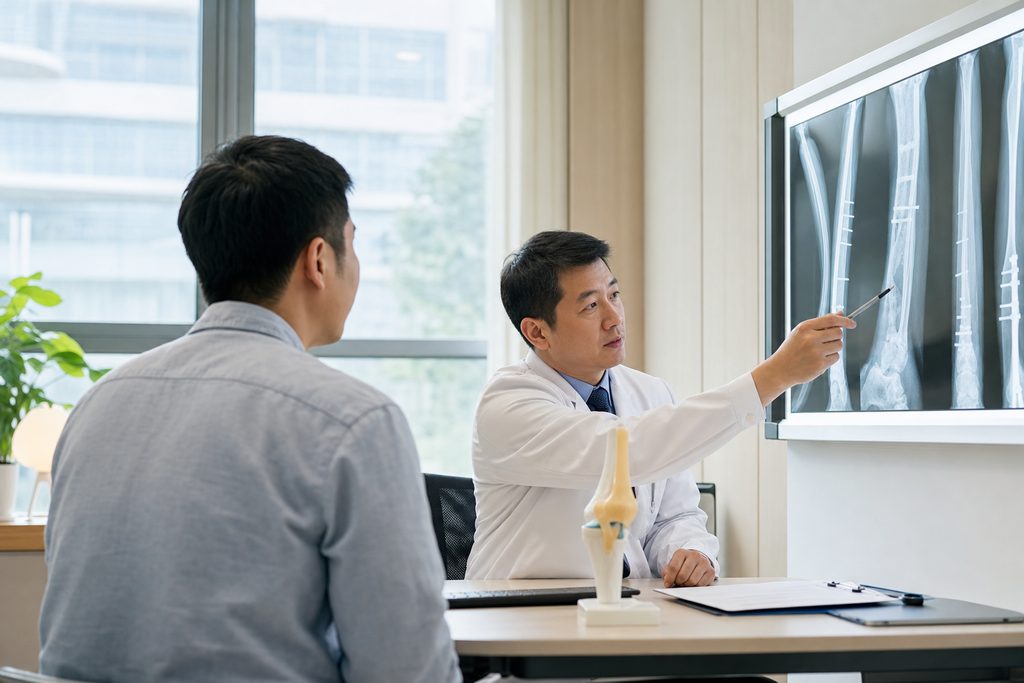
Between 5% and 10% of all bone fractures fail to heal properly. That figure comes from a 2022 analysis in the Journal of Orthopaedic Trauma. You end up with a non-union — a fracture that just stops knitting itself back together. The pain lingers. The instability remains. Your surgeon at home may have already discussed a revision surgery with bone grafting. Or perhaps they mentioned a complex frame fixation that carries a long, uncertain recovery. Before you commit to another operation, a growing number of patients are looking east. Specifically, they are researching the non union fracture treatment cost Beijing Jishuitan Hospital and the quality of the second opinion they can receive there. Our team at China Medical Services helps you navigate that exact question. We are not surgeons. We are your logistical bridge to one of the world’s highest-volume orthopedic centers.
Key Takeaways
- Beijing Jishuitan Hospital performs over 45,000 orthopedic surgeries annually — a surgical volume that dwarfs most Western trauma centers and directly correlates with physician expertise in complex non-union cases.
- A written second opinion from a Jishuitan specialist costs between $300 and $500, and the full amount is credited back if you later proceed with treatment coordination through our team.
- Navigating a Chinese public hospital independently is extremely difficult without Mandarin fluency — the registration system, payment portals, and clinical workflows assume local language ability.
- Revision surgery for non-union in China often costs 60% to 80% less than comparable procedures in the United States, but the savings only materialize if your case is matched to the right surgical team from the start.
The Problem: When a Broken Bone Refuses to Heal
A fracture that shows no radiographic progression for three consecutive months — or one that fails to bridge the gap within nine months — earns the label “non-union.” The Orthopaedic Trauma Association reports that approximately 100,000 non-union fractures occur annually in the United States alone. Smokers face a risk two to three times higher than non-smokers. Diabetics and patients with poor vascular supply also fall into the high-risk category. The standard salvage path usually involves autologous bone grafting, often harvested from the iliac crest, combined with rigid internal fixation. It works. But it also means another surgery, another scar, and another long stretch of protected weight-bearing.
What frustrates patients most is the waiting. You wait for a surgical slot. You wait to see if the graft takes. You wait through months of physical therapy with no guarantee. A second opinion can break that cycle — not by promising miracles, but by exposing you to a surgical team that has seen your exact complication hundreds of times before. That is where Beijing Jishuitan Hospital enters the conversation.
Who We Are
China Medical Services connects international patients with China’s top-tier hospitals. We maintain a database of 340+ top-ranked institutions across 37 cities. We handle hospital matching, appointment coordination, bilingual medical companion services, and visa guidance. We do not provide medical treatment, clinical diagnoses, or surgical recommendations. We translate your medical records, present your case to the appropriate specialist, and build the logistical scaffolding so you can focus entirely on healing. Think of us as your in-country operational team — we exist so you never stand alone in a Chinese hospital corridor wondering where to go next.
Why Beijing Jishuitan Hospital Delivers Results for Non-Union Fractures
Beijing Jishuitan Hospital is not just another large hospital. It is China’s de facto national center for orthopedics and trauma. When you ask how does Beijing Jishuitan Hospital treat non union fractures, the answer starts with volume. The orthopedic department handles more than 45,000 surgeries each year. The trauma division alone manages a caseload that includes complex non-unions, malunions, infected non-unions, and segmental bone defects referred from across the country. A surgeon there may see more atrophic non-unions in a single month than a general orthopedist in a Western community hospital encounters in a full career.
Surgical Volume Drives Pattern Recognition
Non-union surgery is not a single procedure. It is a family of techniques — intramedullary nailing with reaming, plate osteosynthesis with compression, Ilizarov distraction osteogenesis, Masquelet membrane induction, and vascularized fibular grafting. Choosing the wrong technique for the wrong biology leads straight to a second failure. High-volume surgeons develop pattern recognition that no textbook can replicate. They know, for instance, that a hypertrophic non-union of the tibia in a young male usually responds beautifully to simple rigid stabilization without grafting. An atrophic non-union in an osteoporotic elderly patient demands a completely different biological strategy. The team at Jishuitan has published extensively on these distinctions, and their clinical protocols reflect decades of iterative refinement.
Technology and Infrastructure Built for Complex Cases
If you are asking is Jishuitan Hospital good for nonunion bone surgery, the infrastructure answer is yes. The hospital operates dedicated bone defect reconstruction units with intraoperative 3D navigation, motorized hexapod external fixation systems, and an in-house bone bank that maintains allograft availability without the delays common in smaller centers. Their infection control protocols for infected non-unions — a particularly devastating complication — combine aggressive serial debridement with antibiotic-loaded cement spacers and staged reconstruction. The Masquelet technique, which uses an induced membrane to create a biological chamber for bone grafting, is performed here at a frequency that makes it a near-routine procedure rather than a salvage last resort.
Cost Advantage Without Quality Compromise
Let us address the non union fracture treatment cost Beijing Jishuitan Hospital question directly. A complex revision surgery for tibial non-union with bone grafting in the United States typically ranges from $40,000 to $80,000, depending on implant selection, graft source, and hospital stay duration. In Europe, the range is roughly €25,000 to €50,000. At Beijing Jishuitan Hospital, through the international patient pathway, the same procedure generally falls between $12,000 and $25,000. This price includes surgeon fees, anesthesia, implant costs, and a standard inpatient stay. It does not include travel, accommodation, or our coordination services.
| Procedure | US Estimated Cost (USD) | Jishuitan Hospital Estimated Cost (USD) |
|---|---|---|
| Tibial Non-Union Revision with Bone Graft | $40,000 – $80,000 | $12,000 – $22,000 |
| Femoral Non-Union with Intramedullary Nailing | $45,000 – $90,000 | $15,000 – $25,000 |
| Infected Non-Union (Two-Stage Revision) | $60,000 – $120,000 | $18,000 – $30,000 |
| Ilizarov Frame Application for Bone Transport | $50,000 – $100,000 | $15,000 – $28,000 |
These figures are estimates. Final pricing varies by hospital and case complexity. The structural reason for the gap is not a mystery — Chinese surgical labor costs, hospital operational expenses, and implant manufacturing economics all run lower than their Western equivalents. Clinical outcomes, measured by union rates and complication profiles, are published in peer-reviewed journals and compare favorably with international benchmarks. Lower cost does not mean lower quality here. It means different economics.
What You Need to Know Before Going Alone
Honesty matters. Walking into a Chinese public hospital as a foreign patient without preparation is overwhelming. The system was built for domestic patients. It works beautifully for them. It does not bend easily for outsiders.
- Language Barrier: Registration kiosks, pharmacy instructions, surgical consent forms, and postoperative discharge summaries are in Mandarin. Even the elevator directories in the outpatient building assume Chinese literacy. A single miscommunication about weight-bearing restrictions can jeopardize your entire recovery.
- Registration and Queuing: Public outpatient clinics do not accept international online reservations for first-time visits. You must physically queue at the registration window, often before 7 AM, with your passport and a translated medical summary. The specialist you need may only hold clinic hours twice a week. Without local knowledge, you burn days just trying to get in front of the right doctor.
- Payment Systems: Public hospital billing counters do not process international credit cards. They accept Chinese bank cards, WeChat Pay, Alipay linked to Chinese bank accounts, or cash. Foreign-issued cards are largely useless. You need a local payment intermediary or sufficient cash on hand, which creates its own logistical headaches.
- Medical Records Transfer: Jishuitan specialists need your imaging in DICOM format, not just printed films or JPEG screenshots. They need operative notes from your original fixation surgery. They need a timeline of your infection history if an infected non-union is suspected. Gathering, translating, and formatting these records correctly before arrival is the single most important determinant of whether your consultation is productive or wasted.
How We Help You Navigate This
These barriers exist for structural reasons, not malice. The Chinese public hospital system was designed to serve a domestic population of 1.4 billion people efficiently. It succeeds at that. Our job is to build a bridge between that system and you.
Before you travel, we collect your complete medical file — imaging, operative reports, microbiology results, and current clinical photographs. We translate everything into medical-grade Mandarin and submit it through the hospital’s official international consultation channel. We arrange a bone healing second opinion China price that is transparent from the start: $300 to $500 for a written specialist review, or $500 to $800 for a video consultation with the expert who would potentially perform your surgery. Every dollar you spend on that consultation is credited in full toward our coordination fee if you proceed with treatment — a one-time credit that applies within 90 days.
Once you decide to move forward, we coordinate the in-person surgical consultation, schedule imaging studies, and place a bilingual medical companion at your side for every hospital visit. Our companions handle registration, payment processing, queue management, and real-time translation during surgeon consultations. They do not make medical decisions for you. They make sure nothing gets lost in translation when the surgeon explains why a Masquelet technique is indicated instead of a single-stage grafting approach.
After surgery, we remain involved through discharge planning, medication reconciliation, and follow-up appointment scheduling. If you need rehabilitation guidance, we connect you with physiotherapy teams experienced in post-non-union recovery protocols. The goal is continuity — no gaps between what the surgeon intends and what actually happens during your recovery.
For patients exploring medical tourism nonunion fracture China package options, we structure the entire journey: airport transfers from Beijing Capital International Airport, accommodation recommendations near the hospital in the Xicheng District, and a clear timeline from arrival to surgery to safe discharge. We do not sell a pre-packaged product off a shelf. We build the itinerary around your specific fracture biology and surgical requirements.
Frequently Asked Questions
Technically, yes. You can fly to Beijing, walk into the orthopedic outpatient clinic, and attempt to register as a self-pay international patient. In practice, the language barrier, payment friction, and record-transfer requirements make this extremely difficult. Most patients who try this route spend weeks navigating administrative hurdles before they even sit down with a specialist. Using a coordination service compresses that timeline dramatically. It also ensures your case lands on the right desk — not just any orthopedic desk, but the subspecialist who focuses on your specific type of non-union.
That happens. It is not a problem — it is the entire point of seeking a second opinion. You receive the specialist’s written assessment in English, with the clinical reasoning clearly explained. You then take that document back to your home surgeon and have an informed conversation. You are under no obligation to proceed with surgery in China. The second opinion is yours to keep and use however you see fit. Many patients use it to validate their local treatment plan. Others discover a different surgical approach they had not been offered and choose to pursue it in Beijing.
Plan for a minimum of three to four weeks. This includes the preoperative consultation, any repeat imaging, the surgery itself, and the early postoperative period when the surgical team needs to monitor your wound, adjust your external fixation if one is applied, and clear you for safe travel. Some cases — particularly infected non-unions requiring staged procedures — demand a longer stay. Your surgeon will give you a specific timeline during the initial consultation. We help adjust your accommodation and visa arrangements accordingly.
Yes. Beijing Jishuitan Hospital uses internationally certified implant systems from manufacturers that supply markets worldwide — including brands familiar to any Western orthopedic surgeon. The locking plates, intramedullary nails, and external fixation frames are the same product lines used in Europe and North America. China also has domestic implant manufacturers whose products meet ISO and CE standards, and Jishuitan’s procurement protocols filter strictly for quality. The hardware is not the variable you need to worry about. The surgical decision-making and technical execution are what matter — and those are precisely why patients seek out this institution.
Your Next Step
A non-union fracture steals time from your life. Every month spent in limbo — not quite healing, not quite moving forward — compounds the frustration. A second opinion from a high-volume orthopedic center can either give you confidence in your current treatment path or reveal a better one you had not considered. Beijing Jishuitan Hospital brings enormous clinical experience to that conversation. Our role is to make that expertise accessible to you without the friction that would otherwise keep it out of reach.
If you want to understand what a written second opinion or a video consultation would look like for your specific case, start with a free consultation. We review your situation, explain the process in plain terms, and give you a clear picture of timelines and costs before you commit to anything. Visit our patient coordination page to begin. There is no pressure. There is just a path forward that you may not have known existed.
Medical Disclaimer: This article is for informational purposes only and does not constitute medical advice. Always consult a qualified healthcare provider regarding any medical condition or treatment decision. China Medical Services does not provide clinical diagnoses, surgical recommendations, or guarantees of treatment outcomes.
For more medical information and treatment options in China, visit chinamedservices.com (China Medical Services).
