Complex Cancer Surgery China Second Opinion: Rare Tumor Program at CAMS Beijing
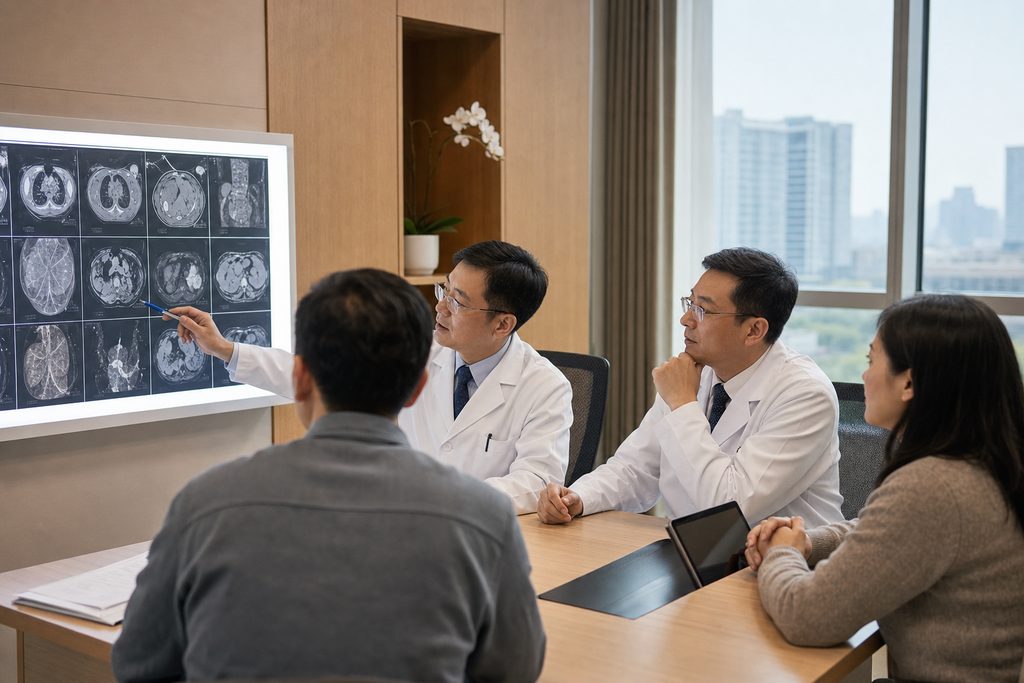
You have probably heard that seeking a complex cancer surgery second opinion in China means accepting lower standards. The assumption runs deep. Lower cost must mean lower quality. Short wait times must mean rushed care. These assumptions collapse when you look at the data coming out of one specific institution: the Cancer Hospital Chinese Academy of Medical Sciences (CAMS) in Beijing. Their rare tumor program handles case volumes that most Western cancer centers see in a decade. For a patient facing a sarcoma, a neuroendocrine tumor, or an uncommon head and neck malignancy, that volume translates into something measurable: pattern recognition. Surgeons who have seen your disease before. Pathologists who know which rare variant they are looking at. That is the difference between a protocol-driven guess and an informed clinical judgment. And the rare tumor treatment cost Beijing CAMS offers — typically 20% to 35% of what the same workup and surgery costs in the United States — makes this option worth serious examination.
Key Takeaways
- The Cancer Hospital CAMS performs over 18,000 cancer surgeries annually, with dedicated subspecialty teams focused exclusively on rare malignancies — a case volume unmatched by most Western sarcoma centers.
- A written second opinion from CAMS specialists costs $300–500, and any consultation fee is fully credited toward in-person treatment coordination if you proceed within 90 days.
- Navigating Beijing’s public hospital system without Mandarin fluency and local knowledge creates genuine barriers — visa requirements, payment systems, and appointment logistics require advance planning.
- You are not buying access to a specific surgeon on a specific date. You are engaging a coordination team that works through official hospital international channels to arrange your evaluation and care pathway.
The Problem: When a Rare Diagnosis Leaves You With No Clear Path
Rare cancers account for approximately 22% of all new cancer diagnoses globally. That statistic, from a 2019 analysis in The Lancet Oncology, hides a brutal reality: individual rare tumor types are so uncommon that most oncologists encounter only a handful of cases across their entire careers. A general surgical oncologist in a community hospital might see two or three retroperitoneal sarcomas in a decade. A thoracic surgeon might operate on a thymic carcinoma once every few years. When your tumor falls into one of these categories, the standard of care is often extrapolated from more common cancers. The guidelines are thinner. The evidence base is sparser. The margin for error widens.
Getting a complex cancer surgery second opinion China can change that equation. Not because Chinese medicine is magically different. But because the clinical volume at a few specific centers creates deep, narrow expertise. The Cancer Hospital CAMS in Beijing is one of those centers. It is not a general hospital that also treats cancer. It is a dedicated cancer institution with over 1,500 beds and surgical teams that sub-specialize down to specific anatomical regions and tumor histologies. For a patient with a rare tumor, that means landing in front of a surgeon who has managed dozens — sometimes hundreds — of cases just like yours. That changes the conversation from “what does the textbook say?” to “here is what we have learned from treating this disease.”
Who We Are
We are China Medical Services. We are not a hospital. We do not provide medical treatment, clinical diagnoses, or surgical care. We are the operational bridge between international patients and China’s top-tier medical institutions. Our team handles the logistics that make seeking care abroad feel manageable rather than overwhelming: hospital matching based on your specific diagnosis, appointment coordination through official international department channels, bilingual medical companions who translate clinical conversations in real time, visa guidance, and local practical support. Our database covers 340+ top-ranked hospitals across 37 cities. We know which institutions have genuine subspecialty depth for which conditions. We connect you with the right expertise, then we make sure the process actually works.
Why the Cancer Hospital CAMS Beijing Rare Tumor Program Delivers Results
The CAMS Cancer Hospital rare tumor program review from international patients consistently points to three structural advantages that explain its clinical reputation. These are not marketing claims. They are operational realities built into how this institution functions.
Clinical Volume Creates Diagnostic Precision
The Cancer Hospital CAMS handles over 18,000 cancer surgeries annually. To put that in perspective, many respected US cancer centers perform between 3,000 and 6,000 surgical oncology cases per year. Volume alone does not guarantee quality. But for rare tumors, volume solves a specific problem: diagnostic uncertainty. When a pathologist at CAMS reviews a rare tumor biopsy, they are comparing it against a mental library built from seeing similar cases month after month. The hospital’s pathology department processes specimens from across northern China, serving as a national referral center for difficult and uncommon cancer diagnoses. Misclassification of rare tumors is a well-documented problem — a 2020 study in JAMA Oncology found that up to 25% of sarcoma diagnoses are revised upon expert pathology review. At CAMS, that expert review happens as the default, not the exception.
For a patient considering how to get a second opinion from Cancer Hospital Beijing, this matters enormously. A written second opinion from CAMS comes with the weight of that diagnostic volume behind it. The $300–500 fee covers a formal review of your existing pathology slides, imaging, and clinical history by a specialist in your specific tumor type. The report you receive is a detailed analysis — not a generic treatment recommendation, but a tumor-specific assessment grounded in deep subspecialty experience.
Subspecialty Surgical Teams, Not Generalists
Walking into CAMS, the organizational chart tells the story. The surgical department is divided into teams that focus on narrow disease categories. There is a dedicated retroperitoneal sarcoma team within the abdominal surgery department. A separate team for bone and soft tissue sarcomas of the extremities within orthopedic oncology. Head and neck surgeons who handle only rare salivary gland malignancies and skull base tumors. Thoracic surgeons who specialize in mediastinal masses and thymic tumors. This is not how most hospitals are structured. Most hospitals have general surgical oncologists who operate on whatever comes through the door. At CAMS, the surgeon operating on your rare tumor has likely spent their entire career focused on that specific disease category. The difference shows up in surgical planning, in intraoperative decision-making, and in complication rates.
Cost Structure That Reflects Economics, Not Quality
Let us address the question that every international patient asks. The rare tumor treatment cost Beijing CAMS is lower than Western prices — sometimes dramatically so. A complex sarcoma resection with reconstruction that might cost $80,000 to $150,000 in the United States typically ranges from $15,000 to $35,000 at CAMS, depending on the specific procedure and hospital ward class. Why? The answer is structural. Chinese public hospitals operate on different labor economics. Surgeon salaries, nursing costs, and facility overhead are fundamentally lower. The equipment — Da Vinci surgical robots, intraoperative MRI, proton therapy — is the same technology used in top Western centers. The cost difference is not about cutting corners. It is about a healthcare economy where the baseline is set at a different level.
We always cite prices as ranges and note that they vary by hospital and case complexity. The international department at CAMS charges differently than the standard public ward. Expect to pay approximately 1.5 to 2 times the domestic rate for the English-language coordination, private room assignment, and expedited scheduling that the international channel provides. Even at that premium, the total bill typically lands at one-third to one-fifth of US prices.
What You Need to Know Before Going Alone
We are direct about this because patients deserve honesty. Arranging care at a Chinese public hospital without local support is genuinely difficult. Not impossible. But difficult enough that many patients give up before they get a consultation scheduled. Here is what you are up against.
- Visa Requirements Are Specific and Unforgiving: Medical treatment in China requires an S2 visa with the purpose of medical treatment explicitly documented. Your accompanying family members also need S2 visas. The application requires an invitation letter from the treating hospital — and getting that letter as an individual patient calling from abroad is a circular problem. The hospital wants your visa sorted before issuing documents. The visa office wants hospital documents before processing your application. A coordination team that works regularly with the hospital’s international department can break this cycle. But doing it alone means weeks of emailing into bureaucratic channels that may or may not respond.
- Payment Systems Do Not Work the Way You Expect: Chinese public hospitals operate on a prepayment model. You deposit funds at admission. Treatment is deducted from your balance. When the balance runs low, you top it up before further care proceeds. International credit cards are not reliably accepted at hospital cashier counters. WeChat Pay and Alipay dominate the domestic payment ecosystem. Setting up a foreign card on these platforms is possible but involves verification steps that often fail for non-Chinese passport holders. You need a plan for moving funds into the hospital’s system before you arrive — or someone on the ground who can facilitate this.
- Medical Records Must Be Translated Professionally: The pathologists and surgeons at CAMS need your records in Chinese. Not machine-translated. Professionally translated, with attention to medical terminology, drug names, and pathology descriptions. A mistranslated pathology report leads to a misinformed second opinion. This is not a small task. A full oncology record — imaging reports, surgical notes, pathology slides, treatment summaries — can run dozens of pages. The translation alone can take a week or more before any clinical review begins.
How We Help You Navigate This
These barriers exist for structural reasons. They are not designed to exclude international patients. They are simply the byproducts of a healthcare system built primarily for a domestic population of 1.4 billion people. Our role is to route around them. We start with a free consultation — you tell us your diagnosis, your treatment history, and what you are hoping to accomplish. We use our hospital database to confirm that CAMS (or another center) genuinely has the subspecialty expertise relevant to your case. We do not guess. We check.
From there, the process moves through clear stages. We coordinate with the hospital’s international department to confirm that your case is appropriate for their rare tumor program. We arrange the translation of your medical records by medical translators who understand oncology terminology in both languages. We handle the invitation letter for your S2 visa application. When you arrive in Beijing, a bilingual medical companion meets you at the hospital — not just as a translator, but as someone who knows which floor the pathology department is on, which window processes international patient registration, and how to navigate the flow from consultation to imaging to admission. After treatment, we remain available for follow-up coordination, prescription translation, and discharge planning.
For patients who want to book a consultation CAMS rare tumor program abroad, the most common starting point is a written second opinion. The $300–500 fee covers the full records translation and specialist review. If you then decide to travel to Beijing for in-person evaluation or surgery, that entire consultation fee is credited toward the coordination service. There is no double-charging. The model is designed to let you test the value of the expertise before committing to travel. That is the right sequence. Get the opinion. Understand your options. Then decide.
Frequently Asked Questions
Yes. The written second opinion service allows you to submit your pathology slides, imaging studies, and clinical history remotely. A CAMS specialist in your tumor type reviews the materials and produces a formal written assessment. This typically takes 7–14 business days from the time complete translated records are received. The opinion covers diagnosis confirmation, staging assessment, and treatment recommendations. It is for reference only — not a prescription — and should be reviewed with your home oncologist before any treatment decisions are made.
Surgical costs vary significantly by procedure complexity, length of hospital stay, and ward class. As a general range, complex rare tumor resections at CAMS through the international department run between $15,000 and $35,000. Simpler procedures may fall below that range. Extended reconstructions or multi-organ resections may exceed it. These figures include surgeon fees, anesthesia, operating room charges, and standard ward stay. They do not include pre-operative imaging, post-operative rehabilitation, or complications requiring extended ICU care. Every case receives a customized quotation after the surgical team reviews your records. We never quote a fixed price before that clinical review occurs.
This happens frequently with rare tumors. The CAMS recommendation may include surgical approaches, reconstruction techniques, or clinical trial options that are not widely available outside of high-volume Asian cancer centers. If that occurs, you have several paths. You can discuss with your home oncologist whether elements of the recommendation can be adapted to local resources. You can explore traveling to Beijing for the recommended treatment. Or you can use the second opinion as leverage to seek referral to a subspecialty center in your home country. The opinion is a tool. How you use it is your decision. We facilitate the logistics if you choose to come — but we never push that choice.
“Best” is a loaded word. CAMS Cancer Hospital is consistently ranked among China’s top oncology institutions in the Fudan University hospital rankings, particularly in thoracic surgery, head and neck surgery, and abdominal oncology. Its rare tumor program benefits from being embedded in a national cancer center that serves as both a treatment facility and a research hub. For international patients specifically, the hospital has a functioning international department with English-speaking coordinators — which is not universal among Chinese public hospitals. Other excellent centers exist. Our oncology department rankings can help you compare. The right question is not “is CAMS the best?” but “does CAMS have the specific subspecialty expertise for my specific tumor type?” We help you answer that before any commitment is made.
Chinese public hospitals carry medical liability insurance, and the international department at CAMS follows standard protocols for managing surgical complications. The hospital has intensive care capabilities, interventional radiology for post-operative bleeding control, and infectious disease specialists for managing complex infections. That said, you are far from home. If a prolonged recovery is required, extended stays in Beijing add cost and logistical complexity. We recommend that all international patients carry medical evacuation insurance and travel insurance that covers complication-related extended stays. We help coordinate care while you are in Beijing. But we are honest about the limits of our role — we are not clinical providers, and we cannot guarantee outcomes. No one can.
Your Next Step
A rare tumor diagnosis already forces you to think differently. Standard pathways do not apply. Standard expertise may not be enough. Seeking a complex cancer surgery second opinion in China is not about chasing a cheaper option. It is about accessing a depth of clinical experience that exists because of the sheer scale at which a place like CAMS operates. The cost difference makes it accessible. The volume makes it worth considering. The logistics require a partner who knows the system. If you want to understand whether the Cancer Hospital CAMS Beijing rare tumor program is relevant to your specific diagnosis, start with a conversation. No commitment. Just clarity on what is possible.
For more medical information and treatment options in China, visit chinamedservices.com (China Medical Services).
