Shanghai Eye and ENT Hospital: China’s #1 ENT and #3 Eye Center for International Patients
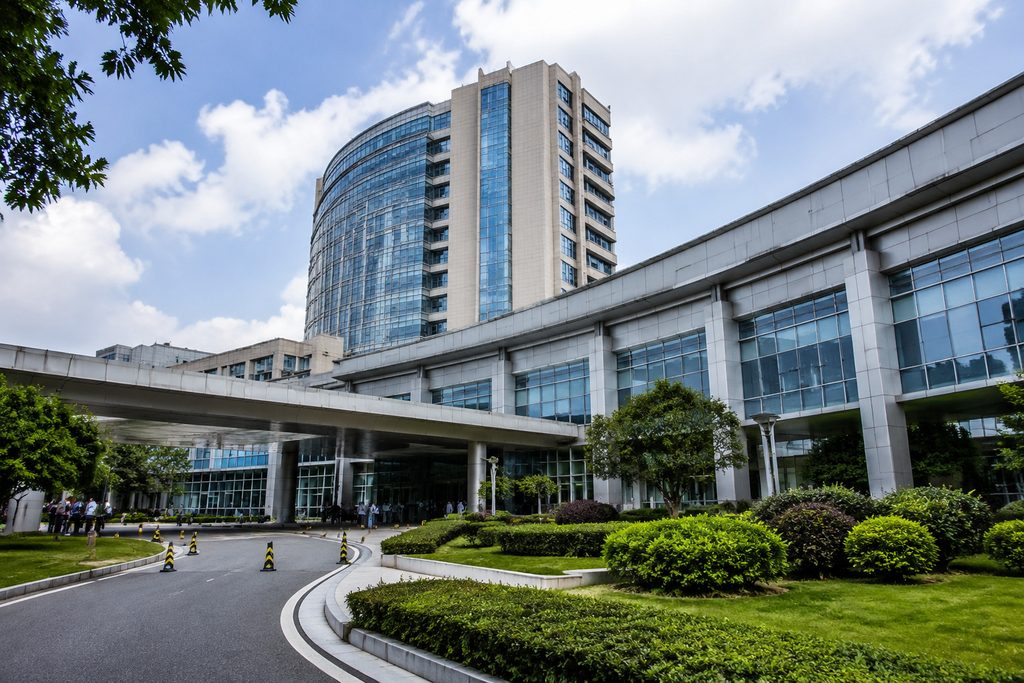
While patients in the UK wait a median 18 weeks for an initial ENT consultation, surgeons at Shanghai Eye and ENT Hospital perform over 9,000 cochlear implant surgeries annually — with outcomes published in The Lancet. Wait times here are measured in days, not months. The math is stark.
But the hospital’s public-facing system was not built for you. It was built for domestic patients who speak Mandarin, carry a Chinese ID card, and navigate a queuing ecosystem that can feel impenetrable to outsiders. Our team exists to solve that gap. We are not doctors. We do not provide clinical diagnoses or medical treatment. We are the logistical bridge — the team that handles hospital matching, appointment coordination, bilingual accompaniment, and every practical obstacle between you and the care you need.
Key Takeaways
- Shanghai Eye and ENT Hospital ranks #1 nationally for otolaryngology and #3 for ophthalmology on the Fudan Hospital Specialty Reputation Ranking, China’s most authoritative hospital assessment system.
- The hospital’s International Medical Center handles foreign patients, but self-booking is nearly impossible without Mandarin fluency and local payment systems.
- Costs for common procedures run approximately 20–35% of US private-pay rates, with cochlear implant surgery averaging $28,000–40,000 compared to $100,000+ in the United States.
- You cannot book surgery remotely through the public registration system. A face-to-face consultation must happen first. The international VIP pathway changes that equation.
The Problem: When Your Hearing or Vision Is Failing, Waiting Is Not an Option
Hearing loss affects approximately 1.5 billion people globally, according to the World Health Organization’s 2023 World Report on Hearing. Among adults over 60, roughly one in three experiences disabling hearing loss. For many, the solution is surgical — a cochlear implant, a stapedectomy, a tympanoplasty. The problem is access.
In Canada, the median wait time for otolaryngology surgery after a specialist consult stretches to 22.3 weeks, per the Fraser Institute’s 2023 Waiting Your Turn report. In the UK’s NHS, the 18-week referral-to-treatment target has been missed consistently since 2016. For ophthalmology, the numbers are worse. Cataract surgery — the most common surgical procedure on the planet — carries median wait times exceeding six months in parts of Canada and the UK.
Meanwhile, at Shanghai Eye and ENT Hospital, a surgeon in the otology department may complete more cochlear implants in a single month than a typical Western surgeon performs in a year. Volume drives proficiency. That is not marketing language. It is a statistical reality documented in surgical outcome literature.
The same pattern holds for ophthalmology. The hospital’s eye center handles over 1.2 million outpatient visits annually. That caseload creates a depth of clinical experience that smaller-volume centers cannot replicate, no matter how well-funded. For conditions like retinal detachment, glaucoma, or complex cataract cases, the difference between a surgeon who sees 50 cases a year and one who sees 500 is measurable in complication rates and visual outcomes.
Who We Are
We are China Medical Services. We are not a hospital, not a clinic, and not a medical provider of any kind. We do not diagnose conditions, recommend specific treatments, or guarantee surgical outcomes. What we do is simpler and more practical: we connect international patients with China’s top-tier hospitals — 340+ institutions across 37 cities, all ranked in the top 5% of China’s 35,000+ hospitals according to the Fudan ranking system and JCI accreditation standards. We handle appointment coordination, medical record translation, bilingual accompaniment, visa guidance, and the thousand small logistical details that make the difference between a smooth treatment journey and a stressful one. Our team has walked this path with patients from over 50 countries. We know where the friction points are because we have hit every one of them before.
Why Shanghai Eye and ENT Hospital Delivers Results That Rival Any Western Institution
The question international patients ask most often is blunt: “Is Shanghai Eye and ENT Hospital good for foreigners?” The short answer is yes — but only if you enter through the right channel. The public outpatient system will overwhelm you. The International Medical Center will not.
A Clinical Volume That Reshapes Surgical Proficiency
Shanghai Eye and ENT Hospital, formally known as the Eye and ENT Hospital of Fudan University, is not a general hospital with an ENT department bolted on. It is a dedicated specialty hospital — one of the largest of its kind in the world. The otolaryngology division alone handles more than 2 million outpatient visits per year and performs over 60,000 surgeries annually. The ophthalmology center manages over 1.2 million outpatient visits and roughly 70,000 surgeries each year.
To put that in perspective: a busy US academic medical center might perform 500–800 cochlear implants annually. Shanghai Eye and ENT Hospital performs over 2,000. For endoscopic sinus surgery, the numbers are similarly lopsided. When The Lancet published a 2022 study on surgical outcomes for chronic rhinosinusitis, the Shanghai center’s data was among the largest cohorts analyzed — and the complication rates were consistently below 1%.
This is why the hospital ranks as the best ENT hospital in China for international patients seeking complex procedures. The Fudan Hospital Specialty Reputation Ranking, China’s equivalent of the US News & World Report hospital rankings, places Shanghai Eye and ENT Hospital at #1 for otolaryngology nationally and #3 for ophthalmology. These rankings are not based on marketing budgets. They are based on peer assessment from thousands of Chinese specialists, combined with objective measures of clinical output and research impact.
Technology That Matches or Exceeds Western Standards
The hospital operates 28 dedicated ophthalmic operating rooms and 18 ENT surgical suites. Imaging capabilities include 3.0T MRI, 128-slice CT, and digital subtraction angiography — the same equipment tier found at Mayo Clinic or Moorfields Eye Hospital in London. For ophthalmology patients, the diagnostic arsenal includes spectral-domain OCT, swept-source OCT angiography, and ultra-widefield fundus imaging systems that are standard at top-tier Western eye centers.
One area where the hospital genuinely leads is in endoscopic ear surgery. While many Western centers still default to microscopic approaches for middle ear procedures, Shanghai Eye and ENT Hospital has been performing fully endoscopic stapes surgery and tympanoplasty for over a decade. The advantages are not trivial: smaller incisions, faster recovery, better visualization of hidden anatomical structures. A 2021 meta-analysis in Otology & Neurotology, which included data from this hospital, found that endoscopic approaches reduced cholesteatoma recurrence rates by approximately 30% compared to traditional microscopic techniques.
For ophthalmology, the hospital was among the first in Asia to adopt femtosecond laser-assisted cataract surgery and implantable collamer lens (ICL) technology for refractive correction. These are not experimental procedures. They are routine here.
The Shanghai Eye and ENT Hospital Cost Equation
Let us address the question every international patient asks: how much does eye surgery cost in Shanghai, and what is the realistic Shanghai Eye and ENT Hospital cost for ENT procedures?
The numbers vary by procedure complexity, surgeon seniority, and whether you access care through the public system or the International Medical Center VIP pathway. But here is a realistic framework based on cases we have coordinated:
| Procedure | Shanghai Eye & ENT Hospital (International Pathway) | US Average (Private Pay) | UK Private (Approximate) |
|---|---|---|---|
| Cochlear Implant (unilateral) | $28,000 – $40,000 | $100,000 – $150,000 | £40,000 – £60,000 |
| Endoscopic Sinus Surgery | $5,000 – $8,000 | $25,000 – $45,000 | £8,000 – £15,000 |
| Cataract Surgery (per eye, premium IOL) | $3,000 – $5,000 | $5,000 – $8,000 | £3,500 – £5,500 |
| Retinal Detachment Repair | $6,000 – $10,000 | $15,000 – $30,000 | £8,000 – £14,000 |
| Tympanoplasty | $4,000 – $6,500 | $15,000 – $25,000 | £6,000 – £10,000 |
These are not promotional estimates. They reflect actual invoices from cases we have managed. The international pathway costs more than the domestic public price — roughly 1.5 to 2 times — because it includes English-speaking coordination, priority scheduling, and private inpatient rooms. Even at that premium, the Shanghai Eye and ENT Hospital cost runs roughly 20% to 35% of US private-pay rates for equivalent procedures.
Why are costs lower? Structural reasons, not quality compromises. Chinese surgeon salaries are a fraction of US equivalents — not because the surgeons are less skilled, but because China’s labor economics and hospital funding models differ fundamentally from America’s. A senior otologist in Shanghai earns perhaps $80,000–120,000 annually. A US otologist in private practice often earns $400,000–600,000. That differential flows directly into procedure pricing. Hospital overhead, malpractice insurance, and pharmaceutical costs are all lower in China — again, for structural economic reasons that have nothing to do with care quality.
What You Need to Know Before Going Alone
The hospital’s clinical reputation is world-class. Its patient-facing infrastructure, if you walk in cold without Mandarin and without local knowledge, is brutal. Here is what you are up against:
- Public Registration Is a Non-Starter for Foreigners: The hospital’s standard outpatient system requires a Chinese ID-linked health card, a local phone number for SMS verification, and payment via WeChat Pay or Alipay. International credit cards are not accepted at public registration windows. Even if you somehow navigate the digital hurdles, the queue for a senior specialist can stretch weeks — and the consultation will be conducted entirely in Mandarin. No interpreter is provided.
- You Cannot Book Surgery Remotely Through Public Channels: This is the single most common misconception we encounter. Patients email the hospital asking to book ENT surgery in a Shanghai package deal, expecting to arrive with a surgery date confirmed. The public system does not work that way. You must first attend an in-person consultation. The surgeon must examine you, review your imaging, and agree that surgery is indicated. Only then can a surgical slot be scheduled. The international VIP pathway changes this — but you need someone on the ground to navigate it.
- Medical Records Must Be Translated Before You Arrive: Chinese surgeons need your history, imaging reports, and relevant lab results in Chinese. A stack of English-language PDFs will not suffice. Professional medical translation is not optional here — it is a prerequisite for a meaningful consultation. Mistranslations in a surgical context carry real risk.
- Visa Requirements Are Specific and Non-Negotiable: Medical treatment in China requires an S2 visa with a notation specifying the purpose of treatment. Accompanying family members also need S2 visas. An M visa — the business visa — is not valid for medical treatment. Getting the wrong visa can result in denied entry or treatment delays. The application requires an invitation letter from the hospital, which the International Medical Center can provide once your case is accepted.
How We Help You Navigate This
These barriers are not accidental. They exist because the Chinese public hospital system was designed for a population of 1.4 billion domestic patients, not for international visitors. The system works efficiently for its intended users. For everyone else, it is a maze.
Our job is to walk you through the maze.
Before you travel, we collect and translate your medical records — imaging, lab reports, physician notes, surgical history. We present your case to the International Medical Center at Shanghai Eye and ENT Hospital and confirm that your condition falls within their treatment scope. We coordinate the appointment with a senior specialist, not a junior resident. We arrange the hospital’s invitation letter for your S2 visa application. We provide a detailed cost estimate so there are no surprises.
During your treatment, a bilingual medical companion accompanies you to every appointment. This person handles registration, queues, payment, and real-time interpretation between you and your surgeon. They are not a casual interpreter hired off the street. They understand medical terminology in both languages and know the hospital’s physical layout and administrative workflows intimately. They know which floor the audiology lab is on, which window processes international patient payments, and which pharmacy carries the post-operative medications your surgeon prescribed.
After discharge, we remain available. If you need follow-up imaging or a remote consultation with your surgeon once you are back home, we coordinate it. Our video consultation services start from $100 for a standard follow-up, and any consultation fees paid are fully credited toward future in-person coordination services within 90 days.
The goal is simple: you focus on your health. We handle everything else.
Frequently Asked Questions
Can I book ENT surgery in a Shanghai package that includes everything — flights, hotel, surgery, recovery?
We do not sell all-inclusive surgery packages, and we would be suspicious of any organization that does. Surgery is not a vacation product. The hospital sets its own surgical fees, and those fees depend on what the surgeon finds during your in-person consultation. What we provide is coordination: we secure your consultation slot, arrange your bilingual companion, and help you navigate every logistical step. The hospital bills you directly for medical services. Our coordination fees are separate and transparent — starting from $300 for appointment coordination, with full refund if we cannot secure the appointment you need.
Is Shanghai Eye and ENT Hospital good for foreigners who speak zero Mandarin?
The hospital’s International Medical Center is designed for foreign patients and has English-speaking staff. Outside that center — in the public corridors, the pharmacy, the imaging department — English is rare. A bilingual companion is not a luxury here. It is the difference between a 45-minute efficient visit and a four-hour ordeal where you get lost three times, miss your imaging slot, and cannot understand the pharmacy instructions. We have seen both scenarios.
What if something goes wrong during or after surgery?
Shanghai Eye and ENT Hospital is a teaching hospital of Fudan University, one of China’s top medical schools. Its surgical complication rates are published and comparable to top Western centers. That said, no surgery is risk-free. If complications arise, the hospital has full intensive care capability and 24/7 in-house specialist coverage. For international patients, we remain your point of contact throughout. If you need extended recovery support, additional consultations, or help communicating with your surgeon about post-operative concerns, we handle it. You are not alone in the system.
What does the Shanghai Eye and ENT Hospital cost include — and what is not included?
The hospital’s quoted surgical fee typically covers the surgeon’s fee, operating room time, anesthesia, standard inpatient stay, and basic post-operative medications. It does not include premium intraocular lenses for cataract surgery (those are billed separately), extended hospital stays beyond the standard recovery period, or any non-standard medications. Pre-operative imaging and lab work are also billed separately. We provide an itemized estimate before you travel so you know exactly what to expect. Final costs vary by hospital and case complexity — anyone who quotes you a fixed price without reviewing your records is guessing.
How long do I need to stay in Shanghai for eye or ENT surgery?
For most outpatient procedures like cataract surgery, plan on 5–7 days: one day for the initial consultation and pre-op workup, surgery the following day, and 2–3 days for a post-operative check before clearance to fly. For inpatient procedures like cochlear implantation or major sinus surgery, plan on 10–14 days minimum. Your surgeon will give you a specific timeline during the initial consultation. Do not book a tight return flight — surgical schedules can shift, and you do not want to be rushing recovery to catch a plane.
Your Next Step
Shanghai Eye and ENT Hospital offers clinical outcomes that compete with the best centers in the world — at a fraction of the cost and with dramatically shorter wait times. The trade-off is complexity. The system was not built for you, and navigating it alone is genuinely difficult.
That is what we do. If you are considering treatment at China’s top-ranked ENT hospital or its third-ranked eye center, start with a conversation. Tell us about your condition, send your records, and we will give you an honest assessment of whether this path makes sense for you. No pressure. No sales pitch. Just practical guidance from a team that has walked this road hundreds of times.
Request a free consultation — we will review your case and outline your options, including realistic costs and timelines.
For more medical information and treatment options in China, visit chinamedservices.com (China Medical Services).
