Middle East Medical Tourism China: Halal Food, Prayer Facilities & Arabic Support
Key Takeaways
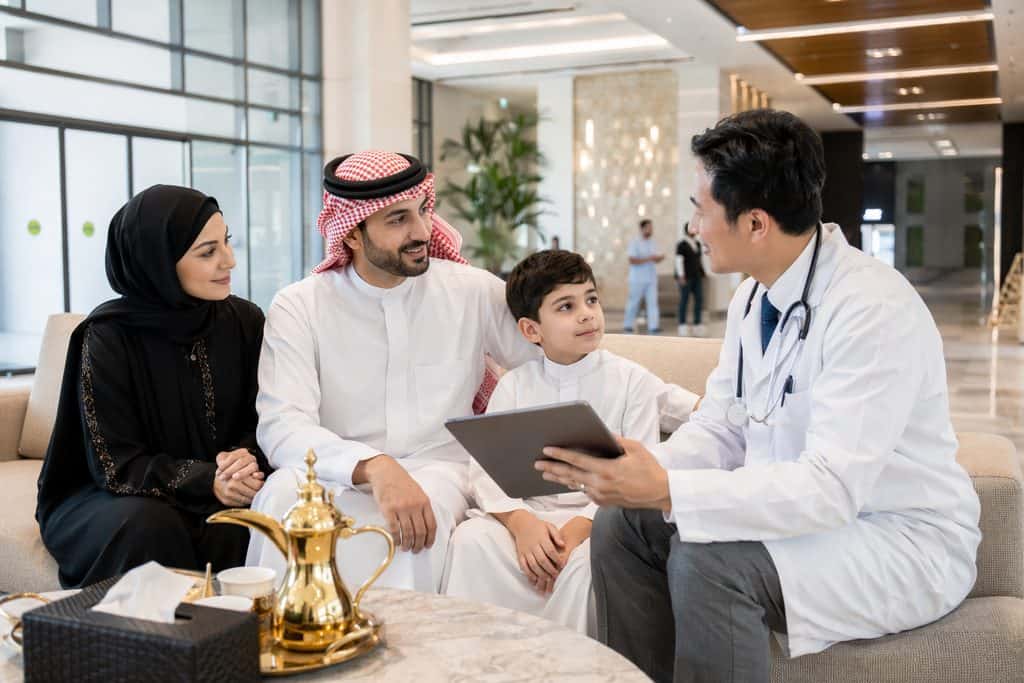
- China’s top-tier hospitals now actively accommodate Middle Eastern patients, with dedicated international wings providing halal-certified meals, private prayer spaces, and Arabic-speaking coordinators in major cities like Beijing, Shanghai, and Guangzhou.
- The cost advantage remains dramatic—complex cardiac surgery in a Chinese top-5 hospital runs $12,000–20,000, compared to $120,000+ in the United States, with no measurable drop in clinical outcomes at Fuwai Hospital, which performs over 14,000 cardiac surgeries annually.
- Language barriers and cultural friction are real outside international departments. A standard public ward with no Arabic support can leave you isolated during pre-op instructions, consent forms, and post-operative care—this is where bilingual coordination becomes non-negotiable.
- Not every Chinese hospital is equipped for Muslim patients. Knowing which specific facilities have halal kitchens, dedicated ablution spaces, and staff trained in cultural sensitivity determines whether your treatment experience is seamless or stressful.
The Problem: Flying Thousands of Miles Into a Cultural Unknown
You have been quoted $140,000 for a hip replacement in Dubai. A clinic in Germany wants €35,000 and a six-month wait. Your cousin in Doha waited eleven months for a spinal fusion that should have taken three weeks to schedule. The math stops making sense. And then someone mentions China.
But the first question is not about surgical volume or board certifications. It is quieter. Will I find food I can eat? Is there a clean, quiet place to pray five times a day? Will anyone speak Arabic when I need to describe my pain, my fear, my medical history? These questions are not secondary. For a Muslim patient traveling from Riyadh, Muscat, or Kuwait City, they are the baseline. Without answers, the cost savings mean nothing.
Approximately 1 in 5 international patients now arriving in China for treatment comes from the GCC and broader Middle East. That number has climbed sharply since 2018. Hospitals noticed. Some adapted. Others did not.
Who We Are
Fuwai Hospital in Beijing performs more than 14,000 cardiac surgeries per year—the highest volume of any heart center globally. A complex congenital heart repair that a surgeon in London might perform twelve times annually is routine here. Volume correlates with outcomes. The data is consistent across specialties. A top Chinese orthopedic surgeon replaces 200–500 joints per year. The average US orthopedic surgeon replaces roughly 65. When complications arise intraoperatively, the surgeon who has seen the rare presentation fifty times responds differently than the one seeing it for the third time. This is not theory. It is pattern recognition built on repetition.
For oncology, hospitals like Fudan University Shanghai Cancer Center rank among China’s top 10 for tumor treatment and run clinical programs that match or exceed Western benchmarks for five-year survival in gastric, liver, and esophageal cancers—diseases that disproportionately affect Middle Eastern populations.
Cost Structures That Do Not Sacrifice Quality
The halal hospital China price question comes up in every initial consultation we have with patients from Jeddah or Abu Dhabi. The answer is straightforward: you pay 70–90% less than US rates for equivalent or higher-volume care. A cardiac bypass at a top-tier Chinese public hospital runs $12,000–20,000. The same procedure in the US averages $120,000. A total knee replacement: $8,000–15,000 in China versus $35,000–50,000 in America. These numbers vary by hospital and case complexity, but the structural gap holds.
Why the difference? Labor costs in China are lower. Hospital administrative overhead is leaner. Malpractice insurance does not carry the same crushing premiums. Pharmaceutical and implant pricing is domestically negotiated. None of this implies lower clinical standards. The top 5% of China’s 35,000+ hospitals—ranked by the Fudan University hospital rankings and accredited by JCI—operate at international benchmarks. The cost advantage is structural, not qualitative.
Reproductive Medicine and the IVF Question
Fertility treatment is a major driver of Middle Eastern medical travel to China. Patients regularly ask us about the best IVF clinic Shanghai for Muslims. Shanghai’s Jiahui International Hospital and the international division of Shanghai Ninth People’s Hospital both run high-volume reproductive medicine programs with experience treating Gulf patients. Lab standards meet international embryology society guidelines. Genetic testing protocols are comparable to what you would find in London or Toronto. And the cost—typically $5,000–8,000 per cycle—undercuts Gulf private clinics by 50–70%. More importantly, these facilities have halal meal services and private recovery suites where prayer and cultural privacy are respected. That combination of clinical quality and cultural accommodation is what patients are actually searching for.
What You Need to Know Before Going Alone
Arranging treatment independently sounds possible on paper. In practice, the friction is real and cumulative.
- Visa Requirements: Medical travelers to China apply for an S2 visa, specifically annotated for treatment purposes. Accompanying family members also need S2 visas. The application requires an invitation letter from the treating hospital—something most public hospital departments will not issue unless you already have a confirmed appointment, which you cannot get without being in China. This is the circular problem. International hospital departments and coordination services break the loop.
- Language and Consent: Outside the international wings, Chinese public hospitals operate in Mandarin. Consent forms, surgical risk disclosures, anesthesia questionnaires—all in Chinese characters. A China medical tourism Arabic translator is not a luxury in this environment. It is a patient safety requirement. Misunderstanding a post-operative instruction or a drug allergy question carries clinical risk.
- Payment Architecture: Chinese public hospitals require upfront payment. International insurance is rarely accepted for direct billing outside the private international hospital networks. You pay the hospital deposit, undergo treatment, and seek reimbursement from your insurer afterward. Having someone who can navigate the hospital cashier, explain line items, and verify charges in real time prevents billing chaos.
Halal Food, Prayer Facilities, and Arabic Language Support: The Ground Reality
Let us answer the search query directly. Can I find halal food in Chinese hospitals? Yes—in specific facilities. The international departments of major hospitals in Beijing, Shanghai, Guangzhou, and a handful of other cities have dedicated halal kitchens or contract with certified halal caterers. Meals are prepared separately, labeled clearly, and delivered to patient rooms. Public wards in the same hospitals generally do not offer this. If you are admitted through the standard public channel, halal food is not guaranteed. You need to be in the international wing or have a coordination team arranging it.
Is there a prayer room in a Beijing hospital? Peking Union Medical College Hospital‘s international medical center has a dedicated quiet room that functions as a multi-faith prayer space. Qiblah direction is marked. Ablution facilities are adjacent. Similar setups exist at Beijing United Family Hospital, Shanghai Huashan Hospital’s VIP wing, and the international division of Guangzhou’s Nanfang Hospital. Outside these specific facilities, you may be directed to a general quiet area or a hospital chapel—workable but not purpose-built. We always confirm the prayer setup before recommending a hospital to Muslim patients.
Arabic language support is the most variable element. Some international departments employ full-time Arabic-speaking patient coordinators. Others rely on English as a bridge language and bring in contract interpreters for Arabic. The China medical tourism Arabic translator function is often filled by a bilingual medical companion who stays with you through consultations, pre-op, and recovery. This is not just about comfort. When a surgeon explains the risks of a procedure and you need to sign a consent form, understanding every word matters.
How We Help You Navigate This
You tell us what you need. We tell you which hospitals can actually deliver it—not which ones claim they can on a brochure. That distinction saves weeks of frustration.
Before you travel, we match your clinical needs to the right hospital. If you need oncology, we look at Fudan’s specialty rankings and cross-reference with facilities that have halal kitchens and Arabic-speaking staff. If you ask to book surgery China with halal meals, we confirm the meal service is operational for your exact admission dates—not just theoretically available. We coordinate the invitation letter so your S2 visa application moves forward. We arrange your initial consultation, your pre-operative tests, your admission.
During treatment, a bilingual medical companion stays with you. They handle registration queues, pharmacy runs, payment counters, and translation during doctor consultations. They make sure your halal meals arrive on time and that you know where to pray. They are not clinical staff. They are your navigator inside a system that was not built for Arabic speakers.
After discharge, we coordinate follow-up appointments, medication refills, and recovery logistics. If you need a video consultation with your Chinese surgeon three months later, we set it up. The goal is continuity—not a surgical transaction and a handshake goodbye.
Frequently Asked Questions
How much does a halal-friendly hospital stay cost in China?
The halal hospital China price question depends on the procedure, the hospital tier, and whether you use the international VIP channel or standard admission. A cardiac surgery with a 7–10 day stay in a top Beijing hospital’s international wing typically ranges from $15,000–25,000 all-inclusive of halal meals and private room. The same surgery through the standard public channel might cost $8,000–12,000, but halal food and Arabic support would need to be arranged externally. We help you weigh the trade-offs honestly.
Can I bring my family and will they have halal food too?
Yes. Family members traveling on S2 visas can stay in hospital-affiliated accommodation or nearby serviced apartments. Halal meals for accompanying family members can be arranged through the hospital’s international department catering service. Some hospitals have family suites where a relative can stay in-room with the patient. We coordinate this before arrival so there are no surprises.
What happens if something goes wrong during treatment?
Chinese top-tier hospitals carry full liability insurance and follow standard international protocols for adverse events. Your bilingual companion remains with you, ensuring communication stays clear between you and the medical team. If a complication requires extended hospitalization, we handle the logistical adjustments—visa extensions, accommodation changes, family notifications. We do not provide clinical care, but we make sure nothing gets lost in translation during critical moments.
Do I need to speak English to get treatment in China?
English helps. Many Chinese doctors in international departments speak functional to fluent medical English. But if your primary language is Arabic and your English is limited, you need a dedicated Arabic-speaking companion. We arrange this. The China medical tourism Arabic translator role is critical for informed consent and post-operative instructions. Skipping it is not a cost-saving move—it is a clinical risk.
Is the best IVF clinic Shanghai for Muslims actually experienced with Gulf patients?
The international reproductive medicine programs in Shanghai have treated hundreds of couples from the GCC. They understand the cultural sensitivities around gamete handling, embryo storage, and gender selection regulations. They also understand that Muslim patients need clear documentation for cross-border treatment legitimacy. Our team has worked with these clinics extensively and can connect you directly.
Your Next Step
China’s medical infrastructure for Middle Eastern patients is real, growing, and concentrated in specific hospitals that have invested in halal kitchens, prayer spaces, and Arabic-speaking staff. The challenge is knowing which ones. That is where we come in.
If you are considering treatment in China and need honest, specific answers about halal hospital China price, prayer facilities, or Arabic language support at particular hospitals, reach out for a free consultation. No pressure. No sales script. Just a practical conversation about what is possible and what it costs. Visit our patient services page to start.
For more medical information and treatment options in China, visit chinamedservices.com (China Medical Services).
