Beijing Anzhen Hospital: Cardiac Surgery and Aortic Aneurysm Treatment Center
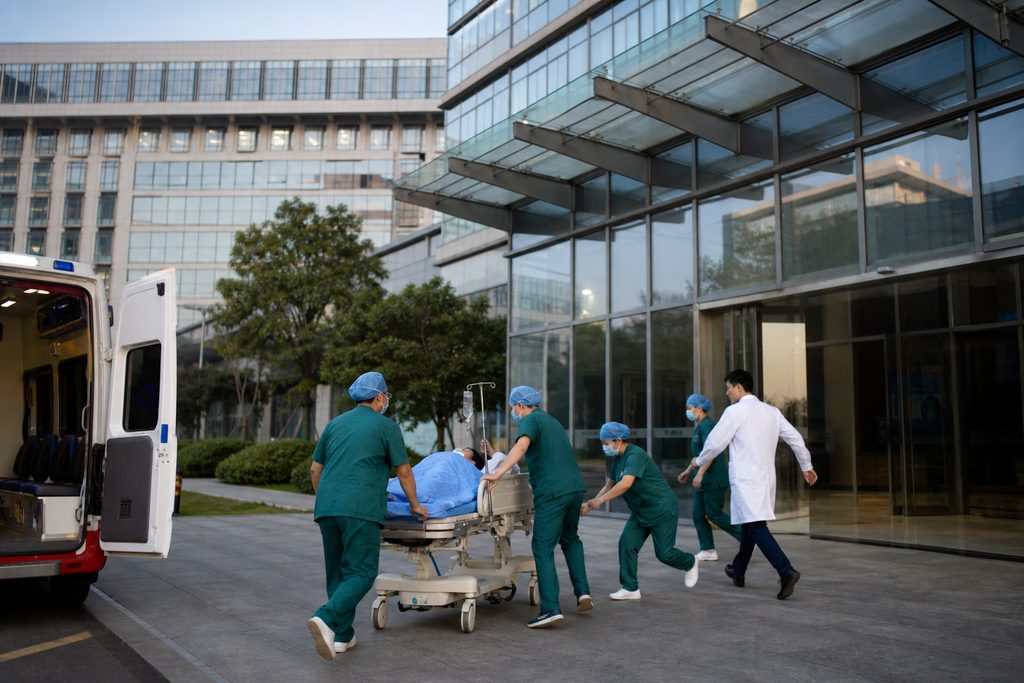
While a patient in the United States faces a bill exceeding $120,000 for a complex aortic root replacement, the same procedure at a center with some of the highest surgical volumes on the planet can cost a fraction of that. Beijing Anzhen Hospital performs over 15,000 cardiac surgeries annually. That kind of volume isn’t just a number. It’s a guarantee of institutional muscle memory that directly impacts survival rates.
Key Takeaways
- Beijing Anzhen Hospital is one of the world’s highest-volume cardiac centers, performing over 15,000 surgeries annually with outcomes comparable to top Western institutions.
- The average cost for complex aortic surgery is roughly 70-80% lower than in the United States, often falling between $25,000 and $45,000 USD depending on complexity.
- Language barriers and the Chinese hospital payment system create significant friction for solo international travelers; pre-arranged coordination is not a luxury but a necessity.
- Public registration desks cannot book surgeries for overseas patients in advance; accessing top surgeons requires navigation through the hospital’s official International Medical Center.
The Problem: High Cost and Long Waits for Aortic Repair
Aortic aneurysms are silent. They grow without symptoms until the moment they threaten to rupture. When a Western patient receives this diagnosis, the terror is immediately compounded by two brutal realities: time and money. In systems like Canada’s or the UK’s NHS, the wait for elective cardiac surgery can stretch beyond four months. In the US, private insurance might approve the surgery quickly, but the financial toxicity is immediate. A total aortic arch replacement with a frozen elephant trunk procedure—a common solution for extensive aneurysms—can generate a hospital bill well north of $150,000.
That is if you can get on the schedule. The shortage of specialized aortic surgeons means many patients are forced to travel within their own countries, burning precious weeks. For an ascending aortic aneurysm measuring 5.5 cm, the risk of rupture increases exponentially with time. Waiting isn’t just stressful. It’s dangerous.
Who We Are
We are not a hospital. We don’t perform surgeries or provide medical advice. Our team at China Medical Services functions as your logistical bridge to China’s elite medical infrastructure. We exist because we know that navigating a foreign healthcare system—especially one as massive and internally complex as China’s—requires more than a good map. It requires a guide who speaks the language, understands the clinical hierarchies, and can distinguish between a general cardiologist and a true aortic sub-specialist. We handle the barriers so you can focus on recovery.
Why Beijing Anzhen Hospital Delivers Results for Aortic Aneurysm Surgery
The institution’s reputation isn’t built on marketing. It’s built on data. Beijing Anzhen Hospital is home to the National Clinical Research Center for Cardiovascular Diseases. It is a high-volume powerhouse where complex aortic pathologies are standard daily cases, not rare anomalies.
Volume Creates Mastery
In cardiac surgery, the link between hospital volume and mortality is ironclad. Studies published in the Journal of the American College of Cardiology consistently show that high-volume centers have significantly lower operative mortality for aortic surgery. At Anzhen, they don’t just do “a lot” of hearts. They specialize in the hardest ones. Their Aortic Surgery Center manages the entire aorta, from the root to the iliac bifurcation. When you ask about the aortic aneurysm surgery cost Beijing Anzhen Hospital charges, you aren’t paying for a generic procedure. You are paying for a team that has seen every anatomical variation thousands of times. This repetition cuts down on bypass time and complications.
Technology at the Scale of a Mega-Hospital
Anzhen operates on a scale that allows for massive investment in hybrid operating suites. They routinely perform the “Sun’s procedure” (total arch replacement combined with stented elephant trunk implantation), a technically demanding operation invented by Dr. Sun Lizhong at this very hospital. This isn’t a center importing techniques from the West. It’s a place exporting surgical innovations to the world. The infrastructure supports rapid intraoperative imaging and cerebral protection strategies that are standard here but often fragmented in lower-volume centers. This technical density explains why many patients searching for the best heart surgery hospital in China for foreigners end up at Anzhen’s doors.
Structural Cost Advantage Without Cutting Corners
Let’s address the elephant in the room. Why is the price so much lower? It’s a question of economics, not quality. The cost of labor, hospital construction, and pharmaceutical supply chains in China is fundamentally lower than in the US or Europe. A top-tier Chinese cardiac surgeon earns a high local salary, but it doesn’t approach the multi-million-dollar compensation packages of US surgeons. The sterilization protocols, the ICU monitoring equipment, and the surgical staplers are the same international brands used in New York or Berlin. The savings come from systemic efficiency and lower operational overhead. When you review the Beijing Anzhen Hospital cardiac surgery price for international patients, you see the reflection of a different cost structure, not a different standard of care.
| Procedure | Estimated Cost (Beijing Anzhen – International Dept.) | Estimated Cost (USA) |
|---|---|---|
| Coronary Artery Bypass Grafting (CABG) | $15,000 – $22,000 | $40,000 – $120,000+ |
| Aortic Root Replacement (Bentall) | $28,000 – $38,000 | $80,000 – $150,000+ |
| Total Arch Replacement (Sun’s Procedure) | $35,000 – $45,000 | $120,000 – $180,000+ |
| Mitral Valve Repair | $18,000 – $28,000 | $50,000 – $100,000+ |
Note: Prices are estimates in USD for the hospital package only, based on the international department. They vary by case complexity and length of ICU stay. These figures do not include our coordination fees or travel logistics.
What You Need to Know Before Going Alone
We have seen patients try to walk into Anzhen’s public lobby with a stack of translated medical records, hoping to see a top professor that afternoon. It does not work. The Chinese public hospital system is a high-throughput machine designed for domestic citizens. Attempting to navigate it as a foreigner without local support introduces specific, hard barriers.
- Visa Requirements: Medical treatment in China requires an S2 visa, which specifically requires a formal invitation letter or medical diagnosis certificate from the Chinese hospital. You cannot enter on a tourist visa and simply check into the cardiac ward. The hospital’s International Medical Center must trigger this documentation. Without pre-approval, you are stuck at the embassy.
- Payment Systems: The hospital will not bill your US or European insurance directly. You must pay the estimated treatment deposit upfront via wire transfer or Chinese UnionPay card. WeChat Pay and Alipay dominate the local ecosystem, and foreign credit cards often fail at hospital cashier desks. The deposit for a major aortic surgery can be substantial, and the mechanics of moving that money across borders are not trivial.
- Language and Clinical Nuance: A general translator cannot explain the difference between a hemiarch replacement and a total arch with a frozen elephant trunk. The informed consent process requires a deep, bilingual understanding of cardiac anatomy. Miscommunication during the pre-operative consultation can lead to a mismatch between patient expectations and the surgical plan.
How We Help You Navigate This
Our role is to remove the friction between you and the operating table. We start by translating your medical records—angiograms, CT scans, echocardiograms—into a format that Chinese surgeons can immediately interpret. We don’t just translate words; we localize the clinical narrative.
We then coordinate directly with the International Medical Center to secure a formal assessment. This is the step that generates your S2 visa invitation. Once the surgeon accepts your case, we negotiate the timeline. We cannot jump the queue in the public system, but we can lock in a treatment window through the VIP international channel. This is where the question of how safe is aortic aneurysm repair at Beijing Anzhen gets a practical answer: it’s safe when you have a pre-booked bed, a confirmed surgeon, and no logistical chaos upon arrival.
On the ground, our bilingual case managers accompany you to every consultation, pre-op test, and payment counter. We verify that the billing codes match the agreed-upon package. After surgery, we stay in the loop during the ICU stay and the step-down recovery. We don’t disappear once the incision is closed. For those asking about what is recovery time after heart bypass surgery in China, we help manage the expectation: you are typically walking within 24 hours, but staying in Beijing for a minimum of two to three weeks for post-operative monitoring is mandatory before receiving clearance to fly.
Frequently Asked Questions
Yes, but not through the general registration desk. To book cardiac surgery package Beijing Anzhen Hospital international channels require, you must go through the official International Medical Center. This requires a medical review first. The surgeon must review your raw imaging data (DICOM files) before accepting the booking. We facilitate this transfer and translation of data. There is no “click to buy” surgery package; it’s a clinical acceptance process.
For a complex aortic root or arch procedure, international patients should budget between $30,000 and $45,000 USD for the hospital portion. This includes the surgeon’s fee, anesthesia, operating room, device implants (valves, grafts), and ICU recovery. This is the aortic aneurysm surgery cost Beijing Anzhen Hospital quotes for its international wing. It does not include pre-operative testing or complications that significantly extend the ICU stay.
At a high-volume center like Anzhen, operative mortality for elective aortic root replacement is comparable to international benchmarks, hovering around 2-3% depending on patient age and comorbidities. The volume of cases directly correlates with safety. Anzhen’s aortic team operates multiple times a day, a pace that keeps the entire perioperative chain—from perfusionists to ICU nurses—sharply attuned to aortic patients. The safety profile is one of the main reasons we recommend it for those seeking the best heart surgery hospital in China for foreigners.
Plan for a minimum of three to four weeks in Beijing. The hospital stay itself is usually 7 to 10 days for an uncomplicated recovery. The remaining time is required for follow-up CT scans, wound checks, and a final consultation to clear you for a long-haul flight. The risk of deep vein thrombosis and the need for strict blood pressure control make an early return home unsafe.
Your Next Step
A cardiac diagnosis feels like a race against time. The impulse to rush toward the nearest solution is strong. But a high-stakes aortic repair requires a level-headed, data-driven choice. Beijing Anzhen Hospital offers a combination of elite surgical volume and a price point that preserves your financial health. The challenge is the distance and the system complexity.
You don’t need to solve the logistics puzzle alone. If you want to understand whether your specific case is suitable for treatment here, start with a free consultation. We’ll review your records and give you an honest, clinical assessment of the path forward. No pressure. Just clarity.
Disclaimer: This article is for informational purposes only and does not constitute medical advice. Always consult a qualified healthcare professional regarding any medical condition or treatment. Prices are estimates and subject to change based on individual patient needs and hospital policies.
For more medical information and treatment options in China, visit chinamedservices.com (China Medical Services).
